
INSIGHTS
Accessible Web Design: Why ADA Compliance is Mandatory for Healthcare
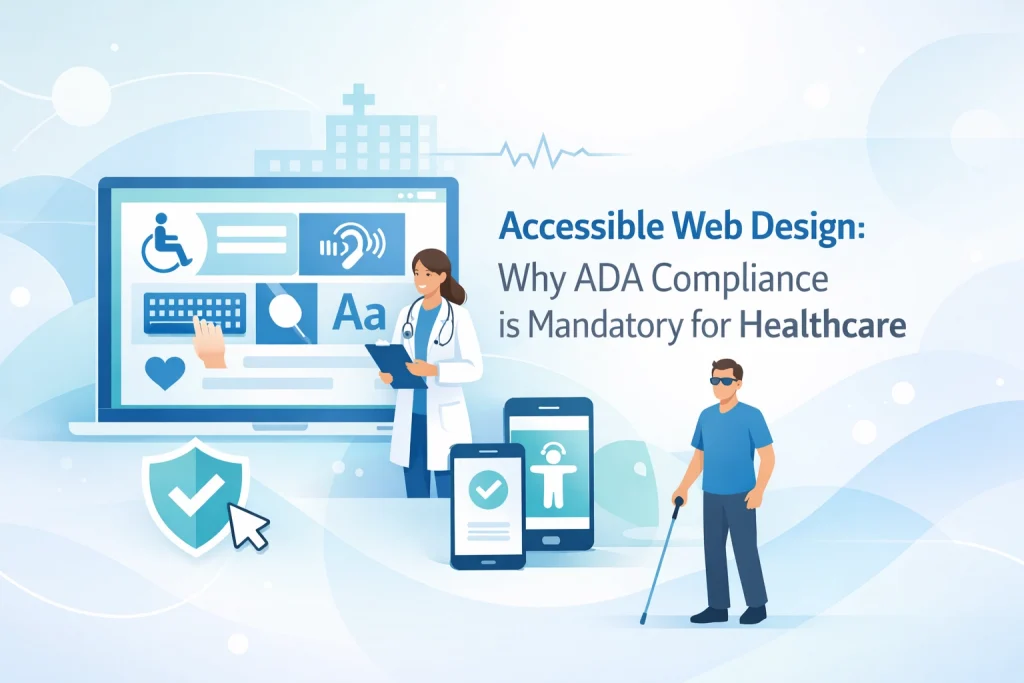
Imagine a potential patient: someone struggling with a substance use disorder or a mental health crisis: arriving at your website at 3 AM. They are desperate for help, but because they have a visual impairment and use a screen reader, your site is a maze of unlabeled buttons and broken links. They can’t find the "Admission" button. They can’t read your program descriptions.
In that moment, you haven’t just lost a high-value lead; you’ve potentially opened your facility up to a federal lawsuit.
Today is Monday, March 16, 2026. If you haven't prioritized digital accessibility yet, you are officially in the "red zone." With the Department of Health and Human Services (HHS) final rule deadlines looming on May 11, 2026, for many organizations, "getting around to it" is no longer an option.
At Ads Up Marketing, we see website design as more than just pretty colors: it’s about Visual Trust. If your site isn't accessible, you're telling a portion of the population that they don't matter. In healthcare, that’s a brand-killer.
The 2026 Deadline: Why the Clock is Ticking
For years, ADA compliance for websites was a bit of a "gray area" legally. While the Americans with Disabilities Act (ADA) Title III has always required "places of public accommodation" to be accessible, the specific technical standards for websites were often left to the courts.
That changed in May 2024. The HHS issued an updated rule under Section 504 of the Rehabilitation Act. This rule establishes binding accessibility requirements for any healthcare organization receiving federal financial assistance (which includes almost everyone taking Medicare or Medicaid).
The Deadlines are Clear:
- May 11, 2026: For healthcare providers with 15 or more employees.
- May 11, 2027: For healthcare providers with fewer than 15 employees.
If you fall into that first category, you have less than two months to ensure your entire digital presence meets the WCAG 2.1 Level AA standards.

Alt-text: A calendar highlighting the May 11, 2026 deadline for ADA compliance in healthcare.
What Exactly Does "Accessible" Mean?
In the world of digital marketing, we follow the Web Content Accessibility Guidelines (WCAG). Think of these as the building codes for the internet. For healthcare facilities, the gold standard is WCAG 2.1 AA.
So, what does that look like in practice? It’s not just about font size. It’s about ensuring your site is:
- Perceivable: Can users see and hear the content? (e.g., alt text for images, captions for videos).
- Operable: Can users navigate the site regardless of their physical ability? (e.g., keyboard-only navigation, no flashing content).
- Understandable: Is the language clear and the navigation predictable?
- Robust: Does the site work with various assistive technologies like screen readers?
But this still doesn't drill down into the "why" for facility owners. You’re busy managing 50-bed milestones and fixing VOB bottlenecks. Why should you care about alt-text?
Because compliance is a competitive advantage. When your competitors’ sites are glitchy and non-compliant, your accessible, professional site becomes a beacon of trust.
The High Cost of Non-Compliance
I know you're juggling a lot, but ignoring ADA compliance is like ignoring a leak in your facility’s roof. Eventually, the ceiling is going to cave in. In 2026, the risks of an inaccessible website are three-fold:
1. The Legal "Bounty Trap"
There is a massive industry of "drive-by" lawsuits where law firms use automated tools to find non-compliant websites and file thousands of claims. Healthcare is a prime target because the ethical bar is higher. Avoiding the bounty trap starts with a solid, compliant foundation.
2. Loss of Federal Funding
If your facility relies on Medicare or Medicaid reimbursements, non-compliance with the new HHS rule could jeopardize your funding. The government is treating digital accessibility with the same seriousness as physical wheelchair ramps.
3. Reputation and Trust
In behavioral health, professionalism is a sales tool. If a family member is looking for a detox center and your website is broken or difficult to use, they won’t trust you with their loved one’s life. Visuals dictate trust, and accessibility is the bedrock of that visual experience.
Performance Impact: Compliant vs. Non-Compliant
| Feature | Non-Compliant Facility Site | ADA-Compliant (Ads Up Standard) |
|---|---|---|
| Legal Risk | High (Target for litigation) | Low (Safe Harbor / Best Practice) |
| Search Visibility | Average | High (Google rewards accessibility) |
| Mobile UX | Often clunky/unstable | Seamless and fast |
| Audience Reach | Excludes ~20% of users | 100% Inclusive |
| Brand Trust | Potential "Red Flag" | Established Authority |
| Lead Quality | High friction for some users | Low friction, higher conversion |
Key Elements Every Healthcare Website Needs
To meet the WCAG 2.1 AA standards, your digital team needs to audit and fix several specific areas. If you’re doing a feasibility study for a new market, these should be baked into your launch plan from day one.
Proper Color Contrast
For users with low vision or color blindness, text must stand out against the background. A light gray font on a white background might look "modern," but it’s an accessibility nightmare. We use specialized tools to ensure your brand colors meet the 4.5:1 contrast ratio required.
Keyboard Navigation
Can someone use your website without a mouse? Many people with motor disabilities use the "Tab" key to navigate. If your intake forms or call-to-action buttons aren't reachable via keyboard, you're essentially locking the front door to your facility.
Alt-Text and Screen Reader Support
Every image on your site needs descriptive "alternative text." This isn't just for SEO (though it helps!). It allows screen readers to describe the image to a user. For example, instead of "image01.jpg," the alt-text should be "Medical team standing in front of a residential treatment facility." This helps reduce pre-admission anxiety by making your visuals accessible to everyone.

Alt-text: A screenshot of a website being tested for keyboard navigation and screen reader compatibility.
The ROI of Doing It Right
So what's the connection between accessibility and your bottom line? I get asked this by CFOs all the time. Is this just another expense?
Actually, it's an investment in the patient journey to ROI.
- Better SEO: Google’s algorithms favor websites that are easy to crawl and have good user experiences. Many ADA requirements (like alt-text, headers, and fast load times) are also core SEO ranking factors.
- Wider Audience: Over 60 million Americans live with a disability. By making your site accessible, you are expanding your potential patient pool significantly.
- Reduced Bounce Rates: A site that is easy to navigate keeps people on the page longer, leading to more 3 AM crisis calls and higher admissions.
How to Get Started (Before May 11th)
If you're feeling overwhelmed, don't panic. You don't have to rebuild your entire digital presence overnight, but you do need an action plan. Here is how we recommend approaching it:
- Run an Accessibility Audit: Use tools like WAVE or Axe to find the low-hanging fruit.
- Fix High-Impact Elements: Prioritize your contact forms, phone numbers, and location pages.
- Update Your Documents: Those HIPAA policy PDFs and downloadable intake forms need to be accessible too.
- Training: Ensure your content team knows how to use H1, H2, and H3 tags correctly.
- Hire Experts: Website accessibility is technical. Trying to DIY it often leads to "accessibility overlays" (those little icons in the corner) which can actually increase your legal risk because they don't fix the underlying code.

Alt-text: A developer at Ads Up Marketing reviewing a healthcare website's code for ADA compliance.
Let Ads Up Marketing Handle the Complexity
At Ads Up Marketing, we specialize in the intersection of high-growth marketing and strict healthcare compliance. We understand that as a facility owner, your focus should be on patient care, not debugging ARIA labels.
We’ve navigated LegitScript complexities and AI-driven marketing compliance for years. Ensuring your website is ADA-compliant by the 2026 deadline is just another way we protect your business while driving admissions.
Don't wait until you receive a demand letter or a notice from the HHS. Let’s audit your site today and make sure you’re providing an inclusive, high-trust experience for every person seeking help.
Is your website ready for the May 11th deadline? Call us today at 305-539-7114 for a comprehensive accessibility audit.