You're staring at your Google Ads dashboard, and the numbers look pretty good. Clicks are up. Cost-per-click is reasonable. Traffic to your admissions page has increased by 30% this month. But here's the uncomfortable question nobody wants to ask: how many of those clicks actually turned into admitted patients?
If you can't answer that question with confidence, you're not alone. Most treatment center owners we talk to are stuck measuring the wrong things, or worse, measuring nothing at all past that initial click. And that's costing them thousands in wasted ad spend every single month.
Let's fix that.
The Click Is Just the Beginning
Here's something that might sting a little: a click doesn't pay your bills. An admitted patient does.
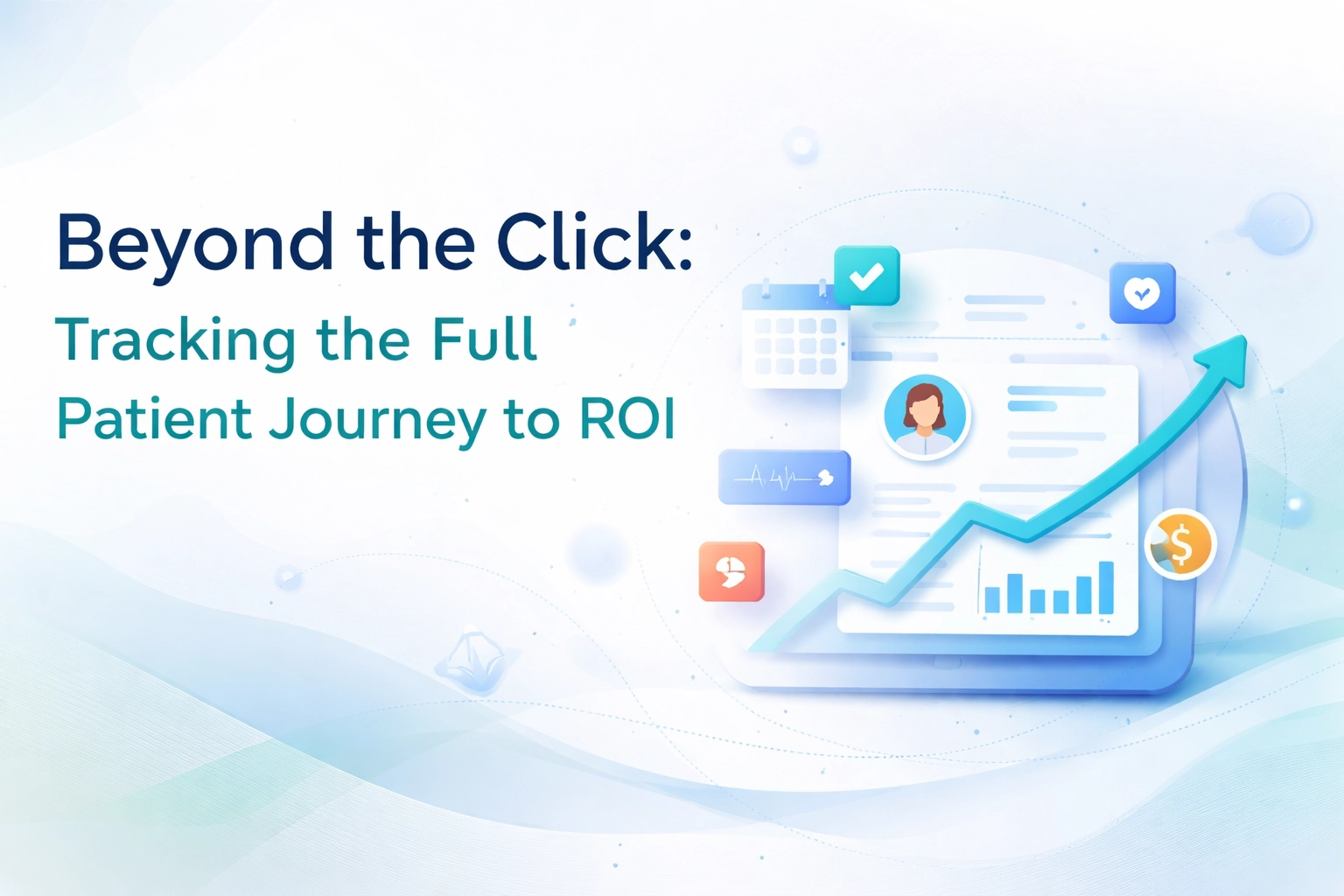
The problem is that patient acquisition in behavioral health isn't like buying a pair of shoes online. Someone struggling with addiction or a family member searching for help rarely converts immediately. They might click your Facebook ad on Monday, Google your facility name on Wednesday, read reviews on Thursday, and finally call your admissions line on Saturday.
If you're only tracking that first click, you're missing the entire story. Worse, you might be killing campaigns that are actually working, just because they're not the last touch before conversion.
According to SAMHSA's National Survey on Drug Use and Health, over 46 million Americans struggled with substance use disorders in 2023. That's a massive population actively searching for help. But if your attribution model can't connect those searches to actual admissions, you're essentially flying blind in a competitive market.

Why Multi-Touch Attribution Actually Matters
Think about your own buying behavior for a second. When's the last time you saw an ad, clicked it, and immediately purchased something expensive or life-changing? Probably never.
Your prospective patients are no different. They're researching. Comparing. Reading testimonials. Checking your credentials. And often, they're doing all of this across multiple devices over days or even weeks.
Single-touch attribution, giving all the credit to either the first or last interaction, creates a distorted picture. It's like giving your quarterback all the credit for a touchdown while ignoring the linemen, receivers, and running backs who made the play possible.
Multi-touch attribution tracks the entire journey:
- The awareness stage (where they first heard about you)
- The consideration stage (where they researched and compared)
- The decision stage (where they finally picked up the phone)
Without this full picture, you can't make smart decisions about where to invest your marketing dollars. You might be pouring money into channels that look good on paper but aren't actually driving admissions.
The Three Phases of Patient Journey ROI
Let's break down what you should actually be measuring at each stage. This isn't just theory, it's the framework we use with our clients to connect marketing spend to real revenue.
| Phase | What to Track | Why It Matters |
|---|---|---|
| Awareness & Reach | Impressions, CTR, CPC, Engagement Rate | Shows how effectively you're reaching your target audience |
| Lead Capture & Conversion | Cost per Lead, Conversion Rate, Form Completions, Call Volume | Connects marketing spend directly to patient inquiries |
| Financial Impact | Cost per Acquisition, Patient Lifetime Value, Net ROI | Reveals true return by tying campaigns to actual revenue |
The magic happens when you connect all three phases. You can finally answer questions like: "Which campaign brought in patients with the highest lifetime value?" or "What's our true cost to acquire a patient who completes treatment?"
That's the kind of data that transforms your marketing from a cost center into a profit driver.

Building Your Tracking Infrastructure (Without Losing Your Mind)
Alright, so you're convinced that tracking the full journey matters. But how do you actually do it? The technical side can feel overwhelming, especially if you're not a data nerd.
Here's the good news: you don't need to become one. You just need the right systems in place.
Start With a Healthcare CRM
Your CRM is the hub that connects everything. When a lead comes in, whether through a web form, phone call, or chat widget, it should automatically capture:
- The source (which campaign or channel)
- Every subsequent interaction
- The progression from inquiry to admission to discharge
If your current system can't do this, it's time for an upgrade. Generic CRMs like Salesforce can work, but platforms designed for behavioral health admissions often integrate better with your existing workflows.
Implement Call Tracking
Here's a stat that might surprise you: according to industry data, over 60% of treatment center leads still come through phone calls. If you're not tracking which campaigns drive those calls, you're missing the majority of your conversion data.
Tools like CallRail or Invoca assign unique phone numbers to each campaign. When someone calls, you know exactly which ad, keyword, or landing page prompted that call. It's a game-changer for understanding what's actually working.
Use UTM Parameters Religiously
Every link you share, in ads, emails, social posts, anywhere, should have UTM parameters attached. These little tracking codes tell Google Analytics exactly where each visitor came from.
Without them? All your traffic gets lumped into vague categories like "direct" or "organic," and you're back to guessing.
Connect to Financial Data
This is where most treatment centers drop the ball. They track leads, maybe even track admissions, but never connect that data to actual revenue.
Your ultimate goal is to answer: "For every dollar I spent on marketing last month, how many dollars did I get back in patient revenue?"
That requires integrating your marketing data with your billing and revenue cycle management systems. Yes, it takes some work to set up. But once it's running, you'll never make a marketing decision without knowing the true financial impact.
Common Mistakes That Kill Your ROI Tracking
We've audited hundreds of treatment center marketing programs, and certain problems show up again and again:
Mistake #1: Stopping at the click. You know this one by now. Clicks are vanity metrics unless you connect them to admissions.
Mistake #2: Ignoring phone calls. Especially problematic if your best leads call instead of filling out forms.
Mistake #3: Using last-click attribution only. This overvalues bottom-funnel channels and undervalues awareness campaigns that started the patient journey.
Mistake #4: Not accounting for Patient Lifetime Value. A patient who completes a 90-day residential program is worth significantly more than someone who leaves after 7 days. Your attribution should reflect that.
Mistake #5: Siloed data. Marketing, admissions, and billing all tracking separately with no integration. It's impossible to calculate true ROI when your data lives in different systems that don't talk to each other.
If any of these sound familiar, you're leaving money on the table. The National Institute on Drug Abuse emphasizes the importance of data-driven approaches in treatment: and that principle extends to how you market your services too.
What Proper Tracking Actually Looks Like in Practice
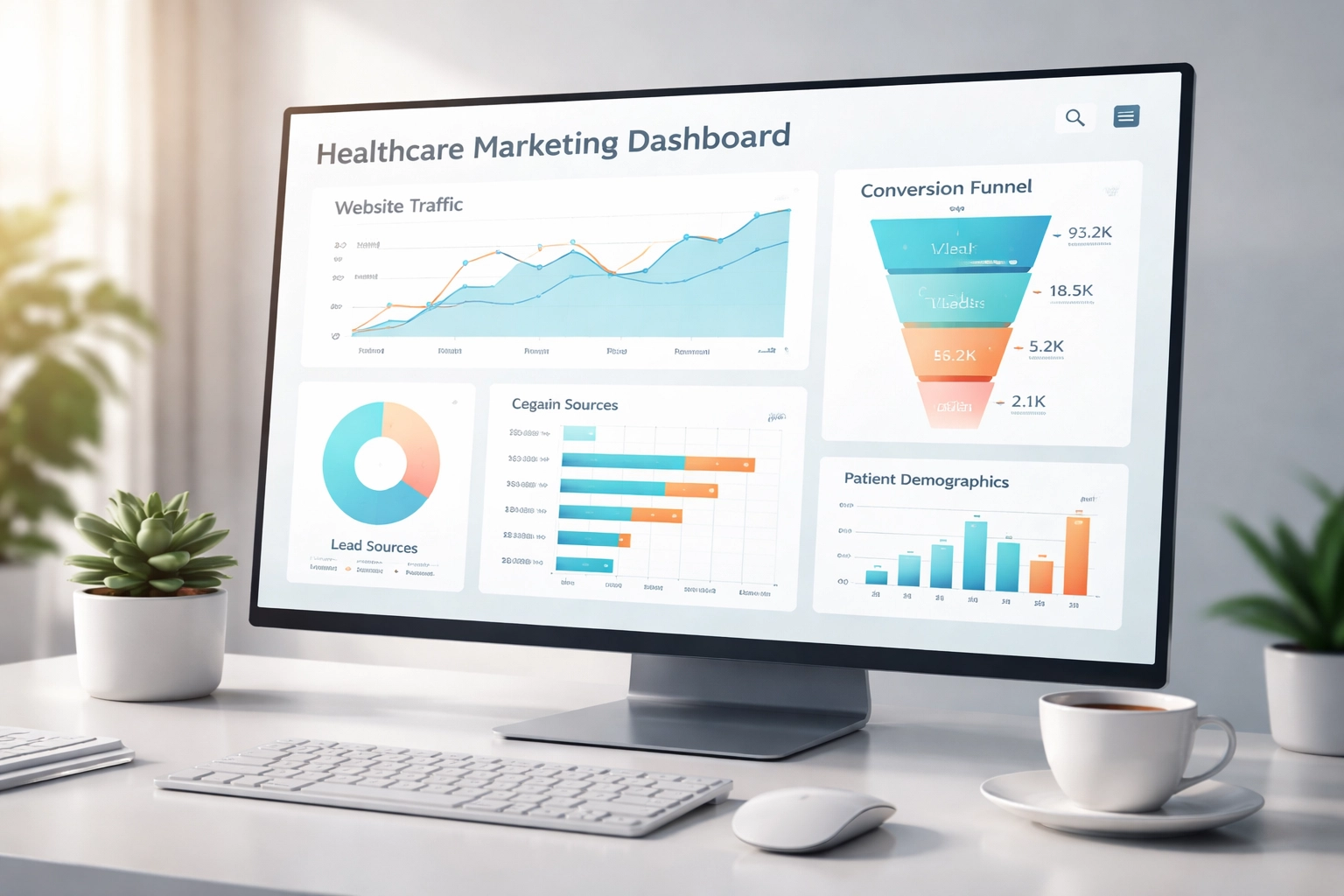
Let me paint a picture. One of our clients: a mid-sized residential facility in the Southeast: came to us frustrated. They were spending $40,000 a month on digital marketing but couldn't tell us whether it was working.
Here's what we found after implementing full-journey tracking:
- Their Google Ads were generating plenty of clicks, but only 8% of those clicks turned into phone calls
- Organic search traffic converted at nearly 3x the rate of paid traffic
- Patients who found them through educational blog content had 40% higher completion rates than those from direct response ads
- Their true cost-per-admission was $4,200: not the $800 cost-per-lead they'd been reporting
With this data, we reallocated budget toward higher-converting channels and optimized their high-intent lead strategy. Within 90 days, their cost-per-admission dropped to $2,800 while admissions volume increased by 22%.
That's what happens when you track beyond the click.
Why You Shouldn't DIY This
Look, I'm all for self-reliance. But setting up proper patient journey tracking involves:
- Technical integrations across multiple platforms
- HIPAA-compliant data handling
- Custom attribution modeling
- Ongoing optimization based on what the data reveals
It's not impossible to do yourself. But it's time-consuming, technically demanding, and easy to get wrong. And when you get it wrong, you're making decisions based on bad data: which is arguably worse than no data at all.
The treatment centers seeing the best ROI from their marketing are the ones working with partners who specialize in this stuff. Partners who understand both the technical side and the unique challenges of behavioral health marketing.
Ready to See Your Real ROI?
If you're tired of guessing whether your marketing is working, we should talk. At Ads Up Marketing, we help treatment centers build tracking systems that connect every click, call, and form submission to actual patient revenue.
No more vanity metrics. No more guessing. Just clear data showing exactly what's driving admissions: and what isn't.
Call us at 305-539-7114 or visit our website to schedule a free marketing audit. We'll show you exactly where your current tracking is falling short and how to fix it.
Because at the end of the day, clicks don't fill beds. Patients do. And you deserve to know which marketing efforts are actually bringing them through your doors.