INSIGHTS
Understanding Patient Privacy in the Age of AI-Powered Analytics
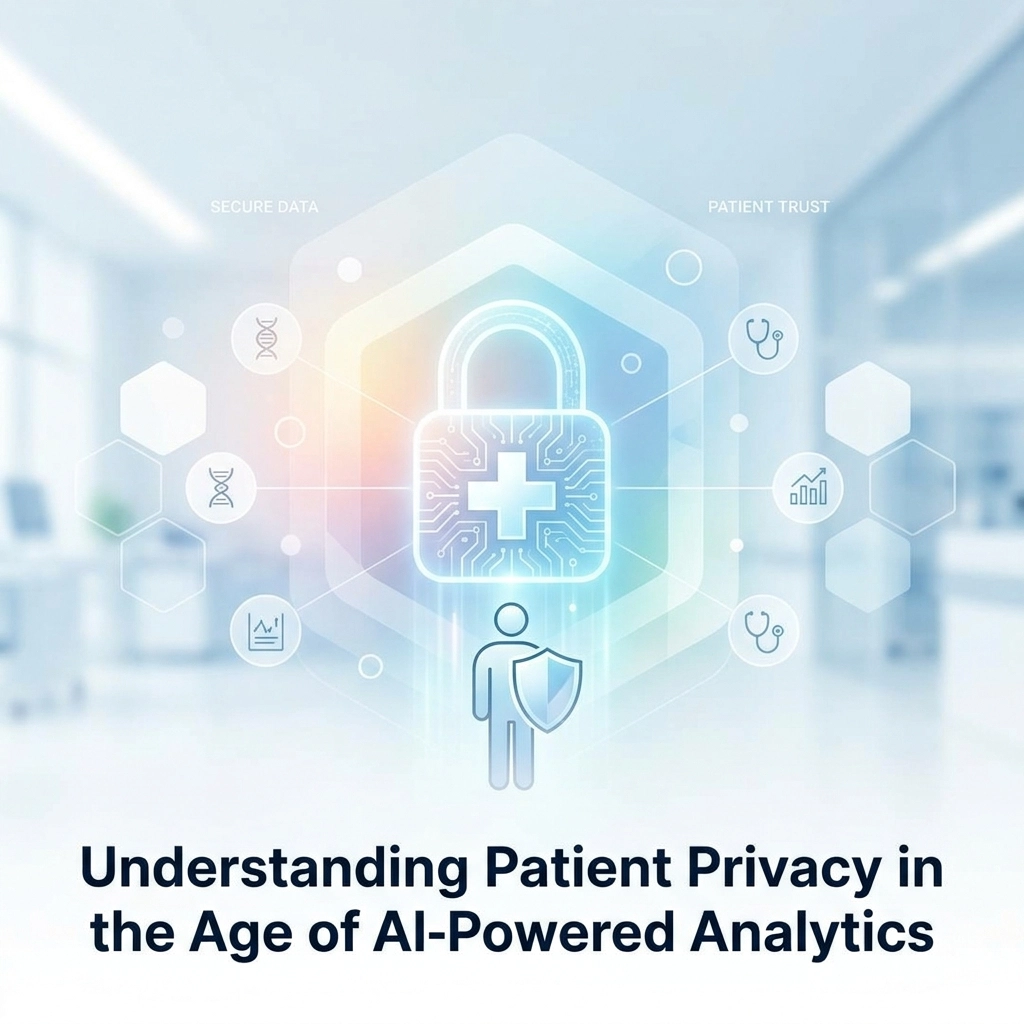
Imagine waking up to a notification that your facility’s patient database, the lifeblood of your operations, has been compromised. Now, imagine that the breach wasn't caused by a traditional hacker, but by a "leak" in your own AI-powered analytics tool. It’s a gut-punch moment that no facility owner wants to experience.
In 2026, the intersection of healthcare and artificial intelligence is no longer a futuristic concept; it is our daily reality. We use AI to predict patient outcomes, optimize our spend, and even handle initial intake queries. But here is the catch: as these models get smarter, they get hungrier for data. And in the world of behavioral health and addiction treatment, that data is the most sensitive information on the planet.
If you are feeling a bit overwhelmed by the technical jargon of "large language models" and "data scraping," you aren't alone. I know you're struggling to balance the need for cutting-edge marketing with the ironclad requirements of HIPAA compliance. How do you harness the power of AI without turning your facility into a legal liability?
The High Stakes of 2026: Why Privacy Isn't Optional
The financial landscape for data security has shifted dramatically over the last year. According to a 2025 IBM security report, the average cost of a healthcare data breach has surged to over $7.4 million. For a mid-sized facility, a hit like that isn’t just a "bad quarter", it’s a business-ending event.
But it’s not just about the money. It’s about trust. Your patients come to you at their most vulnerable. If they feel their private struggles are being fed into a faceless machine without protection, that trust evaporates instantly. We’ve seen that compliance is a competitive advantage, and in 2026, it is the cornerstone of a trustworthy brand.
The Re-identification Trap: AI’s Secret Weapon
One of the biggest misconceptions I hear from facility owners is, "But Lee, we anonymize our data!"
In the old days, stripping names and social security numbers was enough. Today, AI is too smart for that. Modern AI analytics can "re-identify" patients by triangulating supposedly anonymous health data with unprotected info from smart devices, search histories, and shopping patterns. Researchers have already demonstrated that AI can re-identify a "substantial majority" of patients from datasets that were thought to be safe.
So what's the connection to your marketing? If your tracking pixels and AI-driven CRM tools are gathering too much "shadow data," you might be violating privacy laws without even knowing it. This is why understanding patient privacy in your digital marketing strategy is no longer a "side task", it’s a core operational requirement.

Balancing ROI and Regulation: The Performance Impact
You might be thinking, "If I lock down my data this tightly, will my marketing suffer?" It’s a fair question. CFOs and owners are often worried that privacy-first marketing means flying blind.
However, the data shows the opposite. Facilities that implement robust, AI-compliant tracking actually see a more sustainable ROI because they aren't wasting budget on "junk" leads that come from non-compliant sources.
Data Breakdown: The Cost of Compliance vs. The Cost of Neglect (2026 Projections)
| Metric | Privacy-First AI Strategy | "Wild West" AI Strategy |
|---|---|---|
| Average Breach Risk | Low (<2%) | High (>15%) |
| Avg. Cost per Admission (CPA) | $1,200 – $1,800 | $1,000 – $3,000 (Highly Volatile) |
| Legal/Compliance Overhead | Predictable Annual Fee | High (Potential $7.4M Fines) |
| Patient Trust Score | High (90%+) | Low (Varies with PR) |
| Long-term Scalability | High | Low (Subject to Platform Bans) |
As you can see, while the "Wild West" approach might offer a slightly lower CPA in the short term, the long-term risk to your rehab owner profitability in 2026 is massive.
Technical Safeguards: How to Shield Your Data
To stay compliant, you don’t have to abandon AI; you just have to change how you use it. At Ads Up Marketing, we focus on three main pillars of technical safety:
- Federated Learning: Instead of moving all your sensitive patient data to a central cloud server (where it's vulnerable), the AI "learns" locally on your secured servers. Only the "knowledge" is shared, not the raw data.
- Differential Privacy: This adds "mathematical noise" to your datasets. It allows the AI to see patterns (like "what time of day do most detox leads call?") without ever being able to pinpoint a specific individual.
- Privacy by Design: This means building your marketing funnels with compliance as the foundation, not an afterthought. Whether you are navigating AI in rehab marketing or setting up a new call center, the security measures are baked in from day one.

Marketing Without the Fear: The "Ads Up" Way
I get it, you’re an expert in treatment, not data science. You shouldn't have to stay up until 3 AM worrying if your Google Analytics setup is going to trigger an OCR audit.
But this still doesn't drill down to the core issue: how do you get more admissions while staying safe?
The secret lies in tracking the full patient journey to ROI using "clean room" environments. We help facilities set up data structures that allow you to see which ads are working without ever exposing Protected Health Information (PHI) to third-party platforms.
Are you using AI to handle your 3 AM crisis calls? If so, is that AI HIPAA-compliant? Many of the "off-the-shelf" AI bots are not. We help you vet these tools so you can provide 24/7 support without the 24/7 legal risk.
Navigating LegitScript and Beyond
In our industry, we also have to deal with LegitScript and advertising complexities. AI adds another layer to this. Google and Meta are increasingly using AI to flag and ban accounts that they deem "high risk." If your AI-generated ad copy or landing pages don't meet their evolving standards, you could find your accounts disabled overnight.
Working with a dedicated agency like Ads Up Marketing means you have a team that is constantly monitoring these shifts. We don't just "set and forget" your campaigns; we iterate based on the latest compliance standards from organizations like NAATP.
Your Next Steps: Don't Leave It to Chance
The "Age of AI" is an incredible opportunity for healthcare providers to reach more people and save more lives. But the road is paved with regulatory landmines. You don't have to walk it alone.
If you are unsure whether your current marketing stack is HIPAA-compliant, or if you want to see how AI can actually improve your ROI when done correctly, let’s talk. We specialize in helping mid-to-large scale facilities reach that 50-bed milestone and beyond by combining aggressive marketing with bulletproof compliance.
Ready to secure your facility’s future? Give us a call at 305-539-7114. Let’s make sure your 2026 growth is built on a foundation of trust and security.

Frequently Asked Questions
Is Google Analytics HIPAA compliant in 2026?
By default, no. You must use specific server-side configurations and Business Associate Agreements (BAAs) to ensure no PHI is transmitted. We can help you set this up.
Can I use AI for patient intake?
Yes, but only if the platform is specifically designed for healthcare and offers a BAA. Avoid using generic AI tools like standard ChatGPT for handling actual patient names or medical histories.
How does Ads Up Marketing handle data privacy?
We implement "Privacy by Design" across all our services, from PPC to SEO. We use secure, encrypted reporting tools that keep your patient data where it belongs: with you.
What is the "re-identification" risk?
It is the ability of AI to combine different sets of anonymous data to figure out the identity of a specific person. It’s a major focus of healthcare marketing ethics.
Stop guessing and start growing. Call Ads Up Marketing today at 305-539-7114 and let’s audit your AI compliance together.