
INSIGHTS
State-by-State Marketing Restrictions: Navigating the Legal Patchwork of 2026
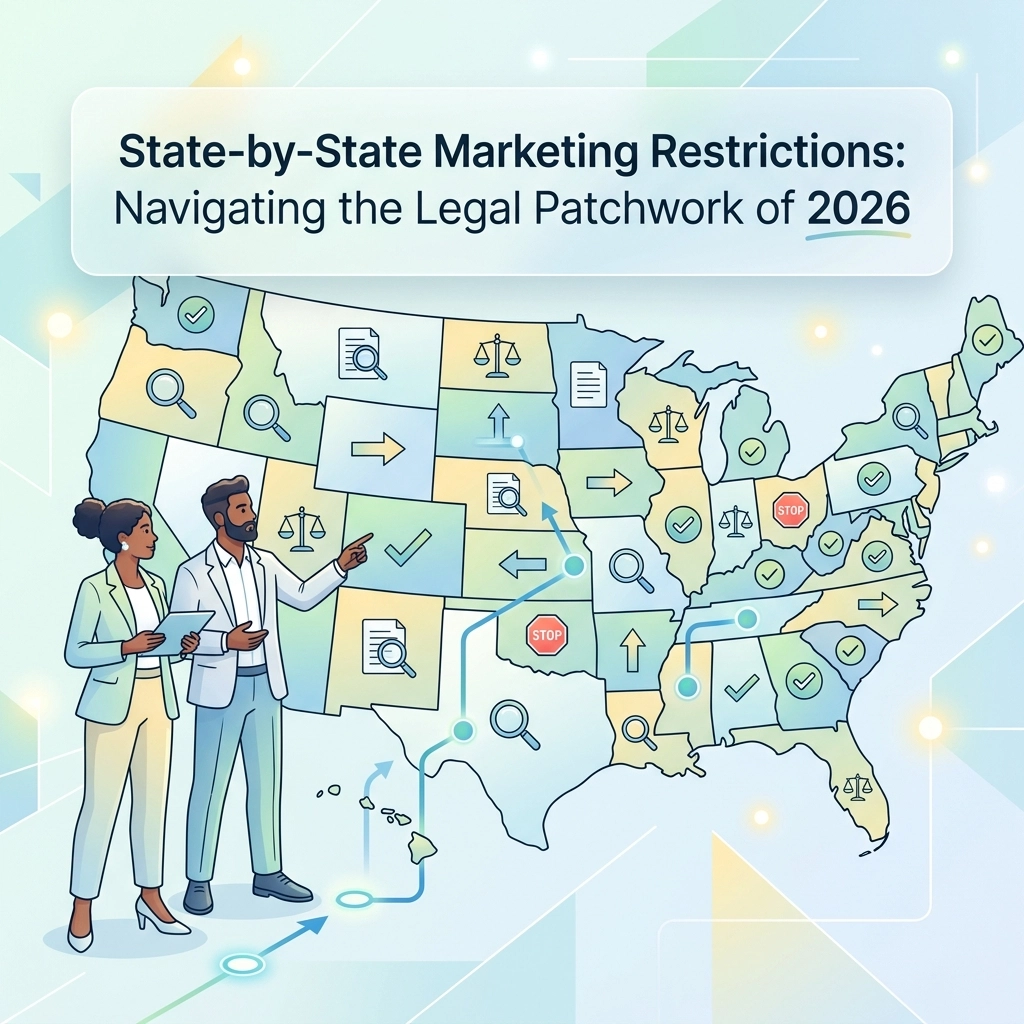
Imagine waking up to a certified letter from a State Attorney General’s office. It’s not a routine audit. It’s a notification that your facility is being fined $10,000 per violation because your website’s tracking pixel didn’t recognize a "Do Not Sell" signal from a resident in Rhode Island. For a rehab center processing hundreds of leads a month, those numbers don't just hurt: they can end a business.
As of March 2026, the "Wild West" of digital marketing is officially over. We are no longer dealing with a few isolated laws in California or Virginia. Today, twenty states have comprehensive privacy laws in full effect. If you’re running a treatment center and targeting patients across state lines, you aren't just a healthcare provider anymore; you are a data controller navigating a legal minefield.
I know you’re struggling to keep up. You want to focus on patient outcomes and increasing admissions, but instead, you’re stuck wondering if your Google Ads campaign is accidentally breaking a law in Kentucky. At Ads Up Marketing, we see this anxiety every day.
Let’s break down the 2026 legal patchwork and, more importantly, how you can stay compliant without losing your competitive edge.
Table of Contents
- The 2026 Landscape: 20 States and Counting
- The New Kids on the Block: Indiana, Kentucky, and Rhode Island
- Sensitive Data: The Geolocation Trap
- Technical Compliance: GPC and Pixels
- Performance Impact: Compliance vs. Risk
- Your 4-Phase Compliance Action Plan
The 2026 Landscape: 20 States and Counting
As we hit the end of Q1 2026, the regulatory environment has shifted from a suggestion to a de facto national standard. While we still don’t have a federal privacy law, the sheer volume of state-level restrictions means you have to build your marketing for the strictest common denominator.
These laws generally grant consumers the right to:
- Access the data you’ve collected on them.
- Delete that data upon request.
- Opt-out of targeted advertising and the "sale" or "sharing" of their information.
The trap many facility owners fall into is thinking, "I'm based in Florida, so Ohio’s laws don't apply to me." That is a dangerous mistake. In 2026, location is irrelevant to applicability. If you serve residents in a state with a privacy law, you are bound by that state’s rules.
Are you currently tracking where every single lead is coming from and how their data is being handled based on their zip code? If not, you’re flying blind. This is why a professional conversion tracking setup is no longer a luxury: it’s a legal necessity.

The New Kids on the Block: Indiana, Kentucky, and Rhode Island
On January 1, 2026, Indiana, Kentucky, and Rhode Island officially joined the party. While Indiana and Kentucky followed the standard "right to cure" model (giving you 30 days to fix a mistake before being fined), Rhode Island decided to play hardball.
The Rhode Island Risk:
Rhode Island’s law is particularly aggressive. It has a lower applicability threshold than most states, meaning even smaller boutique facilities might fall under its jurisdiction. More importantly, Rhode Island provides no "right to cure." If you’re caught in violation, the fine is immediate.
Oregon's Precision:
Oregon also updated its rules recently to ban the sale of precise geolocation data: defined as anything within 1,750 feet. If your local SEO strategy involves hyper-targeted geofencing around hospitals or other facilities, you could be stepping into a legal gray area without explicit opt-in consent.
Sensitive Data: The Geolocation Trap
In the addiction treatment space, almost all data is "sensitive." We aren't just talking about credit card numbers. Under 2026 standards in states like Connecticut and Oregon, "sensitive data" now includes:
- Health inferences: (e.g., if someone visits your "Heroin Detox" page, you have inferred a health condition).
- Precise Geolocation: Tracking a user's physical movement near a facility.
- Neural data: A new addition to several state statutes this year.
For rehab owners, this means your retargeting campaigns need a major overhaul. You cannot simply "pixel" someone who visited your site and follow them around the internet with ads for "Affordable Rehab" without clear, affirmative consent in many states.
So what's the connection to your bottom line?
If you don't have a compliant way to collect this data, your cost per admission will skyrocket because your targeting will become less accurate. You’re essentially throwing money at the wall and hoping it sticks.

Technical Compliance: GPC and Pixels
Twelve states now require businesses to honor Global Privacy Control (GPC). This is a browser-level setting where a user says, "I don't want to be tracked," before they even land on your site.
If your website ignores this signal and continues to fire your Facebook or Google tracking pixels, you are in direct violation of the law. State Attorneys General are now using automated "crawlers" to find websites that ignore GPC signals. It’s an easy win for them and a massive loss for you.
But this still doesn't drill down to the biggest headache: The "Sale" vs. "Sharing" debate.
Sending data to a platform like Meta or Google for the purpose of targeted advertising is considered "sharing" or "selling" in the eyes of the law. To do this legally in 2026, you need a robust Consent Management Platform (CMP) that actually talks to your ad tags.
Navigating this alone is a recipe for disaster. That’s why we recommend a free AdWords audit to see if your current tracking setup is exposing you to unnecessary risk.
Performance Impact: Compliance vs. Risk
To put this into perspective for CFOs and owners, let’s look at how compliance affects your marketing ROI in 2026.
| Feature | Non-Compliant Marketing | Compliant Marketing (Ads Up Method) |
|---|---|---|
| Legal Risk | Up to $10k per violation (No cure period in RI) | Minimized via GPC & CMP integration |
| Data Quality | High "junk" data; 40% loss due to browser blocking | Clean, first-party data; higher conversion accuracy |
| Brand Reputation | High risk of "Privacy Scandal" or AG investigation | High trust; perceived as an ethical industry leader |
| Ad Targeting | Reliance on "shady" third-party cookies (declining) | Focus on SEO and compliant intent-based search |
| Admissions ROI | Erratic; high waste on non-consenting users | Stable; targeting high-intent, consenting leads |
Source: Internal Data & Industry Regulatory Projections 2026.
As organizations like SAMHSA and NAATP continue to push for higher ethical standards in marketing, being compliant isn't just about avoiding fines: it's about being the kind of facility that families feel safe calling.
Your 4-Phase Compliance Action Plan
How do you fix this? You can't just delete your website and go back to yellow page ads. You need to operationalize your compliance.
Phase 1: The Technical Audit
Use a cookie scanning tool to see every script running on your site. Are you still running a tracking pixel for a vendor you haven't used in two years? Delete it. Test your site with a GPC-enabled browser. If the pixels still fire, you have work to do.
Phase 2: Policy Refresh
Update your privacy policy to specifically mention Indiana, Kentucky, and Rhode Island. Make sure your LegitScript certification is up to date, as they are increasingly looking for data privacy compliance in their reviews.
Phase 3: Vendor Remediation
Ensure you have Data Processing Agreements (DPAs) with every marketing vendor. If they can't explain how they handle state-specific opt-outs, they are a liability.
Phase 4: Continuous Monitoring
The laws will change again by December. You need a partner who lives and breathes this stuff. Whether it's managing your Social Media Marketing or your Google Ads, compliance must be baked into the strategy, not added as a garnish.
Don't Let a Patchwork of Laws Shut Your Doors
I know this feels overwhelming. You opened a treatment center to save lives, not to become an expert in the Rhode Island Transparency and Privacy Protection Act.
The reality of rehab marketing compliance in 2026 is that the stakes have never been higher. One mistake can wipe out a year's worth of profit. But you don't have to navigate this legal patchwork alone. At Ads Up Marketing, we specialize in the intersection of high-performance healthcare marketing and rigorous legal compliance.
We help facilities like yours transition from "risky" to "resilient." We can audit your current setup, fix your tracking, and ensure your digital marketing services are driving admissions: not lawsuits.
Ready to protect your facility and grow your admissions safely?
Give us a call today at 305-539-7114 or contact us through our website for a comprehensive compliance and marketing strategy session. Let’s get your marketing right so you can get back to the work that truly matters: helping people recover.