Focus Keyword: marketing KPIs for treatment center owners
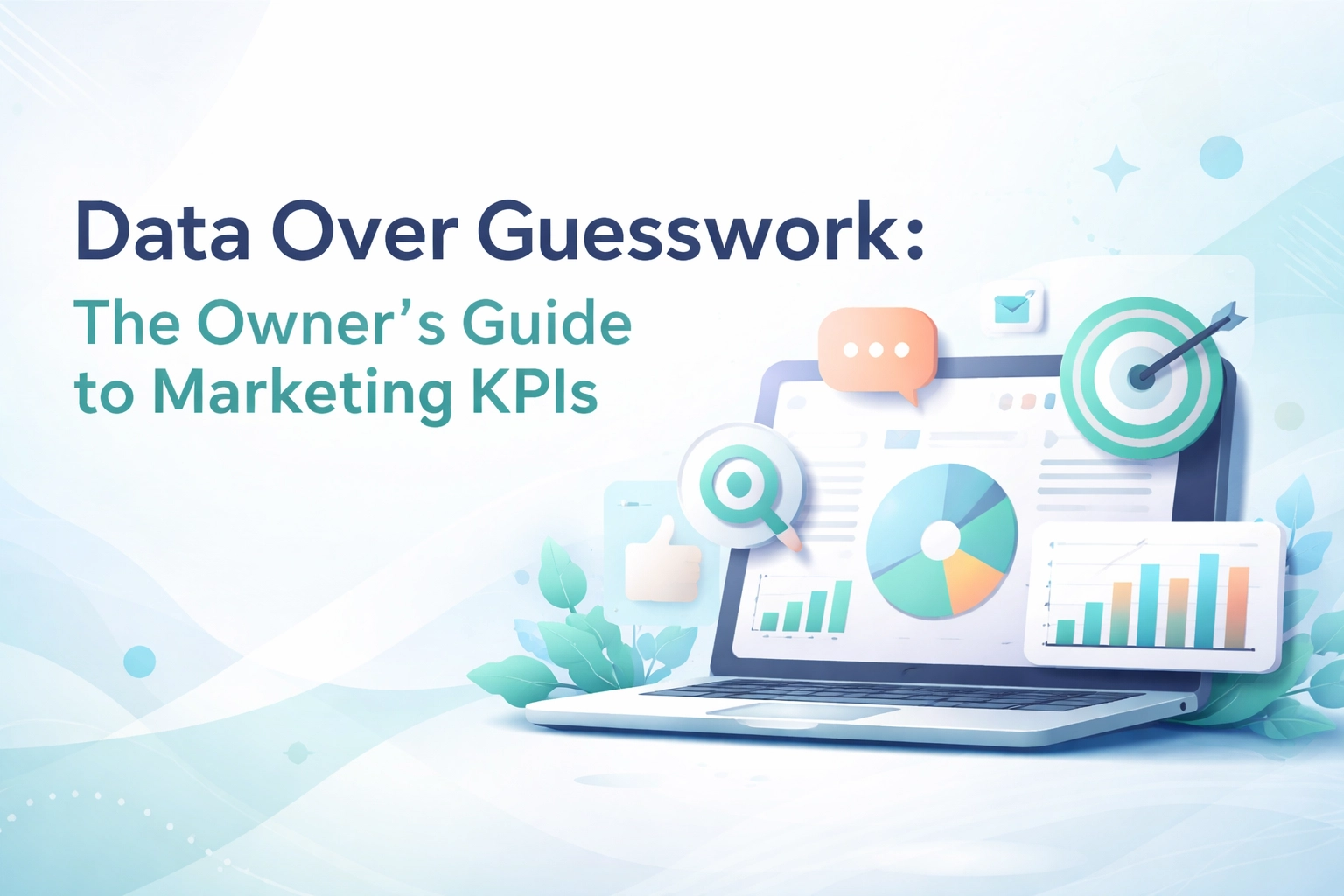
You've probably been there. Sitting in a meeting while someone rattles off impressive-sounding numbers: thousands of website visitors, hundreds of social media likes, a spike in "engagement." Sounds great on paper. But here's the uncomfortable question: did any of that actually put a patient in a bed?
If you're running a treatment center, you don't have the luxury of guessing whether your marketing dollars are working. Census fluctuations, rising acquisition costs, and razor-thin margins mean every decision needs to be backed by real data. Not vanity metrics. Not gut feelings. Actual, revenue-tied numbers that tell you what's moving the needle.
So let's break down the KPIs that actually matter for treatment center owners: and why flying blind is costing you more than you realize.
Why Vanity Metrics Are Killing Your Marketing Budget
Here's the thing about metrics like page views, social followers, and email open rates: they feel good. They're easy to report. But they don't pay your staff or keep beds full.
According to the Substance Abuse and Mental Health Services Administration (SAMHSA), the behavioral health industry continues to see rising demand: yet many facilities struggle with inconsistent admissions. Why? Because they're optimizing for the wrong things.
A Facebook post with 500 likes doesn't mean much if zero of those people called your admissions line. A blog that gets 10,000 views but generates no leads? That's not marketing success. That's expensive noise.
The real question isn't "how many people saw us?" It's "how many people converted: and at what cost?"

The KPIs That Actually Drive Revenue
Let's get specific. If you want to run your facility like a business (and you should), these are the metrics that deserve your attention every single week.
1. Cost Per Admission (CPA)
This is the big one. Your CPA tells you exactly how much you're spending in marketing dollars to get one patient through the door. It's calculated by dividing your total marketing spend by the number of admissions attributed to that spend.
Why does this matter? Because if you're paying $3,500 per admission but your average revenue per patient is $15,000, you're in decent shape. But if that CPA creeps up to $8,000 or $10,000? You've got a problem that no amount of "brand awareness" will fix.
2. Customer Lifetime Value (CLV)
Not every patient is equal from a revenue perspective. Some complete a 30-day program and leave. Others return for PHP, IOP, or refer family members. CLV captures the total revenue a patient generates over their entire relationship with your facility.
When you know your CLV, you can make smarter decisions about how much to invest in acquiring different types of patients. A higher CLV justifies a higher CPA: but only if you're tracking both.
3. LTV/CAC Ratio
This ratio compares your Customer Lifetime Value to your Customer Acquisition Cost. It's one of the clearest indicators of marketing efficiency.
| LTV/CAC Ratio | What It Means |
|---|---|
| Below 1:1 | You're losing money on every patient |
| 1:1 to 2:1 | Break-even territory: barely sustainable |
| 3:1 | Healthy and scalable |
| 5:1 or higher | Strong ROI, potential to reinvest aggressively |
Most treatment centers we work with at Ads Up Marketing aim for at least a 3:1 ratio before scaling campaigns.
4. Marketing-Sourced Revenue
What percentage of your total revenue came from marketing-generated leads? This metric forces accountability. If you're spending $50,000/month on digital marketing but only 15% of revenue traces back to those efforts, something's off.
Track this monthly. Compare it quarter over quarter. It's one of the clearest ways to prove (or disprove) marketing ROI.

Pipeline Metrics: Where Leads Go to Live or Die
Getting leads is only half the battle. What happens after someone fills out a form or calls your admissions line? That's where pipeline metrics come in.
Lead-to-Admission Conversion Rate
If 100 people inquire about treatment and only 8 become patients, your conversion rate is 8%. Industry benchmarks vary, but most successful facilities aim for 10-15% or higher.
A low conversion rate usually points to one of three problems:
- Lead quality issues (you're attracting the wrong audience)
- Admissions process friction (slow follow-up, poor phone handling)
- Misaligned messaging (what you promise doesn't match reality)
Speed to Lead
How fast does your team respond to inquiries? According to research from Lead Response Management, the odds of qualifying a lead drop by 400% after the first 10 minutes. In treatment, where people often reach out during crisis moments, speed isn't just nice: it's essential.
If your average response time is over 15 minutes, you're likely losing admits to competitors who answer faster.
Pipeline Velocity
This measures how quickly leads move through your funnel: from first contact to admission. Faster velocity means shorter sales cycles, more predictable revenue, and less wasted effort on leads that stall out.
Building a Data-Driven Culture (Without the Headache)
Look, I get it. You didn't open a treatment center to spend your days staring at dashboards. But here's the reality: the owners who succeed long-term are the ones who treat data like a compass, not an afterthought.
That doesn't mean you need to become a data scientist. It means you need:
- A clear set of KPIs (start with the 5-6 we covered above)
- Consistent tracking (weekly at minimum, daily if you can)
- Attribution tools that tie marketing spend to actual admissions
- A partner who speaks your language and can translate numbers into action
At Ads Up Marketing, we specialize in conversion tracking that actually works for treatment centers. No more guessing which campaign drove that admission last Tuesday. No more spreadsheets that don't talk to each other.

A Simple Framework for Owner-Level Reporting
Here's a quick snapshot of what a healthy owner dashboard might look like:
| Metric | Target | This Month | Status |
|---|---|---|---|
| Cost Per Admission | Under $4,000 | $3,200 | ✅ On Track |
| LTV/CAC Ratio | 3:1 or higher | 3.4:1 | ✅ On Track |
| Lead-to-Admission Rate | 12%+ | 9% | ⚠️ Needs Attention |
| Marketing-Sourced Revenue | 40%+ | 44% | ✅ On Track |
| Avg. Speed to Lead | Under 5 min | 8 min | ⚠️ Needs Attention |
Notice how this tells a story at a glance? CPA and revenue attribution look solid, but there's work to do on conversions and response time. That's actionable. That's what data should do for you.
Stop Guessing. Start Growing.
If your current marketing partner can't tell you exactly how many admissions came from paid search last month: or what your true cost per acquisition is: that's a red flag. You deserve clarity. You deserve a team that obsesses over the numbers that actually grow your business.
We've helped treatment centers across the country cut their CPA by 30-50% while increasing admit volume. Not through tricks or gimmicks, but through relentless focus on the metrics that matter.
Ready to see what data-driven marketing actually looks like? Give us a call at 305-539-7114 or reach out through our contact page. Let's talk about your numbers: and how to make them work harder for you.
Because in 2026, guesswork isn't a strategy. It's a liability.