You’re pouring money into Google Ads, watching those clicks roll in, and yet… your admissions numbers aren’t budging. Sound familiar? If you’re running a treatment center or healthcare facility, you’ve probably felt that gut-punch moment when you realize a huge chunk of your ad budget went to people who were never going to pick up the phone.
PPC advertising is an essential marketing strategy for drug rehab centers looking to connect with individuals seeking treatment. In the addiction treatment industry, PPC ads for rehab centers are primarily paid advertisements that appear in search engine results when a user enters a specific query related to addiction recovery.
This approach provides immediate visibility for drug rehab centers, allowing them to appear at the top of search engine results pages almost instantly. In such a competitive landscape, effective PPC management is crucial for standing out in search engine results and achieving stability in the addiction treatment industry.
Here’s the thing most PPC managers won’t tell you right away: what you exclude from your campaigns matters just as much as what you include.
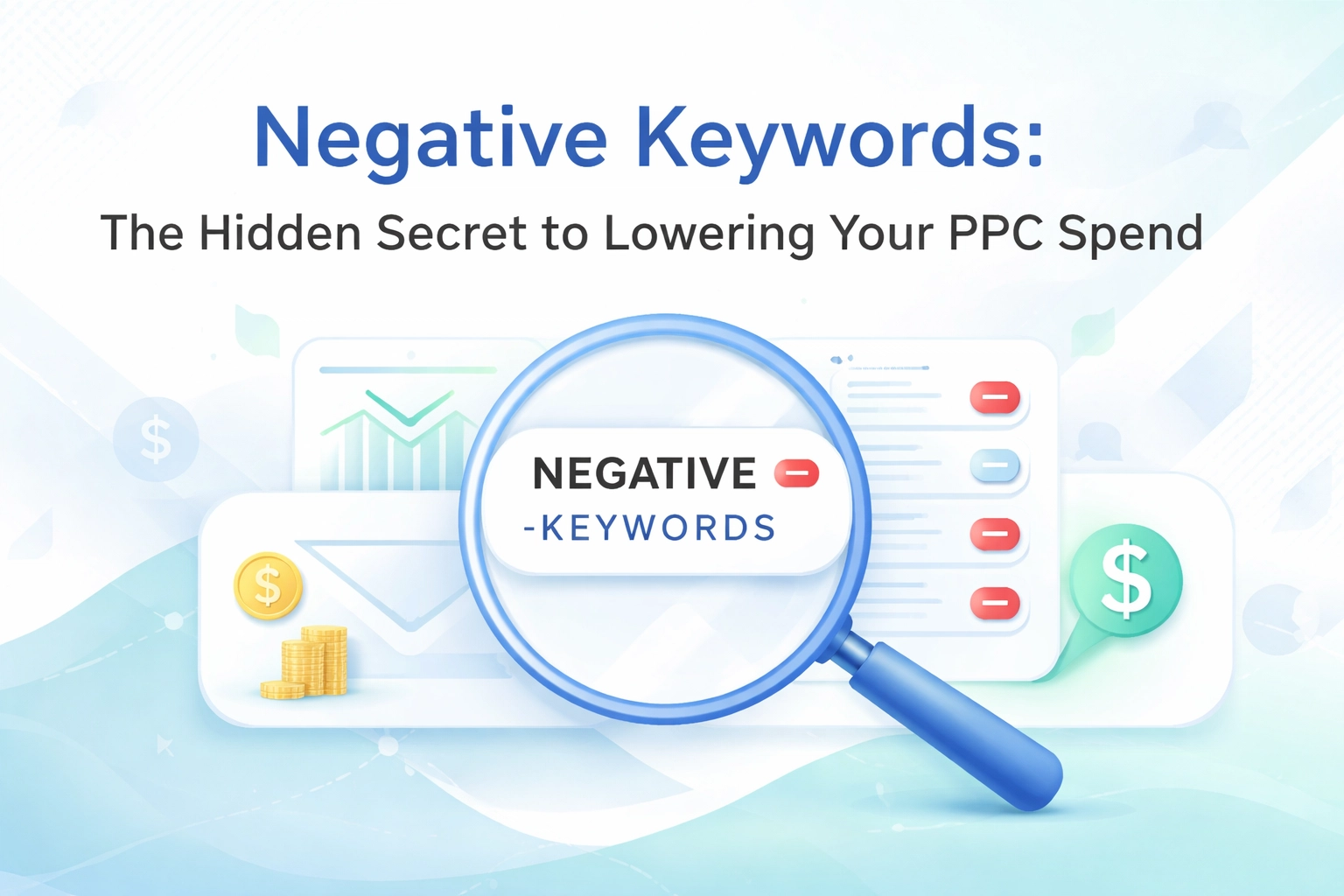
That’s where negative keywords come in. They’re not flashy. They don’t get the spotlight in marketing conversations. But they might just be the single most effective lever you can pull to slash wasted spend and boost your return on investment.
What Exactly Are Negative Keywords for Rehab PPC Campaigns?
Think of negative keywords as your campaign’s bouncer. While your regular keywords tell Google, “Hey, show my ad when someone searches for this,” negative keywords do the opposite; they say, “Whatever you do, don’t show my ad for this search.”
For example, let’s say you run a residential treatment center. You probably want to appear when someone searches “inpatient rehab near me.” But do you want to pay for clicks from people searching “free rehab programs” or “rehab jobs hiring”? Probably not.
Identifying negative keywords is crucial for improving ad relevance and ensuring your ads don’t appear in irrelevant searches, which helps negative keywords prevent ads from being shown to unqualified traffic.
By adding “free” and “jobs” as negative keywords, you’re telling Google to skip those searches entirely. No impression, no click, no wasted budget. Adding negative keywords helps avoid wasting ad spend and ensures your ads are shown to users who are genuinely interested in treatment.
Implementing negative keywords is essential to prevent wasted ad spend, improve ad relevance, and increase CTR while lowering CPA.

Why This Matters for Your Bottom Line
Here’s where it gets real. According to WordStream’s industry benchmarks, the average cost-per-click in the healthcare industry hovers around $2.62 on search. But for competitive niches like addiction treatment? You’re often looking at $15, $30, sometimes even $50+ per click.
Now imagine 30% of those clicks coming from irrelevant searches. That’s money walking straight out the door. Effective bidding strategies and monitoring ad performance for certain keywords are essential for maximizing ROI, as adjusting bids based on keyword effectiveness helps reduce wasted spend and improve campaign results.
Here’s a quick breakdown of how negative keywords can impact your campaign performance:
| Metric | Without Negative Keywords | With Strategic Negative Keywords |
|---|---|---|
| Click-Through Rate (CTR) | 2.1% | 3.8% |
| Irrelevant Clicks | ~35% | ~8% |
| Cost Per Acquisition (CPA) | $485 | $290 |
| Monthly Wasted Spend (on $10k budget) | $3,500 | $800 |
| Quality Score (avg.) | 5/10 | 7/10 |
These figures represent typical improvements we’ve seen working with treatment center clients at Ads Up Marketing.
A successful PPC strategy involves continuous monitoring and bid adjustments based on keyword effectiveness to ensure optimal results and compliance.
That jump in Quality Score alone can lower your cost-per-click, meaning your budget stretches further. It’s a compounding effect: better targeting leads to better engagement, which leads to lower costs, which means more admissions per dollar spent.
Using Google Analytics to track rehab PPC campaign performance, including impressions, clicks, and conversions, provides the detailed data needed for ongoing optimization and improved ROI.
The Searches That Are Quietly Draining Your Budget
You’d be surprised how many treatment centers are paying for clicks that have zero chance of converting. Some of the most common culprits include:
- “Free” searches – People looking for no-cost options typically aren’t your ideal client
- Job seekers – “Rehab counselor jobs” or “treatment center careers” aren’t admission inquiries
- DIY and informational queries – “How to detox at home” or “signs of addiction quiz” rarely convert
- Competitor brand names – Unless you’re running a conquest campaign intentionally
- Unrelated services – “Physical rehab” vs. “addiction rehab” is a costly mix-up
- Review or comparison searches – “Rehab center reviews” often signals research mode, not action
Every one of these search types can generate clicks. And every click costs you money. The solution isn’t to stop advertising: it’s to get surgical about who sees your ads.

Understanding Negative Keyword Match Types
Not all negative keywords work the same way. Google gives you three match types, and choosing the right one matters more than most people realize.
Negative Broad Match
This is the default. If you add “free” as a negative broad match keyword, your ad won’t show for any search that contains the word “free” in any order. So “free rehab programs,” “rehab programs free,” and “is rehab free” would all be blocked.
Negative Phrase Match
This requires the exact phrase to appear in order. Adding “free rehab” as a negative phrase match would block “free rehab near me” but not “rehab programs that are free.”
Negative Exact Match
This only blocks searches that match your keyword exactly. “Free rehab” as an exact match would only block that precise search: nothing else.
The trick is balancing coverage with precision. Go too broad, and you might accidentally block valuable searches. Go too narrow, and irrelevant clicks slip through anyway.
Building Your Treatment Center Negative Keyword List
Here’s a process that actually works:
- Start with your Search Terms Report and conduct keyword research – This shows you the actual queries triggering your ads. Use tools like Google’s Keyword Planner to uncover irrelevant terms that may be triggering your ads and add them as negatives.
- Use industry-specific knowledge – In healthcare and addiction treatment, certain terms almost never convert. Your marketing partner should know these inside and out.
- Check competitor data – What are other treatment centers excluding? There’s usually a reason.
- Review and refine weekly – This isn’t a set-it-and-forget-it task. New irrelevant searches pop up constantly.
- Organize by campaign or ad group – Some negatives apply universally; others only make sense for specific campaigns or ad groups. Creating a negative keyword list for each ad group ensures your ad groups avoid irrelevant traffic.
Regularly testing different variations of your ads and landing pages will help you discover which combinations work best.
The Substance Abuse and Mental Health Services Administration (SAMHSA) and organizations like the National Association of Addiction Treatment Providers (NAATP) emphasize ethical marketing in this space.
Proper keyword targeting isn’t just about ROI: it’s about reaching people who genuinely need help, not cluttering their search results with irrelevant ads.
Continuous conversion rate optimization (CRO) and analysis are crucial for the success of your Google Ads campaigns, allowing you to identify what’s working, maintain efficiency, and control costs.

Why Most Facility Owners Struggle With This
Let’s be honest. You’re running a treatment center, not a digital marketing agency. You’ve got admissions to manage, staff to coordinate, and compliance to maintain. Digging through search term reports and testing match types? That’s probably not where your energy needs to go.
And here’s the catch: negative keyword management isn’t a one-time project. It requires consistent attention and is a key part of effective PPC management. Well-organized campaign structure and ongoing optimization are essential to maximize ROI and reach the right audience. The facilities seeing the best PPC results are the ones with dedicated teams (or partners) watching their campaigns like hawks.
PPC advertising for rehab centers also operates under strict regulations, requiring compliance with platform policies and certification.
That’s exactly why we built our digital marketing services around the unique challenges treatment centers face. We’re not a generalist agency trying to apply e-commerce tactics to healthcare. We understand the nuances: the compliance requirements, the sensitive nature of the searches, the high-stakes conversion environment.
How We Can Help You Stop the Bleed
At Ads Up Marketing, we’ve managed millions in PPC spend specifically for addiction treatment and behavioral health facilities. Our expertise in addiction treatment marketing, drug rehab PPC, and working with drug rehab centers and addiction treatment facilities sets us apart. We’ve seen the patterns. We know which negative keywords protect your budget and which ones can accidentally tank your reach.
When you work with us, here’s what happens:
- Full campaign audit – We identify where your money is going and where it’s being wasted
- Custom negative keyword buildout – Tailored to your services, location, and competitive landscape
- Ongoing optimization – Weekly reviews to catch new irrelevant searches before they drain your budget
- Landing page optimization – We ensure optimized landing pages to reduce bounce rates, increase user engagement, and ultimately drive more admissions for your rehab center
- Transparent reporting – You’ll see exactly how your spend is performing
We leverage targeted advertising, pay-per-click advertising, and native channel campaigns to reach specific demographics, locations, and times of day, maximizing your campaign’s efficiency.
Our strategies include using the Google Display Network to reach users during their browsing sessions and integrating Google Analytics to track campaign performance and support continuous optimization.
We’ve helped facilities cut their cost-per-admission by 30-40% just by tightening up their negative keyword strategy. That’s money you can reinvest in better care, more staff, or expanded capacity.
PPC advertising also enhances brand recognition by placing your ads at the top of search results and allows drug rehab centers to quickly adapt their strategies based on performance data.
Curious what your campaigns might be missing? We’re happy to take a look. Give us a call at 305-539-7114 and let’s talk about where your PPC budget is really going.
The Role of Conversion Rates in Rehab PPC
When it comes to addiction treatment centers running PPC campaigns, conversion rates are the metric that truly tells you if your efforts are paying off. It’s not enough to simply drive traffic to your website: what matters is how many of those visitors actually take the next step, whether that’s filling out a contact form, making a phone call, or scheduling an assessment.
A successful PPC campaign for rehab centers is measured by its ability to turn clicks into qualified leads and, ultimately, admissions.
In the world of rehab PPC, every click is an investment. High conversion rates mean your PPC ads and landing pages are resonating with potential clients who are actively seeking addiction treatment. This is why optimizing your landing pages for clarity, speed, and ease of use is just as important as targeting the right keywords.
When your landing pages are tailored to the needs of those searching for addiction treatment services, you’re far more likely to see those visitors convert into real inquiries.
Tracking conversion rates allows treatment centers to identify which parts of their rehab PPC campaigns are working and which need improvement.
By focusing on boosting conversion rates, you ensure that your ad spend is going toward attracting and engaging the people most likely to benefit from your services. In short, prioritizing conversion rates is the key to running efficient, effective, and profitable PPC campaigns in the addiction treatment space.
The Power of Negative Keywords to Enhance Rehab PPC Campaigns
Negative keywords aren’t sexy. They don’t make for exciting marketing conversations. But they’re one of the most powerful tools you have for protecting your ad spend and improving your ROI.
A successful PPC strategy for rehab centers requires precise targeting, ethical considerations, and effective management to ensure your campaigns succeed and remain visible in search results. Every dollar you save on irrelevant clicks is a dollar you can put toward reaching someone who actually needs your help. And in this industry, that’s what it’s all about.
Crafting effective ad copy is essential for improving ad relevance and campaign performance, helping your ads connect with the right audience and boosting your Quality Score.
Stop letting bad searches eat into your budget. Whether you tackle this yourself or bring in a team that specializes in treatment center marketing, the important thing is to take action.
Ready to see what strategic negative keyword management can do for your facility? Call us today at 305-539-7114 or reach out through our contact page. We’ll show you exactly where the leaks are: and how to plug them.