
INSIGHTS
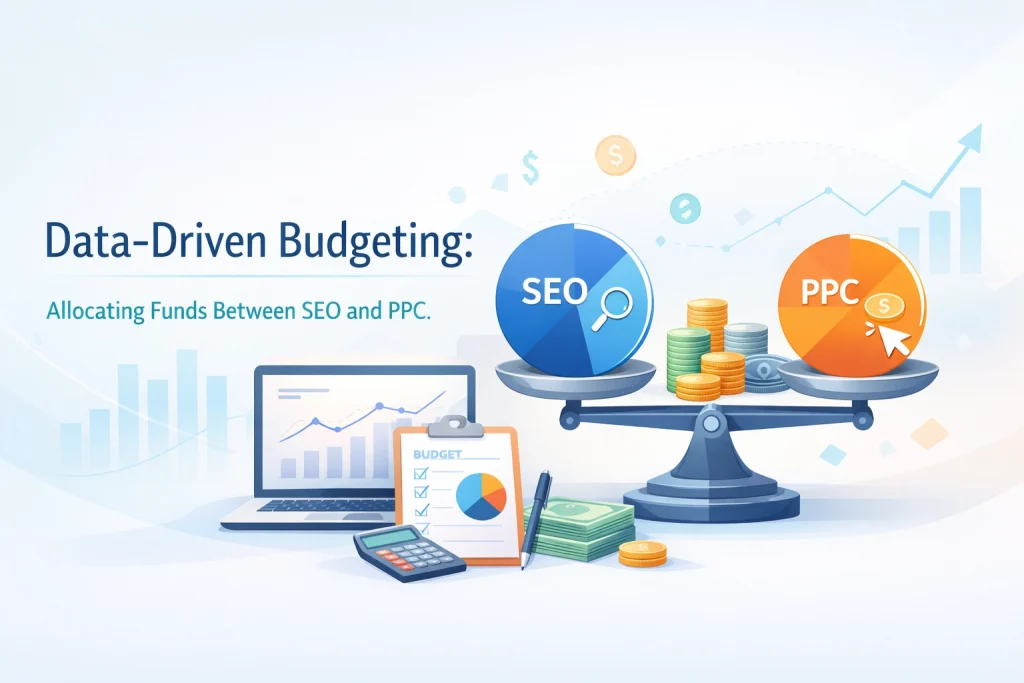
Data-Driven Budgeting: Allocating Funds Between SEO and PPC
You’re sitting in your office, looking at the monthly marketing spend, and that familiar tightening starts in your chest. You’ve just cut a check for thirty grand to Google Ads, and while the phone is ringing, you can’t help but wonder: Is this sustainable? On the other hand, you’ve been paying an SEO agency for six months, and while they send you reports about "keyword rankings" and "organic impressions," the immediate impact on your bed count feels like a whisper in a thunderstorm.
If you’ve ever felt like you’re throwing money into a digital black hole, you aren’t alone. In the high-stakes world of behavioral health and addiction treatment, the cost of a single admission can be astronomical. When you're managing a facility, guessing isn't a strategy: it's a liability.
To maximize your rehab center budget allocation 2026, you need to stop viewing SEO and PPC as competing entities. Instead, think of them as two different financial instruments in your investment portfolio. One is a high-yield, short-term bond; the other is a compounding index fund.
In this guide, we’re going to strip away the "marketing speak" and look at the hard data. How do you actually decide where your next dollar goes for the maximum ROI?
Table of Contents
- The Great Tug-of-War: PPC vs. SEO
- Budgeting by Business Stage: When to Pivot
- The Performance Impact: A Data Comparison
- Identifying Channel Misalignment
- The "Portfolio" Approach to Healthcare Marketing
- Why Your VOB Process is Part of Your Marketing Budget
- Actionable Next Steps
The Great Tug-of-War: PPC vs. SEO
Let’s be direct: PPC (Pay-Per-Click) is the faucet. You turn it on, and the leads flow immediately. You turn it off, and the leads stop. It’s perfect for filling beds now, but it’s expensive, and in the rehab space, the competition is brutal.
SEO (Search Engine Optimization) is the well. You have to dig for a long time before you hit water. But once you do, the water is essentially free, and the well provides for years.
According to SAMHSA, the demand for mental health and substance use services continues to rise, but so does the cost of reaching those in need. If you rely solely on PPC, your cost per admission (CPA) will eventually eat your margins alive. If you rely solely on SEO, you might go out of business before your website ever hits page one.

Budgeting by Business Stage: When to Pivot
Data shows that the "perfect" split doesn't exist. It evolves. If you are a 20-bed detox center that just opened its doors in West Palm Beach, your allocation should look very different from a 100-bed established facility with a decade of history.
The New Facility (Year 1)
Recommended Split: 70% PPC / 30% SEO
At this stage, cash flow is king. You need admissions to keep the lights on and pay your clinical staff. PPC provides the immediate visibility needed to reach patients in a 3 AM crisis. During this time, your SEO budget is an investment in your future self, building the foundation of your website's trust and visuals.
The Growth Phase (Years 2-3)
Recommended Split: 50% PPC / 50% SEO
As your organic rankings begin to climb, you’ll notice your blended CPA starts to drop. This is the "sweet spot." You are still using PPC to target high-intent keywords, but your organic content is starting to capture "top of funnel" researchers: family members looking for information on "signs of opioid abuse" or "how to talk to a son about rehab."
The Mature Authority (Year 4+)
Recommended Split: 30% PPC / 70% SEO
Established facilities should dominate organic search. At this stage, PPC becomes a tactical weapon. You use it for negative keyword strategies to filter out low-quality leads and focus your spend only on the most profitable, high-acuity cases.
The Performance Impact: A Data Comparison
To make a data-driven decision, you have to look at the numbers. The following table illustrates how a typical mid-sized behavioral health facility might see the ROI shift between these two channels over a 12-month period.
Performance Impact: PPC vs. SEO (12-Month Outlook)
| Metric | PPC (Paid Search) | SEO (Organic Search) |
|---|---|---|
| Time to First Lead | 24 – 48 Hours | 3 – 6 Months |
| Average CPL (Lead) | $150 – $400 | $40 – $120 |
| Sustainability | Low (Stop paying, stop appearing) | High (Lasts years) |
| Trust Factor | Moderate (It's an "Ad") | High (Google "vouched" for you) |
| Scalability | Instant (Just add budget) | Slow (Requires content/time) |
| Targeting Precision | Extreme (Specific zip codes/hours) | Broad (Topic-based) |
Data inspired by industry benchmarks from NAATP and Ads Up Marketing internal case studies.
Identifying Channel Misalignment
I’ve seen dozens of facility owners spend $50,000 a month on PPC while their website has a 90% bounce rate because it looks like it was built in 2005. That is a data misalignment.
If your PPC is delivering a 5% conversion rate but your organic traffic is converting at 0.5%, you don't necessarily have an "SEO problem": you likely have a content problem. Your organic visitors might be looking for educational resources, but you're giving them a "Call Now" hard sell.
Are you tracking the full journey? Using tools to track the full patient journey to ROI is the only way to see if your SEO efforts are actually supporting your PPC conversions (and vice versa). Often, a patient will click a PPC ad, leave, research your facility via organic search, and then call. If you aren't tracking that, you might mistakenly cut the "underperforming" SEO budget and see your PPC effectiveness tank.

The "Portfolio" Approach to Healthcare Marketing
Think of your marketing budget like a retirement account.
- PPC is your "Day Trading": It requires constant attention, tweaking, and quick reactions. It’s high-risk/high-reward.
- SEO is your "S&P 500": It’s boring, it takes time, but over 10 years, it’s how wealth (and brand dominance) is built.
In 2026, the facilities that win aren't the ones with the biggest budgets; they’re the ones with the smartest data. They know that LegitScript compliance makes PPC harder, so they use SEO to build a "moat" around their business that competitors can't simply buy their way over.
Why Your VOB Process is Part of Your Marketing Budget
Here is a hard truth: You can have the best SEO and PPC split in the world, but if your intake team is dropping the ball, you're lighting money on fire.
We often see owners complain about lead quality when the real issue is the VOB (Verification of Benefits) bottleneck. If a lead comes in through a $300 PPC click and your team takes four hours to verify their insurance, that patient is already calling the next facility.
Data-driven budgeting means looking at the Cost Per Admission (CPA), not just the Cost Per Lead (CPL). If your SEO leads take longer to close but have a higher lifetime value, they deserve a larger slice of the budget pie. If you're struggling to understand which number truly matters, check out our breakdown on CPA vs. CPL.
The "Owners Guide" to Marketing KPIs
If you are the owner or CFO, you don't need to know what a "meta description" is. You need to know:
- CAC (Customer Acquisition Cost): What did it cost to get one person in a bed?
- ROAS (Return on Ad Spend): For every $1 into Google Ads, how much revenue came back?
- Organic Share of Voice: Are you winning the "free" traffic in your local market?
For a deeper dive into these metrics, read our Data Over Guesswork guide.
Actionable Next Steps: How to Reallocate Today
So, what's the connection between your current spreadsheet and a full facility? It starts with a data audit.
- Audit your current CPA by channel. Stop looking at "total leads." Break it down: How many admissions came from the organic "Contact Us" form vs. the PPC landing page?
- Assess your facility's maturity. If you are at 90% capacity, now is the time to lean hard into SEO. If you are at 40% capacity, you need to crank the PPC faucet, even if it hurts the margins temporarily.
- Check your intake performance. Use advanced intake techniques to ensure that the expensive traffic you're buying isn't being wasted on a poorly handled phone call.
- Don't do it alone. The landscape of AI in rehab marketing and shifting Google algorithms is too complex to manage while also trying to provide world-class clinical care.
At Ads Up Marketing, we specialize in helping healthcare facilities find that perfect "Goldilocks" zone of budget allocation. We don't just give you a "70/30" template; we look at your specific market, your specific facility size, and your specific financial goals to build a strategy that actually works.
Stop guessing with your marketing dollars. Let’s look at the data together and build a plan that keeps your beds full and your CPA low.
Ready to maximize your ROI? Call Ads Up Marketing today at 305-539-7114 to schedule a data-driven strategy session.
Whether you're hitting the 50-bed milestone or just starting out, we have the tools to help you scale ethically and profitably. Let's get to work.