INSIGHTS
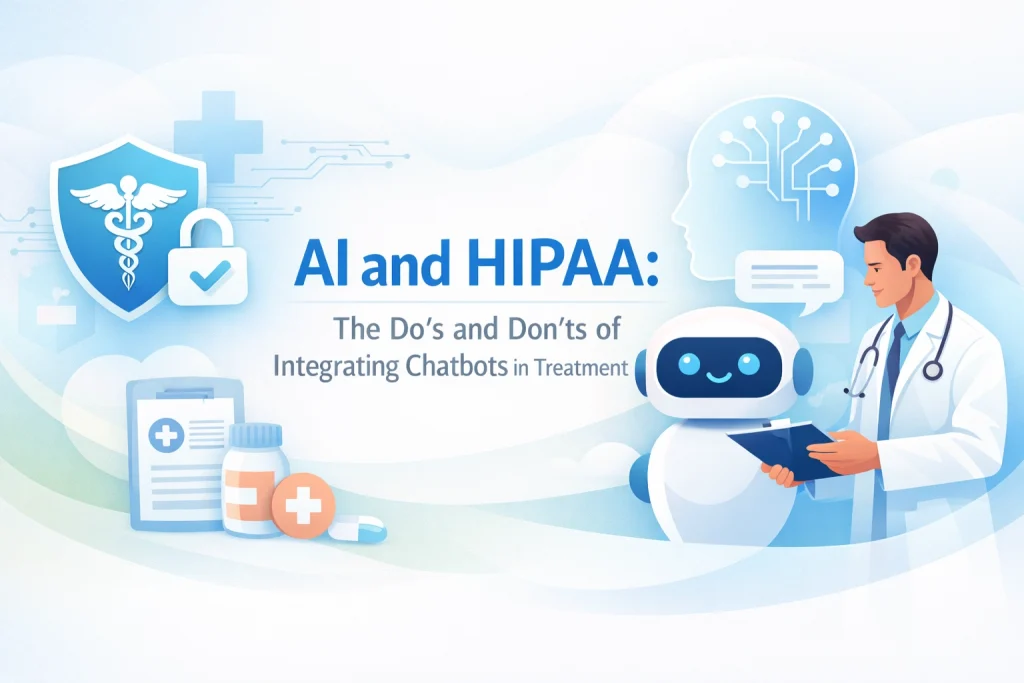
AI and HIPAA: The Do’s and Don’ts of Integrating Chatbots in Treatment
Imagine it’s 3:00 AM. A potential patient is scrolling through your website, desperate for help but too anxious to pick up the phone. They see a chat bubble. They start typing out their deepest struggles, their current substance use, and their insurance details.
As a facility owner, you see an opportunity for a life-saved and a boost to your census. But if that chatbot isn’t configured correctly, you aren’t just looking at a lead: you’re looking at a massive HIPAA violation that could sink your facility before the sun even comes up.
In the race for rehab owner profitability 2026, AI is the ultimate fuel. It handles the anatomy of a 3-AM crisis call without waking up your staff. But there’s a thin line between "cutting-edge efficiency" and "legal nightmare."
So, how do you use AI chatbots in a treatment setting without the Department of Health and Human Services (HHS) knocking on your door? Let’s break down the non-negotiable do's and don'ts of integrating AI while keeping your patient data: and your license: safe.
The High Stakes of AI in Behavioral Health
We’ve all seen the headlines. AI is changing everything from how we track the patient journey to how we optimize PPC spend. But in healthcare, the "move fast and break things" mentality is a recipe for disaster.
The Office for Civil Rights (OCR) doesn't care if your chatbot was "just trying to be helpful." If Protected Health Information (PHI) is transmitted, stored, or processed by an AI tool that hasn't been properly vetted, you are liable. According to HHS.gov, HIPAA fines can reach tens of thousands of dollars per violation. For a mid-sized facility, a single data leak from an unsecured chatbot could wipe out an entire year’s profit.

DO: Demand a Business Associate Agreement (BAA)
This is the "Golden Rule" of healthcare tech. If a vendor won't sign a BAA, you cannot use their AI for anything involving patient data. Period.
A BAA is a legally binding contract that ensures the service provider assumes responsibility for protecting PHI according to HIPAA standards. Many popular AI tools: like the free version of ChatGPT or generic website plugins: will not sign a BAA.
When you work with us at Ads Up Marketing, we emphasize understanding patient privacy in your digital marketing strategy. You need a partner who knows that "enterprise-grade" isn't just a buzzword; it’s a requirement for survival.
DON’T: Use Consumer-Grade AI for Intake
It’s tempting to grab a cheap $20-a-month AI tool to handle your website queries. But those tools often "learn" from the data they receive. If a patient types their medical history into a non-compliant chatbot, that data could technically be used to train the AI's next iteration.
That is a massive breach of privacy. Always ensure your AI deployment uses "Zero Data Retention" policies. This means the AI model provider (like OpenAI or Anthropic) doesn’t keep the data to train their models.
Performance Impact: Compliant AI vs. Generic Chatbots
| Feature | HIPAA-Compliant AI | Standard Consumer AI | Impact on ROI |
|---|---|---|---|
| Data Encryption | End-to-end (AES-256) | Variable/Unsecured | High: Prevents costly data breaches |
| BAA Availability | Mandatory | Usually No | Essential for legal operation |
| Data Training | Private/No retention | Used for model training | High: Protects proprietary patient info |
| Audit Logs | Comprehensive tracking | Minimal to none | Critical for HIPAA audits |
| Source Attribution | Cites clinical sources | Prone to "hallucinations" | Medium: Reduces medical liability |
DO: Prioritize Source-Attributed Responses
One of the biggest risks with AI is "hallucination": when the AI confidently makes up a fact. In a treatment setting, if an AI gives the wrong advice about detox or withdrawal symptoms, the consequences could be fatal.
Your chatbot should be restricted to a specific knowledge base (like your facility’s protocols and SAMHSA guidelines). It should cite its sources. If a patient asks about your VOB process, the AI should pull directly from your specific VOB bottleneck solutions rather than guessing.
DON’T: Forget the Human Element
AI is a tool for engagement, not a replacement for clinical care. It’s great for answering "Do you take Blue Cross Blue Shield?" or "Where are you located?" but it should never attempt to diagnose or provide therapy.
The best use of AI in 2026 is to act as a bridge. It keeps the lead warm, gathers the necessary data, and then triggers a "hand-off" to your admissions team. This is where professionalism as a sales tool comes into play. The AI creates the first impression, but your team closes the gap with empathy.

DO: Use Compliance as a Competitive Advantage
Believe it or not, being "the compliant guy" is actually good for business. In an industry plagued by the bounty trap and unethical lead management, being transparent about how you protect patient data builds immediate trust.
When a family is looking for a rehab center, they are in a state of high vulnerability. Showing them that you take their privacy seriously through clear disclosures and secure technology reduces pre-admission anxiety. It says, "We are professionals. You are safe here."
Navigating the "New Frontier" of 2026
The landscape of harm reduction and legal frameworks is shifting. State laws are becoming even more stringent than federal HIPAA guidelines in some cases.
If you’re scaling: perhaps hitting that 50-bed milestone: your manual processes won't hold up. You need systems. But those systems must be built on a foundation of transparency and clear disclosures.
Why Verification Matters
Don’t just take a vendor’s word for it. Look for:
- SOC 2 Type II Certification: This proves they have independent audits of their security controls.
- HITRUST: The gold standard for healthcare security.
- Annual Penetration Testing: Specifically for their AI components.
How Ads Up Marketing Protects Your Bottom Line
Integrating AI isn't just about the tech; it's about the strategy. You want to lower your cost per admission while maintaining the highest ethical standards.
We see too many facility owners get lured in by "cheap" AI solutions that end up costing them their reputation. At Ads Up Marketing, we specialize in navigating AI in rehab marketing. We don't just help you get more clicks; we help you build a sustainable, compliant, and highly profitable brand.
Is your current website setup a ticking time bomb? Or are you ready to leverage AI to dominate your market safely?
Don't leave your compliance to chance. Let's talk about how to integrate HIPAA-compliant AI into your intake process the right way.
Call us today at 305-539-7114 to schedule a compliance and marketing audit.

Key Takeaways for Facility Owners
- Audit your current tools: If you have a chatbot, check right now if you have a signed BAA on file.
- Educate your team: Ensure your intake staff knows how AI-generated leads are handled and where that data is stored.
- Monitor your ROI: Use data over guesswork to see if your AI is actually converting or just creating a security risk.
- Verify your VOB: Ensure your AI isn't leaking sensitive insurance data through unencrypted channels.
The future of treatment is digital, but the foundation must remain human and secure. By following these do's and don'ts, you aren't just staying out of legal trouble: you're building a brand that patients and their families can trust with their lives.
Ready to scale your facility with the right balance of tech and trust? Contact Ads Up Marketing at 305-539-7114.