
INSIGHTS
Training Your Team for the ‘Crisis Call’: How to De-escalate and Deliver Help
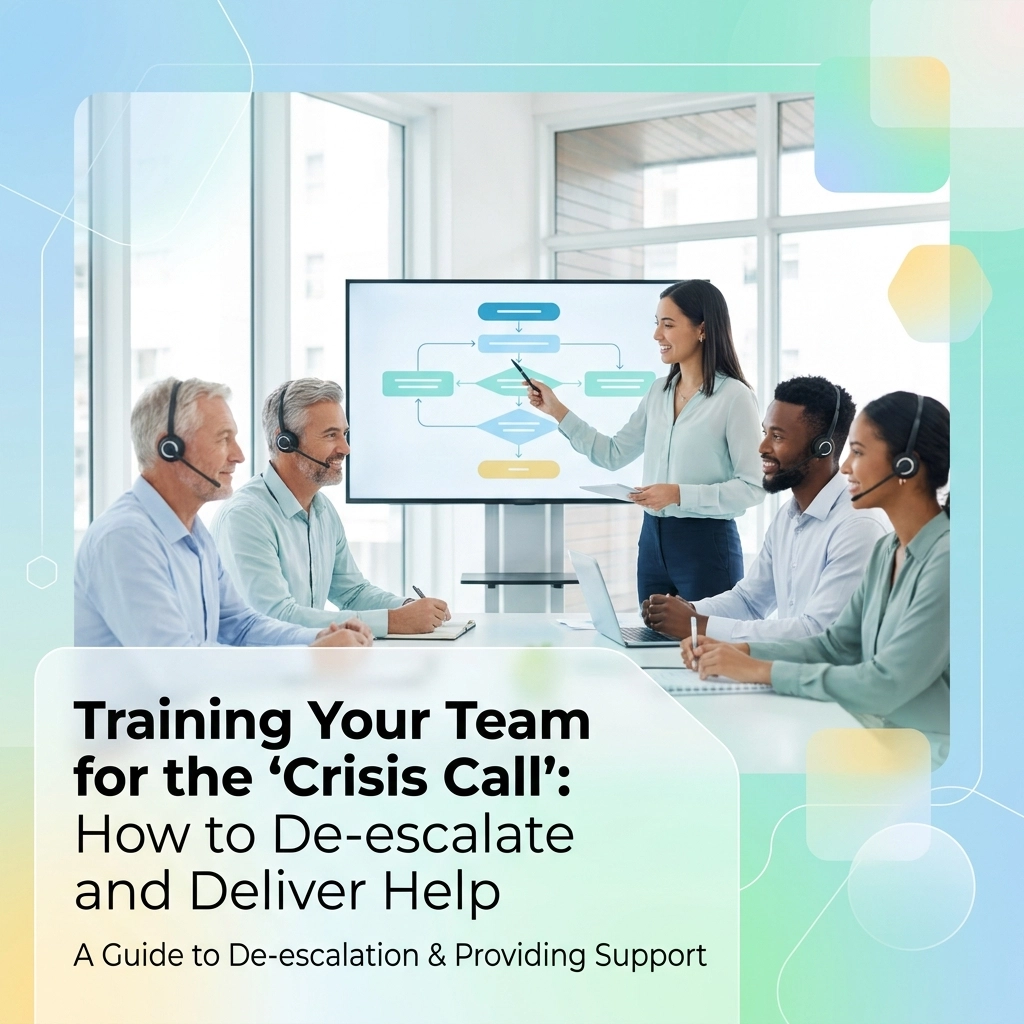

When a true crisis call hits your lines, it doesn’t feel like “customer service.” It feels like time compressing.
Someone is scared. A spouse is angry. A parent is frantic. A patient is embarrassed, shaking, or done pretending they’re fine. And your intake team has to do three things at once:
- Lower the temperature (de-escalate)
- Protect the caller (and your team)
- Move the call toward real help, fast, ethically, and compliantly
If you’re a facility owner or operator, the uncomfortable truth is this: your marketing can be excellent… and your admissions can still stall if your call center can’t handle urgency with calm structure.
So let’s talk about how to train your team for the crisis call, what to say, what not to say, how to practice, and how to measure performance without turning humans into robots.
Table of Contents
- What counts as a “crisis call” in behavioral health intake?
- The psychology of escalation: why callers “flip” fast
- The de-escalation framework we teach: HEARD + safety checkpoints
- Talk tracks that work (and phrases that backfire)
- Training design: how to build skills, not just “knowledge”
- Compliance, privacy, and “do we need to call 911?”
- Performance Impact: what better crisis handling does to revenue (and burnout)
- How Ads Up Marketing helps you turn urgency into admissions (the right way)
- FAQ: Crisis call de-escalation training for intake teams
What counts as a “crisis call” in behavioral health intake?
A crisis call isn’t only suicidality or overdose (though those absolutely happen). In most call centers supporting treatment, “crisis” usually looks like high emotion + high stakes + low patience.
Common examples:
- “He’s drunk again and I’m done, tell me where to take him.”
- “If you can’t take my insurance, don’t waste my time.”
- “I can’t do this anymore. I’m scared I’ll relapse tonight.”
- “Don’t call me back. I shouldn’t have called.”
- “My daughter is 19, she’s missing, and I found pills, what do I do?”
If your team treats those like standard intake calls, callers feel it immediately. And then the call spirals.
If you want a deeper tactical breakdown of late-night urgency calls, pair this with:
https://adsupmarketing.com/the-anatomy-of-a-3-am-crisis-call-advanced-intake-techniques
The psychology of escalation: why callers “flip” fast
You can’t coach de-escalation without explaining what’s happening in the brain.
In crisis states, people often shift into fight/flight/freeze. That’s not “being difficult.” That’s nervous system overload. Expect:
- Short attention span (they won’t track long explanations)
- Threat scanning (they assume you’ll judge, sell, or dismiss)
- Black-and-white thinking (“Either you help now or you don’t care”)
- Control-seeking (interrupting, demanding, testing boundaries)
This is why “calm down” fails. It reads as “your feelings are the problem.” And your caller doubles down.
If your intake team is serving substance use and mental health audiences, a trauma-informed approach matters. SAMHSA’s trauma guidance is a solid baseline reference:
https://www.samhsa.gov/trauma-violence
And for addiction science context (helpful for coaching empathy without enabling), NIDA is credible and practical:
https://nida.nih.gov/
The de-escalation framework we teach: HEARD + safety checkpoints
A simple structure makes your team consistent under pressure. One reliable option is HEARD:
- H , Hear: let them get it out (without interrupting every 5 seconds)
- E , Empathize: reflect the feeling and stakes
- A , Apologize: for the situation without admitting wrongdoing
- R , Resolve: move to the next best step, now
- D , Diagnose: after the call, find root causes and process fixes
But this still doesn’t drill down on the part owners care about: how do we prevent risk while staying conversion-focused?
Add two safety checkpoints your team memorizes:
- Safety screen (Is anyone in immediate danger right now?)
- Capacity screen (Can I ethically keep this call, or do I need a warm transfer / emergency escalation?)
What “Safety screen” sounds like
- “Before we go further, I want to make sure you’re safe. Are you or someone else in immediate danger right now?”
- “Do you have a plan to harm yourself or anyone else today?”
Train your team to ask calmly and directly, no whispering, no panic, no awkward avoidance.
For crisis pathways and what to do in emergencies, 988 is the U.S. Suicide & Crisis Lifeline. Train your team to know it cold: https://988lifeline.org/
Talk tracks that work (and phrases that backfire)
De-escalation is mostly tone + pacing + wording. Here are practical scripts you can workshop in roleplay.
1) When the caller is angry and accusatory
Works:
- “You’re not wrong to be frustrated. Let’s take this one step at a time and get you a clear answer.”
- “I can hear how urgent this is. I’m here with you, let’s figure out the fastest safe option.”
Backfires:
- “That’s our policy.”
- “You need to calm down.”
- “I already told you…”
2) When the caller is ashamed or shutting down
Works:
- “I know it can take a lot just to make this call. You did the right thing reaching out.”
- “You’re not in trouble. My job is to help you find the next step.”
Backfires:
- “Why would you do that?”
- “How long has this been going on?” (too early; feels interrogative)
3) When they demand guarantees (“You’ll take my insurance, right?”)
Works:
- “Here’s what I can do right now: I can verify benefits and tell you exactly what to expect before you commit to anything.”
- “Let’s get you clarity, what insurance do you have, and are you the policyholder?”
Then connect to operational reality. If your verification process is slow, that’s not a caller problem, it’s a conversion bottleneck. This post lays it out well:
https://adsupmarketing.com/why-your-vob-process-is-your-biggest-marketing-bottleneck
4) When the caller is manic, rambling, or disorganized
Works:
- “I’m going to slow us down for a second so I don’t miss anything important.”
- “I’m going to ask one question at a time. Is that okay?”
Backfires:
- “You’re not making sense.”
- Overloading with 8 questions in a row
Training design: how to build skills, not just “knowledge”
Most call centers “train” by dumping information, handing out scripts, and hoping for the best.
Crisis-call readiness is different. You’re training state management (staying regulated) and micro-skills (reflecting emotion, asking safety questions, controlling pace).
Here’s a structure that actually sticks.
Step 1: Build a one-page “Crisis Call Playcard”
Keep it simple, visible, and consistent:
- Opening lines for urgency
- Safety screen questions
- De-escalation reminders (tone, pace, silence)
- Transfer rules
- Documentation checklist
Step 2: Roleplay like you mean it (10 minutes/day)
If you only do monthly training, people forget. Do micro-drills:
- 2 minutes: scenario setup
- 5 minutes: call simulation
- 3 minutes: feedback (1 strength, 1 fix)
Rotate scenarios:
- angry spouse
- scared patient
- intoxicated caller
- insurance conflict
- “I’m suicidal but I don’t want to go to a hospital”
Step 3: Score calls on behaviors, not vibes
Instead of “good call/bad call,” score these:
- Did they name the emotion?
- Did they ask the safety screen when indicated?
- Did they avoid arguing?
- Did they present a clear next step?
- Did they document and escalate correctly?
Step 4: Coach the nervous system (seriously)
A regulated rep can regulate a caller.
Teach small resets:
- feet on floor + exhale before answering
- lower voice volume by 10%
- short phrases, longer pauses
- “I’m here with you” language
And yes, this reduces staff turnover. Burnout often comes from feeling powerless during chaotic calls.
Compliance, privacy, and “do we need to call 911?”
Crisis calls collide with compliance. Your team needs clean rules so they don’t freeze, or overshare.
Key reminders to build into training:
- HIPAA still matters when you’re collecting PHI. Keep disclosures minimal and purposeful.
- Avoid discussing specifics with third parties without proper authorization (with limited safety exceptions, your legal/compliance team should define these).
- If someone is in imminent danger, your team should follow a documented escalation policy (which may include contacting emergency services depending on your procedures and jurisdiction).
If you want a plain-English refresher on HIPAA in a marketing + intake context:
https://adsupmarketing.com/understanding-patient-privacy-hipaa-in-your-digital-marketing-strategy
And if your leadership team is exploring AI tools for call notes, QA, or routing, you need to think compliance-first:
https://adsupmarketing.com/the-new-frontier-of-compliance-navigating-ai-in-rehab-marketing
For industry ethics standards (especially relevant for lead handling and call flows), NAATP is a strong authority:
https://www.naatp.org/
Performance Impact: what better crisis handling does to revenue (and burnout)
If you’re an owner/CFO, you don’t want “soft skills.” You want numbers. Fair.
Here’s a practical way to think about it: crisis-call competence increases qualified admissions and reduces leakage (hang-ups, angry transfers, no-shows) while protecting your brand.
Performance Impact comparison table
| Metric | Before (Untrained/Ad-hoc) | After (Trained + QA + Process) | Why it changes |
|---|---|---|---|
| Crisis call abandon rate | Higher | Lower | Callers feel contained quickly; fewer hang-ups |
| Transfer success rate | Inconsistent | More consistent | Warm transfers + clear rules reduce drop-offs |
| Time-to-next-step (VOB, assessment, bed check) | Slow | Faster | Reps know the pathway; fewer “let me ask” loops |
| Qualified admission rate from high-urgency calls | Lower | Higher | De-escalation creates trust; caller stays engaged |
| Staff burnout/attrition risk | Higher | Lower | Less emotional whiplash; clearer boundaries |
If you’re measuring marketing ROI, don’t ignore the intake layer. A “cheap CPL” means nothing if the call collapses. We’ve covered that from the business angle here:
https://adsupmarketing.com/cost-per-admission-vs-cost-per-lead-which-number-truly-matters
and for full-funnel attribution thinking:
https://adsupmarketing.com/beyond-the-click-tracking-the-full-patient-journey-to-roi
So what’s the connection? De-escalation is a revenue protection system. It keeps your highest-intent moments from turning into brand damage.
How Ads Up Marketing helps you turn urgency into admissions (the right way)
A lot of agencies stop at “more leads.” That’s not enough in healthcare, and it’s definitely not enough in addiction/behavioral health.
At Ads Up Marketing, we look at the full chain: click → call → conversation → compliance → admission.
Here’s how we typically help when crisis calls are part of your reality:
-
Call-center-first messaging: marketing that sets expectations and reduces pre-admission anxiety (this matters more than most teams admit)
https://adsupmarketing.com/behind-the-scenes-why-showing-your-medical-team-reduces-pre-admission-anxiety -
Intake-focused landing page and design improvements (trust signals, clarity, fewer “what happens next?” gaps). If you’re curious how visuals shape trust fast:
https://adsupmarketing.com/the-psychology-of-first-impressions-how-your-websites-visuals-dictate-trust -
PPC + SEO that match urgency (high-intent terms, call extensions, negative keywords to reduce junk calls):
https://adsupmarketing.com/negative-keywords-the-hidden-secret-to-lowering-your-ppc-spend -
Ethical lead handling (no bounty-trap behavior, no sketchy routing, no brand risk):
https://adsupmarketing.com/the-ethics-of-lead-management-avoiding-the-bounty-trap
If you want us to review your crisis-call flow, scripts, routing, tracking, and where callers drop, call 305-539-7114. We’ll tell you straight what’s working, what’s leaking, and what to fix first.
Mid-call-center reality check: if your phones are lighting up but admissions aren’t moving, you don’t need “more traffic.” You need a cleaner system.
A simple “Crisis Call” coaching checklist you can implement this week
Use this in your next QA session:
- Opening control: Did the rep slow the call down within the first 30 seconds?
- Emotion reflection: Did they accurately label the feeling (“scared,” “overwhelmed,” “angry”)?
- No power struggle: Did they avoid arguing, correcting, or defending?
- Safety screen: Did they ask when the call signaled risk?
- Next step: Did they offer one clear path (not five options)?
- Warm transfer: If transferring, did they stay on the line and bridge?
- Documentation: Did they record key facts without unnecessary PHI?
- Close: Did they confirm next action + timeframe?

FAQ: Crisis call de-escalation training for intake teams
What is crisis call de-escalation training?
It’s training that prepares your team to handle high-emotion, high-stakes calls using structured verbal techniques (active listening, empathy, clear limits) while following safety and compliance rules.
What’s the fastest way to improve crisis-call outcomes?
Daily micro-roleplays + a one-page playcard. Not a 90-minute lecture once a quarter.
How do you keep de-escalation from turning into “therapy on the phone”?
You train containment + next step. Your reps don’t need to process trauma, they need to stabilize the moment and guide the caller into appropriate care.
How should our team handle suicidal ideation on a call?
You need a written policy, training, and escalation pathways. At minimum, reps should be comfortable asking direct safety questions and know when to escalate to clinical leadership and/or emergency resources like 988 (https://988lifeline.org/). Align this with your compliance and legal guidance.
Does better crisis-call handling really affect marketing ROI?
Yes, because it reduces leakage at the most valuable point in the funnel. If you want to tighten measurement, review your “Cost Per Admission” model, not just CPL:
https://adsupmarketing.com/cost-per-admission-vs-cost-per-lead-which-number-truly-matters
Ready to pressure-test your intake team’s crisis-call readiness?
If you’re thinking, “We’re doing okay… but we’re one bad call away from a mess,” you’re not being dramatic. You’re being operationally realistic.
Call 305-539-7114 and let Ads Up Marketing help you evaluate:
- where crisis callers drop off,
- how your scripts and routing hold up under stress,
- and what improvements will actually move admissions (without putting your brand or compliance at risk).