INSIGHTS
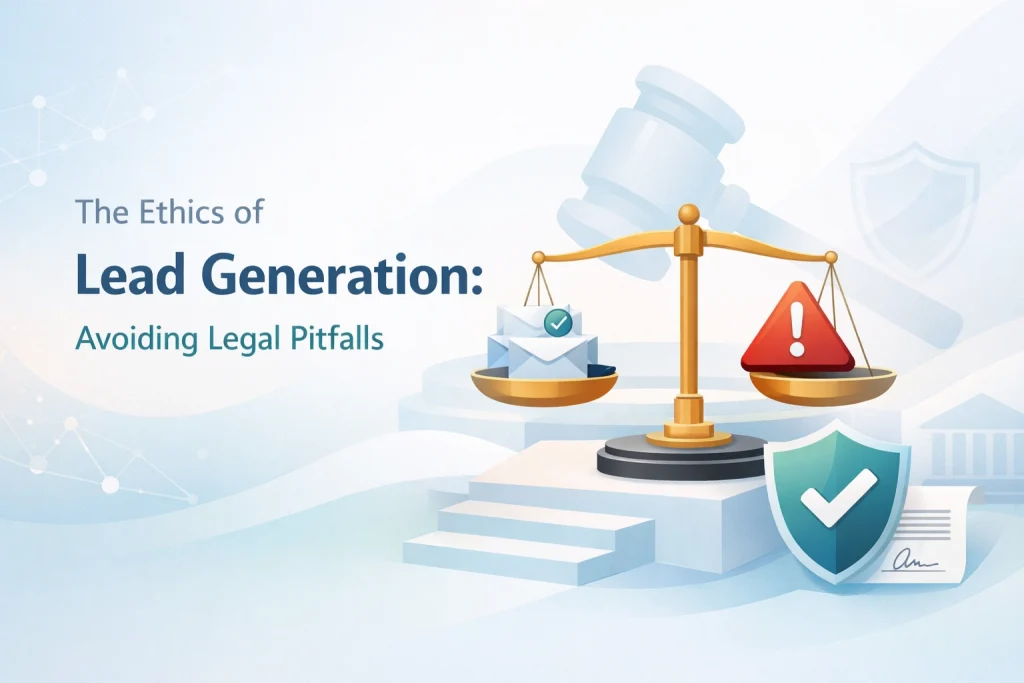
The Ethics of Lead Generation: Avoiding Legal Pitfalls
You’ve seen the headlines. A treatment center gets slapped with a multi-million dollar class-action lawsuit because their lead generator used "robocalls." Or worse, an owner finds themselves under federal investigation because a third-party partner was practicing "patient brokering" under the guise of "marketing consulting."
It’s 2026, and the "Wild West" days of rehab marketing are officially over. If you’re still using the same lead generation tactics from 2018: or even 2023: you aren’t just behind the curve; you’re standing on a landmine.
As a facility owner or CEO, I know your primary goal is to keep your beds full and help people recover. But in the rush to hit census goals, it’s easy to overlook the "how" behind your lead flow. Today, we’re diving into the ethics of lead generation and how to navigate the legal minefield of 2026 without sacrificing your ROI.
The New Regulatory Reality: One-to-One Consent
The biggest shift we’ve seen recently involves the Federal Communications Commission (FCC) and its crackdown on lead generation "loopholes." In the past, a lead generator could gather a consumer’s info on a generic site and sell that "lead" to fifty different centers.
That doesn't fly anymore. Under the FCC’s latest rulings, marketers must obtain one-to-one consent. This means if a potential patient fills out a form, they must explicitly agree to be contacted by your specific facility, not a vague "network of providers."
If you’re buying leads from a provider who can’t show you exactly where and how that person consented to hear from you, you’re at risk for TCPA (Telephone Consumer Protection Act) violations. At $500 to $1,500 per unauthorized call or text, those leads get expensive real fast.

Avoiding the "Bait and Switch" in 2026
We’ve all seen the "bait and switch" in healthcare. A website promises a luxury beachfront retreat for "zero out of pocket," only for the patient to arrive at a cramped facility in a strip mall with a $10,000 bill.
Beyond being morally bankrupt, this is a legal nightmare. State attorneys general are increasingly looking at "unfair and deceptive acts and practices" (UDAP) in the behavioral health space.
Ethical lead generation requires radical transparency. This means:
- Accurate Imagery: Stop using stock photos of Malibu if you’re located in a suburb. High-quality, real imagery of your actual facility builds trust and reduces pre-admission anxiety.
- Clear Value Propositions: Don’t promise "100% insurance coverage" when you haven't even run a VOB yet. Your VOB process is often your biggest bottleneck, and lying about it at the lead stage only leads to AMA (Against Medical Advice) discharges later.
The "Bounty Trap": Why Per-Head Payments Are Poison
If you are paying a marketing firm or an individual specifically for every "admit" or "head in a bed," you are likely dancing with patient brokering laws. Whether it’s the EKRA (Eliminatory Kickbacks in Recovery Act) or state-level equivalents, the "bounty" system is the fastest way to get your license revoked.
At Ads Up Marketing, we focus on Cost Per Lead (CPL) and Cost Per Acquisition (CPA) through legitimate advertising channels like SEO and PPC, rather than "buying" patients. There is a massive legal difference between paying for an advertisement and paying for a person.
Performance Impact: Ethical vs. High-Risk Lead Gen
| Feature | Ethical Lead Gen (Ads Up Standard) | High-Risk "Bounty" Lead Gen |
|---|---|---|
| Consent Type | Clear, one-to-one specific consent | Vague, multi-seller "consent" |
| Legal Compliance | HIPAA, TCPA, & EKRA compliant | High risk of EKRA/TCPA violations |
| Brand Impact | Builds long-term trust and authority | Short-term gains, long-term reputation damage |
| Patient Retention | Higher (expectations match reality) | Lower (bait-and-switch leads to AMAs) |
| Average CPA | Data-driven, optimized over time | Volatile and legally "dirty" |
HIPAA and the AI Frontier
It’s 2026, and AI is everywhere. From chatbots that pre-screen leads to AI-driven ad bidding, the tech is incredible. But here’s the catch: navigating AI in rehab marketing requires a strict adherence to HIPAA.
If your lead generation form is sending Protected Health Information (PHI) through an unencrypted AI tool or a non-compliant CRM, you’re in trouble. You need to ensure that every piece of tech in your "lead-to-admission" funnel has a signed Business Associate Agreement (BAA).
So, what's the connection between ethics and tech? It's protection. An ethical marketer protects the patient's data as fiercely as their own. If you want to dive deeper into how we handle this, check out our guide on understanding patient privacy and HIPAA in digital strategy.

Transparency as a Competitive Advantage
I know you’re struggling with the rising costs of admissions. The temptation to take a shortcut: to buy that "hot" list of leads or use an aggressive call center: is real. But in the current climate, compliance is your biggest competitive advantage.
When you are transparent, you attract higher-quality patients who are actually ready for help. They aren't being "sold"; they are being "served."
How to Audit Your Current Lead Gen Ethics:
- Review your landing pages: Do they clearly state who will be calling the patient?
- Audit your call center scripts: Are your intake specialists using advanced, empathetic techniques, or are they using high-pressure sales tactics?
- Check your lead sources: If you're using third-party aggregators, ask for their "LegitScript" certification and their "one-to-one" consent documentation. If they can't provide it, run.
LegitScript and Beyond
Speaking of LegitScript, it remains the gold standard for advertising in the addiction space. But LegitScript and beyond is just the baseline. Truly ethical marketing involves showing the "human" side of your facility.
But this still doesn't drill down to the "why." Why go through all this trouble? Because a patient's first impression of your brand starts with the very first ad they see. If that ad is a lie, their recovery is built on a shaky foundation. The psychology of first impressions dictates that trust is won or lost in milliseconds. Don't lose it by being shady.

The Solution: Data-Driven, Ethical Growth
You don't have to choose between being "the good guy" and having a profitable facility. In fact, the most profitable centers in 2026 are the ones that have mastered tracking the full patient journey. They know exactly where their leads come from, and they ensure every touchpoint is legal, ethical, and professional.
At Ads Up Marketing, we specialize in building these systems. We don't believe in "black box" marketing. We believe in data over guesswork. We help you scale your facility: whether you're hitting that 50-bed milestone or exploring a new market feasibility study: using tactics that will keep you out of court and in the business of saving lives.
Stop Guessing, Start Growing Safely
Are you worried your current lead generation strategy might be a ticking time bomb? Don't wait for a "cease and desist" letter or a massive fine to find out.
Ethical lead generation isn't just about following the law; it's about building a brand that patients and their families can trust during their darkest hours. It’s about ensuring that when that 3 AM crisis call comes in, your team is ready to provide real help, not just a sales pitch.
Let’s get your marketing on the right side of history. We can help you build a custom solution that prioritizes compliance, transparency, and: most importantly: results.
Ready to clean up your lead flow and scale with confidence? Call us today at 305-539-7114 to speak with a compliance-focused marketing expert.