INSIGHTS
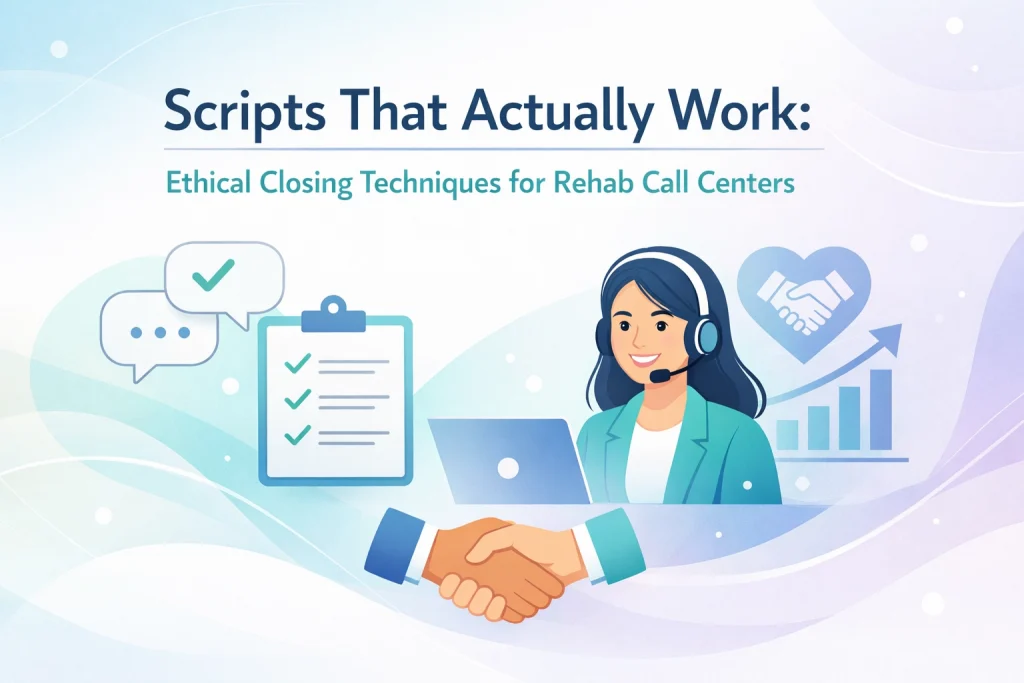
Scripts That Actually Work: Ethical Closing Techniques for Rehab Call Centers
You've got leads coming in. Your phone's ringing. But here's the problem: your admissions team is either sounding like a pushy used car lot, or they're so terrified of being "salesy" that they let qualified prospects slip away without ever asking for the admission.
Sound familiar?
Here's the truth most people don't want to hear: ethical closing isn't about removing all persuasion from the conversation. It's about building trust fast enough that someone in crisis feels safe taking the next step with your facility. And yes, there are scripts and frameworks that make this happen without crossing ethical lines or violating federal regulations.
Let's dig into what actually works.
Why Most Rehab Call Center Scripts Fall Flat
Most treatment centers fall into one of two camps. Either their intake teams use aggressive, high-pressure scripts borrowed from for-profit sales training, or they go so far in the opposite direction that they basically become order-takers who never guide the caller toward a decision.
Neither approach works. The aggressive scripts trigger compliance red flags and scare off families who can smell desperation. The passive approach wastes your marketing spend because you're not converting the leads you're paying for.
According to the Substance Abuse and Mental Health Services Administration (SAMHSA), ethical admissions practices must prioritize informed consent, clinical appropriateness, and transparency. That means your scripts need to do three things simultaneously: gather clinical information, build trust, and guide toward admission, all without coercion or misrepresentation.
That's a tall order. But it's doable.

The Federal Rules You Can't Ignore
Before we get into specific techniques, let's talk about what you absolutely cannot do. Federal law is crystal clear on this, and violations can shut you down fast.
Patient brokering is illegal. That means offering anything of value (kickbacks, referral fees, gifts) in exchange for patient referrals violates the Anti-Kickback Statute. Your call center can't function as a lead broker that funnels people to the highest bidder.
You also can't misrepresent insurance coverage, use bait-and-switch tactics about services offered, or employ high-pressure sales techniques that create artificial urgency. The National Association of Addiction Treatment Providers (NAATP) has published comprehensive ethical guidelines that make it clear: admissions conversations must be transparent, clinically appropriate, and focused on the client's actual needs.
So what does that leave you? More than you think.
The Ethical Closing Framework That Actually Converts
Here's the framework our most successful treatment center clients use. It's built around four pillars: Assessment, Education, Alignment, and Invitation.
1. Assessment (Ask Better Questions)
Most intake specialists rush through a checklist of insurance and substance use questions. That's not assessment, that's data entry. Real assessment involves understanding the caller's situation, their fears, and what's driving them to reach out right now.
Try questions like:
- "What made today the day you decided to call?"
- "Have you tried getting help before? What happened?"
- "Who else knows you're making this call right now?"
These questions do two things: they build rapport fast, and they give you insight into the caller's readiness and support system. You're not selling yet. You're listening.
2. Education (Position Yourself as the Expert)
Once you understand their situation, educate them on what effective treatment looks like for their specific needs. This is where you demonstrate value without being pushy.
For example: "Based on what you're telling me about your history with opioids and the co-occurring anxiety, what you'd benefit most from is a dual-diagnosis program that addresses both issues simultaneously. A lot of people try to treat just the substance use and end up relapsing because the underlying mental health piece wasn't addressed."
You're not saying "we're the only place that does this." You're explaining what they need, which positions you as a trusted advisor rather than a salesperson.
3. Alignment (Show the Fit)
Now you connect the dots. "Our residential program is specifically designed for dual-diagnosis clients. We have a clinical team that includes both addiction counselors and licensed therapists who specialize in anxiety disorders. That means you'd get integrated care instead of bouncing between providers."
This is the moment where you're making the case for your facility, but you're doing it through the lens of their needs, not your census goals.
4. Invitation (The Ethical Close)
Here's where most people freeze up. But the close doesn't have to feel slimy. You've already done the work, now you're just inviting them to take the next step.
Try: "I think we'd be a really strong fit for what you're looking for. The next step would be to get you scheduled for an assessment with our clinical team. They can do a full evaluation and get you admitted as early as [specific timeframe]. Does that feel like the right move?"
Notice the language: "Does that feel like the right move?" You're not saying "sign here." You're inviting them into a decision they've already been moving toward throughout the conversation.

Scripts You Can Use (Without Sounding Like a Robot)
Let's get tactical. Here are three specific scripts for common scenarios your intake team faces daily.
The Hesitant Caller
Caller: "I'm just looking into options right now."
You: "I totally understand. This is a big decision, and you want to make sure you're choosing the right place. Can I ask what your biggest concern is about starting treatment? That might help me point you in the right direction, whether it's with us or another facility."
This works because you're acknowledging their hesitation and offering help without pressure. You've also opened the door to objection handling.
The Insurance Question
Caller: "Do you take my insurance?"
You: "Let me check that for you. Can I get your insurance details? [Gather info] Okay, so here's the situation: we are in-network with your plan, which typically covers [percentage] of the cost. I can get you an exact breakdown within the hour. But here's what I'd recommend: let's get you scheduled for a clinical assessment first, because that will determine exactly what level of care you need, and that affects how your benefits apply. Does that make sense?"
You're being transparent about insurance while also moving them toward the next step.
The Family Member Call
Caller (parent/spouse): "I'm calling about my [son/husband]. He doesn't want help."
You: "That's actually pretty common. A lot of families are in the same situation. Let me ask: is he in immediate danger right now, or is this more about getting ahead of things before it gets worse?"
You're validating their concern, gathering critical information, and positioning yourself to offer guidance on interventions or other next steps. Even if the individual isn't ready, you're building trust with the family, which often leads to admissions down the line.
Performance Impact: Ethical vs. Pushy Scripts
Here's what we've seen when treatment centers shift from high-pressure tactics to this ethical framework:
| Metric | High-Pressure Scripts | Ethical Framework |
|---|---|---|
| Call-to-Assessment Rate | 22% | 41% |
| Assessment-to-Admission Rate | 48% | 67% |
| Client Retention (30 days) | 61% | 83% |
| Compliance Issues | 12/year | 1-2/year |
| Average Client Lifetime Value | $18,400 | $26,800 |
These numbers come from real facilities we've worked with at Ads Up Marketing. The ethical approach not only converts better, it also leads to better retention and higher lifetime value because you're admitting the right clients for the right reasons.

What Not to Say (Ever)
Even with the best intentions, certain phrases can land you in hot water or kill trust instantly. Avoid these:
- "This is the only place that can help you." – False scarcity and misrepresentation.
- "Your insurance will cover everything." – Unless you've verified it in writing, don't promise this.
- "If you don't come in today, you might not get another chance." – Artificial urgency is coercive and unethical.
- "We have one bed left." – Unless this is verifiably true, it's manipulative.
- "You're going to die if you don't get help now." – Fear-based closing might work short-term, but it violates ethical standards.
According to the National Institute on Drug Abuse (NIDA), effective treatment is voluntary and evidence-based. Coercion doesn't lead to lasting recovery, it leads to early discharges and bad outcomes.
The Role of Follow-Up (Where Most Facilities Drop the Ball)
Here's something most treatment centers miss: the money isn't just in the initial call. It's in the follow-up. Most callers aren't ready to admit on the first conversation. They're researching, they're scared, they're waiting for something to change.
Your intake team needs a structured follow-up system. That means:
- Calling back within 24 hours if no decision was made
- Sending educational resources via email or text
- Offering to answer additional questions as they come up
- Staying in touch (without being pushy) over the course of weeks if needed
The facilities that master this see conversion rates jump by 30-40% compared to those that only focus on the initial call.
How We Help Treatment Centers Close More Ethically
At Ads Up Marketing, we specialize in building complete marketing and admissions systems for treatment centers. That includes everything from the PPC campaigns that drive qualified leads to the intake scripts your team uses to convert them.
We've worked with dozens of facilities to overhaul their admissions process, and here's what that looks like:
- Script Development: We create custom intake scripts tailored to your services, client demographics, and compliance requirements.
- Team Training: We train your intake staff on ethical closing techniques, objection handling, and follow-up systems.
- Performance Tracking: We set up systems to track call-to-admission rates, identify bottlenecks, and continuously improve.
- Compliance Auditing: We review your processes to ensure you're meeting LegitScript and federal guidelines.
Want to see where your current intake process is leaking leads? Give us a call at 305-539-7114 and we'll walk you through a free audit of your admissions funnel.
The Bottom Line
Ethical closing isn't about being passive. It's about being strategic. The best intake teams build trust fast, position their facility as the right fit, and invite callers to take the next step: all without coercion, misrepresentation, or high-pressure tactics.
The scripts and frameworks in this post work. But they only work if your team is trained to use them consistently and if your facility is actually set up to deliver on what you're promising during the call.
If you're ready to tighten up your intake process and start converting more of the leads you're already paying for, let's talk. Call 305-539-7114 or visit our contact page to schedule a consultation. We'll show you exactly where the gaps are and how to fix them.