
INSIGHTS
Design for Dignity: How Aesthetics Impact Patient Outcomes and Referral Rates
You've probably heard the phrase "you never get a second chance to make a first impression." In healthcare, that first impression isn't just about courtesy, it's literally affecting patient outcomes. And here's the thing that might surprise you: those same aesthetic cues are working overtime on your website right now, influencing whether families choose your facility or keep scrolling to the next option.
Recent research from University of Michigan turned conventional thinking on its head. They studied nearly 4,000 surgical patients and found something remarkable: room location relative to nursing stations directly impacted recovery rates. Patients in rooms with direct sightlines to clinical staff experienced better outcomes than those tucked away in corners. The implications? Design isn't just decoration. It's clinical intervention.
The Clinical Case for Beautiful Spaces
Let's talk numbers, because that's what matters when you're running a treatment center. A landmark study published in Science back in 1984 (yes, it's been around that long and we're still playing catch-up) showed that surgical patients with views of trees used less pain medication and left the hospital sooner than patients staring at brick walls. Trees. That's it. Just having something natural to look at measurably changed clinical outcomes.
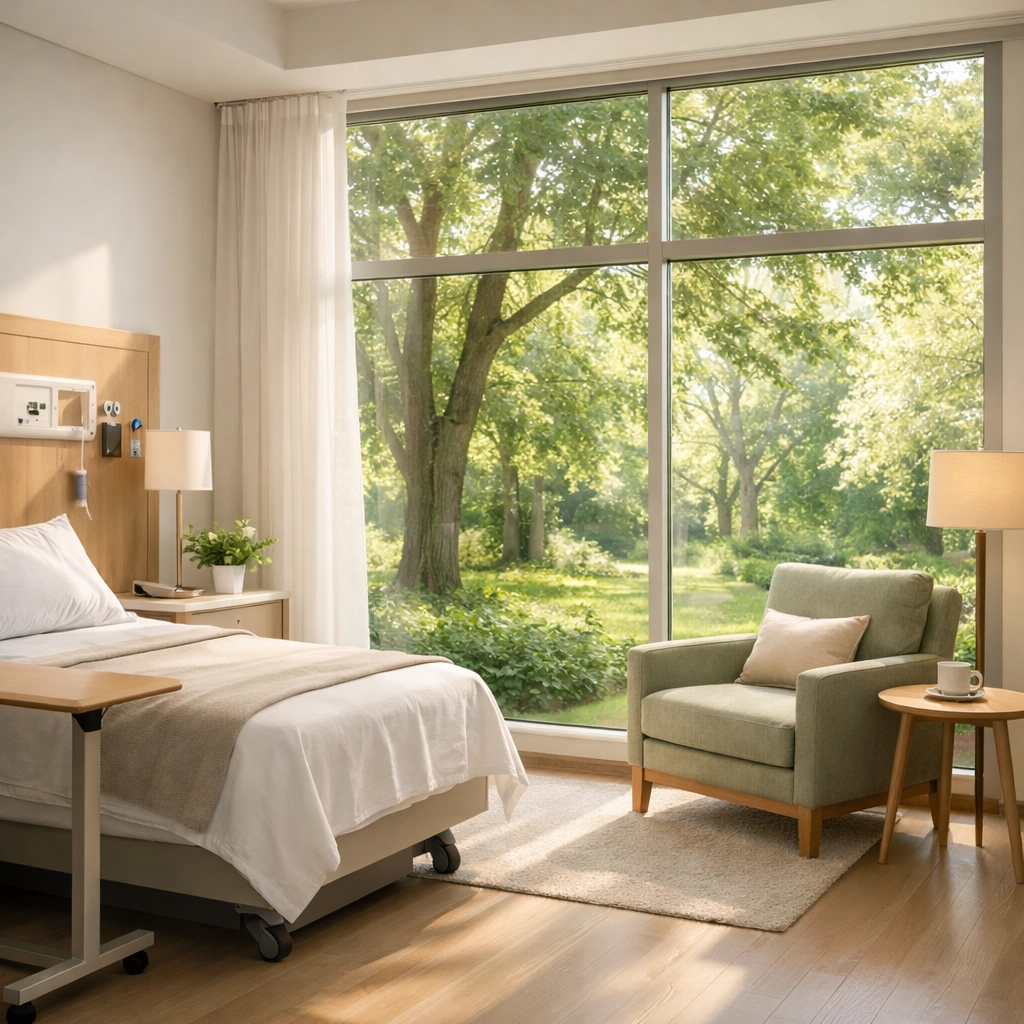
Fast forward to today, and facilities using single-occupancy rooms are reporting:
- 50% reduction in patient falls
- 70% decrease in medication errors
- Improved satisfaction scores across the board
- Shorter lengths of stay
According to SAMHSA research, environmental factors play a significant role in treatment engagement and recovery trajectories. Natural lighting, noise control, and thoughtful architectural choices aren't luxuries: they're affecting whether your patients complete treatment successfully.
But here's where most facilities drop the ball: they invest thousands (sometimes millions) in creating healing environments, then fail to showcase these assets where it matters most. Your website.
What Prospective Patients See Before They See You
Think about the last major purchase you made. Did you buy it without looking it up online first? Of course not. Families researching treatment options are doing the same thing, except the stakes are infinitely higher. They're scrolling through facility websites at 2 AM, desperate and terrified, trying to determine which center gives their loved one the best chance at recovery.
Your facility's aesthetic quality: both physical and digital: becomes a proxy for clinical quality. Fair? Maybe not. Reality? Absolutely.
When someone lands on your website and sees pixelated photos, outdated design, or stock images that clearly aren't your facility, what message does that send? It doesn't matter how beautiful your actual campus is if your digital front door looks like it hasn't been updated since 2010.
The Bridge Between Physical and Digital Trust
So what's the connection between your facility's architecture and your referral rates? It all comes down to visual trust. The same environmental cues that help patients heal: natural light, clean lines, connection to nature, thoughtful space planning: need to translate to your digital presence.
Here's what we've learned working with treatment centers across the country: facilities that invest in professional photography and video see measurably higher inquiry-to-admission conversion rates. Not because the photos are pretty (though they are), but because they provide evidence of investment in patient experience.
Consider these design elements that matter both on-site and online:
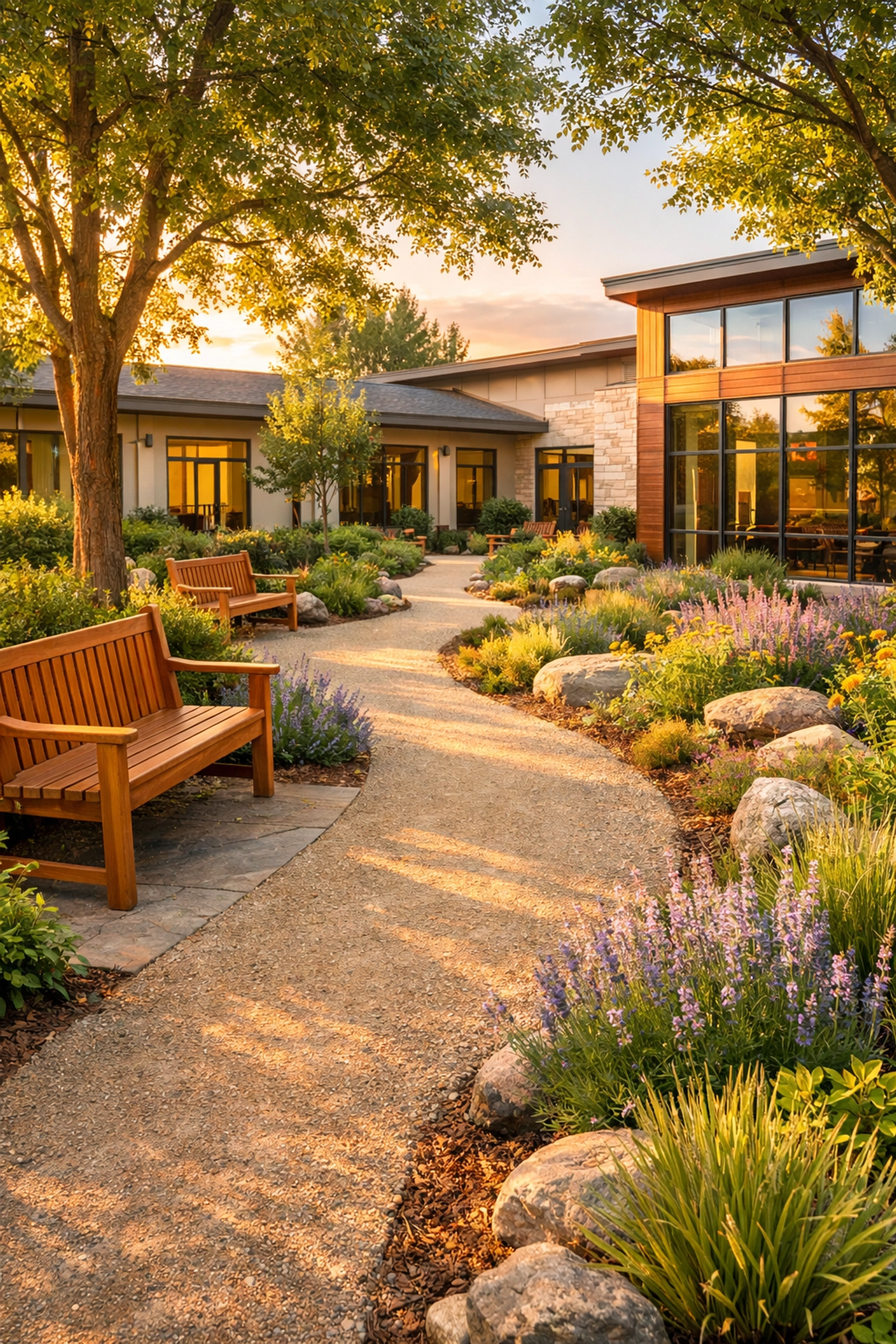
Natural Elements: Research from the National Institutes of Health confirms that exposure to nature reduces stress hormones and promotes healing. Are you showcasing your outdoor spaces, gardens, or nature-accessible areas on your website?
Cleanliness and Maintenance: Hospital architects design with infection control in mind, using easily cleanable surfaces and optimal airflow. Your digital presence should reflect that same attention to detail: clean layouts, well-maintained content, no broken links or outdated information.
Privacy and Dignity: Single-occupancy rooms improve outcomes partly because they preserve patient dignity. Your website should do the same: professional imagery that respects privacy while still showing real spaces.
Accessibility: Physical spaces should accommodate diverse needs. So should your website. Is your site mobile-responsive? Can families access virtual tours? Are contact methods clearly visible?
The Data Behind Design-Driven Decisions
Let's break down what the research actually tells us about design impact:
| Design Element | Measured Impact | Source |
|---|---|---|
| Natural window views | Reduced pain medication use, shorter hospital stays | Science, 1984 |
| Direct nursing station visibility | Better recovery rates, faster clinical intervention | University of Michigan, 3,964 patient study |
| Single-occupancy rooms | 50% fewer falls, 70% reduction in medication errors | Healthcare design research |
| Natural lighting & noise control | Shorter stays, reduced patient stress | Evidence-based design studies |
| Thoughtful space planning | Improved patient satisfaction, better treatment engagement | Substance Abuse and Mental Health Services Administration |
But this still doesn't drill down into the real question: how do you translate these physical advantages into digital assets that actually drive admissions?
Making Your Investment Work Harder
You've already put resources into creating a healing environment. The facility exists. The beautiful grounds are there. The thoughtfully designed spaces are real. What's missing is the strategic showcase that turns those assets into referrals.
This is where most facilities need help, and honestly, where we step in. At Ads Up Marketing, we work specifically with healthcare providers to bridge this gap. We're not talking about slapping some nice photos on a webpage and calling it done. We're talking about a comprehensive visual trust strategy that includes:
Professional Visual Documentation: High-quality photography and video that captures what makes your facility different. Not stock images. Not amateur iPhone photos. Professional documentation that matches the quality of care you provide.
Strategic Content Placement: Knowing where and how to showcase facility features for maximum impact. Virtual tours don't belong buried three clicks deep. Testimonials work better with environmental context.
Digital Experience Architecture: Your website's user experience should mirror the thoughtfulness of your physical space. Easy navigation, clear pathways to contact, information that's actually helpful rather than just marketing fluff.
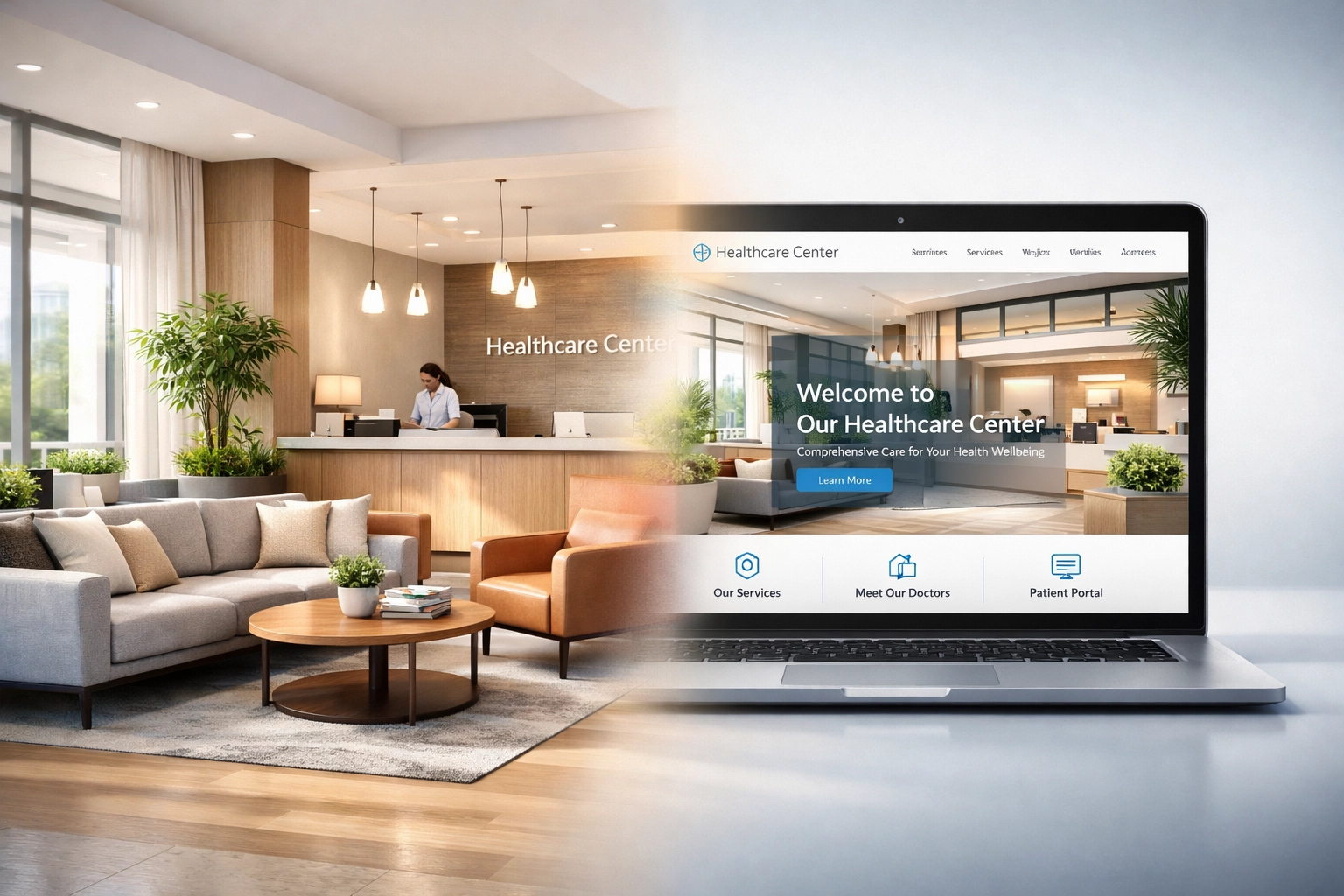
Search Engine Visibility: The most beautiful facility website in the world doesn't help if no one sees it. We handle the technical SEO work that ensures families actually find you when they're searching for help.
The Competitive Advantage You Might Be Missing
Here's something we see constantly: two facilities in the same market, similar programs, comparable outcomes. One has a modern website with professional imagery showcasing their beautiful campus. The other has an outdated site with generic stock photos. Guess which one gets more inquiries?
It's not even close.
The facility with strong visual trust cues online doesn't just get more leads: they get better-qualified leads. Families arrive for tours already sold on the environment. Your admissions team spends less time convincing and more time connecting. The sales cycle shortens. Cost per admission decreases.
And it compounds. Better-qualified admits lead to better completion rates. Successful alumni become referral sources. Positive outcomes generate authentic testimonials and reviews. Your online reputation strengthens. The cycle continues.
What This Means for Your Facility Right Now
Look, I know you're dealing with a thousand priorities. Clinical outcomes, staffing challenges, regulatory compliance, payer relationships: the list never ends. Adding "overhaul our digital presence" to that list feels overwhelming.
But consider this: you're already losing referrals. Right now, while you're reading this, families are comparing facilities online. They're looking at yours. And they're making judgments based on what they see digitally, whether those judgments reflect reality or not.
The good news? This is fixable. Unlike clinical outcomes that take months to track or regulatory issues that require endless paperwork, improving your visual trust online can happen relatively quickly with the right strategy and execution.
We've helped treatment centers across the country translate their physical investments into digital advantages. We know healthcare marketing, we understand the compliance constraints, and we get that you need results, not just pretty pictures.
Your Next Step Is Simple
If your facility has invested in creating a healing environment but your website doesn't reflect that investment, we should talk. No pressure, no hard sell. Just a conversation about where you are, where you want to be, and whether we're the right fit to help you get there.
Give us a call at 305-539-7114. We'll walk through your current digital presence, identify gaps between your physical facility and your online showcase, and outline a realistic strategy to bridge that divide.
Because at the end of the day, families deserve to see what you've built. Your clinical team deserves qualified leads that close. And your facility deserves referral rates that reflect the quality of care you actually provide.
The aesthetics matter. The outcomes prove it. Now make sure your digital presence is working as hard as your treatment team does.
Learn more about our healthcare marketing solutions or reach out directly at 305-539-7114. Let's build the visual trust that drives the admissions your facility deserves.