Focus Keyword: treatment center profitability audit 2026
You're running a treatment facility. Census looks decent. Admissions are coming in. But somehow, at the end of each quarter, the numbers just don't add up the way they should. Sound familiar?
Here's the thing, most facility owners aren't losing money on the big, obvious stuff. They're bleeding out slowly through dozens of tiny, almost invisible leaks. A profitability audit isn't about finding one massive problem. It's about uncovering all those small inefficiencies that collectively drain your margins dry.
Let's dig into what a real profitability audit looks like for addiction treatment centers, where your hidden leaks probably are, and how to actually plug them before they sink your operation.
What Exactly Is a Profitability Audit?
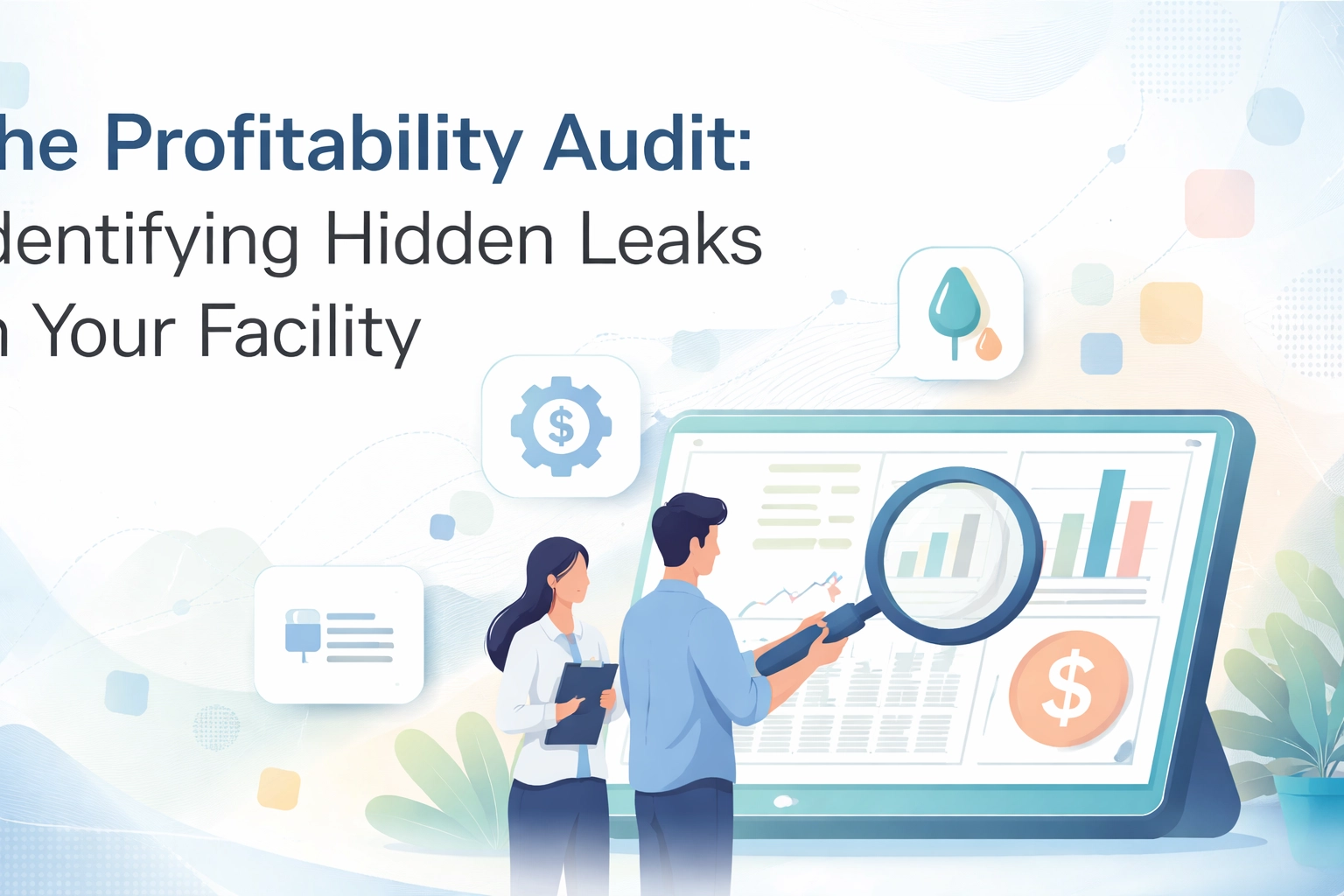
A profitability audit is basically a deep-dive investigation into every corner of your facility's operations, finances, and marketing to find where resources are being wasted. Think of it like checking your house for drafts in winter, you know heat is escaping somewhere, you just need to find where.
For treatment facilities specifically, this means examining:
- Operational workflows (admissions, clinical, discharge)
- Financial processes (billing, collections, payer mix)
- Marketing ROI (cost per admission, lead quality, conversion rates)
- Staffing efficiency (overtime, turnover, credential utilization)
- Compliance costs (unnecessary redundancies, audit prep time)
According to SAMHSA's National Survey of Substance Abuse Treatment Services, the behavioral health industry continues to grow, but so does competition. That means margins matter more than ever. You can't afford leaks you don't know about.

The Most Common Hidden Leaks in Treatment Facilities
After working with dozens of rehab owners over the years, we've noticed certain patterns keep showing up. These aren't the obvious problems like "we need more beds" or "insurance rates dropped." These are the sneaky ones.
1. Marketing Spend That Doesn't Convert
You're spending money on leads. Great. But are those leads actually becoming admissions? And at what cost?
Here's a scenario we see constantly: A facility spends $50,000 monthly on digital marketing but can't tell you their actual cost-per-admission. They know cost-per-lead, sure. But between the lead form submission and someone actually walking through the door? That's a black box.
The leak isn't always in the marketing itself, it's often in the handoff between marketing and your admissions team. If your conversion tracking isn't dialed in, you're essentially flying blind.
2. Admissions Process Friction
Every extra hour between a family's first call and the patient arriving at your facility is an opportunity for them to change their mind, get cold feet, or find another option. According to the National Institute on Drug Abuse, the window of willingness for treatment is often narrow.
Hidden leak: How many admissions are you losing because your verification process takes 6 hours instead of 2? Or because your admissions coordinator isn't following up fast enough?
3. Billing and Collections Gaps
This one hurts because it's money you already earned but never collected. Common culprits include:
- Incorrect coding leading to claim denials
- Slow follow-up on denied claims
- Poor documentation that doesn't support medical necessity
- Not appealing denials that should be appealed
The National Association of Addiction Treatment Providers (NAATP) has emphasized proper billing practices as essential for facility sustainability. Yet many owners don't realize they're leaving 10-15% of revenue on the table through collections issues.
4. Staffing Inefficiencies You Can't See
Overtime costs. High turnover requiring constant recruiting and training. Credential mismatches where you're paying an LCSW to do work a tech could handle.
These don't show up as one line item on your P&L. They're scattered across payroll, benefits, recruiting fees, and productivity losses. But collectively? They can easily represent a six-figure annual leak.

Breaking Down the Leak Categories
Here's a quick overview of where most treatment facilities are hemorrhaging money without realizing it:
| Leak Category | Common Symptoms | Potential Annual Impact |
|---|---|---|
| Marketing Inefficiency | High cost-per-lead, low conversion rates, unclear ROI | $50,000 – $200,000+ |
| Admissions Friction | Long verification times, poor follow-up, no-shows | $100,000 – $500,000+ |
| Billing/Collections | High denial rates, slow AR, uncollected balances | $75,000 – $300,000+ |
| Staffing Waste | Excessive overtime, turnover, credential mismatch | $50,000 – $150,000+ |
| Compliance Overhead | Duplicate documentation, excessive audit prep | $25,000 – $75,000+ |
Add those up, and you're potentially looking at hundreds of thousands in recoverable revenue. And that's before we even talk about census optimization.
How to Actually Conduct a Profitability Audit
Alright, so you're convinced there are leaks. Now what? Here's a practical framework that actually works for treatment facilities:
Step 1: Define Your Scope
You can't audit everything at once. Pick your starting point based on where you suspect the biggest issues are. For most facilities, marketing and admissions are the smartest place to start because improvements there have the fastest impact on revenue.
Step 2: Gather the Right Data
This is where most audits fall apart. You need:
- Marketing spend by channel with lead source tracking
- Full admissions funnel data (inquiries → VOBs → admits)
- Billing reports including denial rates by payer and code
- Staffing costs broken down by department and role
- Census data with length of stay and payer mix
If you don't have clean data, that's actually your first finding. You can't fix what you can't measure.
Step 3: Compare Against Benchmarks
How does your cost-per-admission compare to industry standards? What should your denial rate be? Is your length of stay appropriate for your level of care?
Without benchmarks, you're just looking at numbers. With benchmarks, you're identifying actual problems.

Step 4: Prioritize by Impact
Not every leak is worth plugging immediately. A 2% improvement in collections might require a complete billing department overhaul. But a 10% improvement in lead conversion might just require better call scripts and faster follow-up.
Focus on high-impact, low-effort wins first. Build momentum before tackling the bigger structural issues.
Step 5: Create an Action Plan with Owners
This is critical: and it's where having an outside perspective really helps. When you're inside the business every day, it's hard to see what's broken. Sometimes you need someone to walk through your facility, review your processes, and tell you straight: "Here's where you're losing money, and here's how to fix it."
Why This Matters More in 2026
Look, the treatment industry has changed dramatically over the past few years. Payer rates have tightened. Competition has increased. The facilities that are thriving aren't necessarily the ones with the biggest marketing budgets: they're the ones running the tightest operations.
A profitability audit isn't a luxury anymore. It's basic hygiene for any facility that wants to stay competitive.
And here's the honest truth: most owners don't have time to do this themselves. You're busy running a facility, managing clinical outcomes, dealing with compliance, handling staffing issues. Adding "forensic financial analysis" to your plate isn't realistic.
Let Us Help You Find Your Leaks
At Ads Up Marketing, we specialize in helping treatment facilities identify exactly where they're losing money: and more importantly, what to do about it. Our team understands the nuances of addiction treatment marketing and operations in ways that generic business consultants simply don't.
We can help you:
- Audit your marketing spend and identify which channels actually drive admissions
- Optimize your admissions funnel so you stop losing ready-to-commit patients
- Implement proper tracking so you always know your true cost-per-admission
- Develop strategies that increase census without proportionally increasing spend
The facilities we work with don't just get more leads: they get better leads that actually convert. And they stop wasting money on tactics that look good on paper but don't move the needle.
Ready to find out where your facility is leaking money? Give us a call at 305-539-7114 or contact us today. We'll have an honest conversation about what's working, what isn't, and what it would take to plug those leaks for good.
Because at the end of the day, every dollar you recover goes back into what matters most: helping more people get the treatment they need.