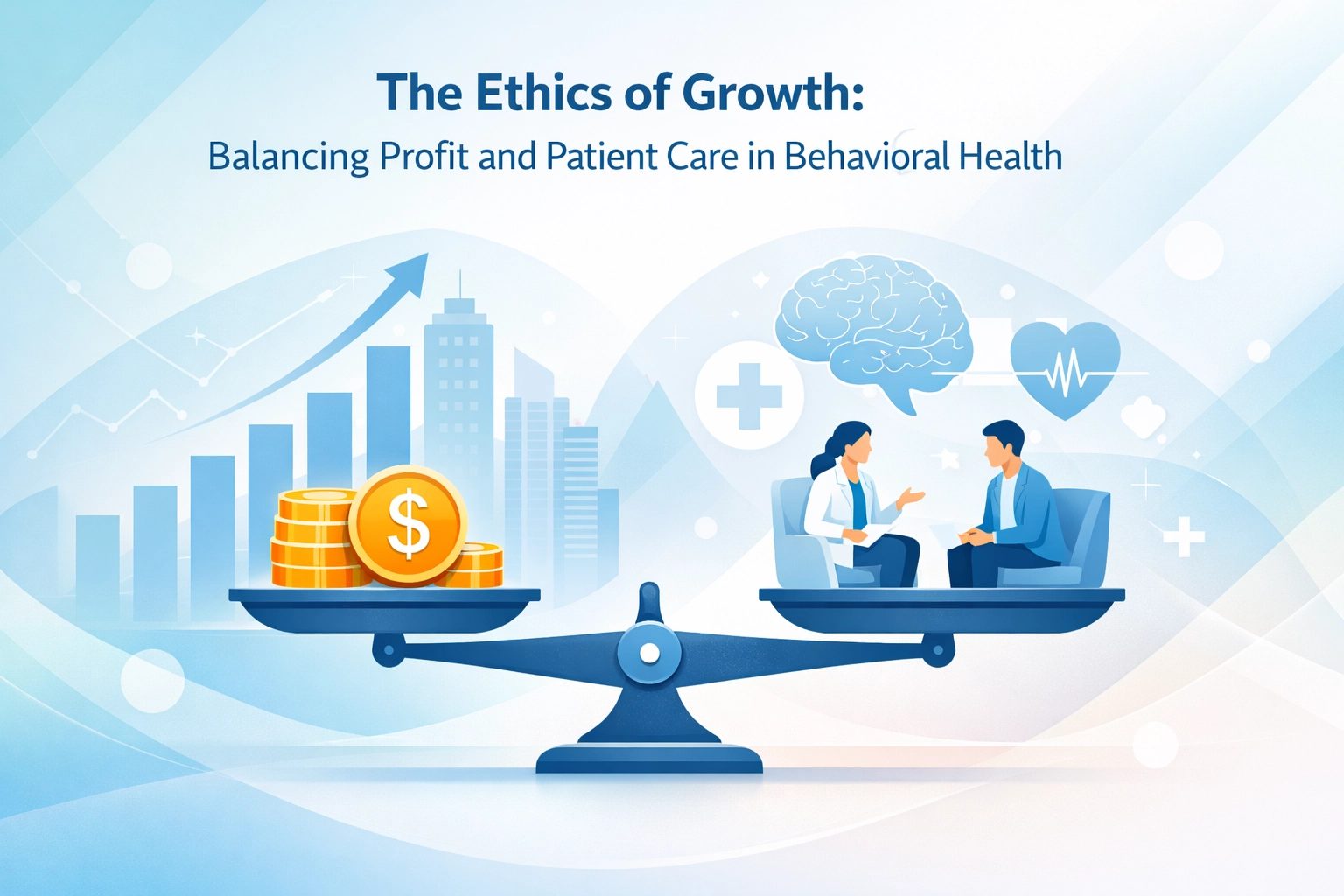
Here's a problem every behavioral health facility owner faces but rarely talks about openly: you need to grow your census to keep the doors open, but aggressive marketing tactics can feel… wrong. Like you're selling treatment the same way someone hawks used cars.
You didn't get into this industry to maximize shareholder value. You got in it because you've seen addiction destroy lives: maybe even your own or someone close to you. But at 3 AM when you're reviewing the balance sheet and census is down 22%, the ethical high ground doesn't pay your clinical staff or keep your accreditation current.
So where's the line? And more importantly, how do you build a facility that's both profitable and principled?
Why This Conversation Matters More in 2026
The behavioral health industry is under a microscope right now. SAMHSA and state regulators are cracking down on patient brokering, unethical referral schemes, and facilities that prioritize length-of-stay metrics over actual clinical outcomes. Insurance companies are demanding more transparency. Families are more educated and skeptical than ever.
At the same time, the demand for treatment has never been higher. According to the National Institute on Drug Abuse, over 46 million Americans struggled with substance use disorder in 2021, and that number hasn't decreased. The market opportunity is massive: but the reputational risks for cutting corners are equally significant.
Your competitors are making choices right now. Some are choosing short-term census boosts over long-term sustainability. Others are so afraid of appearing "salesy" that they're invisible to the people who actually need their help.
You're probably somewhere in the middle, trying to figure out how to grow without compromising what you stand for.
The Core Ethical Principles That Should Guide Growth
According to the American Counseling Association, behavioral health professionals operate under several non-negotiable principles:
- Beneficence: Acting in the client's best interest, always
- Autonomy: Respecting patient choice and informed consent
- Non-maleficence: First, do no harm
- Justice: Providing fair and equitable access to care
- Fidelity: Maintaining trust and keeping promises
Here's the thing: none of these principles conflict with running a profitable business. In fact, facilities that violate these standards face license revocation, network termination, and legal consequences that make profitability impossible.
The real question isn't whether to follow ethical standards. It's how to build your growth strategy around them instead of in spite of them.

Where Growth Strategies and Ethics Actually Collide
Let's be specific about where the tension shows up in your daily operations:
Marketing and Admissions
You need admissions. Your marketing team is measured on lead volume and conversion rates. But when does "persistent follow-up" cross into harassment? When does highlighting your amenities become misleading about what actually drives recovery?
Length of Stay vs. Clinical Necessity
Insurance reimburses based on medical necessity, but your business model assumes certain average lengths of stay. What happens when a patient is clinically ready to step down but you haven't hit your financial targets for the month?
Staff Ratios and Profitability
Adequate staffing is expensive. Cutting corners saves money in the short term but increases burnout, turnover, and the risk of critical incidents. Where's the balance?
Outcome Tracking
Real outcome measurement is hard and sometimes paints an unflattering picture. It's tempting to cherry-pick success metrics or avoid follow-up altogether. But you know that's not honest.
Building a Sustainable Model: Profitability Through Ethics
Here's what most facility owners miss: ethical operations aren't a cost center: they're a competitive advantage.
Think about it. When you operate with genuine integrity:
- Your staff retention improves because they're not experiencing moral injury
- Your readmission rates drop because you're treating appropriately
- Your referral sources trust you and send more appropriate patients
- Your marketing becomes more effective because your reputation precedes you
- You sleep better at night (which is worth something)
Let's look at the actual performance data:
| Metric | Ethics-Compromised Model | Ethics-Centered Model |
|---|---|---|
| Average Staff Tenure | 11-14 months | 24-36 months |
| Cost Per Acquisition | $4,200-$6,800 | $2,800-$4,100 |
| Readmission Rate (90 days) | 28-45% | 12-18% |
| Licensing/Legal Issues (annual) | 2-4 incidents | 0-1 incidents |
| Referral Source Growth | Declining or flat | 15-25% annual increase |
The numbers tell the story. Short-term thinking costs you long-term.
Your Marketing Strategy Is Where This Gets Real
This is where we come in. Most behavioral health marketing is either aggressively unethical or so cautious it's invisible. Neither approach serves your facility or the patients who need you.
At Ads Up Marketing, we've built our entire approach around this principle: effective marketing for behavioral health has to start with clinical credibility and patient benefit.
That means:
Targeting the Right People, Not Just More People
We use local SEO strategies and carefully structured PPC campaigns to connect with individuals actively seeking help: not just anyone with an insurance policy. Quality over volume isn't just ethical; it's more profitable.
Messaging That Educates, Not Manipulates
Your website and ads should reflect what actually happens at your facility. We help you showcase your clinical model, staff credentials, and real outcomes without resorting to scare tactics or false promises.
Compliance-First Campaign Structure
Everything we do is built around LegitScript certification requirements and state-specific regulations. No patient brokering. No misleading claims. No shortcuts that put your license at risk.
Transparent Tracking and Attribution
We implement proper conversion tracking so you know exactly where your admissions are coming from: which lets you make informed decisions about budget allocation instead of throwing money at channels that don't deliver.

The ROI of Doing It Right
One of our clients came to us after getting burned by an agency that was driving high lead volume but terrible conversion rates. Turns out they were targeting anyone with a pulse, regardless of clinical fit. The facility was spending 40+ hours per week on phone calls that went nowhere, and their admit rate was under 8%.
We rebuilt their entire digital strategy around targeting only appropriate-level-of-care candidates within their licensed service area. Lead volume dropped by 35%: but admit rate jumped to 31%. Their cost per admission dropped by $2,400, and their average length of stay increased by 12 days because patients were actually a good clinical fit.
More importantly, their admissions team wasn't burning out on endless dead-end calls, and their clinical team was working with patients who were genuinely ready for the level of care they provided.
That's what ethical marketing looks like in practice. Better outcomes. Better economics. Better work environment.
What You Should Do Next
If you're reading this and recognizing the tension in your own operations, you've got three options:
- Keep doing what you're doing and hope the regulatory environment doesn't tighten further
- Pull back on growth initiatives and accept lower census as the cost of clean hands
- Rebuild your growth strategy around ethical principles and discover that they're actually complementary
Option three is the only one that works long-term.
We help behavioral health facilities across the country build drug rehab marketing strategies that drive admissions without compromising standards. We've worked with enough facilities to know what works, what doesn't, and what gets you in trouble with licensing boards.
If you want to talk through your specific situation: whether you're struggling with lead quality, admission conversion, or just need a second opinion on your current marketing approach: give us a call at 305-539-7114. No pressure, no sales pitch. Just a straight conversation about what's actually possible.
You can also check out our free AdWords audit to see where your current campaigns might be wasting money or targeting the wrong audiences.
The Bottom Line
Growing your behavioral health facility doesn't require you to check your values at the door. In fact, the most sustainable growth comes from building systems that make ethical operation the default rather than the exception.
Your marketing should attract the right patients. Your admissions process should screen for clinical appropriateness. Your treatment model should be guided by outcomes, not census targets. And your growth strategy should assume that reputation and trust are your most valuable assets.
That's not naive idealism: it's practical business strategy for an industry where reputation is everything and shortcuts eventually blow up in your face.
You got into this field to help people. Let's build a marketing and growth system that actually supports that mission instead of compromising it.
Ready to talk specifics? Call us at 305-539-7114 or visit Ads Up Marketing to schedule a consultation. We'll show you exactly how ethical marketing drives better results: both clinically and financially.