
INSIGHTS
The Cost of a Missed Call in Behavioral Health: Calculating Lost Bed Revenue
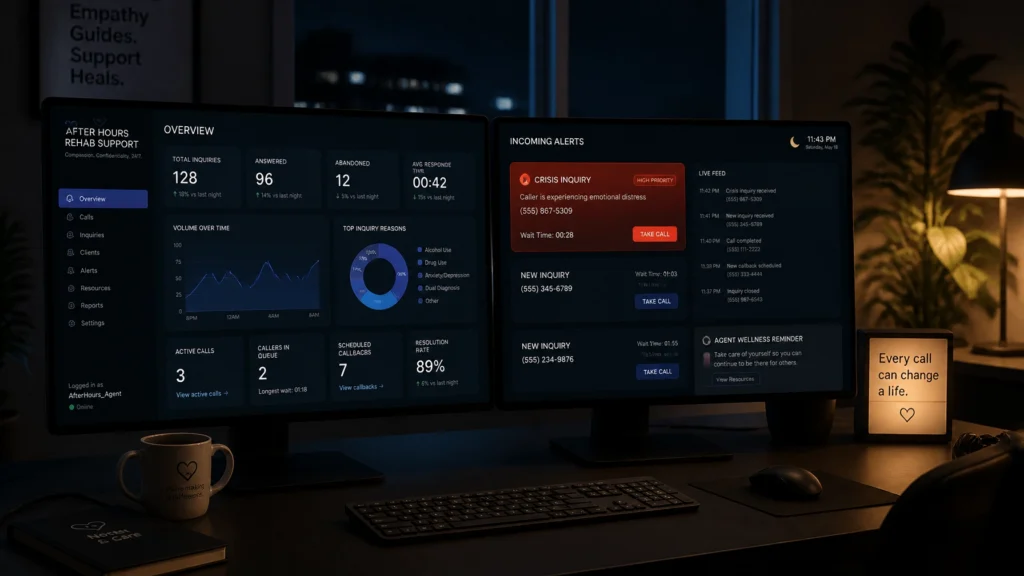
It’s 2:14 a.m. A parent finally gathers the courage to call your treatment center. They have been searching for help, comparing facilities, and worrying about what happens next.
Your phone rings.
No one answers.
By the time your admissions team returns the call in the morning, the family may already be speaking with another center. That one missed call could represent a lost assessment, a lost admission, and several weeks of lost bed revenue.
So what does a missed behavioral health call actually cost your facility? The answer depends on your call volume, conversion rate, average length of stay, and reimbursement. But once you put those numbers together, the revenue leak can become impossible to ignore.
Table of Contents
- Why missed calls carry a higher cost in behavioral health
- How to calculate lost bed revenue from missed calls
- Illustrative missed-call revenue model
- Performance Impact: standard intake vs. optimized call handling
- How to reduce missed calls without compromising care
- Frequently asked questions
Why Missed Calls Carry a Higher Cost in Behavioral Health
In many industries, a missed call may mean a delayed appointment or a lost transaction worth a few hundred dollars.
Behavioral health is different.
A treatment inquiry can lead to:
- A clinical assessment
- Detox or residential admission
- PHP or IOP placement
- Continued outpatient care
- Additional revenue across a longer episode of care
That does not mean every missed call would have become a full-paying admission. It does mean that the value of a qualified treatment inquiry is much higher than the value of an ordinary phone call.
The National Institute on Drug Abuse describes addiction as a chronic, treatable disorder and emphasizes that effective care often requires individualized, ongoing treatment. For your facility, that can translate into multiple levels of care and a longer patient relationship: not simply one isolated bed-night.
At the same time, the person calling may be in a short window of willingness. Maybe a family member has reached a breaking point. Maybe someone struggling with substance use has decided, for the first time in months, that they want help today.
If your center does not answer, the caller may not try again.

How to Calculate Lost Bed Revenue From Missed Calls
The most useful approach is to calculate two numbers separately:
- Lost bed revenue from the initial episode of care
- Potential patient lifetime value across continuing care
This distinction matters. If you combine every possible revenue source into one figure, your estimate may look inflated. If you only count one day of occupancy, you may dramatically understate the opportunity.
Step 1: Find your qualified call volume
Start with the last 60 to 90 days of phone data. Separate genuine treatment inquiries from:
- Wrong numbers
- Vendor calls
- Spam
- Existing patient calls
- Referral partner calls
- Billing or administrative questions
You want to measure qualified inbound calls from prospective patients and families.
Step 2: Calculate your missed-call rate
Use this formula:
Missed-Call Rate = Missed Qualified Calls ÷ Total Qualified Inbound Calls
Include:
- Calls that rang without an answer
- Abandoned calls
- Calls routed to voicemail
- After-hours calls
- Weekend and holiday calls
- Calls that received no timely follow-up
You can define “timely” based on your operation. For a high-intent admissions inquiry, 24 hours may already be too long. A call that gets returned three days later should not be treated as successfully captured.
Step 3: Apply your call-to-admission conversion rate
Next, calculate how many answered, qualified calls become admissions:
Call-to-Admission Rate = Admissions From Qualified Answered Calls ÷ Qualified Answered Calls
Use your own CRM or admissions data whenever possible. If you do not have reliable tracking yet, create a conservative estimate and clearly label it as an estimate.
Step 4: Calculate average bed revenue
For residential treatment, a simple model is:
Average Bed Revenue Per Admission = Average Daily Rate × Average Length of Stay
For example:
- Average daily rate: $667
- Average length of stay: 30 days
- Estimated bed revenue per admission: $20,010
That figure should reflect your actual payer mix and collected revenue: not just your advertised private-pay rate.
You may also calculate contribution margin separately by subtracting variable costs such as clinical staffing, meals, transportation, medications, and other patient-related expenses. Revenue is not profit, and your owners or CFO will need both figures to make a sound decision.
Illustrative Missed-Call Revenue Model
Here is a practical example for a 40-bed residential treatment center.
Assume the facility receives 200 qualified calls per month and misses 20% of them. If the answered-call conversion rate is 20%, the missed calls represent a possible eight admissions that were never given the opportunity to move forward.
| Metric | Current Intake Leak | Improved Call Handling | Performance Impact |
|---|---|---|---|
| Qualified inbound calls per month | 200 | 200 | Same demand |
| Missed qualified calls | 40 | 10 | 30 more calls captured |
| Estimated admissions represented | 8 | 2 | 6 admissions recovered |
| Average length of stay | 30 days | 30 days | Same clinical model |
| Bed-days represented | 240 | 60 | 180 additional bed-days |
| Average daily bed revenue | $667 | $667 | Same rate |
| Estimated monthly bed revenue | $160,080 | $40,020 | $120,060 opportunity |
| Estimated annualized bed revenue | $1,920,960 | $480,240 | $1,440,720 opportunity |
This is an illustrative opportunity model, not a promise that every missed call would have resulted in an admission. Some callers will not meet clinical criteria. Others may lack appropriate insurance or choose a different level of care.
Still, the exercise shows why calculating the lost bed revenue from missed rehab calls is worthwhile. Even recovering half of the estimated opportunity could materially affect census, staffing efficiency, and cash flow.

Performance Impact: Standard Intake vs. Optimized Call Handling
Improving call performance is not just about picking up faster. It is about creating a reliable path from first contact to appropriate next step.
| Intake Element | Common Gap | Optimized Approach | Likely Business Effect |
|---|---|---|---|
| After-hours coverage | Voicemail or delayed callback | Live, trained coverage | More high-intent inquiries captured |
| Call routing | One line for every inquiry | Skill-based routing and escalation | Fewer abandoned calls |
| Intake notes | Manual notes or scattered emails | CRM documentation in real time | Better follow-up accountability |
| Crisis response | Generic script | Safety-focused triage protocol | More appropriate referrals |
| Insurance questions | Delayed verification | Structured information collection | Faster admissions decisions |
| Attribution | Calls not connected to campaigns | PPC, SEO, and call tracking integration | Better marketing decisions |
| Follow-up | “Call back tomorrow” | Immediate next-step scheduling | Higher assessment completion |
If your Google Ads or SEO program generates the inquiry but your intake process loses it, reducing ad spend will not necessarily solve the problem. You may simply create fewer opportunities.
The better question is: where does the lead-to-admission journey break?
Ads Up Marketing can help you connect the dots between acquisition, call handling, and admissions performance. Our after-hours rehab call center coverage guide explains how specialized coverage can support families outside normal business hours.
How to Reduce Missed Calls Without Compromising Care
1. Audit when calls are being missed
Do not look only at the monthly average. Break missed calls down by:
- Hour of day
- Day of week
- Campaign source
- Location
- Call duration
- Caller type
- Abandoned versus unanswered status
You may discover that your overall answer rate looks acceptable while 40% of overnight calls go unanswered.
2. Use specialized behavioral health call support
A generic answering service may not understand detox, residential care, co-occurring disorders, insurance questions, or the sensitivity of a family crisis.
Your call center team should know how to:
- Listen without judgment
- Gather basic information respectfully
- Recognize potential emergencies
- Escalate suicidal or medically urgent situations
- Explain the next step clearly
- Arrange a warm transfer or assessment
- Document the interaction securely
For urgent mental health or suicide-related crises, callers should be directed to appropriate emergency resources, including the 988 Suicide & Crisis Lifeline when applicable. The SAMHSA National Helpline and FindTreatment.gov are also authoritative resources for treatment information and referrals.
3. Protect privacy and follow ethical standards
Call handling must support compliance, not create a new risk.
Review your procedures for:
- HIPAA-compliant documentation
- Minimum-necessary information collection
- Secure CRM access
- Consent for text messaging
- Call recording disclosures where required
- Emergency escalation
- Accurate representation of services and licensure
The NAATP Code of Ethics emphasizes honest marketing, patient privacy, accurate service descriptions, and the prohibition of paid referrals or patient brokering. Your intake process should reflect those same standards.
You can also review Ads Up Marketing’s guide to HIPAA-compliant rehab advertising before updating tracking or follow-up systems.
4. Connect calls to marketing performance
A missed call should not be treated as a generic operational issue. It may be tied directly to a specific keyword, ad, landing page, or referral source.
With proper call tracking, you can determine:
- Which campaigns produce the most qualified calls
- Which hours generate the highest-value inquiries
- Which calls reach voicemail
- Which sources produce assessments and admissions
- Whether a marketing problem is actually an intake problem
This is where PPC management, call center support, and website conversion improvements need to work together.
Frequently Asked Questions
How much does one missed call cost a behavioral health facility?
There is no universal number. One missed call may represent no revenue, while a qualified residential inquiry could represent thousands of dollars in initial bed revenue and significantly more in total patient lifetime value. Use your average daily rate, length of stay, and verified call-to-admission rate to calculate your own estimate.
How do you calculate lost bed revenue from missed calls?
Multiply missed qualified calls by your qualified call-to-admission conversion rate. Then multiply the estimated lost admissions by average length of stay and average daily bed revenue.
Lost Bed Revenue = Missed Qualified Calls × Conversion Rate × Average Length of Stay × Average Daily Rate
Should missed calls be included in marketing ROI calculations?
Yes. If your marketing generates the call, the call-handling process is part of the conversion funnel. Excluding missed calls can make a campaign appear ineffective when the actual problem is delayed response or inadequate intake coverage.
Is a 24/7 behavioral health call center worth the investment?
It can be, particularly if a meaningful share of your qualified inquiries arrives after hours, on weekends, or when your internal team is already busy. Compare the cost of coverage with the amount of recoverable bed revenue and contribution margin: not just the number of calls.
Stop Letting Bed Revenue Go to Voicemail
You do not need to guess what missed calls are costing your treatment center. Pull the data, define a qualified inquiry, calculate your conversion rate, and connect the result to bed-days and collected revenue.
If the number makes you uncomfortable, that is useful information. It tells you where to focus next.
Ads Up Marketing works exclusively with addiction treatment centers and behavioral health facilities. We can help you evaluate the connection between your marketing campaigns, call handling, and admissions outcomes: without relying on guesswork.
Call Ads Up Marketing at 305-539-7114 or contact our team online to discuss where your intake pipeline may be losing revenue.