
INSIGHTS
After-Hours Rehab Call Center Coverage: Capturing Crisis Inquiries 24/7
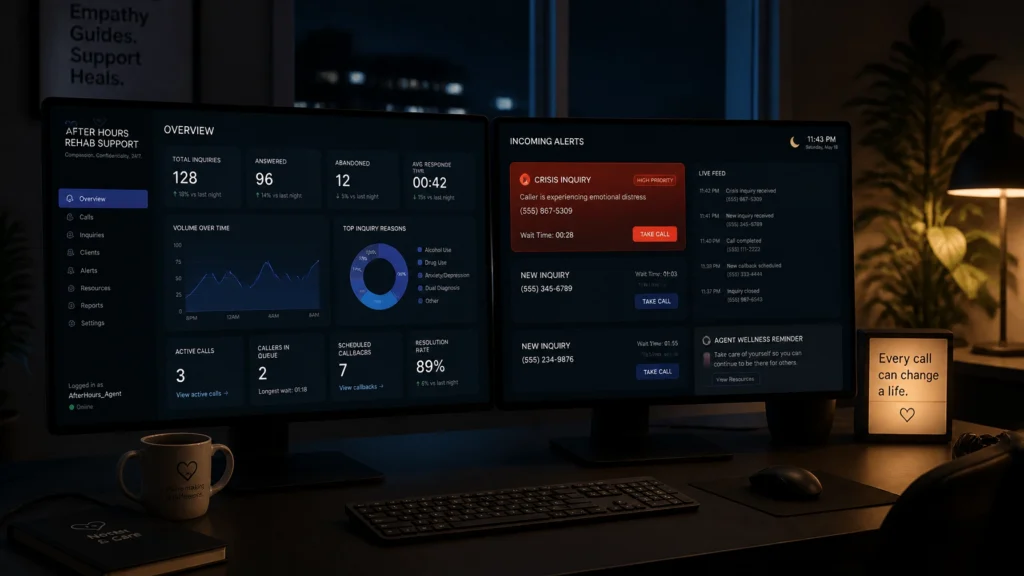
It’s 2:14 AM on a Tuesday. Somewhere out there, a family is sitting in a darkened kitchen, weeping over a son's relapse, frantically searching Google for immediate help. They click your paid ad. They see your phone number. They dial.
And then… they hear an automated voicemail telling them to leave a message and call back during regular business hours.
If your stomach just tightened, you already know the grim reality of this scenario. In the addiction treatment space, addiction doesn’t operate on a 9-to-5 schedule. Desperation doesn't wait for your front desk to unlock the doors at 9:00 AM on Monday. When someone reaches out in the dead of night, they are at their most vulnerable: and they will simply hang up and dial the next facility on the search results page.
Implementing comprehensive after-hours rehab call center coverage isn't just an operational luxury; it's the single most effective way to stop leaking high-intent admissions to your competitors. Let's look at how you can capture those critical inquiries around the clock without burning out your internal team.
Table of Contents
- Why Traditional 9-to-5 Intake Models Fail Behavioral Health Facilities
- The Financial Impact of Missed After-Hours Inquiries
- Core Elements of Robust After-Hours Rehab Call Center Coverage
- Triage Protocols: Balancing Compassion, Compliance, and Conversion
- How Outsourced Support Elevates Your Facility’s Admissions ROI
- Frequently Asked Questions
Why Traditional 9-to-5 Intake Models Fail Behavioral Health Facilities
Think about how much capital you pour into your digital acquisition strategies. You refine your keywords, optimize your landing pages, and maintain strict compliance standards to ensure your campaigns perform. But what happens once the prospect converts into a phone call?

Many mid-sized and boutique treatment centers rely on an in-house admissions coordinator who goes home at night, leaving an answering service or: worse: a generic voicemail box to catch overnight leads. According to insights from the National Association of Addiction Treatment Providers (NAATP), patient acquisition in behavioral health requires immediate rapport and trust-building.
When a panicked parent or an individual struggling with substance use disorder hears a robot or a voicemail greeting, the emotional friction is too high. They feel rejected at the exact moment they need empathy. If you aren't picking up live, you are essentially paying for clicks that immediately benefit your competitors who do answer the phone.
As we often discuss when examining facility growth milestones: such as those outlined in our breakdown of the 50-bed milestone operational systems: scaling a facility requires tightening every operational bottleneck, starting with your intake funnel.
The Financial Impact of Missed After-Hours Inquiries
Let’s be honest about the math. Treatment center owners frequently ask if 24/7 coverage justifies the overhead. To answer that objectively, let's look at a performance comparison table illustrating what happens when you miss nighttime leads versus capturing them.
| Metric / Scenario | Without After-Hours Coverage | With 24/7 Call Center Coverage |
|---|---|---|
| Overnight Inquiries Received | 15 – 20 calls/month | 15 – 20 calls/month |
| Live Answer Rate | < 15% (Voicemail / Missed) | 98% Live Answer |
| Average Conversion to Assessment | 2% (Callback next day – most lost) | 35% |
| Monthly Admissions Captured | 0 – 1 admissions | 5 – 7 admissions |
| Average Patient Revenue | $25,000 – $35,000 | $25,000 – $35,000 |
| Estimated Monthly Revenue Leak | $125,000+ | Captured & Retained |
When you look at the numbers, the question shifts from "Can we afford 24/7 coverage?" to "Can we really afford not to have it?" If you want to understand how these figures affect overall owner profitability, take a look at our analysis on how much rehab owners actually make.
Core Elements of Robust After-Hours Rehab Call Center Coverage
Setting up an effective after-hours pipeline isn't just about hiring any random answering service. Medical and behavioral health intake demands specialized training. Your overnight coverage must possess specific operational pillars:
1. Compassionate, Industry-Trained Specialists
Call handlers must understand the nuances of detox, residential care, co-occurring mental health disorders, and insurance verification basics. They need to speak with warmth, active listening, and zero judgment.
2. Immediate Crisis Triage & Safety Protocols
Not every late-night call is an immediate admission; some are acute medical emergencies or severe mental health crises. Staff must be trained to immediately recognize acute withdrawal dangers or suicidal ideation and know when to route callers to emergency services or resources like the 988 Suicide & Crisis Lifeline or SAMHSA’s National Helpline.
3. Real-Time CRM Integration and Warm Transfers
An overnight message emailed at 7 AM is practically useless. Top-tier after-hours coverage integrates directly with your CRM and admissions software, logging notes instantly and executing warm transfers to your on-call intake specialist when a high-intent caller is ready to move forward.
Triage Protocols: Balancing Compassion, Compliance, and Conversion

When crafting your overnight scripting, you have to walk a fine line between ethical responsibility and sales conversion. You cannot pressure a person in crisis, but you can offer a steady, guiding hand that makes them feel safe.
Here is how successful facilities structure their triage framework:
- Immediate De-escalation: Acknowledge the caller's pain with authentic empathy. Phrases like "I hear how heavy this feels right now, and you're in the right place to get help" instantly lower emotional barriers.
- Verification of Urgent Needs: Determine if the individual is medically stable, intoxicated, or experiencing severe withdrawal symptoms that require immediate local emergency intervention.
- Insurance & Financial Inquiry Collection: Gather basic insurance carrier info discreetly. If your facility accepts their policy, the agent can immediately transition into setting up a next-day admission slot or fast-tracked clinical pre-assessment.
If your front-office workflow or Verification of Benefits (VOB) process is slow during the day, it creates downstream chaos at night. For more on streamlining this bottleneck, read our guide on why your VOB process is your biggest marketing bottleneck.
How Outsourced Support Elevates Your Facility’s Admissions ROI
Building an in-house 24/7 call center from scratch is notoriously expensive. Recruiting, vetting, and scheduling overnight shifts for trained behavioral health intake professionals introduces massive labor overhead.
This is why many forward-thinking facility owners partner with specialized behavioral health marketing and operational partners. By combining robust digital acquisition strategies with dedicated intake coverage, you ensure that every dollar spent on Google Ads or organic SEO actually materializes on your census board.

At Ads Up Marketing, we help addiction treatment centers build cohesive, data-driven acquisition engines that capture high-intent traffic around the clock. Whether you need to optimize your digital presence or refine your admissions workflow, we understand the nuances of the behavioral health industry.
Take Control of Your Admissions Pipeline Today
Don't let another high-value caller hit your voicemail at 3 AM. Let's talk about how to safeguard your ROI and turn nighttime searches into live admissions.
Call us today at 305-539-7114 to speak with our team about comprehensive marketing and conversion strategies tailored exclusively for addiction treatment centers.
Frequently Asked Questions
What is after-hours rehab call center coverage?
After-hours rehab call center coverage is a dedicated operational system or outsourced service designed to answer, triage, and qualify incoming treatment inquiries, phone calls, and web chats that arrive outside standard business hours.
How does 24/7 call coverage improve treatment center ROI?
By capturing high-intent inquiries when prospects are actively searching (often late at night), facilities prevent lead drop-off, increase live-answer conversion rates, and secure valuable admissions that would otherwise be lost to voicemail or competing centers.
Can after-hours operators handle insurance and clinical triage?
Yes. Specialized behavioral health call centers train agents to conduct basic intake questioning, collect insurance provider details, perform initial clinical screening, and execute warm transfers to on-call admissions staff or emergency services when necessary.