
INSIGHTS
Virtual Tours for Addiction Treatment Centers: Bridging Distance and Trust
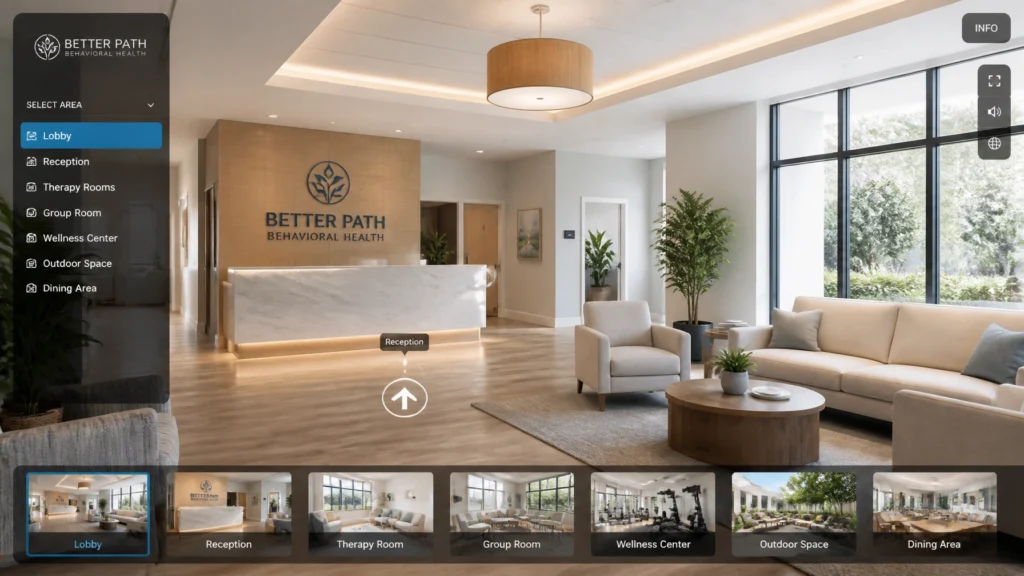
Let's be completely honest for a moment. When a family is sitting at their kitchen table at 2:00 AM, desperate, scrolling through rehab websites while their loved one struggles with active addiction, every single facility starts to look identical on paper. They all feature stock photos of smiling people walking on manicured lawns, generic bullet points about evidence-based care, and polished mission statements.
But behind the screen, fear is taking the steering wheel. The unspoken questions are heavy: What does this place actually look like inside? Will my son or daughter be safe here? Is it clean, professional, and compassionate, or is it a sterile, clinical institution?
For rehab owners and facility directors, bridging that massive gap of uncertainty is the ultimate marketing and admissions hurdle. If prospective clients cannot physically picture themselves or their loved ones stepping through your doors, hesitation sets in: and they bounce to the next tab.
That is precisely why virtual tours for addiction treatment centers have evolved from a cool "nice-to-have" website widget into one of the most powerful conversion and trust-building tools in modern behavioral health marketing.
Table of Contents
- The Psychology of Distance and Fear in Addiction Treatment
- Why Traditional Photos No Longer Cut It
- Core Elements of an Effective Virtual Tour
- Performance Impact: Static Photos vs. 3D Virtual Tours
- Balancing Patient Privacy with Radical Transparency
- Integrating Virtual Tours Into Your Admissions Funnel
- Elevate Your Facility's Reach with Ads Up Marketing
The Psychology of Distance and Fear in Addiction Treatment
When someone reaches out for help, they are often in one of the most vulnerable states of their entire life. According to data from the Substance Abuse and Mental Health Services Administration (SAMHSA), millions of Americans need specialized treatment annually, yet hesitation around entering unfamiliar environments remains a primary barrier to admissions.
Families are naturally protective. If a facility is located out of state: which is common, as many patients seek treatment away from local triggers: an in-person visit before admission is frequently impossible.
When you rely solely on static text and brochure descriptions, you force the prospective client to fill in the blanks. And when people are anxious, their minds rarely fill in the blanks with positive assumptions. They imagine the worst.
Implementing virtual tours for addiction treatment centers fundamentally alters this psychological dynamic. By offering an immersive 360-degree digital walkthrough, you invite prospective patients inside before they ever pick up the phone. As noted in insights from industry groups like the National Association of Addiction Treatment Providers (NAATP), establishing immediate credibility and operational transparency is critical to reducing dropout rates during the intake process.
"When a family can digitally walk through your quiet counseling rooms, comfortable common areas, and serene outdoor patios from three states away, the unknown suddenly transforms into a tangible, safe sanctuary."
Why Traditional Photos No Longer Cut It
Let’s face it: we've all been burned by polished stock photography or heavily filtered facility pictures. You book a hotel room expecting a luxury suite and walk into a broom closet.
In behavioral health, that kind of visual disappointment doesn't just annoy people: it shatters trust instantly. If a family arrives at your facility for admission and feels misled by deceptive website imagery, the immediate loss of rapport can jeopardize the entire treatment engagement.
Furthermore, today’s consumers: especially younger demographics and the parents of millennials/Gen Z adults struggling with substance use: expect digital interactivity. They want to explore. They want to check out the living quarters, examine the dining facility, and inspect the recreation areas on their own terms.
As we explored in our deep-dive on the psychology of first impressions, modern web users evaluate credibility within milliseconds of landing on a page. Interactive 3D and 360° tours signal confidence. They whisper to the visitor: "We have nothing to hide. We are proud of our environment, our staff, and our campus."
Core Elements of an Effective Virtual Tour
Not all virtual tours are created equal. Dropping a few stitched-together panoramic photos into a clunky plugin won't move the needle. To truly bridge distance and build trust, your digital tour must be intentional, beautifully rendered, and strategically structured.
1. The Intake and Reception Area
Start where the patient's journey starts. Showcasing a welcoming, calm, and professional reception area immediately defuses the clinical anxiety associated with "checking into rehab."
2. Residential Living Spaces
Families obsess over where their loved one will sleep. Highlight clean, comfortable double and single rooms, modern bathrooms, and secure storage. Transparency here communicates dignity and respect.
3. Clinical and Therapy Rooms
Showcase bright, quiet individual counseling rooms and structured group therapy spaces. This demonstrates that your facility is backed by a rigorous, professional clinical model rather than just being a resort.
4. Wellness and Outdoor Amenities
Whether it’s a yoga studio, a gym, or shaded outdoor courtyards, highlighting wellness spaces reinforces a holistic approach to recovery and healing.
Performance Impact: Static Photos vs. 3D Virtual Tours
To understand why integrating immersive visual technology matters for your bottom line, look at how engagement metrics shift when facilities upgrade their digital experience:
| Metric / Engagement Factor | Traditional Photo Gallery | 3D / 360° Virtual Tour | Business & Conversion Impact |
|---|---|---|---|
| Average Time on Page | 45 seconds – 1.5 minutes | 3.5 – 6+ minutes | Drastically higher user retention and brand familiarity. |
| Mobile Bounce Rate | 65% – 75% | 35% – 45% | Keeps prospective families engaged instead of bouncing back to Google. |
| Inquiry-to-Admission Ratio | Moderate | High (+25% to 40%) | Pre-qualified leads arrive with higher confidence and fewer objections. |
| Admissions Team Efficiency | High friction (answering basic layout questions) | Low friction (tour acts as a 24/7 virtual admissions guide) | Admissions staff spend time on clinical fit rather than describing rooms. |
As you can see, investing in high-end digital walkthroughs isn't just an aesthetic upgrade: it is a proven lever for improving conversion efficiency and managing your cost per acquisition. For deeper financial context on acquisition metrics, check out our analysis on why your 2026 CPA benchmarks might be wrong.
Balancing Patient Privacy with Radical Transparency
One of the most common hesitations facility owners express about virtual tours is compliance and patient privacy. In addiction treatment, HIPAA compliance and patient confidentiality are non-negotiable.
The good news? Creating a phenomenal virtual tour requires zero compromise on privacy.
- Zero Patient Presence: Tours are professionally captured during designated off-hours or in sterile zones where no current patients or staff members are identifiable.
- De-Identified Clinical Spaces: Medical charts, whiteboards with client names, and personal belongings are completely scrubbed or omitted from every frame.
- Compliant Messaging: Pairing your tour with clear, HIPAA-conscious intake forms and secure communication channels reassures visitors that their digital footprint is fully protected.
When executed correctly, the tour highlights the architecture of healing without ever exposing an individual's private recovery journey.
Integrating Virtual Tours Into Your Admissions Funnel
A virtual tour shouldn't just sit quietly on an obscure "Gallery" subpage. To maximize its ROI, weave it directly into every stage of your digital ecosystem:
- High-Intent Landing Pages: Embed the tour prominently on your primary admissions, detox, and residential treatment pages so visitors can explore immediately.
- Admissions Enablement: Train your intake specialists to text or email a direct link to the tour while they are live on the phone with a prospective family member. Saying "While we talk, let me send you a link so we can look at our private rooms together" instantly breaks down conversational barriers.
- Paid Media Integration: Use short, captivating 15-second teaser clips from your 3D tour in your Meta and YouTube ad campaigns to drive high-intent traffic back to your site.
Elevate Your Facility's Reach with Ads Up Marketing
Running an independent or mid-sized addiction treatment center in today’s hyper-competitive digital landscape is no small feat. Large enterprise networks with bloated budgets are constantly fighting for the same high-intent search terms. You don't need guesswork: you need precision, data-driven marketing that connects your exceptional facility with the families who desperately need your care.
At Ads Up Marketing, we specialize exclusively in behavioral health and addiction treatment marketing. We understand LegitScript compliance, high-intent PPC management, advanced SEO, and cutting-edge web design that turns casual website browsers into confident admissions.
Ready to see how your facility can stand out, build unshakeable visual trust, and increase your monthly admissions? Let's talk strategy today.
Call us directly at 305-539-7114 or visit our contact page to schedule your custom marketing audit.