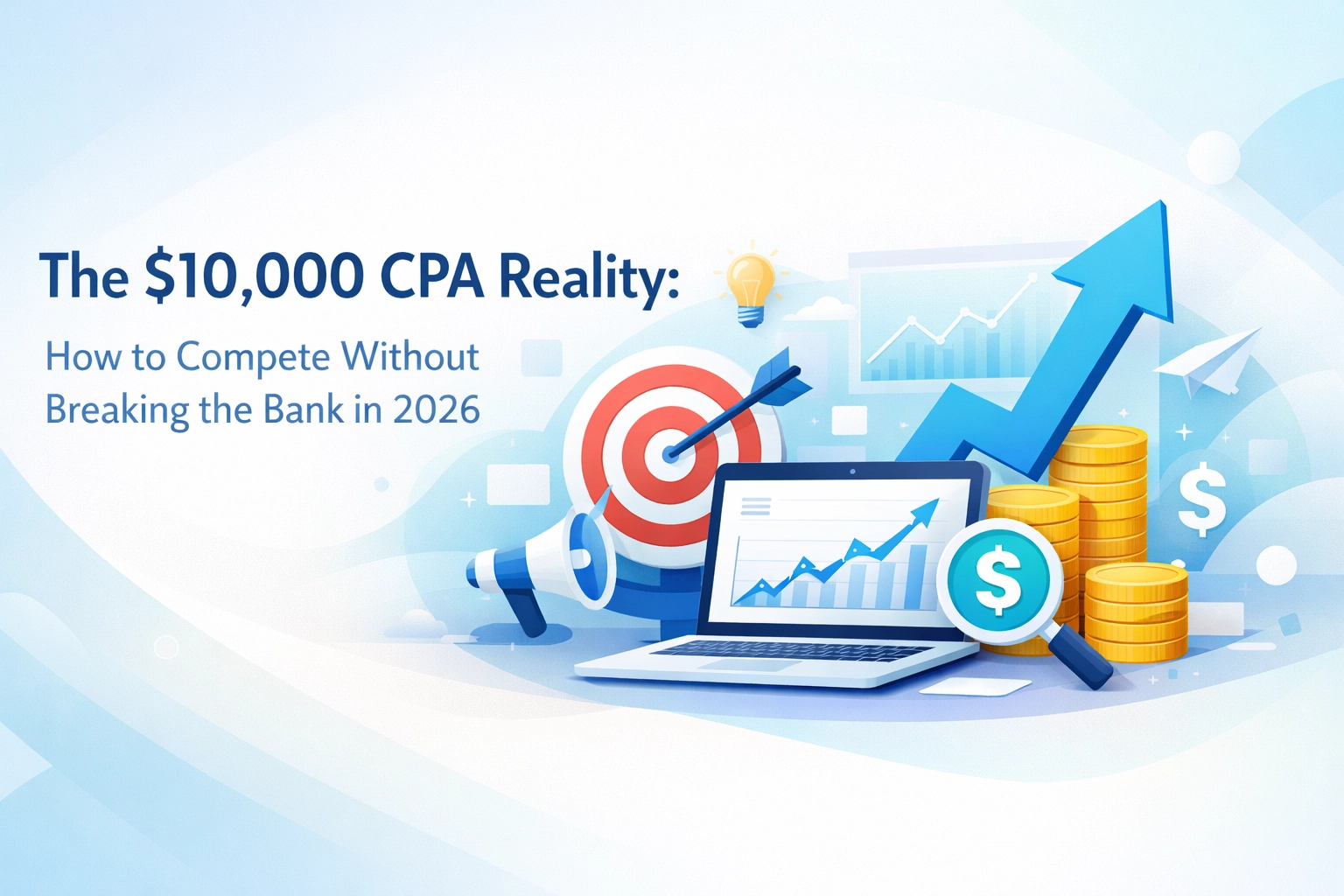
Let's get real for a second. If you're running a behavioral health or addiction treatment facility in 2026, you've probably watched your cost per acquisition climb to levels that would've seemed insane just three years ago. $8,000? Brutal but manageable. $10,000? Now we're talking about a reality that makes CFOs break into a cold sweat and owners question everything.
The thing is, you're not imagining it. According to SAMHSA's latest treatment facility data, competition for qualified admissions has intensified dramatically, and the digital advertising landscape has fundamentally changed. Google Ads costs are up. Facebook's targeting got neutered by privacy updates. And every facility from coast to coast is fighting for the same shrinking pool of searchers who are actually ready to commit.
So here's the million-dollar question: How do you compete when the going rate for a single admission could fund a small car?
Why $10K CPAs Are Now Table Stakes
First, let's acknowledge what's driving this reality. It's not just one thing, it's a perfect storm of factors that have converged in 2026:
Platform costs are climbing. Google Ads CPCs in the addiction treatment space have increased by 35-50% over the past two years. Keywords like "drug rehab near me" or "alcohol detox center" are routinely hitting $50-$80 per click in competitive markets.
Lead quality has dropped. You're getting more clicks, sure, but how many of those actually convert? The VOB process bottleneck we've talked about before? It's killing conversion rates industry-wide.
Compliance restrictions are tighter. With LegitScript requirements and platform policies getting stricter, your ability to optimize and test aggressively has real limits. That means slower learning curves and higher costs before you dial things in.
Everyone's competing for the same keywords. There are only so many people searching for treatment on any given day. When 500 facilities are bidding on the same terms in the same geographic area, prices go through the roof.

The Math That Actually Matters
Here's where most facility owners get lost in the weeds. They fixate on CPA without looking at the full financial picture. Let me show you what I mean with real numbers:
| Metric | Scenario A: High CPA | Scenario B: Lower CPA |
|---|---|---|
| Cost Per Admission | $10,000 | $6,000 |
| Average Length of Stay | 45 days | 30 days |
| Revenue Per Admission | $35,000 | $22,000 |
| Gross Margin | $25,000 | $16,000 |
| Net Profit Per Admission | $15,000 | $10,000 |
| Annual Admissions | 120 | 180 |
| Total Annual Profit | $1,800,000 | $1,800,000 |
See what happened there? The facility paying $10K per admission actually has the same bottom-line profit as the one paying $6K, because they're focusing on the quality of admissions, average length of stay, and total lifetime value rather than just the acquisition cost.
This isn't permission to overspend recklessly. But it is a wake-up call that CPA in isolation is a vanity metric. What matters is your return on ad spend (ROAS) and your ability to fill beds with patients who stay, complete treatment, and generate sustainable revenue.
Strategic Alternatives That Don't Require Infinite Budgets
Alright, so competing head-to-head on the most expensive keywords isn't realistic for everyone. What actually works in 2026 when you're trying to stay profitable?
1. Long-tail keyword optimization. Instead of fighting for "rehab near me," target hyper-specific searches like "dual diagnosis treatment for professionals in Tampa" or "trauma-informed detox for women over 50." These searches have lower volume but dramatically higher intent and lower CPCs. We've seen facilities cut their CPA by 40% just by optimizing their negative keyword strategy and focusing on qualified long-tail terms.
2. Conversion rate optimization on your end. Your website, intake process, and VOB verification workflow matter just as much as your ad spend. If you're spending $10K to get someone to call but your intake team drops 50% of leads, you're not solving a marketing problem, you're perpetuating an operations problem.
3. Retargeting and nurture campaigns. Most people don't admit to treatment on their first search. They research, they hesitate, they get scared. Building robust retargeting campaigns and email nurture sequences means you're staying top-of-mind without constantly paying top-dollar CPCs.
4. Geographic arbitrage. If you're in a saturated market like South Florida or Southern California, consider expanding your digital reach to underserved regions. Telehealth intake, virtual assessments, and regional outreach can give you access to lower-cost leads.

What Actually Moves the Needle in 2026
Let me tell you what I'm seeing work for facilities that are thriving despite the high CPA environment:
Integrated marketing strategies. You can't just throw money at Google Ads and pray. The facilities winning right now have cohesive strategies that blend PPC, SEO, content marketing, and reputation management. They're showing up everywhere their ideal patient is looking, and they're building trust before the first click even happens.
Data-driven decision making. If you don't know your patient lifetime value, your LOS by payer type, or your show rate by traffic source, you're flying blind. Facilities that track metrics ruthlessly can make smarter bids, eliminate waste, and invest confidently in channels that actually convert.
Speed-to-lead processes. According to NAATP industry benchmarks, the difference between responding to a lead in 5 minutes versus 30 minutes can cut your conversion rate in half. Fast, empathetic intake responses aren't optional anymore, they're competitive advantages.
Trust-building content. People are skeptical. They've heard horror stories. They're scared of making the wrong choice. Showing your medical team, creating transparent educational content, and building authority in your niche all reduce hesitation and increase conversion rates downstream.
How to Know If You're Spending Smart
Here's a gut-check framework. Ask yourself these questions:
- Do you know your actual profit per admission, or are you guessing?
- Can you track a lead from first click through admission and discharge?
- Are you testing and iterating monthly, or are you running the same campaigns you launched in 2024?
- Is your intake team empowered and trained, or are they just answering phones?
- Do you have a system for following up with leads who don't admit immediately?
If you answered "no" or "sort of" to more than two of these, your problem isn't CPA: it's infrastructure. And no amount of budget is going to fix that.

The Real Competitive Advantage
Look, here's the thing most people won't tell you: competing in 2026 isn't about having the biggest budget. It's about being smarter, faster, and more strategic than the facilities who are just throwing money at the problem.
You don't need to match the $10K CPA if you can convert at twice the rate. You don't need to bid on every keyword if you own the long-tail searches that drive qualified intent. And you don't need to reinvent the wheel if you partner with people who've already figured out what works.
We've helped dozens of facilities navigate this exact challenge: finding the profitable path between "too expensive" and "not enough volume." Sometimes that means restructuring campaigns. Sometimes it means fixing your intake process. Sometimes it means getting brutally honest about which payers and demographics actually make you money.
The facilities that win in 2026 aren't the ones with unlimited budgets. They're the ones who understand their numbers, optimize relentlessly, and refuse to compete on the same playing field as everyone else.
Ready to Compete Smarter?
If you're tired of watching your marketing budget disappear into high CPAs without seeing the ROI you need, let's talk. We specialize in helping behavioral health and addiction treatment facilities cut through the noise, optimize their ad spend, and build marketing systems that actually fill beds profitably.
Call us at 305-539-7114 or visit adsupmarketing.com to schedule a free strategy session. We'll audit your current marketing, identify what's working (and what's not), and show you exactly how to compete without breaking the bank.
Because the reality is this: $10K CPAs aren't going away. But that doesn't mean you have to play by everyone else's rules.