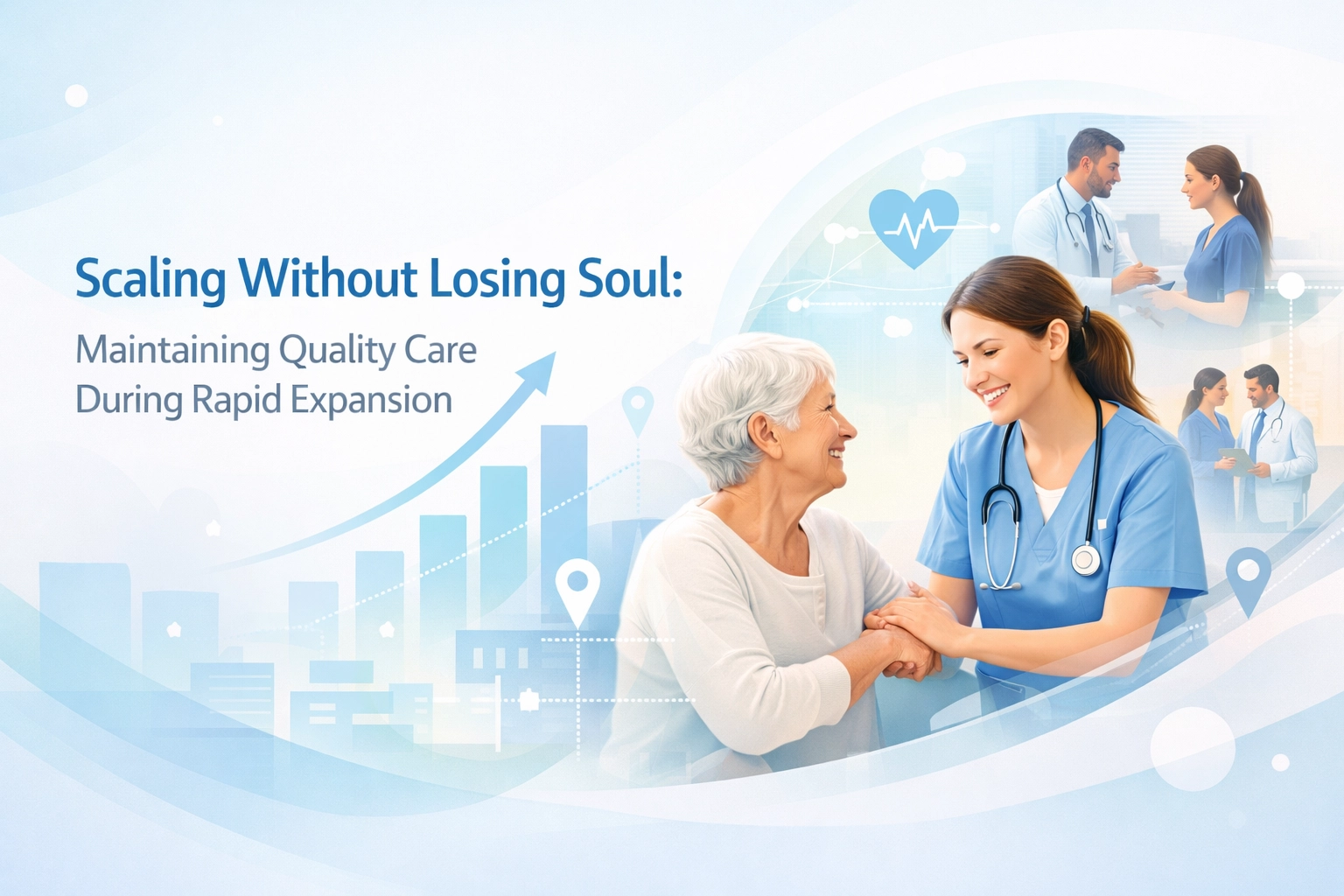
You just signed a lease on your third location. Census is climbing. Your sales team is crushing it. Revenue graphs are pointing straight up and to the right.
And yet… something feels off.
Your clinical director just quit. Staff turnover hit 40% last quarter. You're getting more client complaints than ever before. And the state survey report sitting on your desk? Let's just say it's not great.
Here's the uncomfortable truth: most treatment centers don't fail because they can't grow, they fail because they grow too fast.
Rapid expansion is intoxicating. It feels like validation. Like momentum. Like you've finally "made it." But if your operational infrastructure can't keep pace with your census numbers, you're not scaling, you're just creating a bigger mess.
The difference between sustainable growth and the "churn and burn" model isn't just philosophical. It's measurable. And it will determine whether your facility is still standing three years from now.
The Churn and Burn Trap: Why Volume Doesn't Equal Value
Let's talk about what happens when you prioritize admissions over everything else.
You start cutting corners. Clinical supervision gets spread thin. Staff ratios creep up. Your intake process becomes a revolving door instead of a thoughtful assessment. Before long, you're admitting clients who aren't the right fit, just to keep beds filled and investors happy.
Sound familiar?
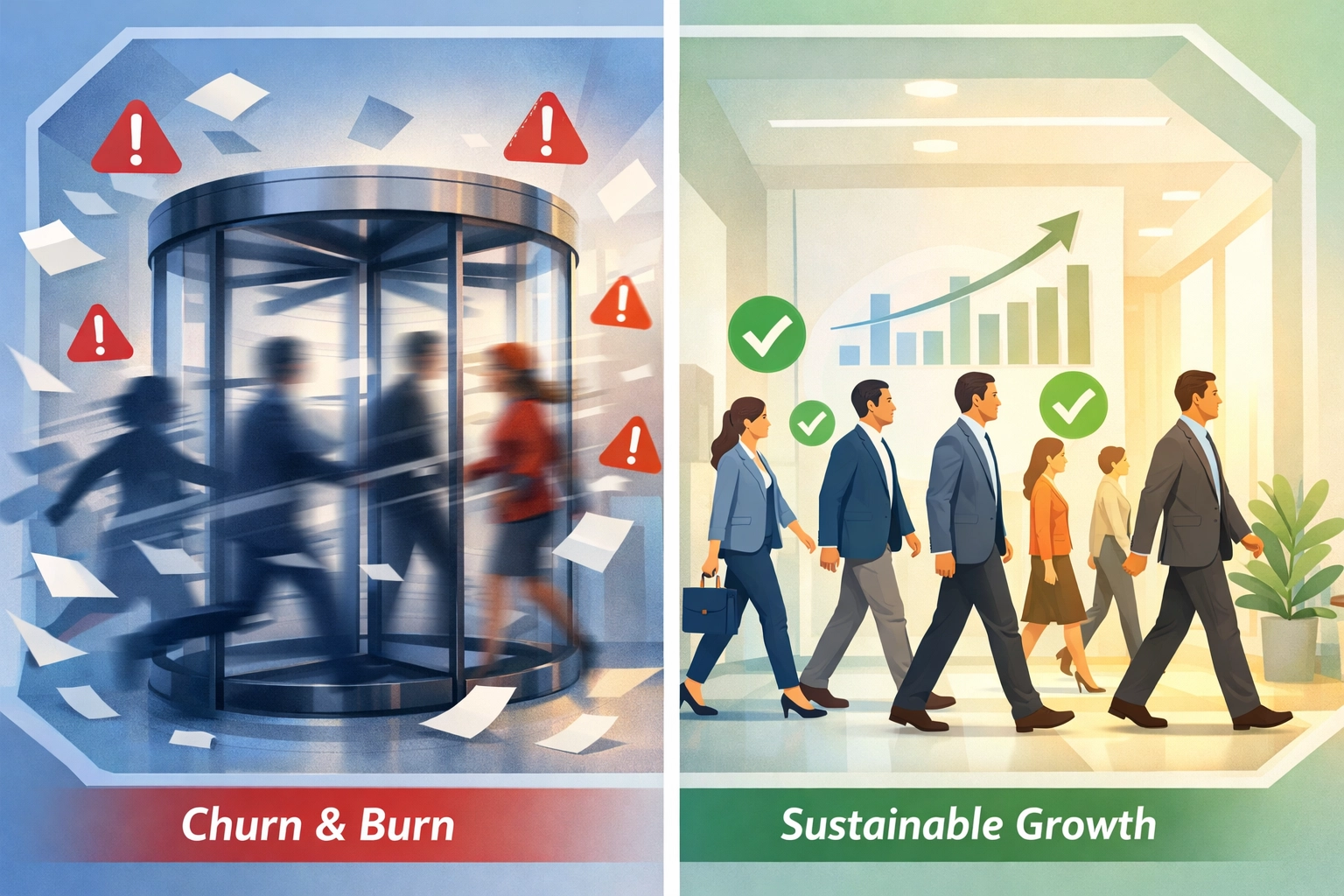
According to the Substance Abuse and Mental Health Services Administration (SAMHSA), facilities that prioritize volume over clinical outcomes see significantly higher rates of early discharge, lower completion rates, and increased regulatory scrutiny. The math is simple: when quality drops, so does your reputation. And in this industry, reputation is everything.
Here's what the churn and burn model actually costs you:
| Metric | Churn & Burn Model | Sustainable Growth Model |
|---|---|---|
| Staff Turnover Rate | 45-60% annually | 18-25% annually |
| Client Completion Rate | 35-45% | 65-75% |
| Regulatory Violations (avg.) | 8-12 per year | 1-3 per year |
| Cost Per Admission (marketing) | $8,500 | $4,200 |
| Insurance Payor Relationships | Strained/unstable | Strong/growing |
Those aren't hypothetical numbers. That's what we see working with treatment centers across the country every single day at Ads Up Marketing.
The facilities that chase growth without building systems? They burn bright and fast. The ones that grow strategically? They're still here five years later, with waiting lists and referral networks that run on autopilot.
Your Operational Systems Checklist: The Foundation for Scale
If you're serious about expanding without imploding, you need infrastructure in place before you open that second or third location. Not after. Before.
Here's your operational systems checklist, the non-negotiables that separate facilities that scale from facilities that flame out:
Clinical Systems
- Standardized assessment protocols across all locations
- Clinical supervision ratios that meet or exceed state requirements (even when you're at capacity)
- Treatment planning frameworks that are consistent, evidence-based, and auditable
- Outcomes tracking tied to specific clinical interventions, not just discharge status
Staffing & Culture
- Documented hiring process with competency-based assessments
- Onboarding programs that take at least 30 days (not 3)
- Ongoing training calendar scheduled 12 months in advance
- Staff satisfaction surveys conducted quarterly with action plans
- Clear career pathways so your best people don't leave for growth opportunities elsewhere
Compliance & Risk Management
- Centralized compliance dashboard showing real-time status across locations
- Regular internal audits (monthly, not annually)
- Incident reporting systems that staff actually use
- LegitScript certification if you're advertising online
- HIPAA protocols that are trained, tested, and enforced
Financial & Operational Metrics
- Daily census tracking by payor, program, and location
- Revenue per client calculated monthly and trended over time
- Admission source tracking to understand where quality referrals come from
- Length of stay analysis broken down by program and discharge reason
- Cost per admission (marketing) by channel and campaign
If you don't have systems in place for at least 80% of these items, you're not ready to scale. Full stop.
Culture Over Compliance: Why Your Team Determines Your Growth Ceiling
Here's something most facility owners miss: your ability to scale is directly tied to the strength of your internal culture.
You can have the best admissions funnel in the world. You can spend six figures a month on PPC campaigns. But if your staff doesn't believe in the mission, if they're burned out, underpaid, or feel like just another cog, your facility will never reach its potential.

According to the National Association of Addiction Treatment Providers (NAATP), facilities with high employee engagement scores see 28% better clinical outcomes and 34% lower staff turnover. That's not soft HR stuff. That's operational leverage.
So what does a culture-first approach actually look like in practice?
- Shared ownership of quality standards. Your clinical staff should feel like co-creators of your treatment philosophy, not just implementers of someone else's rules.
- Frontline empowerment. The people closest to clients often see problems first. Are you listening to them? Or are they afraid to speak up?
- Transparent communication. When you're expanding, fear spreads fast. Keep your team in the loop. They'll forgive mistakes, they won't forgive being blindsided.
- Investment in development. If you're not spending real money on training, certifications, and growth opportunities, your best people will leave. It's that simple.
This isn't feel-good theory. We've worked with treatment centers that doubled their capacity without losing a single key staff member, because they treated culture like the competitive advantage it is.
Technology as the Scaling Multiplier
Let's be real: you cannot manually manage quality across three locations the way you did when you had one 12-bed house.
Modern treatment centers that scale successfully use technology to maintain visibility, standardize processes, and catch problems before they become crises.
Here's what that looks like:
- Cloud-based EMR systems that provide real-time data across all locations
- Quality dashboards showing compliance status, incident reports, and clinical outcomes
- Automated reporting that replaces manual spreadsheets and guesswork
- Marketing attribution tools like conversion tracking to understand what's actually driving admissions
You don't need a six-figure tech stack. But you do need systems that scale with you, not systems that break the moment you add a second location.
The facilities we work with that implement proper tracking and reporting see an average 23% reduction in wasted ad spend and a 31% improvement in lead-to-admit conversion within the first 90 days. That's real money you can reinvest in better care, better staff, or better facilities.
The ROI of Doing It Right
Let's cut to the bottom line: sustainable growth is more profitable than churn and burn. Not just ethically. Financially.
When you maintain quality during expansion:
- Insurance payors renew contracts instead of dropping you
- Referral sources keep sending clients because outcomes are strong
- Marketing costs drop as word-of-mouth and reputation take over
- Regulatory headaches decrease, saving you legal fees and administrative time
- Staff retention improves, cutting recruitment and training costs in half
The Institute for Healthcare Improvement found that organizations implementing structured quality frameworks during expansion saw a 40% improvement in patient satisfaction scores and a 27% reduction in operational costs over three years.
Translation: you make more money by doing the right thing.
How Ads Up Marketing Helps You Scale Without Losing Your Soul
Here's where we come in.
At Ads Up Marketing, we don't just drive admissions. We help treatment centers build sustainable growth engines that align marketing, operations, and clinical quality.
When you work with us, here's what happens:
- Strategic growth planning that matches your marketing spend to your operational capacity
- Lead quality optimization so you're admitting the right clients, not just more clients
- Data-driven campaign management that tracks real outcomes, not just clicks
- Compliance-first advertising that protects your reputation and keeps you off the LegitScript naughty list
- Transparent reporting so you know exactly where every dollar is going
We've helped facilities scale from single locations to regional networks, without sacrificing clinical quality or burning out their teams. We know what works. More importantly, we know what doesn't.
Curious how your current growth plan stacks up? Give us a call at 305-539-7114 and let's talk about where you're headed, and how to get there without losing what made you great in the first place.
The Choice You're Really Making
Every facility owner faces the same fork in the road: grow fast or grow right.
The churn and burn model is seductive. It promises quick wins, impressive census numbers, and the kind of hockey-stick growth that looks great in investor decks.
But it's a trap. Because when quality collapses, everything else follows. Payors leave. Referrals dry up. Staff walks out. Regulators start circling. And suddenly you're fighting fires instead of running a treatment center.
Sustainable growth is harder. It requires patience. Systems. Investment in people and infrastructure. It means sometimes saying no to an admission because it's not the right fit. It means building culture alongside capacity.
But here's the thing: the facilities that do it right don't just survive: they dominate.
They become the names everyone knows. The places insurance companies trust. The programs staff want to work for. The centers families recommend without hesitation.
That's the facility you can build. Not next year. Not someday. Right now.
Ready to stop guessing and start scaling the right way? We're here to help. Call us at 305-539-7114 or visit our contact page to schedule a strategy session. Let's build something that lasts.