INSIGHTS
Designing a Patient-Centric Website Interface
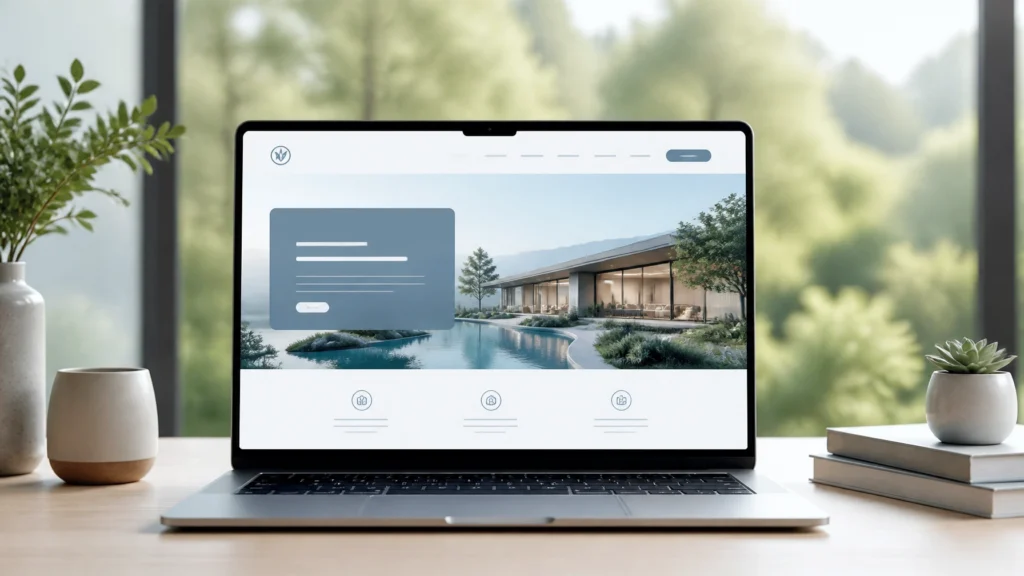
Imagine it’s 3:00 AM. Someone you love is spiraling, and you’ve finally reached that "enough is enough" breaking point. You grab your phone, heart racing, and search for a place that can help. You click a link, and… you're met with a wall of clinical jargon, flickering stock photos of people in handcuffs, and a navigation menu so confusing it feels like a maze.
What do you do? You leave. In less than three seconds, that facility lost a chance to save a life: and a high-value admission.
In the world of residential treatment center marketing, your website isn't just a digital brochure. It’s your front door, your first handshake, and often, the deciding factor between a family choosing your facility or hitting the "back" button. To win in 2026, you can’t just have a "pretty" site. You need a patient-centric interface designed for visual trust, clarity, and comfort.
Table of Contents
- The Psychology of the 3 AM Search
- Visual Trust: Beyond Just a Nice Logo
- Mobile-First: Designing for the Crisis Moment
- Simplifying the Journey: The 'Two-Click' Rule
- The ROI of Patient-Centric Design
- Compliance and Credibility: The 'Seal of Approval'
- Conclusion: Turning Visitors into Admissions
The Psychology of the 3 AM Search
When a prospective patient or a worried family member lands on your site, they aren't in a "shopping" mindset. They are in a crisis mindset. High cortisol levels make it harder for the brain to process complex information. This is why the psychology of first impressions is so critical in behavioral health.
If your interface is cluttered, you’re adding "cognitive load" to someone already at their limit. A patient-centric design acknowledges this by using:
- Generous Whitespace: Give the user's eyes room to breathe.
- Calming Color Palettes: Soft blues, teals, and earthy greens are scientifically proven to lower anxiety.
- Empathetic Language: Instead of "Substance Use Disorder Clinical Intervention," try "We're here to help you get your life back."
Visual Trust: Beyond Just a Nice Logo
Trust isn't something you can just ask for; you have to earn it visually. In an industry unfortunately marred by "patient brokering" and shady practices, your site needs to scream legitimacy.
One of the biggest mistakes we see in residential treatment center marketing is the use of generic, "sad" stock photography. You know the ones: the guy sitting in a dark corner with his head in his hands. According to NIDA, reducing stigma is a key part of the recovery process. Show real photos of your facility, your actual medical team, and bright, hopeful environments.

Mobile-First: Designing for the Crisis Moment
Did you know that over 70% of initial rehab searches happen on a mobile device? If your site takes five seconds to load or has a "contact us" form that's impossible to fill out with thumbs, you’re invisible.
A patient-centric mobile interface prioritizes the "Call for Help" button. It should be "sticky" (remaining at the top or bottom as they scroll) and clearly visible. We often recommend a "one-touch" dial feature. When someone is ready to reach out, don't make them copy-paste a phone number.
Need to see how your current site stacks up? Our team at Ads Up Marketing specializes in content creation and web design specifically for the behavioral health space. We don't just build sites; we build conversion machines. Call us at 305-539-7114 to audit your current interface.
Simplifying the Journey: The 'Two-Click' Rule
A stressed user should be able to find the most important information: Insurance Verification, Programs, and Contact Info: within two clicks.
- Avoid Internal Jargon: Don't use "PHP/IOP/OP" in your main nav without context. Use "Our Programs" or "Levels of Care."
- Audience Hubs: Create clear paths for "For Families," "For Patients," and "For Professionals."
- Insurance Verification (VOB): This is usually the biggest hurdle. Make your VOB process transparent and easy to start right from the homepage.
The ROI of Patient-Centric Design
Is it worth investing in a high-end, custom UX (User Experience)? Let's look at the data. In 2026, healthcare sites with high trust signals and optimized UX convert at nearly double the rate of standard templates.
| Metric | Standard Industry Template | Patient-Centric Custom Design |
|---|---|---|
| Average Conversion Rate | 2.1% | 5.8% – 8.2% |
| Bounce Rate (Mobile) | 65% | 32% |
| Trust Signal Impact | Minimal | +40% lift in inquiries |
| Load Time (Seconds) | 4.5s | 1.2s |
| Cost Per Admission (CPA) | Higher | Significantly Lower |
As you can see, a better interface isn't just about "looking good": it’s about your bottom line. Better UX means a lower Cost Per Admission (CPA), which is the number that actually matters to your facility’s growth.
Compliance and Credibility: The 'Seal of Approval'
You can't talk about residential treatment center marketing without talking about LegitScript and compliance. Your website must prominently display your accreditations.

Place the following logos in your footer and near your main Call to Action (CTA):
- The Joint Commission / CARF Seals
- LegitScript Certification
- NAATP (National Association of Addiction Treatment Providers) Membership
- HIPAA Compliant Secure Form Badge
Providing these "visual anchors" tells the visitor, "We are a safe, regulated, and professional medical facility." Organizations like SAMHSA emphasize the importance of data privacy and ethical marketing, so ensuring your HIPAA compliance is front-and-center isn't just legal: it's a trust builder.
Performance Impact: How UX Changes the Game
Let’s look at a real-world scenario. A facility in Florida was spending $50,000 a month on PPC management but was seeing a high bounce rate. People clicked the ads, saw a cluttered, "corporate-looking" site, and left.
By redesigning their interface to focus on "Visual Trust": including adding real staff photos and a simplified mobile navigation: their conversion rate jumped from 3% to 7.5%. They didn't spend an extra dime on ads, but they more than doubled their admissions.

Conclusion: Turning Visitors into Admissions
Your website is often the very first interaction a person has with your brand. Does it feel like a cold hospital wing, or does it feel like a warm, supportive path to a new life?
Designing a patient-centric interface requires more than just technical skill; it requires empathy. It requires understanding the "3 AM crisis" and providing a digital experience that says, "We see you, we understand, and we can help."
At Ads Up Marketing, we live and breathe the behavioral health industry. We don't guess; we use over $100 million in PPC ad spend data to know exactly what makes a patient click and: more importantly: what makes them stay.
Stop losing potential admissions to a confusing website. Let’s build an interface that reflects the high level of care you provide.
Ready to transform your digital presence?
Give us a call today at 305-539-7114. We offer month-to-month contracts because we’re confident our results will speak for themselves. Let’s help more people find the road to recovery together.