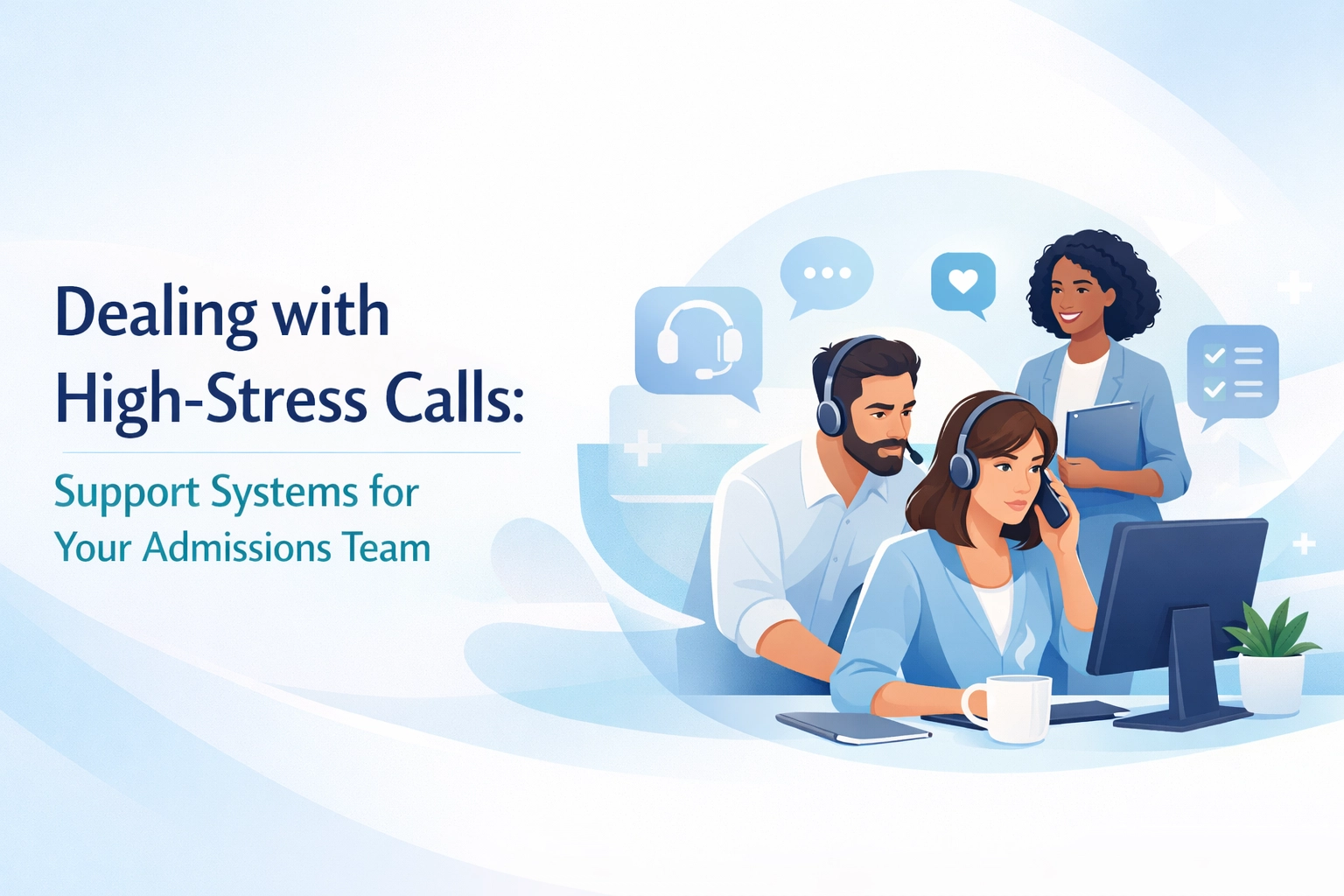
Your admissions team just got off the phone with someone's daughter, mid-crisis, threatening self-harm. Before they can even catch their breath, another call comes in: this time it's an angry parent demanding answers about insurance coverage while their son is actively using in the background.
Sound familiar?
If you run a behavioral health facility, you already know that admissions isn't just about filling beds. It's frontline crisis intervention, insurance navigation, family mediation, and sales: all rolled into one impossibly demanding job. And when your team burns out, your admissions suffer. Period.
The good news? There are proven support systems that actually work. Let's dig into what's killing your team's morale and how to fix it before your best people walk out the door.
Why Behavioral Health Admissions Is Different
Most call centers deal with frustrated customers. Your team deals with people in genuine crisis: individuals who might not make it through the night without help.
According to SAMHSA's National Helpline data, behavioral health crisis calls have increased by 27% since 2020. That's not just more volume. It's more intensity, more complexity, and more emotional weight on every single conversation.
Your admissions counselors aren't just taking orders. They're:
- De-escalating suicidal callers
- Navigating insurance denials in real-time
- Managing family dynamics during active addiction crises
- Making split-second clinical assessments
- Hitting census targets while someone's literally begging for help
It's exhausting. And if you're not actively supporting your team through this, you're losing good people to burnout: and losing admissions in the process.

The Real Cost of Unsupported Admissions Teams
Here's what happens when you don't prioritize support systems:
High turnover. The average behavioral health call center sees 30-45% annual turnover according to industry benchmarks from NAATP. Every person who leaves takes institutional knowledge, rapport with referral sources, and your training investment with them.
Lower conversion rates. Burned-out staff don't close admissions. They go through the motions, miss rapport-building opportunities, and fail to follow up effectively.
Reputation damage. One bad call with a distressed family member can tank your online reviews and referral relationships faster than any marketing campaign can fix.
Compliance risks. Stressed teams make mistakes: HIPAA violations, incomplete documentation, missed clinical red flags.
Let me put this in numbers you care about:
| Metric | Unsupported Team | Supported Team | Revenue Impact |
|---|---|---|---|
| Average Admissions Counselor Tenure | 8-12 months | 24+ months | $45K-$65K saved per counselor in recruitment/training costs |
| Lead-to-Admit Conversion Rate | 18-22% | 32-38% | 10-16 additional admissions per 100 leads |
| Staff Sick Days/Year | 12-18 days | 4-7 days | $8K-$15K saved per employee annually |
| VOB-to-Admit Close Rate | 35-42% | 55-65% | Additional $180K-$320K annual revenue (20-bed facility) |
The math is simple: investing in your admissions team directly impacts your bottom line.
Building Effective Support Systems That Actually Work
So what does real support look like? Not pizza parties and "we appreciate you" emails. Here's what moves the needle:
1. Structured Debriefing Protocols
After an intense call: especially one involving suicide risk, family conflict, or a denied admission: your team needs space to process.
Implement mandatory cool-down periods after high-acuity calls. Even 5-10 minutes to step away, talk to a supervisor, or journal the experience makes a measurable difference. Research published in the Journal of Substance Abuse Treatment shows that structured debriefing reduces compassion fatigue by up to 40%.
Don't just make it available. Make it mandatory and scheduled into workflow.
2. Peer Support Systems
Your veteran admissions counselors have been through it all. Pair newer team members with experienced mentors who can normalize the emotional intensity and share practical coping strategies.
Weekly peer circles: where staff can share difficult calls without judgment: create psychological safety. People need to know they're not alone in feeling overwhelmed.

3. Clinical Consultation Access
Your admissions team shouldn't be making clinical decisions in a vacuum. Give them direct, immediate access to clinical supervisors for:
- Risk assessment validation
- Complex insurance/clinical fit questions
- Ethical dilemmas about admissions
- Post-call clinical debriefing
When your admissions staff knows they can immediately consult someone with clinical expertise, their confidence increases and their stress decreases.
4. Real Training (Not Just Product Knowledge)
Stop training your team on bed availability and insurance contracts and start training them on:
- Motivational interviewing for rapport-building
- Trauma-informed communication for crisis calls
- Stress inoculation techniques for personal resilience
- Boundary-setting to prevent vicarious trauma
The National Institute on Drug Abuse (NIDA) emphasizes that frontline staff benefit enormously from evidence-based communication training. This isn't soft-skills fluff: it's what separates teams that thrive from teams that crash.
5. Technology That Reduces Friction
Your admissions team is already stressed. Don't make them fight with terrible software on top of everything else.
Invest in:
- CRM systems that actually track lead communication history
- Automated VOB verification so staff aren't stuck on hold with insurance companies
- Call recording/coaching tools for skill development
- Real-time census dashboards so they know bed availability instantly
Every minute your team spends wrestling with bad systems is a minute they're not building rapport with a potential admit.
The Support System Nobody Talks About: Marketing Alignment
Here's where most facilities drop the ball completely: and where Ads Up Marketing comes in.
Your admissions team's stress isn't just about the calls themselves. It's about getting poor-quality leads that were never going to convert in the first place.
When your digital marketing isn't targeted properly, your team wastes hours on:
- Out-of-network insurance callers
- People looking for outpatient when you only offer residential
- Geographic mismatches
- Leads who can't afford private pay and don't qualify for your beds
Every bad lead is wasted emotional energy. Every mismatched caller is another frustrating conversation. And it all adds up to burnout.
This is fixable.
Proper PPC campaign management with negative keywords, geo-targeting, and insurance-specific landing pages means your admissions team only talks to qualified leads. Our drug rehab marketing strategies are specifically designed to pre-qualify leads before they ever pick up the phone.
When your marketing and admissions are aligned, your team:
- Spends less time on dead-end calls
- Closes more admissions from qualified leads
- Feels more successful and less frustrated
- Stays in their roles longer

Creating a Culture That Retains Top Talent
Support systems only work if leadership actually values admissions as more than "just sales."
Your admissions director isn't a call center manager. They're running a crisis intervention unit that happens to also drive revenue. Treat them: and their team: accordingly.
That means:
Competitive compensation. Behavioral health admissions counselors should earn more than general call center staff. They're doing harder, more emotionally demanding work.
Career pathways. Show your team where they can grow. Can top performers move into clinical roles? Training positions? Marketing collaboration?
Public recognition. Celebrate admissions wins, but also acknowledge the hard calls where your team handled a crisis professionally even if the person didn't admit.
Leadership modeling. If you're the owner or clinical director, occasionally shadow admissions calls. Understand what your team faces daily. Your empathy will be genuine because you'll have context.
When to Get Outside Help
Look, you're running a treatment facility. You probably don't have time to become an expert in admissions team development, call center optimization, and marketing funnel alignment.
That's literally what we do.
At Ads Up Marketing, we've spent years working exclusively with behavioral health facilities. We understand that admissions support isn't just HR: it's operational strategy that directly impacts census.
We help facilities:
- Optimize lead quality so admissions teams aren't drowning in unqualified calls
- Build conversion-focused landing pages that pre-qualify leads
- Implement local SEO strategies that attract the right geographic fits
- Track which marketing sources produce not just leads, but actual admissions
When your marketing is dialed in, your admissions team can focus on what they do best: helping people in crisis find the right care: instead of wasting energy on calls that were never going to convert.
Your Next Steps
Supporting your admissions team isn't optional anymore. The facilities that figure this out will dominate their markets. The ones that don't will keep hemorrhaging talent and watching their competitors fill beds.
Start with one thing this week:
- Audit your current support systems. Ask your admissions team what would actually help them (and listen to the answer).
- Review your lead quality. Are you sending your team qualified prospects or just raw traffic?
- Talk to your marketing partner. If they can't explain how their strategy reduces your admissions team's stress while increasing conversions, you're working with the wrong people.
Want to see how the right marketing approach can transform your admissions team's experience while improving your conversion rates? Let's talk.
Call us at 305-539-7114 or contact our team here. We'll walk you through exactly how we've helped other behavioral health facilities build sustainable admissions systems that work for everyone: your team, your census, and most importantly, the people who need your help.
Your admissions team is the heartbeat of your facility. It's time to treat them that way.