
INSIGHTS
The Psychology of First Impressions: How Your Website's Visuals Dictate Trust
You've got 50 milliseconds. That's it.
Before a single word on your treatment center's website gets read, before anyone scrolls to see your accreditations or amazing outcomes data: your visitors have already decided whether you're trustworthy or not. And here's the kicker: that snap judgment is almost entirely based on how your site looks, not what it says.
According to Stanford's Web Credibility Research, 94% of first impressions are design-related. Think about that for a second. All those carefully crafted testimonials and evidence-based treatment descriptions? They don't even get a chance if your visual design screams "2009 website template" or worse: generic corporate stock photos that look like they came from every other healthcare site on the internet.
The 50-Millisecond Window (And Why It Should Terrify You)
Let's talk about what happens in that first blink of an eye. Your potential patient's family member: probably stressed, scared, and desperate for help: lands on your homepage. Their brain immediately fires off automatic judgments through something called the Halo Effect.
Here's how it works: if your website looks polished and intentional, visitors subconsciously assume everything about your facility is equally professional. Your clinical team? Must be top-notch. Your admissions process? Probably seamless. Your actual treatment environment? Likely as clean and welcoming as your website suggests.
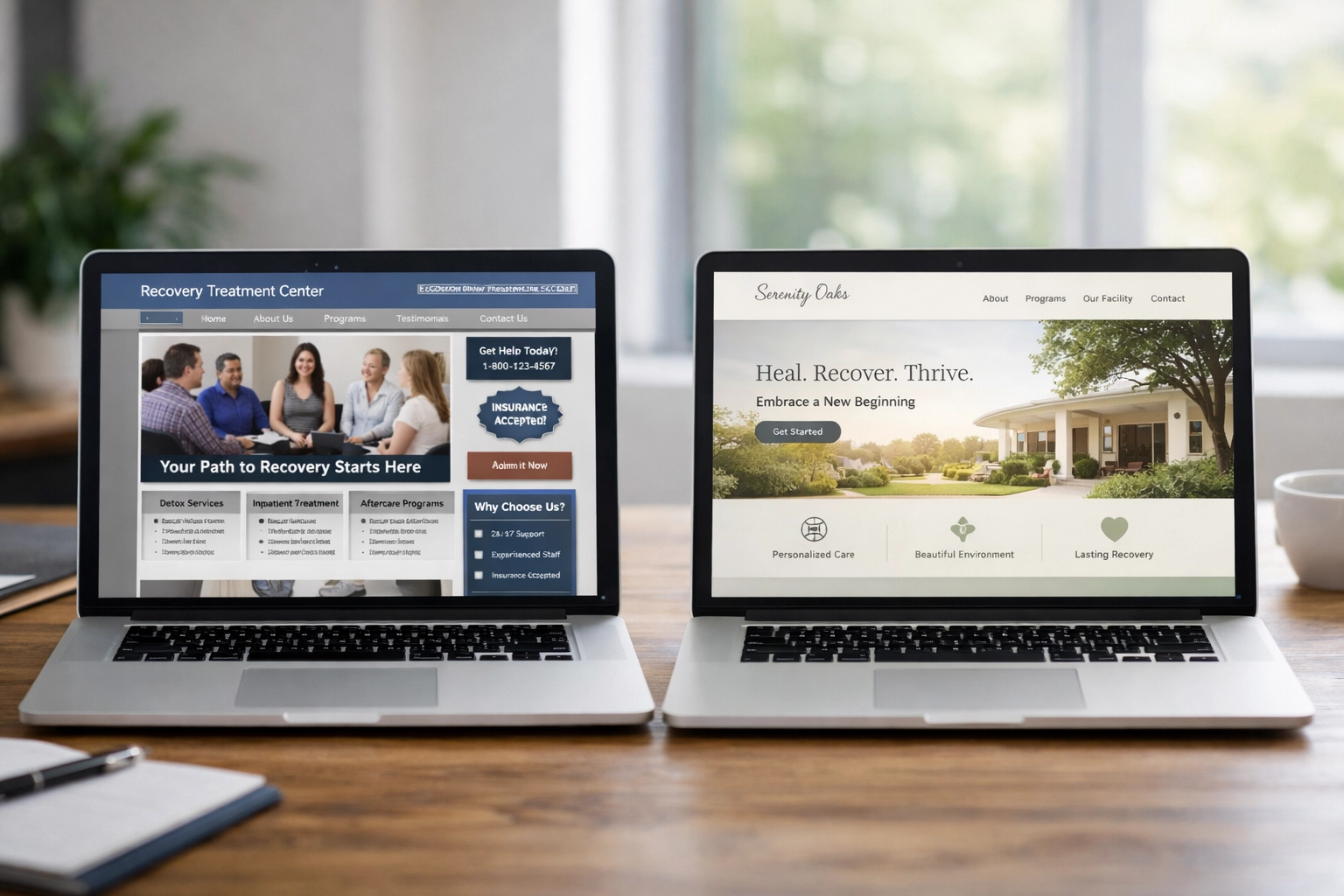
But flip that coin. If your homepage feels dated, cluttered, or filled with those painfully obvious stock photos of people in lab coats pointing at clipboards? Your visitors assume the worst. They're thinking: "If they can't even invest in a decent website, what else are they cutting corners on?"
The Stock Photo Problem Nobody Wants to Talk About
We need to have an honest conversation about stock photography in healthcare marketing. You know the ones I'm talking about: the impossibly diverse group of "doctors" gathered around a computer, all smiling with perfect teeth. The patient in a hospital gown looking contemplatively out a window with soft lighting. The therapist and client shaking hands with that weird corporate enthusiasm.
These images don't just fail to build trust. They actively destroy it.
Why? Because authenticity matters more in addiction treatment and behavioral health than almost any other industry. When someone is researching treatment for themselves or a loved one, they're looking for real. They want to see your actual facility, your actual staff, the real spaces where healing happens.
A study published by the Nielsen Norman Group found that users consistently ignore stock photos but pay close attention to authentic imagery that provides relevant information. In plain English: people can smell fake from a mile away, and when they do, they bounce.
What Visual Trust Actually Looks Like
So what should your treatment center's website look like? Let me break down the elements that genuinely build trust in those critical first 3-5 seconds:
Authentic Photography and Video
- Real staff members (not actors in white coats)
- Your actual facility spaces, inside and out
- Genuine moments from group sessions or therapy (with proper consents, obviously)
- Before-and-after shots of your campus or newly renovated spaces
Professional Design Elements
- Clean, uncluttered layouts that don't overwhelm
- Intentional color psychology (calming blues and greens work well for treatment centers)
- Typography that's actually readable (looking at you, fancy script fonts)
- White space that lets content breathe
Immediate Clarity
- Crystal clear headline that explains what you do
- Easy-to-find contact information (phone number, not hidden three clicks deep)
- Visual hierarchy that guides the eye naturally
- No mystery about your accreditations and licenses

The Business Impact: What This Actually Costs You
Let's get practical. You're probably wondering: "Does this visual stuff really impact my bottom line, or is this just marketing fluff?"
Fair question. Here's what the data tells us:
| Metric | Impact of Poor Visuals | Impact of Strong Visuals |
|---|---|---|
| Bounce Rate | 70-90% leave within 3 seconds | 40-50% explore further |
| Average Session Duration | Under 30 seconds | 2-4 minutes |
| Conversion to Call | 1-2% of visitors | 5-8% of visitors |
| Cost Per Admission | $3,000-$5,000 (wasted ad spend) | $1,500-$2,500 |
| Patient Trust Score | Low credibility perception | High credibility & comfort |
When you're spending thousands on PPC campaigns for detox centers or trying to generate high-intent leads, your website is where the rubber meets the road. You can drive all the traffic in the world, but if your visuals don't build instant trust, you're literally burning money.
The Emotional Architecture of Your Website
Here's something most treatment centers miss: your website's design creates an emotional state in visitors before they even process what you do.
This happens at what researchers call the "visceral level": an automatic, emotional response that bypasses conscious thought entirely. Within those first 50 milliseconds, your design either calms anxious family members, inspires hope in struggling individuals, or triggers suspicion and doubt.
Think about what emotions your current website creates. Does it feel:
- Safe and welcoming, or cold and institutional?
- Modern and capable, or outdated and questionable?
- Authentic and human, or corporate and distant?
- Clear and reassuring, or confusing and overwhelming?
Your visual design choices answer these questions before a single word gets read. And in behavioral health, where stigma and fear are already massive barriers to seeking help, that emotional architecture can literally determine whether someone calls or clicks away.

Video: Your Secret Weapon for Building Trust Faster
If static imagery builds trust, video accelerates it exponentially. A 60-second video tour of your facility, a brief introduction from your clinical director, or testimonials from alumni (with permission) can compress weeks of trust-building into a single viewing.
According to research from Wyzowl, 84% of people say they've been convinced to buy a product or service by watching a brand's video. For treatment centers, video serves an even more critical function: it humanizes your facility and proves you're real.
But here's the catch: the video quality matters. A shaky iPhone video with bad audio undermines trust just as much as stock photos do. You need professional-quality video that still feels authentic. It's a balance, but it's absolutely worth the investment.
Matching Design to Patient Expectations
Different populations have different visual expectations, and your design should reflect who you're trying to reach.
A luxury executive treatment program? Sophisticated, refined visuals with earthy tones and high-end architectural photography work well. A young adult program focused on emerging adults? Brighter, more energetic design with genuine photos of group activities and community spaces resonates better.
The key is alignment. When your visual design matches what your ideal patient expects to see, trust forms instantly. When there's a disconnect: like a teen program with corporate boardroom imagery: visitors bounce because something feels "off."
What You Should Do About This (Starting Today)
Look, I know this might feel overwhelming. Maybe you're reading this and realizing your website is filled with those exact stock photos I just roasted. Or maybe your site hasn't been updated since 2015 and you're not even sure where to start.
Here's the good news: you don't have to overhaul everything overnight. But you do need to start somewhere.
Immediate Actions:
- Audit your current website imagery: count how many stock photos you're using
- Schedule a professional photo shoot of your actual facility (seriously, do this next week)
- Record simple video introductions from key staff members
- Review your homepage through the "50-millisecond test": show it to someone for one second and ask what they remember
Bigger Picture Strategy:
- Develop a visual brand guide that aligns with your patient population
- Invest in ongoing content creation (quarterly photo/video updates)
- A/B test different visual approaches and track conversion metrics
- Keep your design current with annual refresh cycles
The reality is, this stuff is complex. You're running a treatment facility, not a design agency. That's exactly why we exist.
Let's Fix Your Visual Trust Problem
At Ads Up Marketing, we specialize in healthcare marketing that actually converts. We understand the unique challenges of building trust in behavioral health, and we know how to create visual experiences that turn worried visitors into confident callers.
We're not talking about slapping a new coat of paint on your existing site. We're talking about strategic visual psychology that aligns with your patient population, showcases your actual strengths, and converts more of that expensive traffic you're already paying for.
Your admissions process optimization starts with your website. Every day your visuals aren't building trust is another day you're losing qualified admissions to competitors who figured this out.
Ready to stop bleeding money on a website that works against you? Call us at 305-539-7114 and let's talk about what a high-converting, trust-building website actually looks like for your facility. Because you've got 50 milliseconds to make an impression: and we'll make sure it's the right one.