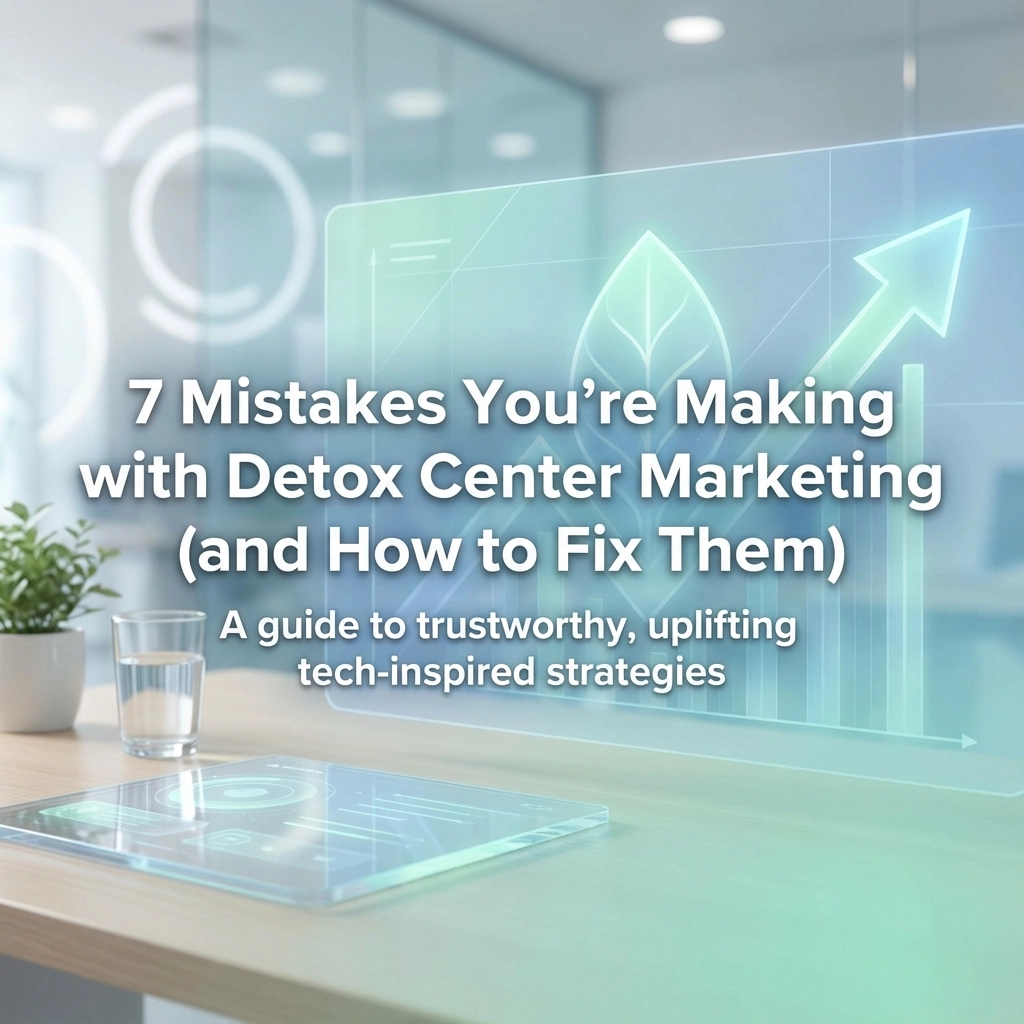
Running a detox center means you're literally saving lives. But here's the harsh reality: if people can't find you when they need help most, all your clinical expertise doesn't matter. You might have the best medical staff, the most compassionate approach, and proven success rates, but without effective marketing, you're invisible to the families desperately searching for help at 2 AM.
Most detox centers make the same costly marketing mistakes, burning through budgets while watching competitors fill their beds. The good news? These mistakes are fixable once you know what to look for.
Mistake #1: Treating Your Detox Center Like Any Other Business
Here's what's happening: You're using generic marketing tactics that work for restaurants or retail stores, completely ignoring the unique nature of addiction treatment. Your ads sound like you're selling vacation packages instead of life-saving medical care.
People searching for detox services aren't comparison shopping like they would for a new car. They're in crisis. They need immediate help, not flashy amenities or vague promises. Yet many centers focus their marketing on spa-like facilities and luxury accommodations rather than medical expertise and successful outcomes.
The fix: Shift your messaging to address the real concerns families have. Instead of "beautiful mountain views and gourmet meals," try "24/7 medical supervision during withdrawal" or "individualized detox protocols based on substance and usage history."
Your marketing should answer questions like: Will my loved one be safe? What happens if there are complications? How long does detox typically take? When content marketing for rehabs focuses on these genuine concerns, families feel understood rather than sold to.

Mistake #2: Ignoring Healthcare Advertising Compliance
Here's what's happening: Your ads keep getting rejected by Google and Facebook because you're using language that violates healthcare advertising policies. Terms like "guaranteed recovery," "100% success rate," or "best detox center" will get your campaigns shut down faster than you can say ROI.
Healthcare advertising has strict rules for good reason. The FTC, FDA, and platform-specific policies all prohibit absolute claims in addiction treatment marketing. Yet we see centers making these mistakes constantly, wasting thousands in rejected ads and lost time.
The fix: Work with marketers who understand healthcare compliance. At Ads Up Marketing, we've helped dozens of treatment facilities navigate these regulations successfully. Instead of claiming you're the "best," focus on what makes you different: your medical credentials, specialized programs, or accreditation status.
Replace problematic language with compliant alternatives:
- "Guaranteed recovery" becomes "evidence-based treatment approaches"
- "Best treatment center" becomes "accredited by [specific organization]"
- "100% success rate" becomes "individualized care plans with ongoing support"
Mistake #3: Weak Online Presence That Doesn't Build Trust
Here's what's happening: Your website looks like it hasn't been updated since 2015, your Google My Business profile is incomplete, and families can't find basic information like insurance accepted or admission requirements. In an industry where trust is everything, a poor online presence destroys credibility before you even get a phone call.
Over 80% of families research treatment options online before making contact. If your website doesn't answer their immediate questions or looks unprofessional, they'll move on to a competitor who does.
The fix: Audit your entire online presence. Your website should clearly display:
- Insurance plans accepted
- Medical staff credentials
- Detox protocols and safety measures
- What to expect during admission
- Contact information prominently displayed
Don't forget about local SEO for treatment centers. When someone searches "detox center near me" at 3 AM, you want to be the first result they see. This means optimizing your Google My Business profile, collecting reviews, and ensuring your NAP (Name, Address, Phone) information is consistent across all platforms.

Mistake #4: Focusing on Volume Instead of Quality Leads
Here's what's happening: You're celebrating high website traffic and lots of phone calls, but your admission rates are terrible. You're attracting tire-kickers instead of families ready to begin treatment. Quality beats quantity every time in detox marketing.
Many centers make the mistake of casting too wide a net, trying to attract anyone and everyone. But not every lead is worth pursuing. A family calling about luxury amenities probably isn't as serious as someone asking about medical supervision during withdrawal.
The fix: Optimize for high-intent searches and qualified leads. Target keywords like:
- "medically supervised detox"
- "alcohol withdrawal symptoms treatment"
- "safe drug detox facility"
- "24/7 medical detox"
These searches indicate someone who understands they need professional medical help, not just a place to "get clean." Your PPC campaigns should focus on these high-intent keywords rather than broad terms that attract casual browsers.
Train your intake staff to qualify leads quickly. Ask about timeline, insurance verification, and level of care needed. This helps you focus energy on families ready to move forward rather than spending hours with people just "gathering information."
Mistake #5: No Clear Unique Value Proposition
Here's what's happening: When asked what makes your detox center different, you give vague answers like "compassionate care" or "individualized treatment." Every center claims this. Families can't tell you apart from the 50 other facilities in their search results.
Without a clear differentiator, you're competing solely on price and location. That's a losing strategy in healthcare marketing.
The fix: Identify what genuinely makes your center unique. Maybe it's:
- Specialized protocols for specific substances
- 24/7 physician availability (not just nurses)
- Dual-diagnosis capability
- Shorter average length of stay due to advanced medications
- Specific accreditations or certifications
Once you've identified your unique strengths, weave them throughout all marketing materials. Your website, ads, and phone scripts should consistently reinforce why families should choose you over alternatives.
If you're struggling to identify your differentiators, that's actually a business development issue disguised as a marketing problem. Before you can market effectively, you need services or approaches that are genuinely different.

Mistake #6: Disconnected Marketing and Admissions Process
Here's what's happening: Your marketing promises one thing, but the admissions experience delivers something completely different. Or worse: leads generated by marketing campaigns get lost in the shuffle because your intake team isn't prepared to handle them properly.
We've seen centers spend thousands driving traffic to their website, only to lose qualified prospects because phone calls go to voicemail or intake staff can't answer basic questions about the programs being advertised.
The fix: Align your marketing messages with your actual admission process. If your ads mention "immediate admission available," make sure that's actually true. If you promote certain programs or services, ensure your intake team can discuss them knowledgeably.
Create intake scripts that address common questions raised by your marketing:
- What insurance do you accept?
- How quickly can someone be admitted?
- What should families expect on admission day?
- What items should patients bring?
Consider implementing call tracking and recording (where legal) to identify where the disconnect happens. Sometimes the issue is response time: addiction treatment inquiries need immediate attention, not callbacks the next business day.
Mistake #7: Ignoring the Power of Social Proof and Reviews
Here's what's happening: Families making treatment decisions rely heavily on reviews and testimonials, but your online reputation management is non-existent. You might be providing excellent care, but if that's not reflected in online reviews, it's like it never happened.
Many detox centers shy away from actively managing their online reputation, thinking it's inappropriate for healthcare. But families absolutely check Google reviews, Yelp, and social media before choosing a treatment facility.
The fix: Develop a systematic approach to reputation management that respects patient privacy while building trust. Focus on:
- Collecting reviews from family members (with patient permission)
- Responding professionally to all reviews, positive and negative
- Showcasing staff credentials and success stories (appropriately anonymized)
- Building an active social media presence that demonstrates your expertise
Remember, you can't ask patients directly for reviews due to HIPAA, but family members who were involved in the treatment decision can share their experiences. Create a process that makes it easy for satisfied families to leave feedback while protecting patient confidentiality.
Ready to Fix These Marketing Mistakes?
Look, detox center marketing isn't like selling shoes online. You're dealing with families in crisis who need accurate information and immediate help. The stakes are too high for generic marketing approaches or trial-and-error campaigns.
These seven mistakes are costing your facility qualified admissions and wasting your marketing budget. But here's the thing: they're all fixable with the right strategy and implementation.
At Ads Up Marketing, we've helped dozens of detox centers and treatment facilities overcome these exact challenges. We understand healthcare compliance, know how to attract high-intent leads, and can help you build marketing systems that actually drive admissions rather than just website traffic.
Don't let poor marketing keep you from helping families who need your services. If you're ready to stop making these costly mistakes and start seeing real results from your marketing efforts, let's talk.
Call us today at 305-539-7114 to discuss how we can help your detox center attract more qualified admissions while staying compliant with healthcare advertising regulations.
Your clinical team is saving lives. Let us help you make sure the right families can find you when they need help most.