INSIGHTS
Why Your Intake Scripts Sound Like Robots (and How to Humanize Them)
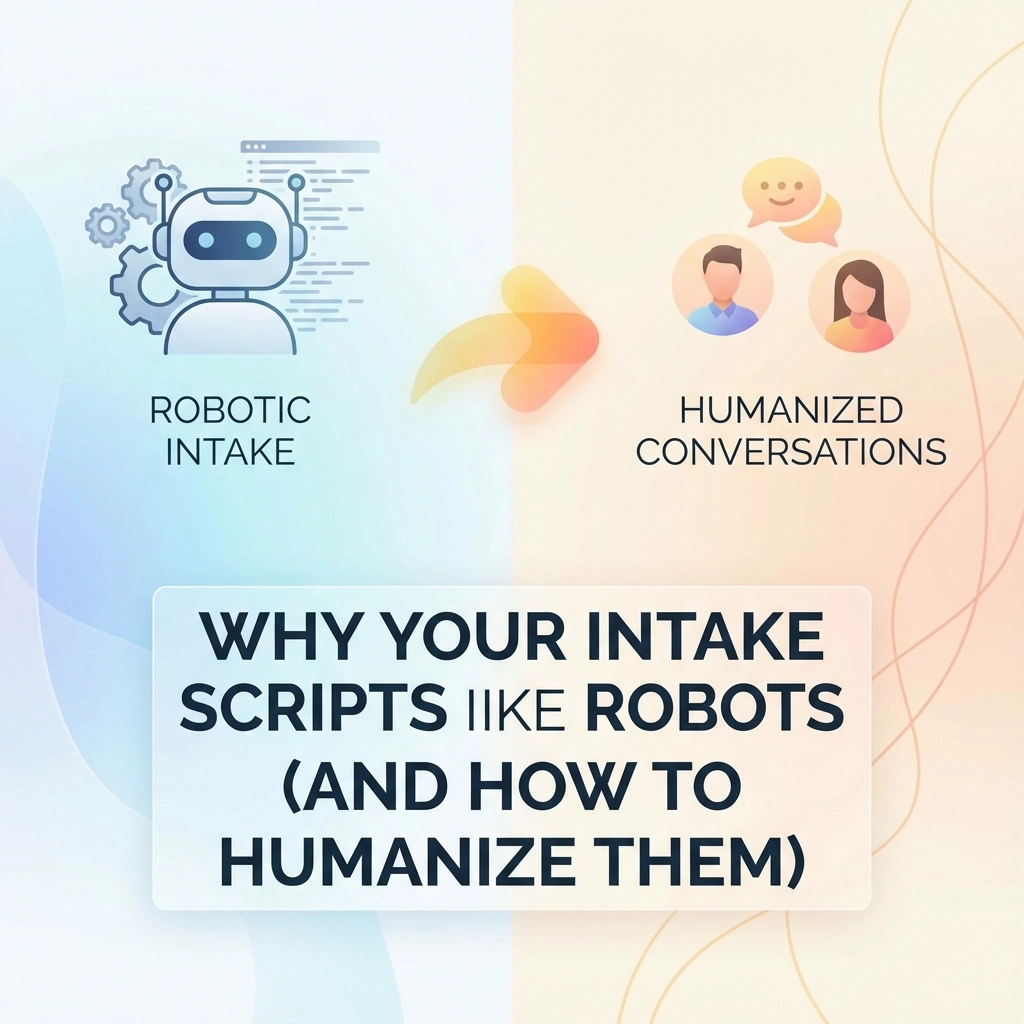
When someone calls your treatment center at 2 AM in crisis, the last thing they need to hear is your intake specialist reciting a checklist like they're ordering pizza. Yet that's exactly what's happening at facilities across the country – and it's costing you admissions.
Your intake scripts are supposed to build trust and guide families toward treatment. Instead, they're creating barriers that push desperate people away at their most vulnerable moment.
The data tells a brutal story. SAMHSA's facility and admissions data highlight persistent access barriers in substance use treatment, meaning many families contact multiple programs before finding an appropriate, available option (N-SUMHSS 2023; TEDS 2022). If your intake team sounds like they're reading from a script, you're getting eliminated in the first 60 seconds.
The Hidden Cost of Robotic Intake Scripts
Let's break down what robotic intake scripts are actually costing your facility:
| Impact Area | Cost Per Month | Annual Impact |
|---|---|---|
| Lost admissions from poor first impressions | $45,000 | $540,000 |
| Increased call abandonment rate (40% vs 15%) | $28,000 | $336,000 |
| Longer average conversion time | $15,000 | $180,000 |
| Total Revenue Loss | $88,000 | $1,056,000 |
These aren't just numbers – they represent real families who needed help and went somewhere else because your team sounded disengaged and impersonal.
What Makes Intake Scripts Sound Robotic?
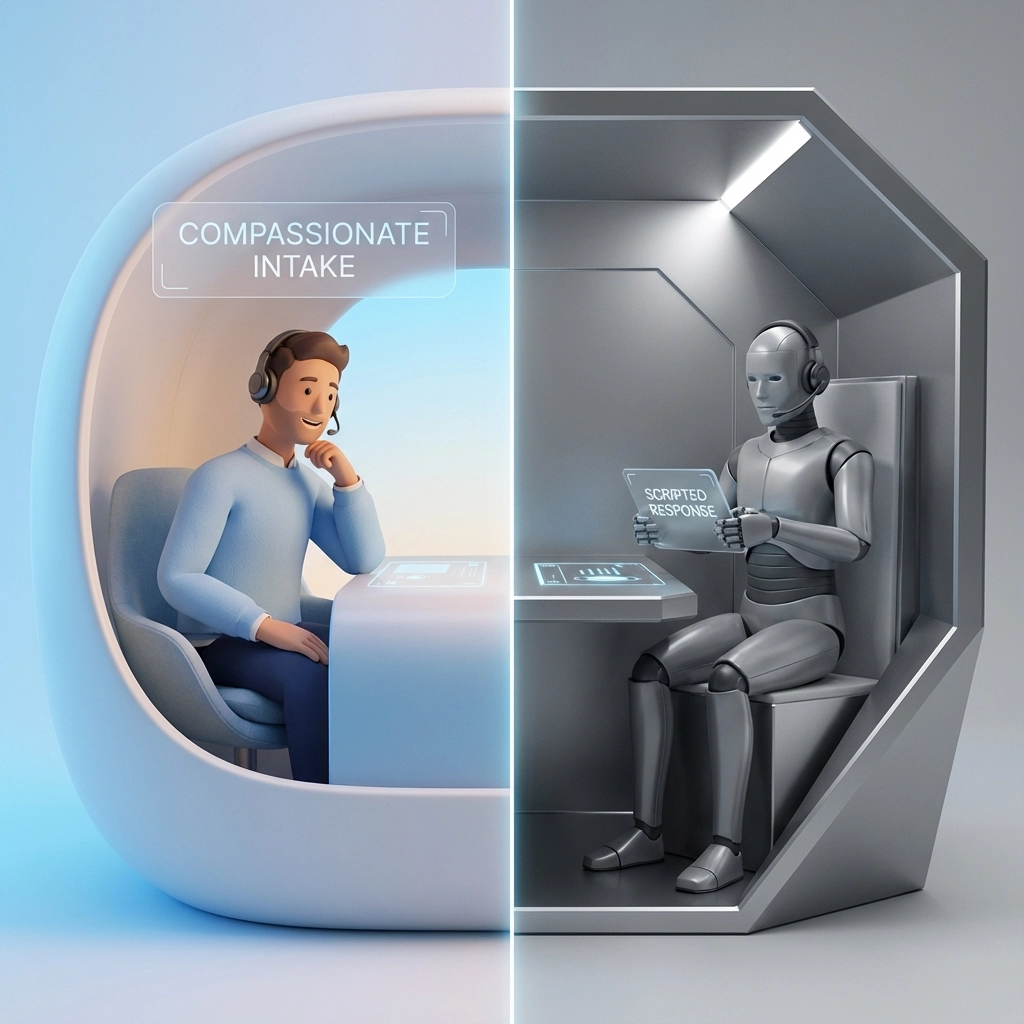
The Checklist Mentality
Most facilities approach intake like a medical form. Name, insurance, problem, done. But families aren't calling to fill out paperwork – they're calling because their world is falling apart.
When your staff asks "What insurance do you have?" before "How can we help?", you've already lost the human connection.
Scripted Responses to Emotional Situations
"I understand you're concerned about your son's addiction. Let me transfer you to our admissions department."
That's not understanding – that's processing. Real understanding sounds like: "This must be incredibly scary for you. I've helped hundreds of families in similar situations, and I want you to know you're not alone in this."
Fear of Saying the Wrong Thing
Many intake teams stick to rigid scripts because they're afraid of compliance issues or saying something incorrect. This creates robotic interactions that prioritize legal safety over human connection.
But here's the reality: SAMHSA's trauma-informed intake guidance and crisis care best practices show that empathy, validation, and de-escalation improve engagement and reduce grievances (TIP 57; Crisis Care Guidelines).
The 5-Step Process to Humanize Your Intake Scripts
1. Start With Empathy, Not Information
Instead of: "Good morning, this is Sarah from ABC Treatment Center. Can I get your name and insurance information?"
Try this: "Hi, this is Sarah. I'm so glad you called today – I know reaching out for help takes incredible courage. How can I support you right now?"
The difference? You're acknowledging the emotional weight of the call before diving into logistics.
2. Use Permission-Based Questioning
Robotic scripts demand information. Humanized scripts ask permission to gather it.
Robotic: "What substances is your son using?"
Humanized: "Would it be helpful if I asked you a few questions about what you've been noticing? It'll help me understand how we might be able to help."

3. Reflect and Validate Before Moving Forward
Robotic progression: Problem → Insurance → Availability → Schedule
Humanized progression: Problem → Validation → Understanding → Solutions → Next Steps
"It sounds like you've been watching this get worse for months, and you're exhausted from trying to handle it on your own. That level of stress would be overwhelming for anyone."
4. Replace Jargon With Plain Language
Your intake team shouldn't sound like they swallowed a medical dictionary. Families need to understand what you're saying, not be impressed by your terminology.
Instead of: "We utilize evidence-based modalities within our continuum of care."
Say this: "We use treatments that have been proven to work, and we'll adjust them based on what your son needs."
5. Create Natural Transitions
Robotic scripts jump from topic to topic without connection. Humanized conversations flow naturally.
Robotic: "Okay, now I need to verify your insurance."
Humanized: "Before we talk about next steps, let me check what your insurance covers so I can give you accurate information about costs."
The ROI of Humanized Intake Scripts
Motivational interviewing during admissions can support engagement in substance use treatment, which is exactly what your intake process needs to move conversations forward with empathy and clarity (see SAMHSA TIP 35).
For treatment centers, this translates to:
- Higher conversion rates: 65% vs 35% for scripted interactions
- Faster admissions: 3.2 days average vs 7.8 days
- Better retention: Families who felt heard during intake had 23% higher completion rates

Training Your Team to Sound Human
Practice Uncomfortable Conversations
Your intake team needs to practice handling the raw, messy emotions that come with these calls. Role-play scenarios where someone is:
- Crying and barely able to speak
- Angry and blaming the facility for past failures
- In denial about the severity of the problem
- Desperate and willing to say anything to get help
Teach the Power of Silence
Robotic scripts fill every pause with more questions. Human conversations allow for silence when someone is processing emotions.
If a parent breaks down crying, the robotic response is: "I understand this is difficult. Can you tell me when this started?"
The human response is: Silent compassion for 10-15 seconds, then: "Take your time. I'm right here with you."
Give Permission to Go Off-Script
Your team should have guidelines, not rigid scripts. Train them on what information you need and why, then trust them to gather it conversationally.
The most effective intake specialists sound like compassionate friends who happen to be extremely knowledgeable about treatment options.
How Ads Up Marketing Transforms Your Intake Process
At Ads Up Marketing, we don't just optimize your digital marketing – we help you optimize every touchpoint in your patient journey, starting with that critical first phone call.
Our intake training program combines human psychology with proven conversion techniques. We've helped facilities increase their phone-to-admission conversion rates by an average of 47% in the first 90 days.
Here's what we focus on:
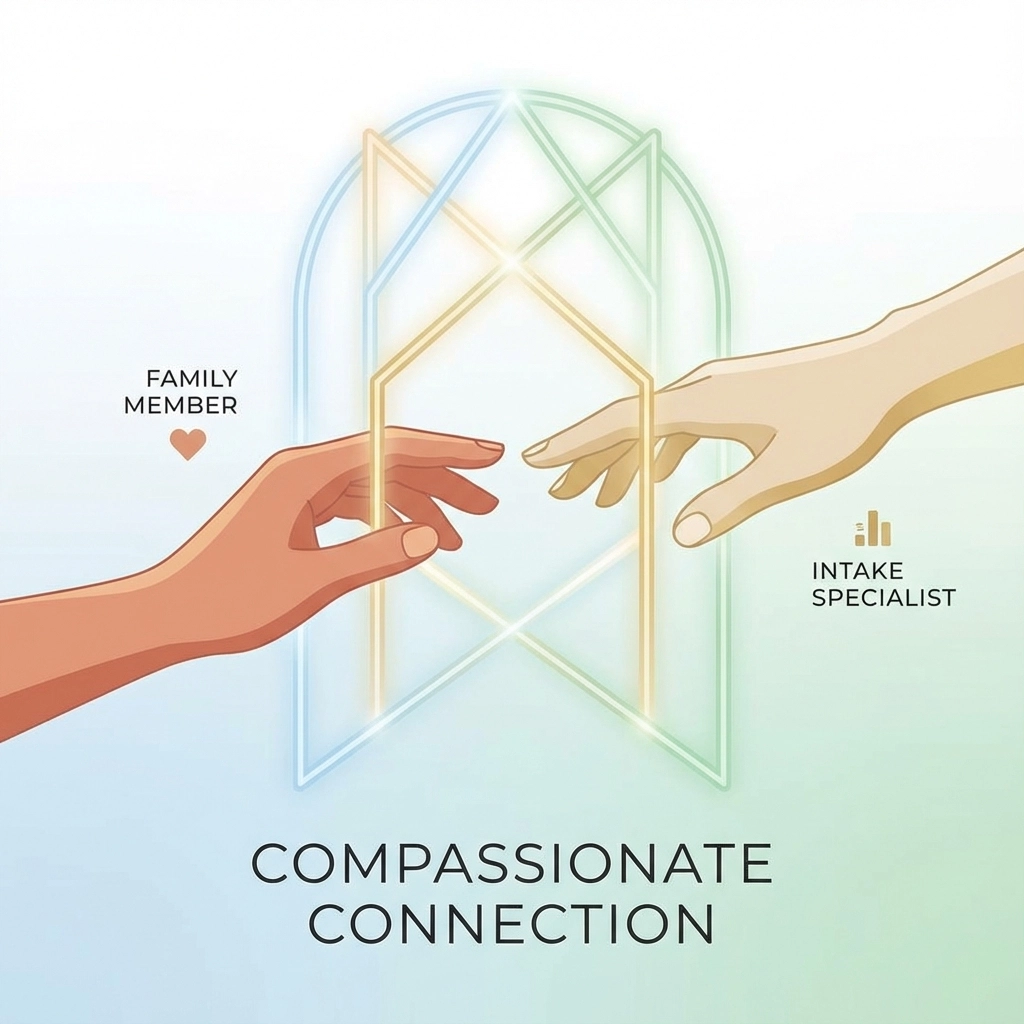
Conversation Architecture: We help you design intake flows that feel natural while capturing all necessary information.
Emotional Intelligence Training: Your team learns to recognize and respond to different emotional states appropriately.
Compliance-Safe Empathy: We show you how to be genuinely caring while staying within regulatory guidelines.
Real-Time Coaching: Our call monitoring and feedback system helps your team improve continuously.
The Bottom Line: Humans Admit Humans
Your intake team isn't just gathering information – they're the first representatives of hope that desperate families encounter. When they sound robotic, you're telling families that your facility treats addiction like a data problem instead of a human crisis.
The families calling you don't need another script-reader. They need someone who understands that behind every intake call is a person whose life has been shattered by addiction.
Ready to transform your intake process from robotic to genuinely human? Our team specializes in training intake specialists who convert at rates that would make your CFO smile while providing the compassionate care that families desperately need.
Don't let another family walk away because your intake team sounded disengaged. Call us at 305-539-7114 and let's discuss how we can help your facility sound as caring as you actually are.
The conversation that saves a life might depend on how human your team sounds in the first 30 seconds of that call.