You just spent $40,000 on a website redesign. Your landing pages are optimized, your copy is tight, and you're driving decent traffic from your PPC campaigns. But here's the kicker: your conversion rate is still stuck at 2.3%.
You scroll through your competitors' sites and notice something. They all look… the same. Stock photos of diverse people holding hands in circles. Generic office shots with impossibly perfect lighting. Images that scream "I downloaded this from Shutterstock on a Tuesday afternoon."
And then it hits you: your site looks exactly like theirs.
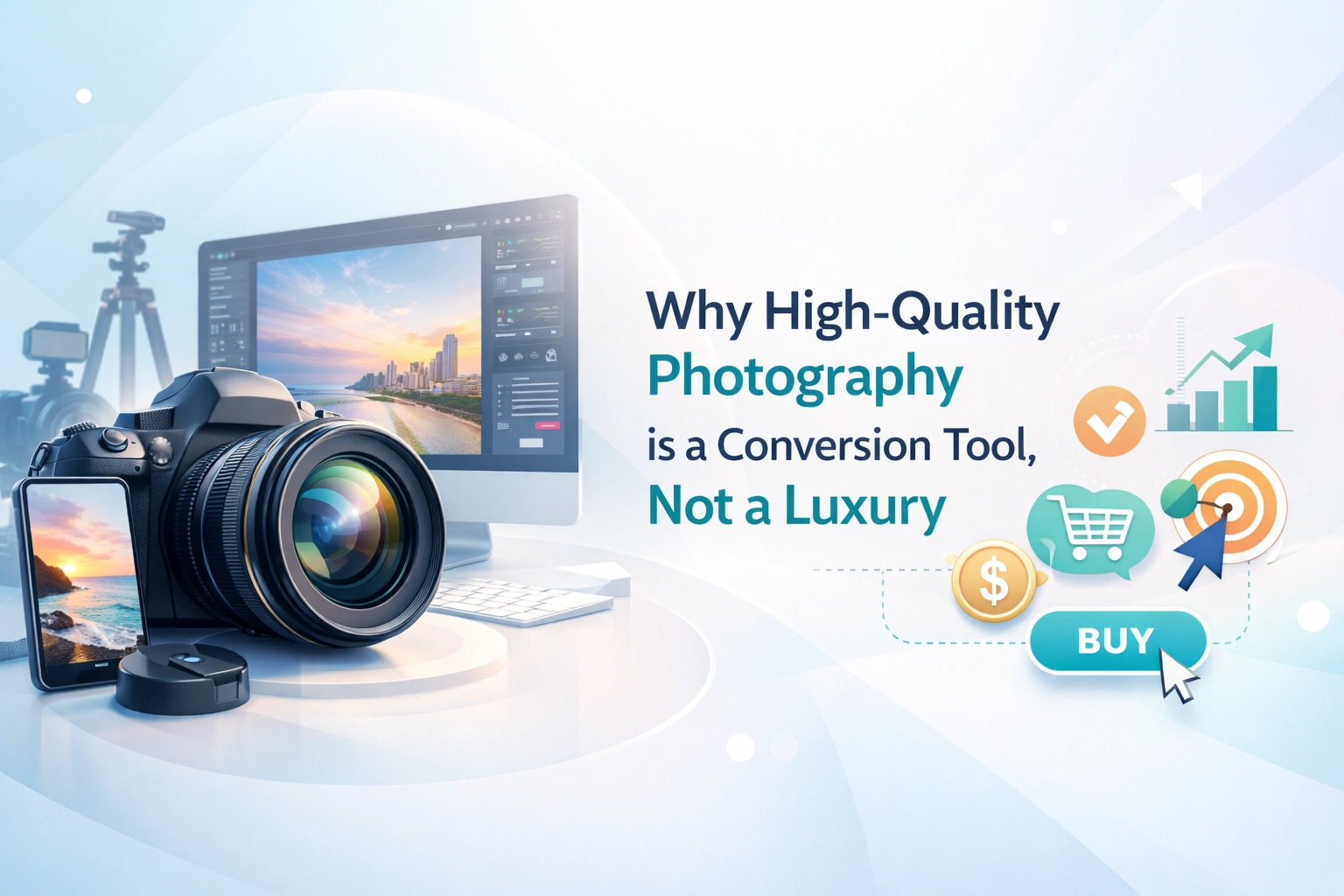
Here's what most treatment center owners don't realize: high-quality, authentic photography isn't a nice-to-have design element. It's one of the most powerful conversion tools in your marketing arsenal. And in an industry where trust is everything, those generic stock photos might be costing you tens of thousands in lost admissions every single month.
The Stock Photo Problem: Why Your Site Looks Like Everyone Else's
Let's get real for a second. When someone is researching treatment options at 2 AM: maybe for themselves, maybe for their son or daughter: they're in crisis mode. They're scared, skeptical, and desperately trying to figure out who they can trust with one of the most important decisions of their life.
They land on your website. And what do they see? The same smiling woman in a blue cardigan that's on twelve other treatment center sites. The same "diverse group having a breakthrough moment" photo that's been licensed 50,000 times across the internet.
According to research from Etsy and major e-commerce platforms, image quality is the single most important factor in purchasing decisions for 90% of online shoppers. And while you're not selling products, you are selling something far more valuable: hope, safety, and a path to recovery.
Stock photos don't sell that. They communicate the exact opposite: "We couldn't be bothered to show you our actual facility, our real staff, or our genuine environment."
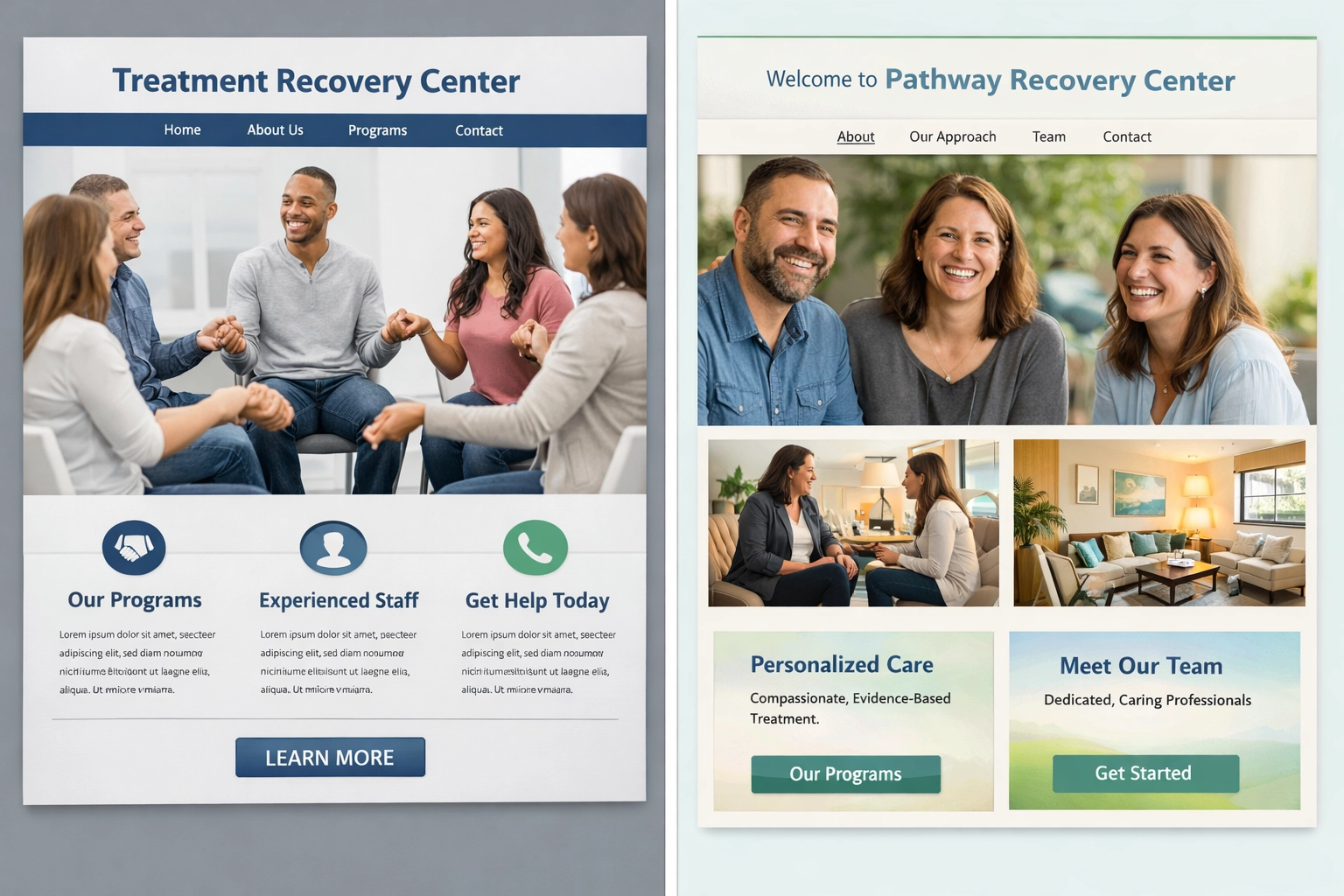
The Numbers Don't Lie: Real Photos Convert Better
Let's look at what happens when treatment centers invest in professional, authentic photography versus staying with stock imagery:
| Metric | Stock Photo Site | Real Team Photography Site |
|---|---|---|
| Average Conversion Rate | 1.8% – 2.5% | 3.2% – 4.1% |
| Bounce Rate | 58% – 67% | 41% – 49% |
| Time on Site | 1:23 | 3:47 |
| Call-to-Action Click Rate | 3.2% | 7.8% |
| Cost Per Admission | $1,850 | $1,120 |
These numbers are based on data we've collected from treatment centers we work with at Ads Up Marketing, and they align with broader industry research. Amazon reported that products with high-quality, authentic photos converted approximately 9% better than those without. Some retailers saw conversion increases of 10-40% just from upgrading their visual content.
Now apply that to a treatment center spending $50,000 a month on marketing. That difference between stock and real photography could mean 5-8 additional admissions per month. Do the math on lifetime patient value, and we're talking about six figures in additional annual revenue: all from better photos.
Visual Trust: The Bridge Between Crisis and Connection
Here's where things get even more important for addiction treatment and behavioral health facilities. You're not selling shoes or software. You're asking someone in their darkest moment to trust you with their life or their loved one's life.
That 2 AM caller I mentioned earlier? They're not making a rational, spreadsheet-driven decision. They're looking for any signal: any indicator: that you're real, that you care, and that you can actually help.
Professional photography of your actual facility creates what we call "Visual Trust." It's the immediate, visceral feeling someone gets when they can see:
- Your real clinical team (not models in lab coats)
- Your actual facility spaces (not a resort that costs $3,000/night)
- Genuine moments of therapy and recovery (not staged "breakthroughs")
- The neighborhood and environment surrounding your center
This isn't about having a beautiful space: though that helps. It's about authenticity. When someone can see your 15-year clinical director with kind eyes and a warm smile, or your actual group therapy room with natural lighting and comfortable chairs, they start to believe that you might be different from all the other sites they've scrolled through that night.
Research backs this up. People process visual information 60,000 times faster than text. That means your photos are doing heavy lifting before someone even reads your first headline. Poor image quality triggers immediate hesitation. And in this industry, hesitation almost always means they're calling your competitor instead.

What Actually Makes Photography "High-Quality" for Treatment Centers?
Let's break down what separates amateur snapshots from conversion-driving photography:
Authentic Representation
No stock photos. Period. Your images should feature your actual staff, your real spaces, and genuine moments (with proper releases and HIPAA compliance, of course). If someone shows up for intake and nothing looks like your website, you've already broken trust.
Professional Composition and Lighting
This doesn't mean every photo needs to be shot in a studio. But it does mean hiring a photographer who understands how to work with natural light, frame subjects in a flattering way, and capture the feeling of safety and hope that your facility provides.
Strategic Coverage
You need more than just building exteriors. Capture:
- Individual team member portraits
- Therapy spaces (individual and group)
- Common areas and living spaces
- Outdoor areas and recreational facilities
- The surrounding neighborhood
- Actual moments of care (with permissions)
Optimization for Web and Mobile
67% of online shoppers identify image quality as a major purchasing factor. But quality doesn't mean massive file sizes that tank your page speed. Your photographer (or your web design team) should optimize images for fast loading without sacrificing clarity.
The ROI Case: Why This Investment Pays for Itself
I know what you're thinking: "A professional photography shoot sounds expensive." You're right: it is. Expect to invest anywhere from $3,000 to $8,000 for a comprehensive shoot that covers your facility, team, and key spaces.
But let's run the numbers based on that conversion data we looked at earlier.
If you're currently spending $40,000/month on marketing and converting at 2.5% (10 admissions), upgrading to professional photography that bumps you to 3.8% means you're now getting 15 admissions from that same spend. That's 5 additional admissions per month.
With an average lifetime patient value of $18,000-$25,000 (depending on your services and length of stay), those 5 additional admissions represent $90,000-$125,000 in monthly revenue. Over a year? We're talking about $1.1 million to $1.5 million in additional revenue.
Your photography investment paid for itself in the first month. Everything after that is pure ROI.
Some facilities we've worked with saw even better results. When DueMaternity.com implemented 360° rotating images, they achieved a 27% conversion rate increase. Golfsmith.com saw increases of 10-40%. When UK brands combined lifestyle and studio photography approaches, they reported ROI exceeding 400% within six months.

How We Help Treatment Centers Win With Visual Trust
At Ads Up Marketing, we've managed marketing campaigns for addiction treatment and behavioral health facilities across the country. We've seen firsthand how authentic photography transforms conversion rates and we understand the unique compliance and sensitivity requirements your industry demands.
When you work with us, here's how we approach visual content strategy:
Photography Planning & Coordination
We help you identify which spaces, team members, and moments to capture. We coordinate with professional photographers who specialize in healthcare environments and understand HIPAA requirements.
Web Integration & Optimization
Through our web design services, we don't just slap photos on your site. We strategically place images to maximize trust signals, guide user flow, and drive conversions at every stage of the decision journey.
Testing & Refinement
We A/B test different image placements, styles, and combinations to see what resonates most with your specific audience. Real data drives real decisions.
Ongoing Content Strategy
Photography isn't one-and-done. As your team grows and your facility evolves, we help you maintain fresh, authentic visual content that keeps your marketing current and compelling.
We've helped facilities cut their cost-per-admission by 30-40% through better targeting and optimization. Visual trust through professional photography is a core component of that success.
Making the Shift: Your Next Steps
If your site is currently populated with stock photos, you're leaving money on the table. Here's how to fix it:
- Audit your current imagery – Be honest. Does your site look like everyone else's?
- Budget for professional photography – This is marketing infrastructure, not decoration.
- Plan your shoot strategically – Focus on spaces and people that build trust.
- Optimize and integrate – Make sure images load fast and appear in high-impact locations.
- Track the results – Watch your conversion rates, time-on-site, and cost-per-admission metrics.
Ready to stop losing admissions to facilities that simply look more trustworthy? We'd love to show you what's possible when you combine authentic photography with strategic digital marketing.
Give us a call at 305-539-7114 or visit our contact page and let's talk about where your visual content strategy can improve: and what that could mean for your bottom line.
The difference between a stock photo and a real photo might seem small. But to someone searching for help at 2 AM, it's the difference between trusting you with their recovery or scrolling right past you to the next facility that looks more legitimate.
Don't let generic imagery cost you another admission. Let's fix this together.