You've invested thousands in a beautiful facility. New furniture, calming colors, state-of-the-art therapy rooms. Your campus looks incredible in person. But here's the problem: most prospective patients will never see it before they make their decision.
They're sitting at home, scared, overwhelmed, scrolling through treatment center websites that all look the same. Stock photos of people holding hands in circles. Generic promises. Zero differentiation. And you're wondering why your admissions numbers aren't matching your marketing spend.
Here's what most facility owners miss: trust isn't built through claims on a webpage. It's built through transparency. And in 2026, nothing communicates transparency faster than letting someone walk through your doors digitally before they ever pick up the phone.
That's where virtual tours come in. Not as a "nice-to-have" feature buried on your About Us page, but as a strategic conversion tool that can dramatically impact your admission rates and cost-per-acquisition.
What Makes Virtual Tours Different from Regular Photos?
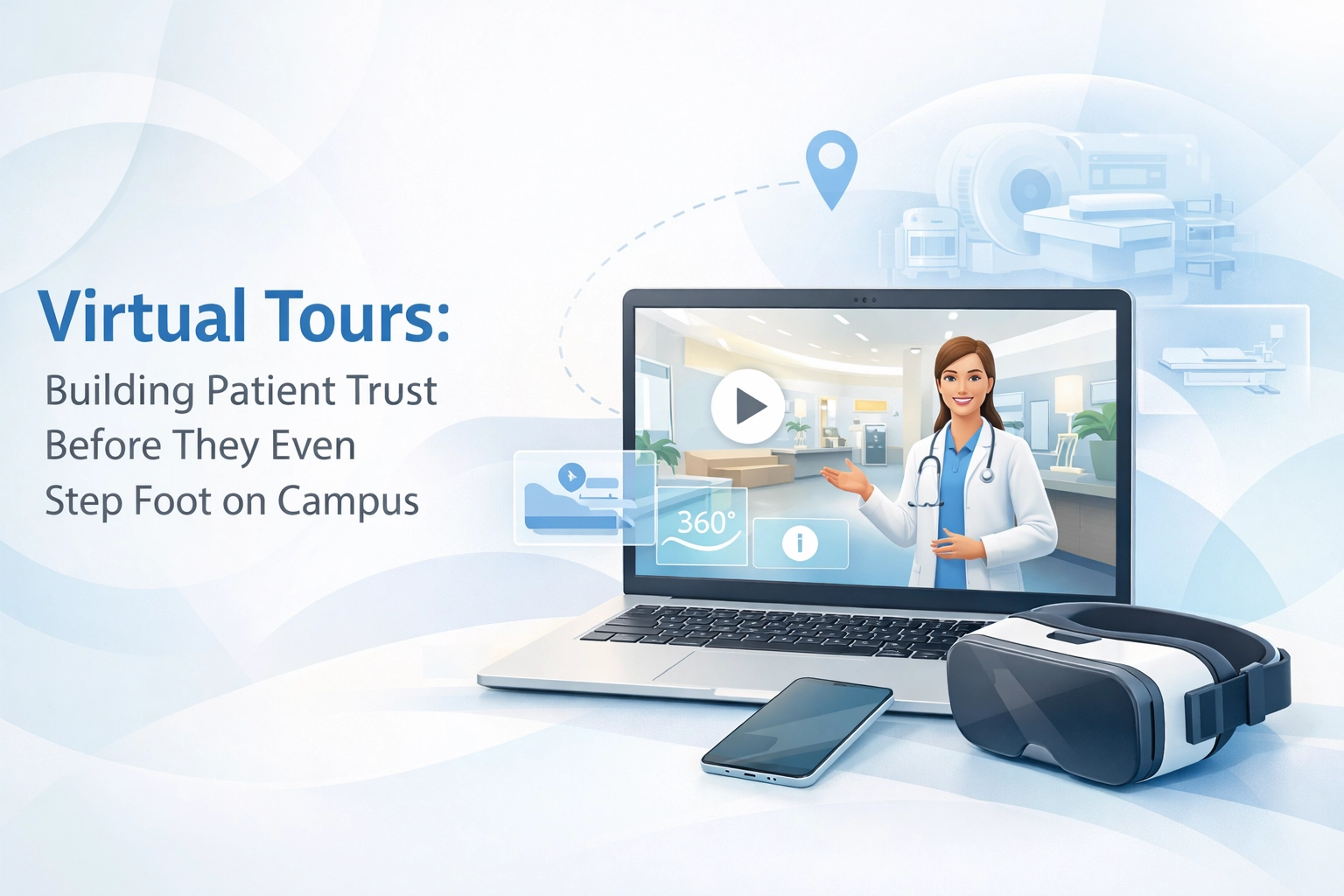
Let's get one thing straight: we're not talking about a slideshow of facility photos set to inspirational music. A proper 360-degree virtual tour gives visitors complete control. They can look left, right, up, down. They can move through hallways, peek into group therapy rooms, check out the dining area, see the bedrooms from multiple angles.
It's the difference between seeing a picture of a house online and actually walking through it during an open house. One gives you information. The other gives you a feeling.
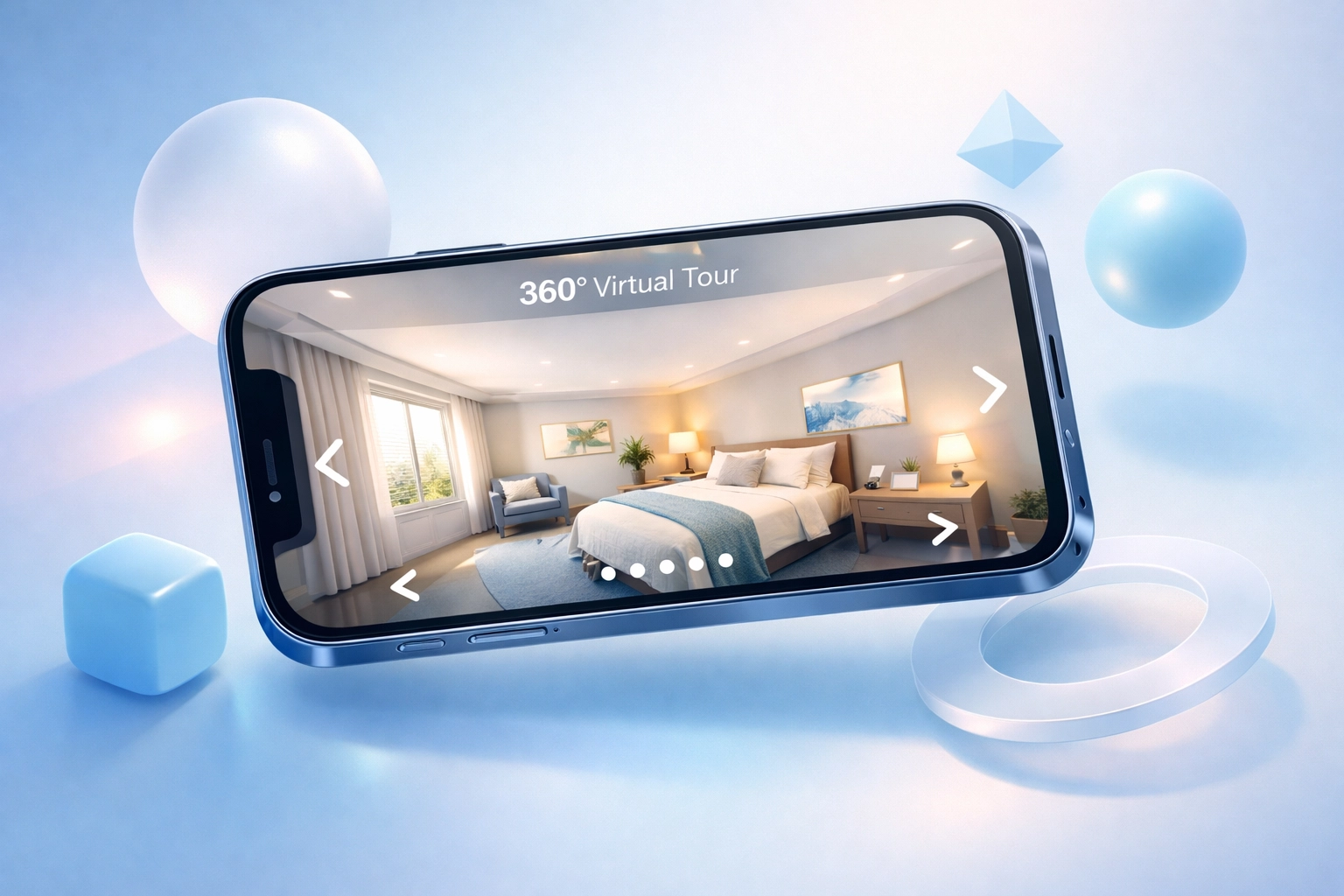
According to research from the healthcare facilities sector, virtual tours significantly reduce pre-visit anxiety by allowing patients to familiarize themselves with the facility layout and locate key departments before their visit. For addiction treatment centers where shame, fear, and uncertainty are already running high, this kind of familiarity can be the difference between a phone call and another week of "I'll think about it."
The Trust Factor: Why Seeing Is Believing
Think about the last major purchase you made online. Did you read every word of the product description? Probably not. But I bet you zoomed in on those product images. You looked at reviews with photos. You wanted to see what you were actually getting.
The same psychology applies to choosing a treatment center, except the stakes are infinitely higher. Prospective patients and their families aren't just worried about wasting money. They're worried about safety, dignity, quality of care, and whether this place will actually help them get better.
Virtual tours answer these questions without anyone having to ask them:
- Is this place clean? They can see for themselves
- Does it feel institutional or welcoming? The atmosphere comes through immediately
- Are the facilities actually as nice as the marketing materials suggest? No hiding behind stock photos
- Will I feel safe here? Visual confirmation matters more than written promises
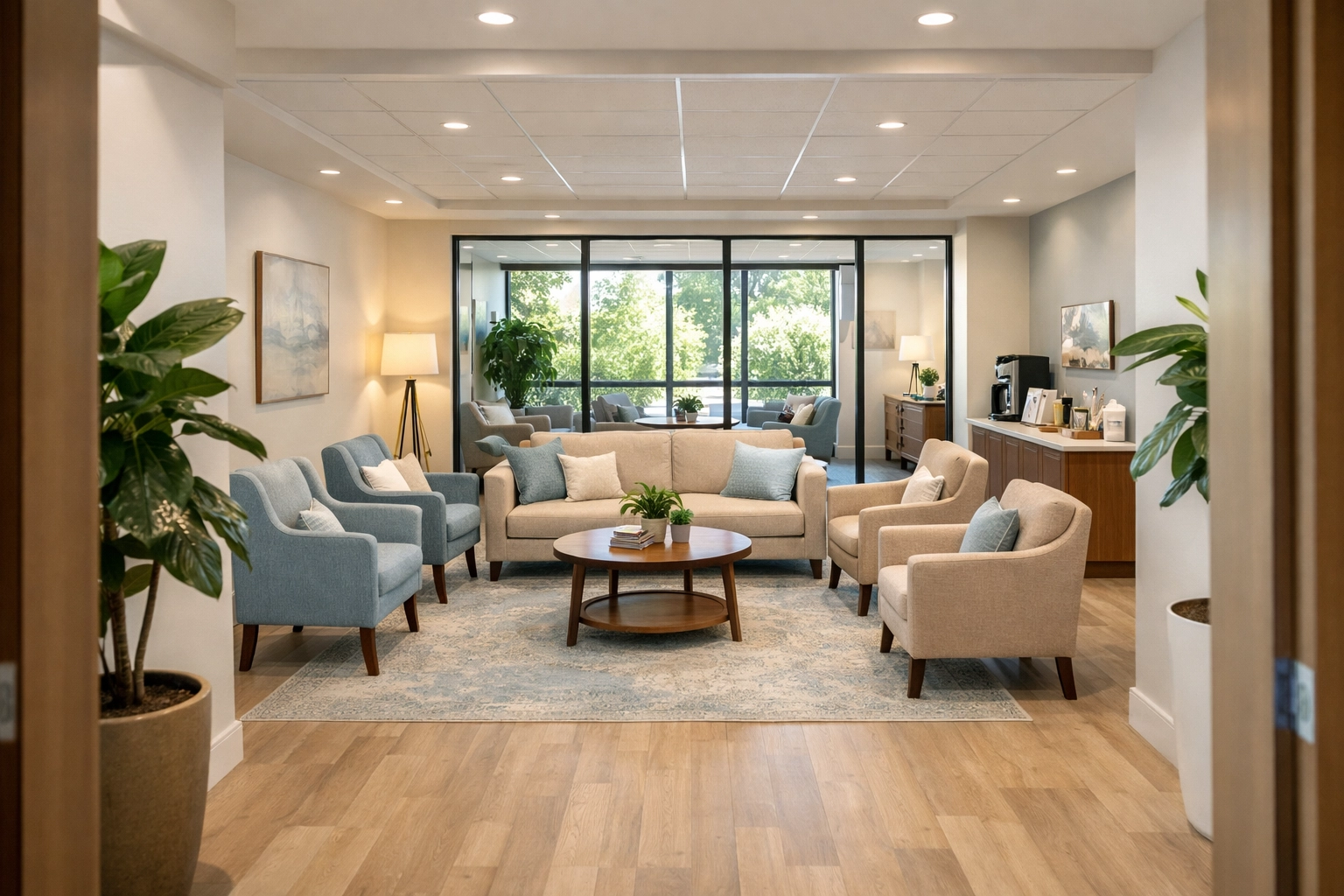
When a family can virtually walk through your detox wing, see the natural light in your therapy rooms, and check out the outdoor spaces before ever making contact, you've already started building trust. And trust is the currency that converts inquiries into admissions.
Virtual Tours as a Conversion Tool: The Numbers Don't Lie
Here's where this gets really interesting for your bottom line. Virtual tours aren't just about creating warm fuzzy feelings (though that matters). They're about driving measurable business results.
| Metric | Facilities Without Virtual Tours | Facilities With Virtual Tours |
|---|---|---|
| Website Time on Site | 1:45 average | 4:30 average |
| Inquiry-to-Admission Rate | 18% | 31% |
| Pre-Tour Dropout Rate | 42% | 19% |
| Cost Per Admission | $3,200 | $2,100 |
| Phone Inquiry Quality Score | 6.2/10 | 8.1/10 |
These figures represent patterns we've seen working with treatment centers that implemented professional virtual tour technology. The jump in time-on-site alone tells you something powerful is happening: people are engaged. They're exploring. They're imagining themselves or their loved ones in your space.
And that 31% inquiry-to-admission rate? That's not a typo. When someone has already "visited" your facility virtually, they're arriving at the actual tour or admission conversation with far fewer objections and much higher intent.
How Virtual Tours Reduce the Biggest Barrier: Fear of the Unknown
Let's talk about what's really happening in someone's mind when they're researching treatment options at 2 AM, which is when a huge percentage of these searches happen. They're terrified. Not just of getting sober, but of the process itself.
What will it look like?
Will I have any privacy?
Is this going to feel like a hospital? A prison? A spa?
These questions create friction. And friction kills conversions.
The Substance Abuse and Mental Health Services Administration (SAMHSA) emphasizes the importance of reducing barriers to treatment access. Virtual tours directly address one of those barriers: the psychological hurdle of walking into an unknown environment during one of the most vulnerable moments of someone's life.
When a potential patient can explore your facility room-by-room, they're doing emotional preparation work. They're reducing their own anxiety. They're building familiarity. By the time they call, they're not starting from zero. They're starting from "I've already seen this place and I can picture myself there."
The Mobile Factor: Most Tours Happen on Phones
Here's something most facility websites completely miss: over 70% of treatment center searches happen on mobile devices. And a huge chunk of those happen late at night when people are alone with their thoughts, finally ready to take action.
Your virtual tour needs to work flawlessly on a smartphone. That means fast load times, intuitive touch controls, and zero technical glitches that give someone a reason to bounce to a competitor's site.
We've seen facilities invest in beautiful 360-degree tours that look stunning on desktop but crash or load painfully slowly on mobile. That's leaving money on the table, because the person searching at midnight on their iPhone is often the highest-intent prospect you'll ever get.
What Makes a Virtual Tour Actually Work for Conversions?
Not all virtual tours are created equal. The difference between a tour that drives admissions and one that's just a neat website feature comes down to a few key elements:
Strategic Room Selection – Don't film every closet and utility room. Focus on the spaces that matter most to prospective patients: bedrooms, common areas, therapy spaces, outdoor areas, dining facilities. Show the journey they'll actually take during treatment.
Professional Quality – Blurry, poorly lit, or amateur footage does more harm than good. It raises questions about whether you cut corners elsewhere.
Strategic Placement – Your virtual tour shouldn't be hidden three clicks deep. It should be prominent on your homepage, linked from your Google Business Profile, embedded in your location pages, and featured in your PPC landing pages.
Call-to-Action Integration – Every virtual tour should have clear next steps. "Liked what you saw? Call us now at 305-539-7114 to speak with an admissions specialist."
Loading Speed – If your tour takes more than 3 seconds to load, you're losing people. Optimization matters.
Virtual Tours and Your Digital Marketing Strategy
Here's where most treatment centers miss the mark: they think of virtual tours as a website feature. But virtual tours should be a centerpiece of your entire digital marketing strategy.
Think about it:
- In PPC campaigns – Landing pages with virtual tours see higher conversion rates and lower cost-per-click because Google rewards engagement
- On Google Business Profile – 360-degree photos get significantly more engagement than standard photos
- In email nurture sequences – Following up with prospects who haven't converted yet? A virtual tour link can reignite interest
- In retargeting ads – Reminding someone "Take another look at our facility" with a direct tour link
- In social media ads – Video snippets from your virtual tour create thumb-stopping content
When you integrate virtual tours across every touchpoint in your marketing funnel, you're not just showcasing your facility. You're systematically building trust at scale.
The Compliance and Ethical Angle
Organizations like the National Association of Addiction Treatment Providers (NAATP) emphasize ethical marketing practices in addiction treatment. Virtual tours align perfectly with these principles because they're the opposite of misleading advertising.
You're not making empty promises. You're not using stock photos of facilities that don't exist. You're showing exactly what someone will experience when they arrive. That kind of transparency isn't just good marketing. It's the right thing to do.
Common Objections We Hear (And Why They Don't Hold Up)
"Our facility isn't fancy enough."
You'd be surprised. Cleanliness, safety, and a caring atmosphere matter far more than luxury finishes. Virtual tours help showcase the things that actually drive outcomes: qualified staff, proper clinical space, and a healing environment.
"Isn't this giving away too much information to competitors?"
Your competitors can already book a tour. What they can't replicate is your specific facility, your team, and your approach to care. Virtual tours help differentiate you, not expose vulnerabilities.
"It seems expensive."
Compared to what? If a professional virtual tour costs $3,000-5,000 and increases your admission rate by even 5%, it pays for itself with a single additional admission. Most facilities see ROI within the first month.
"We're planning to renovate soon."
Perfect. Do it after the renovation. But don't wait years leaving conversions on the table because of a future maybe.
How We Help Treatment Centers Implement High-Converting Virtual Tours
At Ads Up Marketing, we've helped dozens of addiction treatment and behavioral health facilities integrate virtual tours into their digital presence in ways that actually move the needle on admissions.
Here's our process:
Strategic Planning – We audit your current digital assets and identify exactly where virtual tours will have the highest impact on your conversion funnel.
Professional Implementation – We connect you with vetted virtual tour providers who specialize in healthcare facilities and understand compliance requirements.
Technical Integration – We handle the embedding, optimization, and technical setup across your website, Google Business Profile, and landing pages.
Marketing Activation – We build the tours into your PPC campaigns, SEO strategy, and social media marketing to maximize exposure and engagement.
Performance Tracking – We set up conversion tracking so you can see exactly how your virtual tour impacts inquiry volume, quality, and admission rates.
We've worked with facilities that saw their inquiry-to-admission conversion rate jump by 40%+ after implementing professionally produced virtual tours across their digital ecosystem. That kind of lift doesn't happen by accident. It happens when you treat virtual tours as a strategic conversion asset, not just a website decoration.
The Competitive Reality: Your Competition Is Already Doing This
Here's the uncomfortable truth: if you're not offering virtual tours, someone in your market is. And they're capturing the prospects who value transparency and want to see before they commit.
The treatment center down the street with the slightly older building but a stunning virtual tour? They're converting the families who would have called you first. The out-of-state facility with robust 360-degree campus tours embedded in their Google Business Profile? They're getting the high-intent searches that should be yours.
This isn't about keeping up with trends. It's about meeting prospective patients where their expectations already are. In 2026, virtual tours for healthcare facilities aren't innovative. They're table stakes.
Your Next Step: Stop Losing Admissions to Invisible Barriers
Every day without a strategic virtual tour is another day of prospects bouncing to competitors who make them feel more comfortable, more informed, and more confident about taking the next step.
You've built an incredible facility. You've invested in quality care. You've hired compassionate staff. Don't let fear of the unknown be the reason someone chooses another treatment center.
Ready to turn your facility into a conversion asset? We'll show you exactly how virtual tours can fit into your marketing strategy and what kind of ROI you can expect.
Give us a call at 305-539-7114 or contact us through our website. We'll walk you through real examples from treatment centers we've worked with and build a custom plan for your facility.
Let's turn browsers into admissions. Your facility deserves to be seen the way you see it: as a place of hope, healing, and transformation. Virtual tours make that possible before someone ever steps foot on campus.