
Ever wonder why some admissions conversations flow naturally while others feel like you're reading from a telemarketing script? The difference isn't in your training manual, it's in whether you're connecting with a real human being or just trying to fill a bed.
After analyzing thousands of intake calls, we've discovered something counterintuitive: the best admissions specialists use humor and emotional connection to build trust, not pressure tactics. And one of the most effective techniques? Something we call the "Timbuktu Litmus Test."
What Is the Timbuktu Litmus Test?
The Timbuktu test is beautifully simple. When discussing treatment options that require travel, you start with the most extreme example possible: "If I told you that you had to go to Timbuktu to get your life back, would you do it?"
Why Timbuktu? Because it's so far away it's practically fictional to most people. It's in another country, sounds exotic, and, here's the key, it makes people laugh. That laugh isn't just breaking tension; it's testing genuine commitment.
If someone says yes to Timbuktu (even with a chuckle), then suggesting California, Florida, or anywhere in the continental US suddenly feels reasonable by comparison. You've anchored their expectations at "the ends of the earth," making actual travel arrangements seem like a minor detail.

But this technique works for a deeper reason than just psychological anchoring. It reveals whether the person is truly ready to do "whatever it takes" for recovery, or if they're just shopping around for the most convenient option.
The Laughter-or-Tears Rule: Your Connection Compass
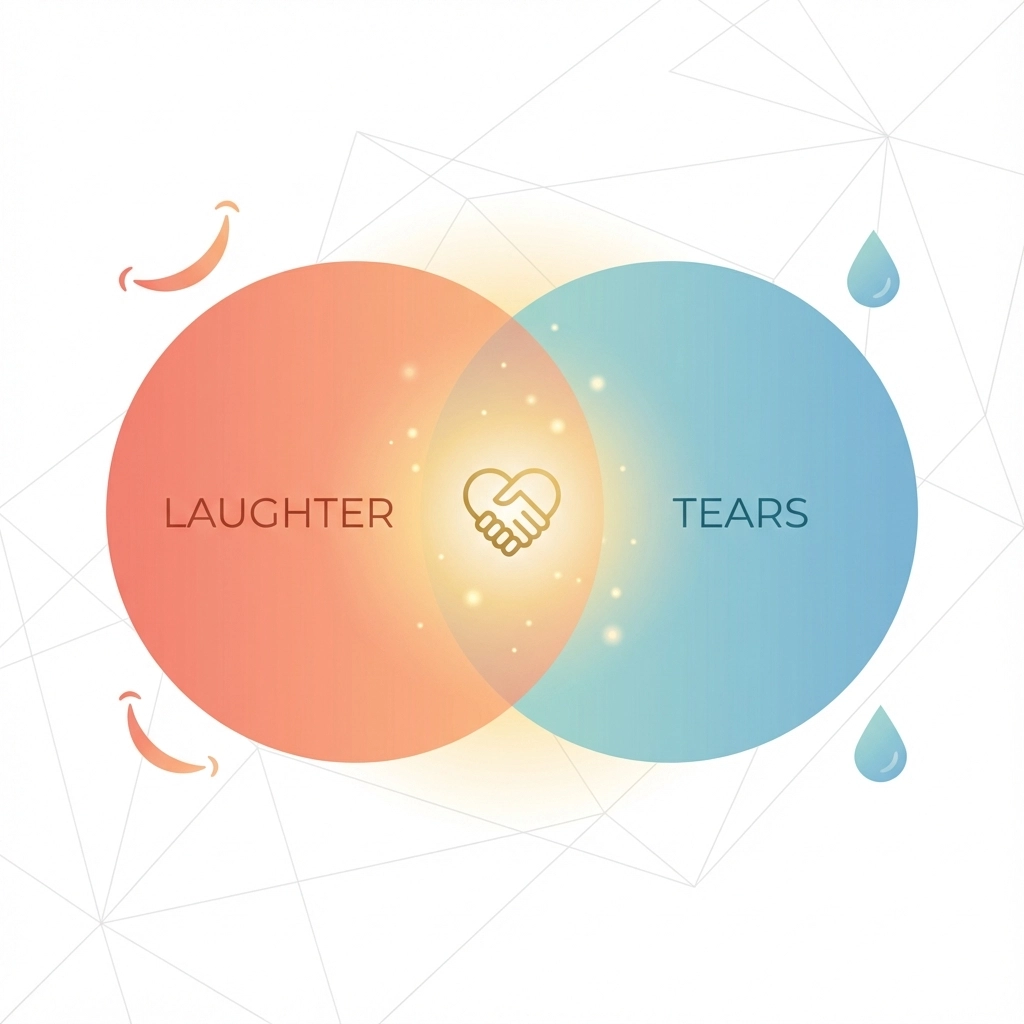
Here's what most intake specialists miss: if you're not getting either laughter or tears from the person on the phone, you haven't made a real connection yet. And without that connection, you're just another voice in their phone trying to sell them something.
Think about it, when was the last time you trusted someone who never made you feel anything? People in crisis aren't looking for robotic professionalism. They're looking for someone who sees them as a human being, not a potential admission.
Why Emotional Peaks Matter
When someone laughs at your Timbuktu question, they're:
- Dropping their guard momentarily
- Engaging with you as a person, not a salesperson
- Opening up to possibilities they might have immediately rejected
- Showing you they're still capable of finding lightness even in their darkest moment
When someone tears up during your conversation, they're:
- Feeling safe enough to be vulnerable with you
- Processing real emotions instead of giving rehearsed responses
- Demonstrating they understand the gravity of their situation
- Creating space for authentic help to happen
Both responses tell you the same thing: you've moved from a transactional call to a human moment. That's when real influence, the kind that actually helps people, becomes possible.
Breaking the Call Center Vibe
Most admissions teams sound like they're reading from a script because, well, they are. But people in crisis can smell scripted responses from a mile away. They've probably already called three other facilities that sounded exactly the same.
The Timbuktu approach works because it's impossible to script. It forces you to be present, responsive, and real. You can't fake the timing of humor or manufacture genuine emotion.
Moving From Script to Conversation
Instead of: "We have excellent facilities in multiple locations that can accommodate your needs."
Try: "Look, I'm going to be straight with you, if I said you had to go to Timbuktu to get clean, would you pack your bags? Because if you're really serious about this, distance shouldn't matter. And the good news is, I'm not sending you to Timbuktu… though I hear the weather's nice this time of year."
See the difference? The second approach:
- Uses humor to test commitment
- Creates a moment of genuine interaction
- Makes the actual logistics feel easier
- Establishes you as someone who talks like a real person
Securing the "Whatever It Takes" Commitment
The genius of the Timbuktu test is that it gets you the most important commitment before you ever discuss practical details. Once someone says yes to going anywhere for recovery, you can reference that commitment when obstacles come up.
Here's how this plays out in real conversations:
Patient: "Wait, you're saying I have to fly to California? I've never been on a plane before."
Admissions Specialist: "I hear you. Flying for the first time can feel scary. But remember what you told me fifteen minutes ago? You said if I told you to go to Timbuktu, you'd do it to get your life back. California's a lot closer than Timbuktu, and a lot warmer too. So what's really going on here? Is it the plane, or something else?"
Notice how this response:
- Acknowledges their fear without dismissing it
- References their own earlier commitment
- Uses gentle humor to maintain perspective
- Asks an open-ended question to understand the real objection
When Commitment Wavers: The Art of Asking Why
Sometimes people agree to Timbuktu in the moment but get cold feet when you mention actual travel arrangements. This isn't the time to push harder: it's the time to get curious.
Common Hidden Objections
When someone balks at travel after initially agreeing, the real issues might be:
- First-time travel anxiety: They've never been on a plane or left their home state
- Fear of abandoning family: Worry about who will take care of kids, elderly parents, or pets
- Financial concerns: Uncertainty about who's paying for flights and how
- Loss of control: Feeling like their life is spiraling and travel makes it worse
- Previous bad experiences: Negative memories from other treatment attempts
The Power of Direct Questions
Instead of guessing what's wrong, just ask:
"Help me understand something: a few minutes ago, you were ready to go to Timbuktu if that's what it took. Now California feels like too far. What changed? And I'm not asking to push you into anything: I'm asking because if we can figure out what's really concerning you, maybe we can address it."
This approach works because:
- It's collaborative, not confrontational
- It references their earlier commitment without shaming them
- It positions you as a problem-solver, not a salesperson
- It creates space for honest conversation about real barriers
Building Trust Through Vulnerability
The most effective admissions specialists understand that trust is built through shared humanity, not perfect professionalism. People in crisis don't need you to have all the answers: they need you to care about finding them.
When to Use Self-Disclosure
Appropriate self-disclosure can deepen connection:
"You know what? I get nervous flying too. There's nothing wrong with being scared of something new, especially when you're already dealing with so much. But I've seen people who were terrified of that first flight tell me later it was the easiest part of their whole recovery journey."
This works because:
- It normalizes their fear without minimizing it
- Shows you're human, not a perfect professional robot
- Provides hope based on real experience
- Maintains appropriate boundaries while creating connection
Practical Application: The Three-Touch Rule
Effective emotional connection in admissions calls typically requires three distinct "touches":
Touch 1: Initial Humor/Warmth
Break the ice with something light, often the Timbuktu test or a similar approach that tests commitment while creating a moment of levity.
Touch 2: Emotional Reality Check
Address the seriousness of their situation with empathy and without judgment. This is where tears often happen, and that's okay.
Touch 3: Forward-Focused Hope
Paint a picture of what life could look like after treatment, referencing their earlier commitment to "whatever it takes."

Common Mistakes That Kill Connection
The "Solution" Trap
Jumping too quickly to logistics before building emotional rapport. People need to feel understood before they'll trust your solutions.
The "Positivity" Trap
Trying to cheer someone up instead of meeting them where they are emotionally. Sometimes people need to cry before they can laugh.
The "Pressure" Trap
Using their vulnerability against them to close the deal faster. This destroys trust and leads to higher AMA rates.
Measuring Emotional Connection Success
How do you know if the Timbuktu approach is working? Look for these indicators:
| Connection Indicator | What It Means | Next Steps |
|---|---|---|
| Genuine laughter | Guard is down, testing commitment | Move to logistics discussion |
| Tears or emotional response | Trust is building, vulnerability present | Acknowledge emotion, provide support |
| Detailed personal sharing | Feeling safe to be authentic | Listen actively, ask follow-up questions |
| Questions about your experience | Seeing you as human, not just staff | Share appropriately, maintain boundaries |
| Resistance to ending call | Connection established | Schedule follow-up, provide clear next steps |
Training Your Team on Emotional Intelligence
The Timbuktu test isn't a script: it's a mindset. Your team needs to understand that every person calling is already in crisis, already scared, and already skeptical of anything that sounds like a sales pitch.
Key Training Points
- Practice reading emotional cues through voice tone, not just words
- Develop comfort with silence after asking emotional questions
- Learn to differentiate between surface objections and real concerns
- Build a repertoire of appropriate humor that feels natural, not forced
- Understand when to escalate to clinical staff for complex emotional needs
The Bottom Line: Helping People Help Themselves
The Timbuktu test works because it embodies a fundamental truth about addiction recovery: the decision to get help has to come from within. You can't talk someone into wanting recovery, but you can create space for their own motivation to emerge.
When you use humor and emotional connection authentically, you're not manipulating people into treatment: you're helping them access their own commitment to change. The laughter tells you they're still capable of joy. The tears tell you they're ready to feel something real. Both responses create openings for genuine help.
Remember, admissions isn't about filling beds: it's about recognizing when someone is ready for the hardest thing they'll ever do, and helping them take that first brave step. Sometimes that step leads all the way to Timbuktu. More often, it just leads to California. Either way, you've helped someone choose life over addiction.
And that's worth way more than any census number.
Ready to transform your admissions approach and build deeper connections with potential patients? Our team at Ads Up Marketing specializes in training healthcare teams to have more effective, empathetic conversations that lead to better outcomes. Call us at 305-539-7114 to discuss how we can help your facility improve both connection rates and long-term retention.