Here's a stat that'll make any facility owner's stomach drop: Patients who stay in-state for treatment are 50% more likely to leave early than those who travel for care. This isn't speculation, it's hard data from a two-year study tracking patient outcomes at a major facility.
Think about that for a second. Half of your AMA (Against Medical Advice) departures could be prevented by one simple factor: making it harder for patients to just… leave.
You're probably thinking, "But local is better, right? Family support, familiar surroundings, lower cost?" Wrong. Dead wrong. And it's costing you serious money.
The Financial Reality of Early Departures
Let's talk numbers because that's what keeps you up at night. At an average daily rate of $1,000, your typical patient stay should generate $21,000 to $45,000 in revenue over 21-45 days. But here's the brutal truth:
Most patients who leave early do so in one of two danger zones:
- The 72-hour shock period (when reality doesn't match expectations)
- The post-detox "I'm cured" phase (physical symptoms gone, but zero psychological work done)
When someone can just get in their car and drive home during these vulnerable moments, you're not just losing a patient, you're losing an average of $35,000 in potential revenue. Per person.
Why Distance Works as a Clinical Tool
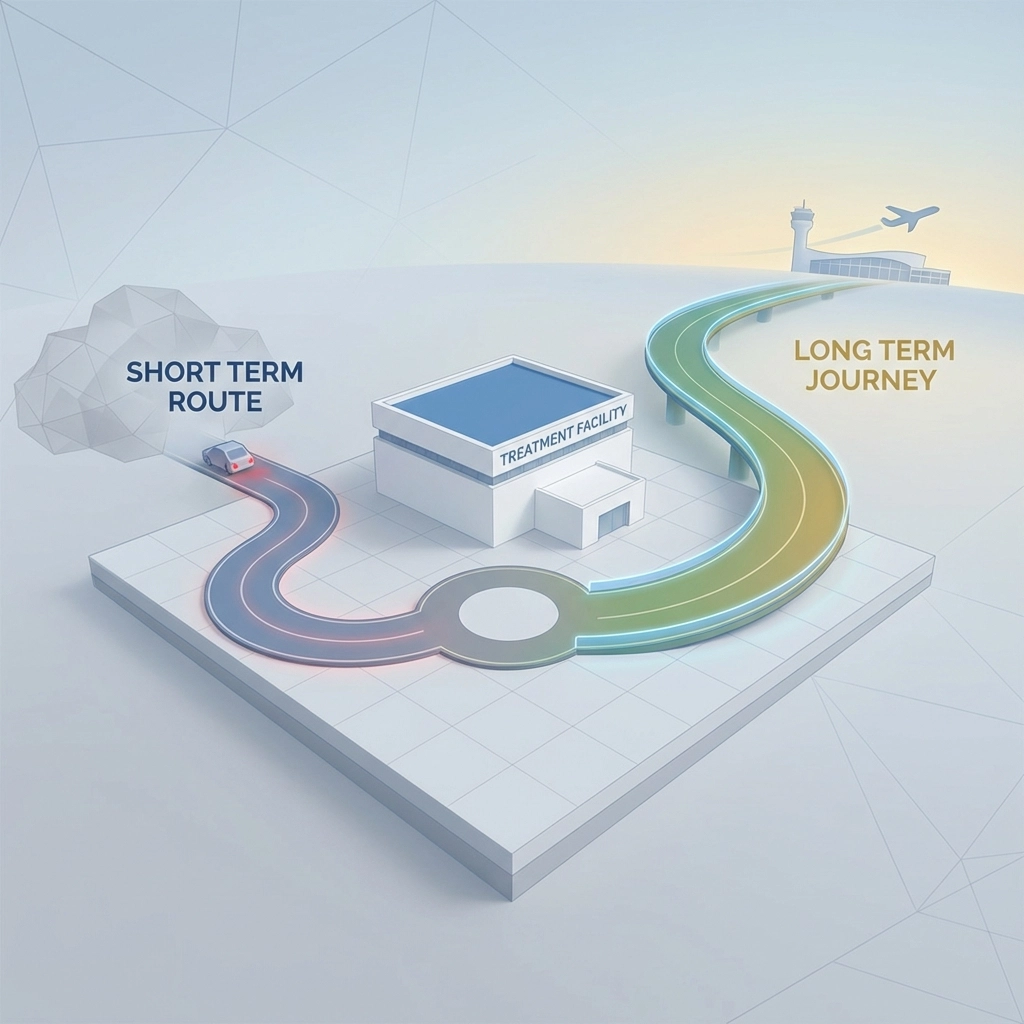
Distance isn't just geography, it's a therapeutic intervention. When patients have to book a flight home, they create what psychologists call a "cooling off period." That extra step, that logistical hurdle, gives them time to reconsider.
Here's what happens in the two highest-risk periods:
The 72-Hour Reality Check
Every patient arrives with expectations. Maybe they thought detox would be easier. Maybe they didn't expect group therapy to feel so intense. When expectations don't match reality, the impulse to flee hits hard.
If they're local? They can act on that impulse immediately. Call an Uber, text a friend, or just walk out and drive home. Game over.
If they're from out of state? They have to think through logistics. Book a flight. Figure out transportation to the airport. Call family to arrange pickup on the other end. That extra friction creates space for staff intervention and clinical re-engagement.
The Post-Detox Trap
This is where facilities lose the most money. Days 5-10, when the physical symptoms fade and patients think they're "fixed." They feel better physically, so they assume they're cured. The psychological dependency? The trauma work? The behavioral patterns? None of that feels urgent anymore.
Again, local patients can act on this false confidence immediately. Out-of-state patients have to plan their escape, which often gives clinical teams the window they need to address this dangerous misconception.
The ROI of Strategic Geography
Let's break down the math on why distance protects your revenue:
| Scenario | Average Stay | Revenue | Early Departure Risk | Expected Loss |
|---|---|---|---|---|
| In-State Patient | 12 days* | $12,000 | 50% higher | $23,000 |
| Out-of-State Patient | 28 days | $28,000 | Baseline risk | $7,000 |
| Net Difference | +16 days | +$16,000 | 50% reduction | $16,000 saved |
*Early departure average
The numbers don't lie. That "inconvenient" flight isn't a bug, it's a feature that protects your clinical outcomes and your bottom line.
The Legal Side: Staying Compliant While Supporting Travel
Now here's where facility owners get nervous: "Can we help with travel costs without breaking federal law?"
The answer is yes, but you have to do it right. Under EKRA (Eliminating Kickbacks in Recovery Act), you cannot simply buy flights for patients. That's considered illegal inducement.
But you can use promissory notes for legitimate travel expenses, provided:
- The arrangement is documented properly
- It's tied to medically necessary treatment
- It follows your state's specific guidelines
- It's not contingent on the patient choosing your facility over competitors
This isn't legal advice: you need to verify compliance with your attorney: but the framework exists to support patients who need travel assistance while staying within federal guidelines.

Building Your Out-of-State Strategy
Smart facility owners are already shifting their marketing to target patients from further away. Here's why this strategy works:
Higher Intent Patients
Someone willing to travel for treatment is already demonstrating serious commitment. They've researched options, compared facilities, and made a significant logistical decision. These aren't impulse decisions: they're calculated choices by motivated patients.
Premium Positioning
Distance allows you to position as a destination facility rather than just a local option. You can charge premium rates because patients are seeking specialized care, not just the closest available bed.
Improved Family Boundaries
Family dysfunction often contributes to addiction. Geographical separation during early recovery creates healthy boundaries that local treatment can't provide. It's harder for enabling family members to interfere with the treatment process.
Marketing to Out-of-State Patients
Your digital marketing strategy needs to evolve beyond local SEO. You need content that attracts patients from specific geographic regions where your clinical approach resonates.
Key strategies include:
- State-specific landing pages highlighting why patients travel to your location
- "Destination treatment" positioning that emphasizes the therapeutic value of distance
- Travel assistance content explaining your compliant support options
- Alumni testimonials from out-of-state patients who stayed longer and achieved better outcomes
The facilities winning this game aren't just competing locally anymore: they're building national reputations that attract patients willing to invest in serious change.
The Competitive Advantage Nobody's Talking About
While your competitors fight over the same local referral sources, you can tap into national demand for quality treatment. Out-of-state patients often have better insurance coverage, fewer local complications, and higher completion rates.
Plus, they become walking advertisements in their home states. A successful graduate from Texas becomes your best marketing asset for attracting more Texas patients. Local patients might refer friends occasionally, but out-of-state patients become regional ambassadors for your program.
Making Distance Work for Your Facility
This isn't about turning away local patients: it's about building a sustainable mix that protects your revenue and improves outcomes. The facilities seeing the strongest growth are those that:
- Track retention rates by patient zip code to identify optimal geographic targeting
- Develop state-specific marketing funnels that emphasize the therapeutic value of distance
- Create compliant travel assistance programs that remove logistical barriers without crossing legal lines
- Train admissions teams to position distance as a clinical advantage, not an inconvenience
The data is clear: distance isn't just good business: it's good medicine. That 50% reduction in early departures translates directly to improved clinical outcomes and significantly better financial performance.
Ready to Build Your Out-of-State Strategy?
The facilities that understand this principle first will have a massive competitive advantage. While others compete for the same local market, you can build a national reputation that attracts higher-intent patients who stay longer and pay more.
At Ads Up Marketing, we've helped treatment facilities build exactly these kinds of geographic strategies. We know how to position distance as a therapeutic tool, create compliant travel assistance messaging, and build marketing funnels that attract serious patients from across the country.
The 50% rule isn't just a statistic: it's a roadmap to better outcomes and stronger revenue. Want to see how this strategy could work for your facility?
Call us at 305-539-7114 and let's talk about turning geography into your competitive advantage. Your census: and your patients( will thank you.)