
Here's the uncomfortable truth: families are about to trust you with their loved one's life. And most of them will make that decision based on a grainy stock photo and a two-paragraph bio written five years ago.
You've probably seen it happen. A family tours your facility, loves what they see, talks to your clinical director for twenty minutes, and suddenly they're all in. But the families who never make it that far? The ones scrolling your website at 2 a.m. looking for any sign that your team actually knows what they're doing? Those are the ones you're losing.
The gap between your facility's actual clinical expertise and what prospective families perceive online is costing you admissions. Video can close that gap faster than anything else in your marketing toolkit.
Why Clinical Leadership Video Actually Moves the Needle
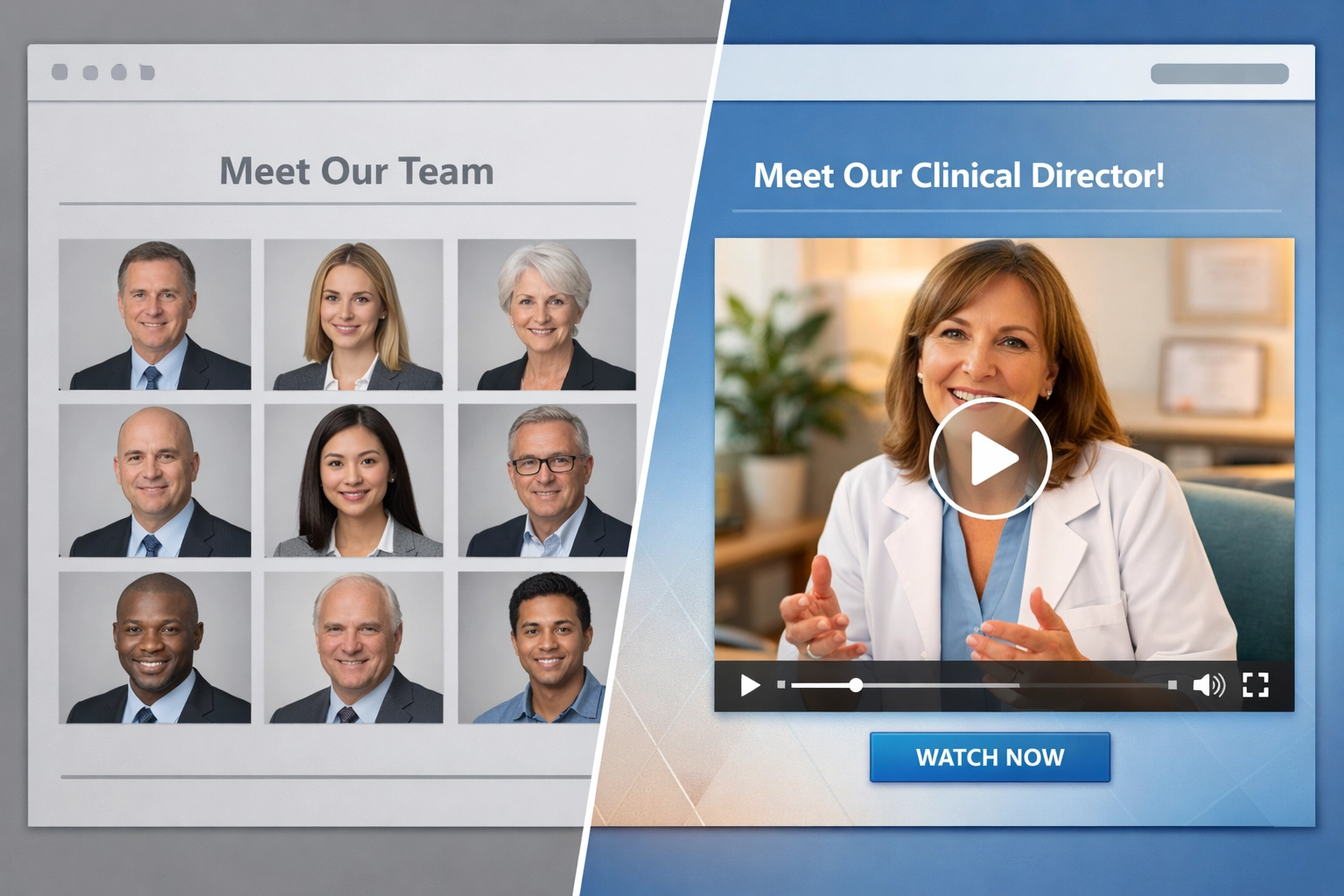
Most treatment centers bury their clinical team's credentials in a "Meet Our Team" page that looks like a high school yearbook. Name. Title. Degree. Maybe a stock photo if you're lucky. Then they wonder why families don't feel connected to the program before they even pick up the phone.
Video does something text and photos can't: it gives families a preview of the actual human beings who'll be managing their loved one's care. According to the Substance Abuse and Mental Health Services Administration (SAMHSA), transparency in treatment settings significantly impacts family trust and engagement throughout the recovery process.
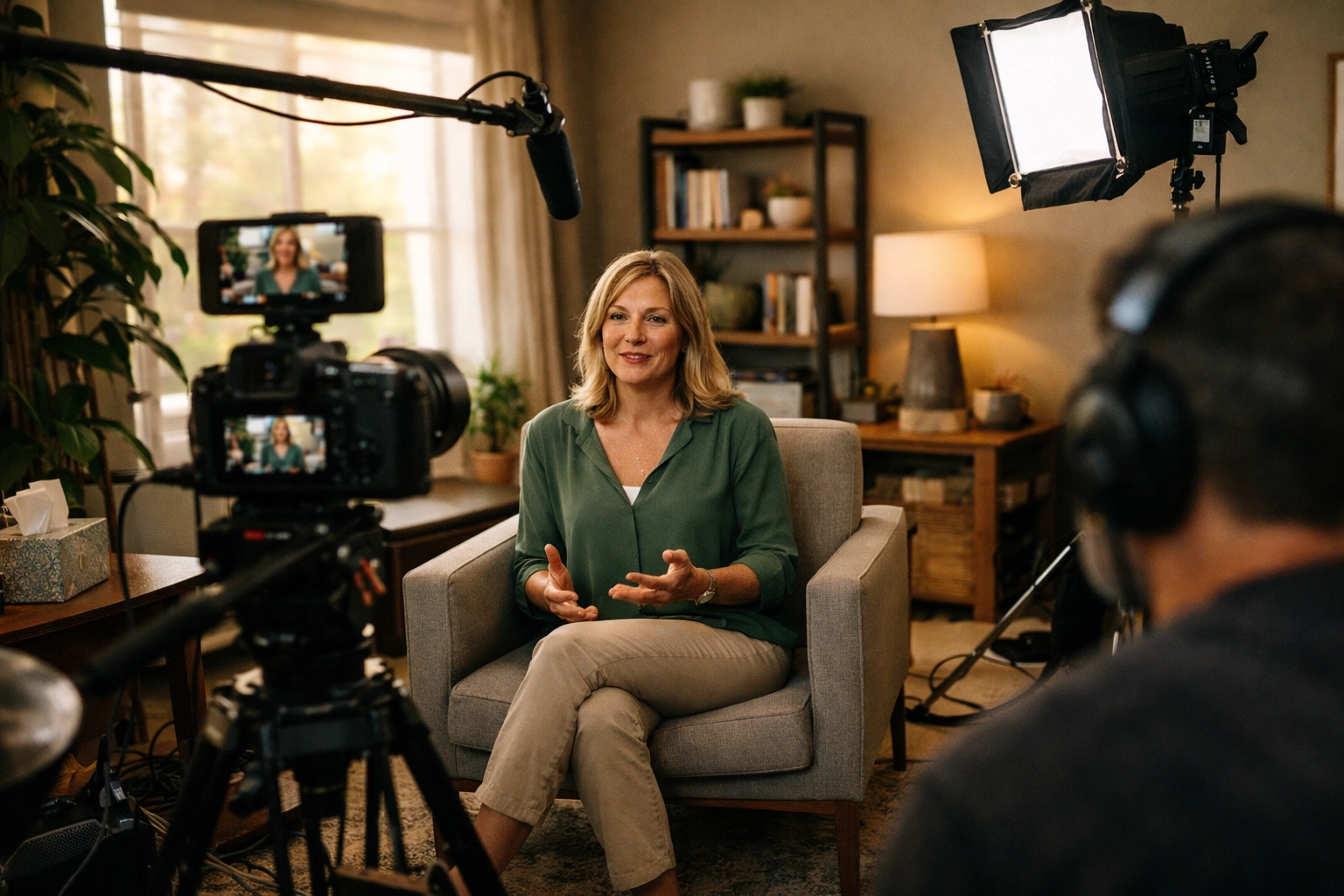
When your clinical director speaks directly to camera about their treatment philosophy, families get answers to questions they didn't even know they had. They see facial expressions, hear tone of voice, and pick up on the confidence (or lack thereof) that tells them whether this person really knows their stuff.

Here's what we've seen working with treatment centers at Ads Up Marketing: facilities that feature video introductions from clinical leadership see measurably better engagement metrics across the board.
| Trust Metric | Without Video | With Clinical Leadership Video |
|---|---|---|
| Average Time on Site | 1:45 | 4:20 |
| Contact Form Completion Rate | 2.8% | 6.4% |
| Phone Call Conversion Rate | 11% | 23% |
| Pre-Admission Anxiety (Self-Reported) | High | Moderate-Low |
| Family Confidence in Clinical Team | 42% | 78% |
Those numbers aren't random. When families can see and hear the person who'll be overseeing care, the entire decision-making process shifts. You're not asking them to take a leap of faith anymore. You're giving them actual evidence that your team is legit.
What Makes a Clinical Leadership Video Worth Watching
Not all videos work. We've all sat through the awkward, over-scripted corporate video that feels like a hostage situation. The clinical director reading off a teleprompter with zero emotion. The overly polished production that feels more like a pharmaceutical ad than an authentic introduction.
Here's what actually resonates:
Keep it conversational, not corporate. Your clinical director should talk like they're sitting across the table from a concerned parent, not delivering a keynote speech. Authentic storytelling matters here. Let them explain why they got into addiction treatment, what their treatment philosophy actually means in practice, and how they approach the toughest cases.
Show, don't just tell. Walk through your clinical spaces. Show the therapy rooms, the group settings, the quiet corners where one-on-one sessions happen. Families want to visualize where their loved one will be spending their time. As the National Association of Addiction Treatment Providers (NAATP) emphasizes, transparency in treatment environments builds confidence and reduces pre-admission hesitation.
Address the fears directly. Families considering treatment are terrified. Will the staff actually care? Is this going to be some cookie-cutter program? What happens if their loved one has a crisis at 3 a.m.? Your clinical leadership video should acknowledge these concerns head-on and explain how your team handles them.
Keep it under three minutes. Attention spans are short, especially when someone's already overwhelmed. Get to the point. Introduce your clinical director, explain their background, show a bit of the facility, and close with a clear next step.
The Connection Between Video and Pre-Admission Anxiety
We talk a lot about conversion rates and ROI, but there's a human element here that doesn't always show up in the data. When families can see who's going to be caring for their loved one, it reduces the anxiety that often derails the admission process.
Think about it from their perspective. They've never met your team. They're about to hand over someone they love to complete strangers. Every unknown in that equation raises their stress level and increases the chance they'll back out or keep shopping around.
Video removes some of those unknowns. It's not a replacement for a real conversation, but it's a bridge. Families arrive at that first phone call already feeling like they've "met" your clinical director. The rapport builds faster. The trust comes easier. And you spend less time convincing them you're qualified and more time talking about how your program can actually help.
If you've been following our recent content, you might've seen our post on why showing your medical team reduces pre-admission anxiety. The same principles apply here, but clinical leadership videos take it a step further by adding personality and depth.
Making Video Work Across All Devices
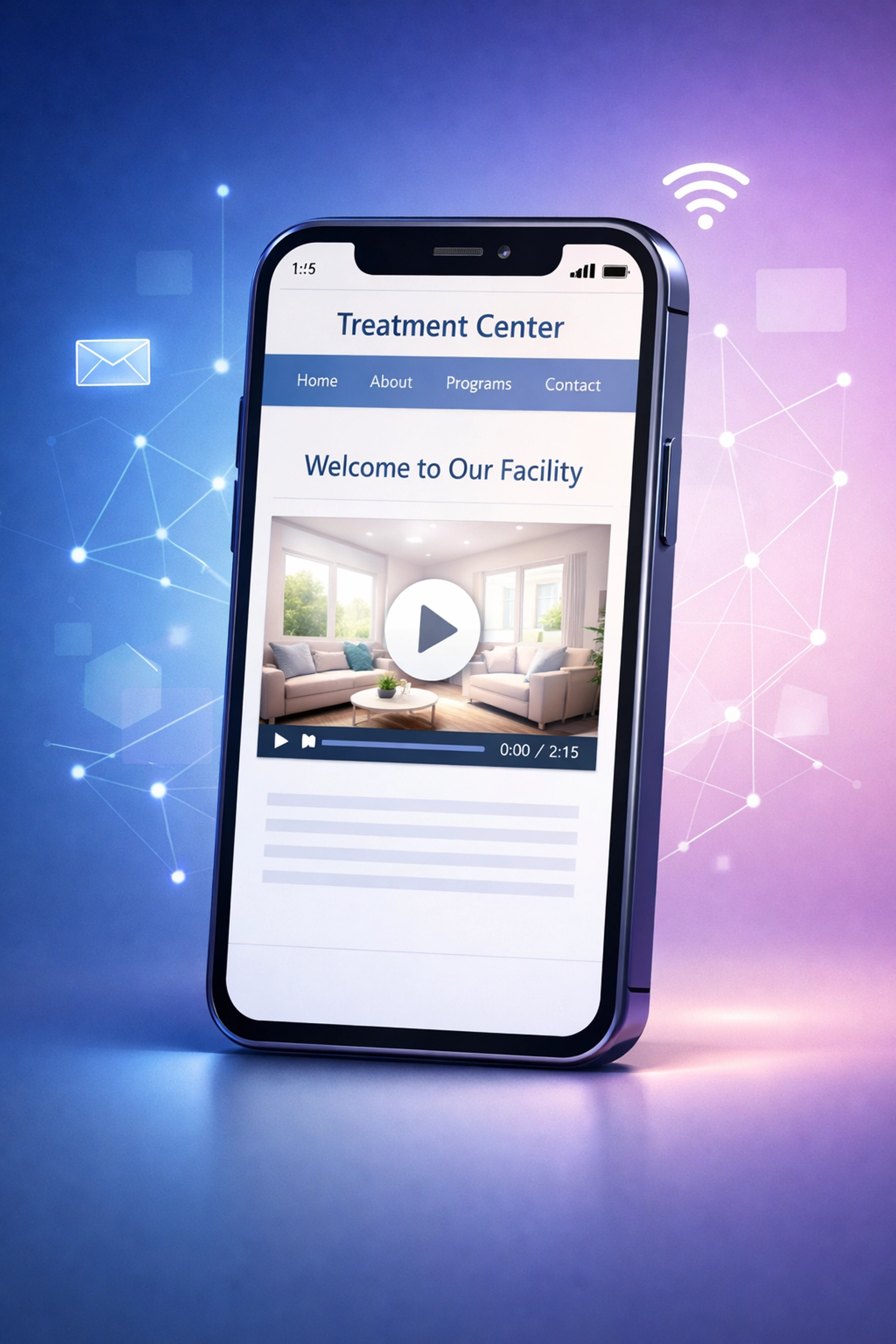
Here's a reality check: most families researching treatment are doing it on their phones. Late at night. In bed. While their loved one is asleep in the next room or actively spiraling.
If your video doesn't load fast on mobile, or if it's formatted in a way that makes it hard to watch on a small screen, you've already lost them. Mobile optimization isn't optional anymore. According to recent data from healthcare marketing research, over 60% of initial treatment center website visits now happen on mobile devices.
Make sure your videos are:
- Hosted on a fast, reliable platform (YouTube, Vimeo, or a professional hosting service)
- Formatted for mobile viewing (vertical or square videos often perform better on phones)
- Captioned or subtitled (many people watch with sound off, especially late at night)
- Quick to load (compress file sizes without sacrificing quality)
At Ads Up Marketing, we help treatment centers integrate video content into their websites in ways that actually work across devices. It's not just about uploading a file and hoping for the best. It's about strategic placement, proper formatting, and ensuring the video fits seamlessly into the user's journey from curious visitor to booked admission.
The ROI of Humanizing Your Clinical Team
Let's talk dollars and cents. Video production costs money. Hiring someone to shoot and edit takes time. Is it actually worth it?
Short answer: yes. Long answer: absolutely yes, if you do it right.
Here's the math. Let's say your average cost-per-admission through paid advertising is around $4,500 (pretty typical for the treatment space in 2026). If adding clinical leadership video to your site increases your conversion rate by even 2-3%, you're looking at significant savings per admission. Scale that across dozens of admissions per month, and you're talking about real money.
But the bigger benefit is often what doesn't happen. Families who feel confident in your clinical team are less likely to back out during verification of benefits. They're less likely to shop around after the first phone call. They're less likely to ghost your admissions team at the last minute. Video front-loads the trust-building process, which means your intake team spends less time convincing and more time coordinating care.
Want to see how this plays out in your specific situation? Give us a call at 305-539-7114 and we'll walk through what a video strategy could look like for your facility.
How to Get Started Without Overthinking It
You don't need a Hollywood production budget to make this work. What you need is a clinical director who's willing to be authentic on camera, a decent smartphone or camera, and about 30 minutes of their time.
Here's a simple framework:
Opening (20 seconds): "Hi, I'm Dr. Sarah Mitchell, Clinical Director here at [Facility Name]. I've been working in addiction treatment for 15 years, and I want to tell you a bit about how we approach care."
Background (45 seconds): Brief personal story about why they got into this field. Keep it relatable. Families connect with authenticity, not credentials alone.
Treatment Philosophy (60 seconds): What makes your clinical approach different? How do you handle the toughest cases? What do families and clients say about working with your team?
Facility Walkthrough (30 seconds): Quick tour of clinical spaces. Show where therapy happens. Make it feel real.
Closing (15 seconds): Clear call-to-action. "If you have questions about our program, our admissions team is available 24/7. Give us a call: we're here to help."
You can film this in-house or work with a professional team (we can connect you with videographers who specialize in healthcare marketing). Either way, the key is to keep it real. Overly polished videos feel like ads. Authentic videos feel like conversations.
The Compliance Side of Clinical Leadership Video
Before you hit record, let's talk compliance. You're operating in a highly regulated space. The video content you create needs to align with HIPAA regulations, advertising standards, and platform-specific rules.
Here's what to watch for:
- No patient testimonials without proper authorization
- No promises of specific outcomes (stay away from "we guarantee" language)
- Clear, accurate representation of your clinical team's credentials
- Compliance with LegitScript and platform advertising policies
When you work with a team that understands addiction treatment marketing (like us at Ads Up Marketing), we help you navigate these requirements from the start. The last thing you need is a great video that gets your ad accounts flagged.
Why Most Facilities Still Don't Do This
If video is so effective, why aren't more treatment centers using it?
Honestly? It feels like extra work. Your clinical director is already stretched thin. Finding time to shoot a video, coordinating schedules, figuring out the technical side: it all sounds exhausting.
But here's the thing: you're already losing admissions to facilities that are doing this. The centers with video introductions from clinical leadership aren't necessarily providing better care than you. They're just communicating their value more effectively.
And in a competitive market where families are comparing five or six facilities before making a decision, that communication gap is the difference between a booked bed and a missed opportunity.
Let's Make This Happen
Look, we get it. You're running a treatment center, not a media production company. You've got enough on your plate without adding "video content creator" to the job description.
That's exactly why we built our services around the unique needs of treatment facilities. At Ads Up Marketing, we handle the strategy, production coordination, website integration, and ongoing optimization so you can focus on what you do best: providing exceptional care.
We've worked with dozens of treatment centers to create authentic, compliant, high-converting video content. We know what works, what doesn't, and how to make the production process as painless as possible for your team.
Ready to stop losing admissions to facilities with better marketing? Call us at 305-539-7114 or visit our contact page to schedule a consultation. We'll show you exactly how video can transform the way families perceive your clinical team: and how that translates to more admissions and better ROI.
Your clinical director has the expertise. Your facility has the track record. Now it's time to let families see that before they pick up the phone. Let's make it happen.