
INSIGHTS
The High-Volume Illusion: Why ‘Churn and Burn’ Admissions are Killing Your ROI
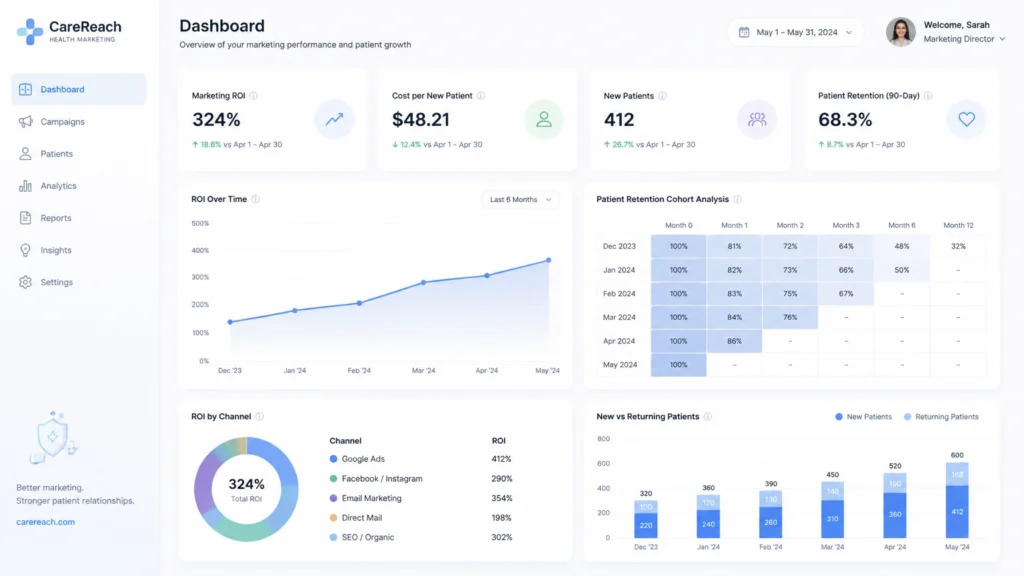
If you run an addiction treatment center or behavioral health facility, you’ve likely felt the constant pressure of the census roller coaster. Beds empty out, payroll looms, and the knee-jerk reaction is simple: pump more money into digital advertising, squeeze the intake team for more calls, and fill those beds at all costs.
So what’s the connection between aggressive top-of-funnel acquisition and your bottom-line profitability? On paper, a high-volume intake month looks like a massive victory. But this still doesn't drill down into the silent profit killer plaguing modern facilities: the "churn and burn" admissions model.
When your marketing engine is optimized purely for raw lead volume and rapid admissions without accounting for patient retention, length of stay (ALOS), and completion rates, you are essentially pouring water into a leaky bucket. You celebrate a full census on the 1st of the month, only to watch early against-medical-advice (AMA) discharges drain your revenue by the 15th.
In this article, we’ll examine why chasing vanity intake metrics destroys your return on investment (ROI), how to calculate your true cost per acquisition (CPA), and how shifting toward retention-first strategies can transform your facility's financial stability.
Table of Contents
- The Anatomy of the High-Volume Illusion
- The Hidden Math: Why Early Leavers Erase Your Marketing Margins
- Performance Impact: Churn-and-Burn vs. Retention-Focused Models
- How to Fix Your Funnel and Protect Your Facility's ROI
- Frequently Asked Questions
The Anatomy of the High-Volume Illusion
Let’s look at a common scenario. You hire an agency or manage campaigns that generate an impressive 50 admissions a month. Your cost per lead (CPL) looks reasonable, and your admissions director is working overtime.

However, when you dig into the clinical data, you notice a troubling trend: 40% of those patients leave within the first 14 days.
According to data and operational standards highlighted by public health authorities like SAMHSA and behavioral health leadership organizations like the National Association of Addiction Treatment Providers (NAATP), premature discharge not only compromises clinical outcomes: it wrecks unit economics.
When patients drop out early:
- The customer acquisition cost (CAC) spent to secure that admission is entirely sunk.
- Fixed operational overhead, staffing costs, and facility expenses are spread across fewer billable days.
- Payer authorizations for higher-tier services (such as PHP or intensive outpatient step-downs) get abruptly cut short.
"A full bed does not equal a profitable bed if the patient discharges before completing the continuum of care."
When you rely on high-volume tactics that attract misaligned, unvetted leads just to hit a monthly quota, you create a revolving door. For deeper insights into optimizing your intake quality, explore our targeted PPC management services.
The Hidden Math: Why Early Leavers Erase Your Marketing Margins
To understand why churn and burn hurts your financial health, you have to look beyond cost-per-click (CPC) and examine your true cost per completed episode.
If your average marketing and intake operational spend is $2,500 per admission, and your completion rate sits at 50%, your acquisition cost per successful episode effectively doubles to $5,000. Contrast that with a facility maintaining a 75% retention rate; their effective acquisition cost per completion drops significantly, even with identical top-of-funnel ad spend.

Furthermore, according to healthcare economic analyses, retaining a patient through full treatment episodes protects substantial revenue: often ranging from $2,300 to over $21,000 per case depending on the level of care: that would otherwise vanish with an early AMA discharge.
So what's the connection to your digital strategy? If your marketing campaigns are casting too wide a net, bringing in prospects who aren't properly qualified or pre-educated, your intake team spends precious hours processing admissions that will never materialize into sustainable revenue. Pairing robust keyword research services with precise audience targeting ensures you attract families who are genuinely ready for long-term recovery.
Performance Impact: Churn-and-Burn vs. Retention-Focused Models
To make the financial contrast crystal clear, let’s compare a high-volume, low-retention model against a strategic, retention-aligned marketing model for a standard residential facility:
| Metric / Indicator | High-Volume ("Churn & Burn") Model | Retention-Focused Strategic Model |
|---|---|---|
| Monthly Admissions | 60 Admissions | 40 Admissions |
| Average Length of Stay (ALOS) | 18 Days | 45 Days |
| AMA / Early Dropout Rate | 55% | 22% |
| Effective CPA per Completed Episode | High ($4,800+) | Optimized ($2,100) |
| Payer Reauthorization Success | Low (Frequent abrupt halts) | High (Consistent clinical documentation) |
| Overall Facility ROI | Volatile, razor-thin margins | Predictable, scalable profitability |
As this comparison illustrates, driving fewer admissions that actually stick yields vastly superior financial predictability and operational breathing room.
Ready to stop wasting ad spend on the wrong admissions? Let’s analyze your current funnel and build a predictable, high-ROI acquisition strategy. Call us today at 305-539-7114 or contact our team online.
How to Fix Your Funnel and Protect Your Facility's ROI
Shifting away from the high-volume trap requires an operational and marketing alignment. Here is how you can re-engineer your approach:
1. Optimize for Intent, Not Just Impressions
Stop bidding on broad, high-intent keywords that attract impulse inquiries with low commitment. Instead, focus on high-intent long-tail keywords and transparent content that addresses patient readiness and family education. Learn how our specialized conversion tracking tools help you track lead quality all the way from initial click to clinical admission.
2. Strengthen Pre-Admission Trust
Many early drops happen because expectations set during the digital search don't match the clinical reality. Use high-transparency video content, virtual facility walkthroughs, and clear pre-admission counseling to set realistic expectations before the patient ever walks through your doors.
3. Audit Your Intake and Marketing Alignment
If your marketing team celebrates cost-per-lead while your clinical team struggles with sudden AMAs, your departments are misaligned. True success requires tracking metrics past the initial phone call. For a comprehensive look at where your digital funnel might be leaking revenue, request a free website audit with our behavioral health marketing specialists.

Frequently Asked Questions
What is the primary cause of the "churn and burn" admissions cycle?
It is typically driven by top-of-funnel marketing campaigns optimized solely for raw lead volume rather than patient-facility fit, combined with a lack of pre-admission education and engagement.
How does patient retention impact marketing ROI?
Higher retention spreads your fixed acquisition and intake costs across more billable days and successful treatment episodes, lowering your effective cost per acquisition and substantially increasing revenue per patient.
What is a healthy patient completion benchmark for rehab facilities?
While benchmarks vary by level of care, top-performing facilities target a patient completion and retention rate of 70% or higher, keeping against-medical-advice (AMA) discharges below 15%.
Don't let the high-volume illusion drain your center's resources. Talk to specialists who understand the unique financial and clinical dynamics of behavioral health. Call Ads Up Marketing today at 305-539-7114 to schedule your comprehensive strategy consultation.