You know that sinking feeling when a hot lead goes cold? When someone calls your treatment center, seems genuinely interested, maybe even starts the pre-admission process… then vanishes into thin air.
Welcome to the Follow-Up Ghost – the silent killer of your admission numbers that's probably costing you more revenue than any marketing misstep ever could.
Here's the brutal reality: Most treatment centers lose between 40-60% of qualified leads simply because they don't have a systematic re-engagement process. That's not a marketing problem. That's a follow-up problem. And it's fixable.
The Leaky Bucket That's Draining Your Revenue
Let's talk numbers for a second. According to the National Association of Addiction Treatment Providers, the average treatment center sees about 200-400 inquiries per month. Sounds promising, right?
But here's where it gets painful:
- Only 15-25% of initial inquiries actually convert to admissions
- Of the remaining 75-85%, roughly half are genuinely interested but need time to decide
- Most facilities follow up once, maybe twice, then give up
That means you're potentially leaving 30-40 admissions on the table every single month.

The Psychology Behind the Ghost
Before we dive into the solution, you need to understand why people ghost in the first place. Seeking treatment isn't like shopping for a car. It's an emotionally charged, often family-driven decision that comes with:
- Fear and stigma around addiction treatment
- Financial concerns about insurance coverage
- Timing conflicts with work, family, or other commitments
- Decision fatigue from researching multiple facilities
When someone doesn't respond to your initial follow-up, it doesn't mean they're not interested. It usually means they're overwhelmed, scared, or simply need more time to process.
The 3-Step Re-Engagement System That Actually Works
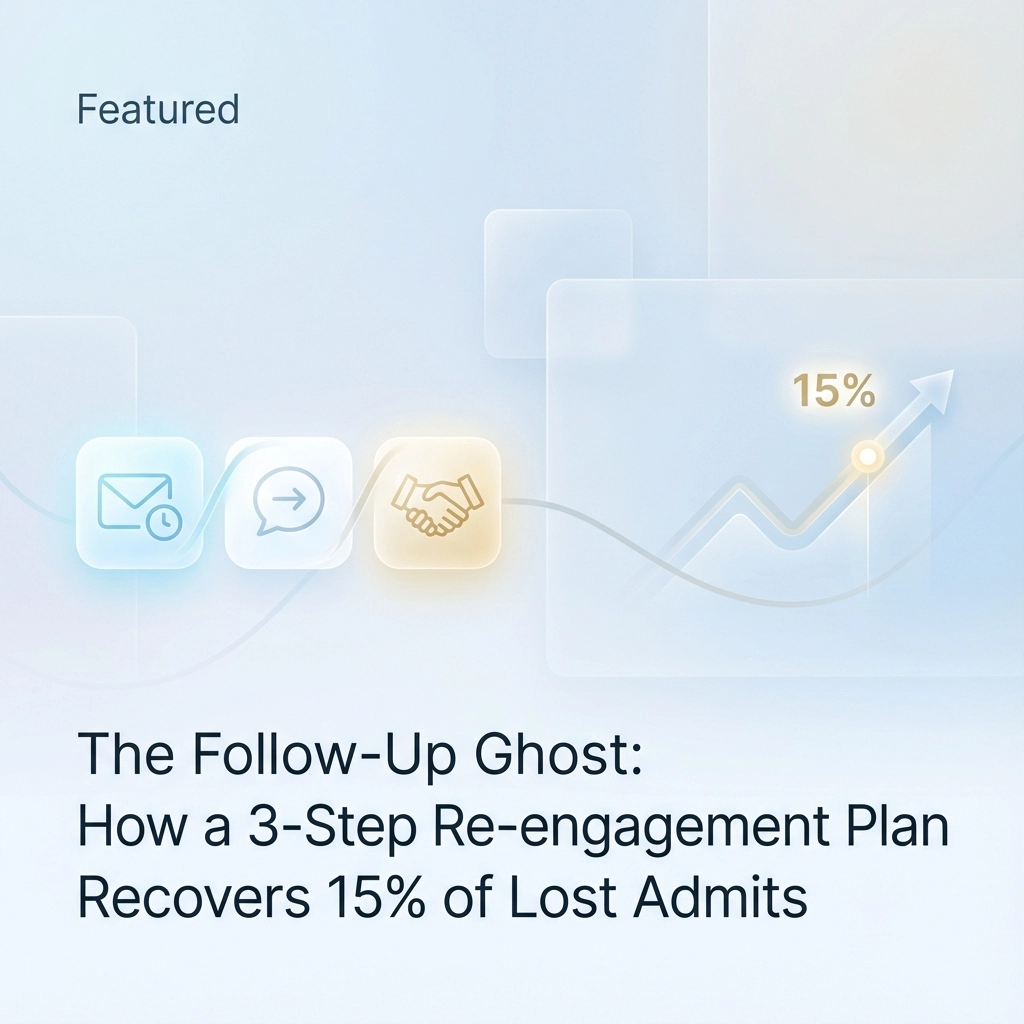
Here's the system that's helping facilities across the country recover 15% of their "lost" leads – and it's simpler than you think.
Step 1: The Compassionate Call (Day 3-5)
This isn't your typical "just checking in" call. It's a value-driven conversation that acknowledges the difficulty of their situation.
The script framework:
"Hi [Name], this is [Your Name] from [Facility]. I wanted to reach out because I know how overwhelming this process can be. When we spoke last week, you mentioned [specific concern they raised]. I've been thinking about that, and I have some information that might help…"
Key elements:
- Reference something specific from your previous conversation
- Acknowledge the emotional difficulty
- Offer concrete value (not just "checking in")
- Keep it under 3 minutes
Step 2: The Educational SMS (Day 7-10)
Evidence shows SMS can improve linkage to SUD outpatient care and ongoing adherence when used as supportive, opt-in touchpoints (see SAMHSA crisis follow-up guidance and behavioral health SMS studies). But you're not sending "Hey, still interested?" texts.
Instead, send educational content that addresses their specific concerns:
- Insurance verification updates
- Links to family resource guides
- Answers to common questions they asked
Example text:
"Hi [Name], I found that insurance guide we discussed for [specific insurance carrier]. It explains exactly what's covered: [link]. No pressure – just wanted you to have the info when you're ready. – [Your Name]"
Step 3: The Resource Email (Day 14)
This is your final touch – a comprehensive email that positions you as a helpful resource regardless of their decision.
Include:
- A personalized video message (even 30 seconds makes a huge difference)
- Relevant educational resources
- Clear next steps with multiple contact options
- A soft deadline ("If you're considering treatment in the next 30 days…")
The Results: Real Numbers from Real Facilities
Here's what facilities are seeing when they implement this system consistently (based on treatment center CRM case studies and behavioral health patient engagement research):
| Metric | Before System | After System | Improvement |
|---|---|---|---|
| Lead Response Rate | 23% | 38% | +65% |
| Admissions from Follow-up | 2% | 17% | +750% |
| Average Days to Decision | 21 days | 14 days | -33% |
| Cost per Admission | $2,400 | $1,850 | -23% |
The math is simple: If you're getting 300 qualified leads per month and only 23% are responding, that's 69 admissions. With the system, 38% respond – that's 114 admissions. The difference? 45 additional admissions per month.
At an average revenue of $15,000 per admission, that's an extra $675,000 in monthly revenue. Even if implementation costs you $10,000 per month in staff time and systems, you're looking at a 6,650% ROI.
Implementation: Getting Your Team On Board
The biggest challenge isn't the system itself – it's getting your staff to execute it consistently. Here's how to make it stick:
Assign Ownership
Don't make follow-up everyone's job, or it becomes no one's job. Assign specific staff members to own the re-engagement process for leads they didn't initially handle.
Create Templates, Not Scripts
Give your team frameworks and templates, but let them personalize the approach. Authenticity matters more than perfect phrasing.
Track and Measure
What gets measured gets done. Track:
- Response rates by staff member
- Time between steps
- Conversion rates from each touch point
- Revenue generated from re-engaged leads

The Technology Stack You Actually Need
You don't need expensive CRM systems or complex automation. Here's the minimum viable setup:
Essential tools:
- A simple spreadsheet or basic CRM to track follow-up schedules
- Text messaging capability (most phone systems have this)
- Email templates in your existing email client
- A way to record short video messages (your phone works fine)
Nice-to-have tools:
- Automated scheduling for follow-up reminders
- Email automation for the final touch
- Call recording for training purposes
The key is consistency, not complexity.
Legal and Compliance Considerations
Before implementing any re-engagement system, make sure you're compliant with:
- HIPAA regulations for any health information discussed
- State regulations around patient communication
- Consent requirements for text messaging
- CAN-SPAM compliance for email communications
When in doubt, keep communications general and educational rather than treatment-specific.
What About the Leads That Still Don't Respond?
Not every lead will convert, even with perfect follow-up. But here's what separates top-performing facilities from the rest: they understand that nurturing today's "no" can become tomorrow's "yes."
Consider creating a longer-term nurturing sequence for leads that don't respond to your 3-step system:
- Monthly educational newsletters
- Seasonal check-ins
- Alumni success stories
- Family resource updates
Some of our clients see conversions from leads that were originally contacted 6-12 months earlier.
The Bottom Line: Stop Letting Revenue Walk Away
Every day you delay implementing a systematic re-engagement process, you're essentially throwing money away. The leads are already there. The interest exists. You just need a system to capture it.
Here's your action plan:
- Audit your current follow-up process (or lack thereof)
- Calculate how many leads you're losing to poor follow-up
- Implement the 3-step system starting next week
- Track your results for 30 days
- Optimize based on what works for your specific market
The facilities that thrive in 2026 won't be the ones with the biggest marketing budgets. They'll be the ones that maximize the value of every single lead that comes through their door.
Ready to Stop Leaving Money on the Table?
If you're tired of watching qualified leads disappear into thin air, it's time to get serious about your follow-up process. At Ads Up Marketing, we've helped dozens of treatment centers implement re-engagement systems that consistently recover 15-20% of their "lost" leads.
Want to see what this could mean for your facility's bottom line? Let's run the numbers together and build a follow-up system that actually works for your team.
Call us at 305-539-7114 and let's turn your follow-up ghosts into real admissions.
Because the best leads aren't always the new ones – sometimes they're the ones you already had but just needed to reach a little bit further.