
"It's just too far from home."
If you've worked admissions for more than a week, you've heard this objection. And if you're like most intake coordinators, you probably started rattling off amenities, insurance benefits, or tried to negotiate on price. Wrong move.
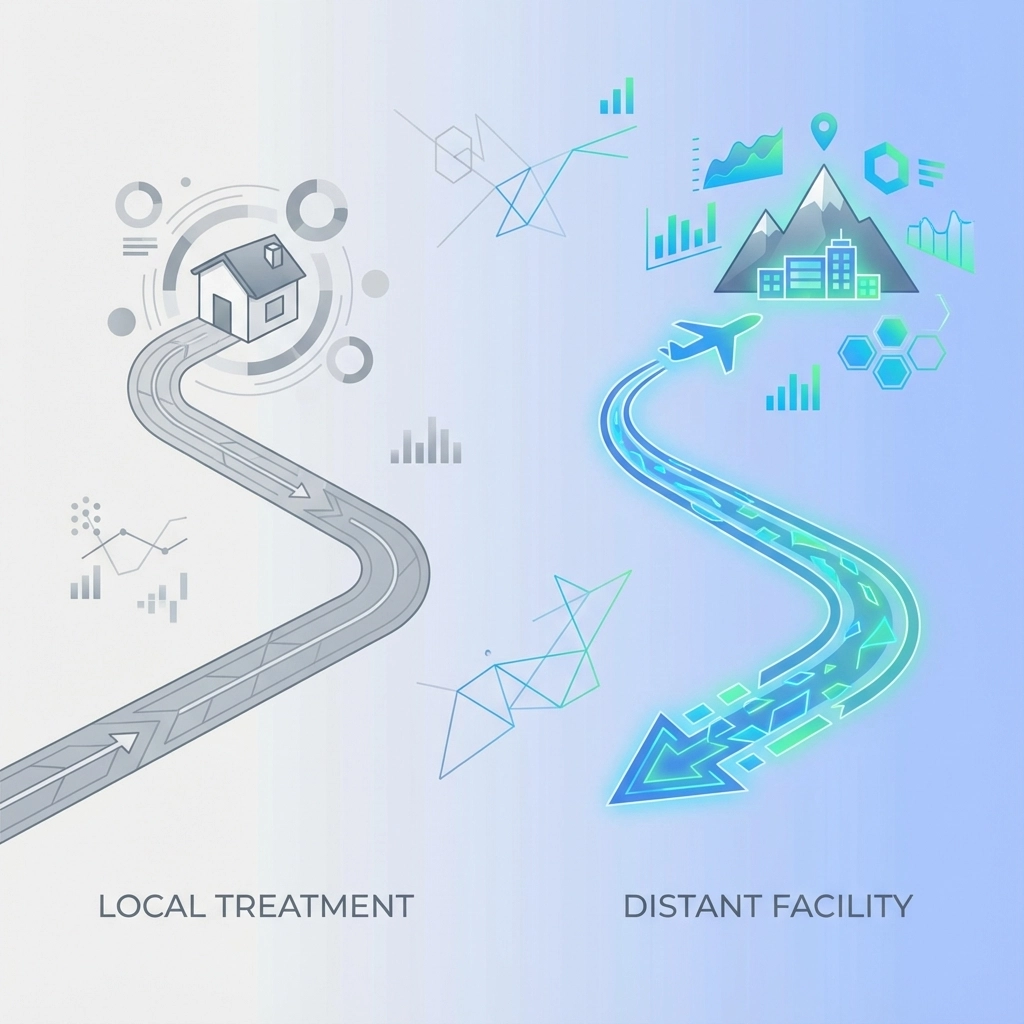
The distance objection isn't about logistics, it's about commitment. And when handled correctly, it becomes your strongest tool for ensuring treatment completion. Here's how the best admissions teams turn "too far" into "exactly what I need."
The Psychology Behind the Distance Objection
Before we dive into the tactical response, let's understand what's really happening when someone says your facility is "too far." They're not doing geography homework. They're unconsciously testing their own commitment level.
The real translation: "If this gets hard, how easy will it be for me to quit?"
This is why your response can't start with flight costs or travel logistics. It has to start with a commitment check that gets them to verbally confirm they're serious about recovery.

Step 1: The Commitment Check (Before You Mention Distance)
Here's where most admissions teams lose the call. They hear "too far" and immediately start defending the location. Instead, you need to pause and redirect to commitment.
The script:
"I hear you saying it's far, and that's actually something I want to talk about in a minute. But first, let me ask you this, are you at the point where you're willing to do whatever it takes to get clean and stay clean? Even if it's uncomfortable or inconvenient?"
Why this works:
- You're not dismissing their concern
- You're elevating the conversation to life-or-death stakes
- You're getting them to publicly commit before you pitch the solution
Wait for their "yes." Don't move forward until you hear some version of "absolutely" or "I have to." If they hedge, you dig deeper into their motivation before ever mentioning travel.
Step 2: The Distance Pitch (Lead with the Data)
Now that they've committed to doing "whatever it takes," you have permission to explain why distance is actually a clinical tool, not a barrier.
The script:
"Good, because I want to share something with you that might surprise you. We've tracked our outcomes for over two years, and patients who travel out-of-state to get treatment have a 50% higher success rate of completing their program compared to people who stay local. Distance literally saves lives."
Follow up with the why:
"Here's what happens, the first 72 hours of treatment are when most people want to leave. If they can just drive home when things get tough, they will. But if leaving means booking a flight, calling family, and making it a whole production… they stay. And staying is what gets you sober."
| Treatment Completion Rates by Distance | Local (In-State) | Out-of-State |
|---|---|---|
| Complete 21+ Day Programs | 65% | 82% |
| Finish Full 30-45 Day Treatment | 58% | 79% |
| Successful 6-Month Follow-Up | 41% | 67% |
Step 3: Address the "False Peak" Phenomenon
This is where you get clinical and show you understand addiction recovery, not just bed management.
The script:
"There's another critical window we see around day 7-10, right after detox. People feel physically better and think they're 'cured.' That's when the brain starts saying 'I can handle this on my own now.' If they're local, they walk out. If they're here with us, they stay and do the real work of recovery, addressing the mental and emotional addiction that physical detox doesn't touch."
The business reality (for owners reading this): A patient who AMAs on day 3 generates $3,000 in revenue. A patient who completes 30 days generates $30,000. The distance factor isn't just clinical best practice, it's what keeps your doors open.
Step 4: Selling Your Specific Location
Only NOW do you start talking about your facility's setting, amenities, and unique benefits. They've already agreed that distance is good, so you're selling them on why your distant location is the right choice.
Pro tip: Don't oversell here. They're already bought into the concept. Just give them enough specifics to visualize themselves succeeding at your facility.

Step 5: Handling Loved Ones (The "But We Want Them Close" Response)
This is where it gets tricky. Often, the family member calling wants the patient nearby so they can visit, help, or feel involved. Your job is to gently reframe this from what feels good to what works.
The script:
"I completely understand wanting them close, that comes from love. But here's what we've learned: proximity feels good for the family, but distance is safer for the patient. You wanting to be able to drive over when they're struggling? That's the exact escape route their addiction is counting on."
The gentle redirect:
"The hardest thing about loving an addict is sometimes the best help feels like abandonment. But if the choice is between feeling close and keeping them alive, which one would you choose?"
Step 6: The Reminder (When They Balk at Logistics)
Here's the crucial part most admissions teams miss. After you've gotten buy-in on distance, when they start questioning flight costs, travel time, or logistics later in the call, you don't re-argue the benefits. You remind them of their commitment.
The script:
"I hear you getting concerned about the travel piece. Remember when I asked if you were willing to do whatever it takes to get clean? You said yes. This is what 'whatever it takes' looks like. The question isn't whether it's convenient, it's whether you meant what you said."

The Legal and Ethical Boundaries
Before we go further, let's be crystal clear about what you cannot do when addressing travel concerns:
- You cannot pay for flights directly (this constitutes illegal incentivization)
- You can discuss promissory notes for travel expenses as part of overall treatment costs
- You must be upfront about travel being the patient's responsibility
- You can explain how families often help coordinate travel logistics
The SAMHSA guidelines are clear that treatment centers must avoid anything that could be construed as inducement beyond legitimate medical care.
Common Mistakes Admissions Teams Make
Mistake #1: Starting with logistics instead of commitment
- Wrong: "Well, we can help you figure out the travel…"
- Right: "Are you willing to do whatever it takes?"
Mistake #2: Arguing with the family member instead of aligning with patient outcomes
- Wrong: "You're being selfish wanting them close"
- Right: "You want what's best for them, and here's what the data shows works best"
Mistake #3: Backing down when they push back on distance
- Wrong: "Maybe we can find something closer"
- Right: "Remember what you said about doing whatever it takes?"
Measuring Your Distance Pivot Success
Track these metrics to see if your team is implementing this correctly:
- Conversion rate after distance objection comes up
- AMA rates for out-of-state vs. local patients
- Length of stay averages by patient origin
- Family satisfaction scores for patients who traveled

Advanced Scripts for Specific Scenarios
For the spouse who's worried about emergencies:
"I understand that concern. Our medical team is available 24/7, and we have protocols for any emergency that would require family notification. The reality is, the biggest emergency is them leaving treatment early: and distance prevents that."
For the patient who's nervous about being alone:
"You won't be alone: you'll be surrounded by people who understand exactly what you're going through. And you know what? Some of your strongest recovery relationships will come from this shared experience of being here together, away from all the old triggers and enablers."
For financial concerns about travel:
"Let's think about this in terms of what it costs NOT to get this right. If you try treatment locally and it doesn't work, you're looking at another round of treatment costs, plus all the damage that happens in between. The travel investment is tiny compared to the cost of addiction."
The Bottom Line for Facility Owners
This isn't just about closing more admissions calls: though it will do that. It's about clinical integrity. When your admissions team masters the distance pivot, you're not just filling beds. You're placing people in the environment where they have the highest chance of success.
Your census improves. Your completion rates go up. Your reputation grows. And most importantly, more people get sober.
Ready to train your admissions team on objection handling that actually works? The team at Ads Up Marketing specializes in conversion-focused training for treatment centers. We help facility owners build admissions processes that turn objections into opportunities.
Call 305-539-7114 to discuss how we can help your admissions team master these conversations and increase your facility's success rates while maintaining the highest ethical standards.
Distance isn't a barrier to treatment: it's a tool for recovery. Make sure your team knows how to use it.