So you've built a treatment center from the ground up. You've navigated licensing headaches, insurance credentialing nightmares, and the constant pressure of keeping beds filled. Now you're thinking about what comes next, and that's exactly where most owners get stuck.
Here's the thing: a successful exit doesn't happen overnight. It takes planning. Real, strategic, sometimes uncomfortable planning that starts years before you ever shake hands with a buyer. Whether you're eyeing retirement, a merger, or simply cashing out to pursue your next venture, the decisions you make today will determine what your facility is worth tomorrow.
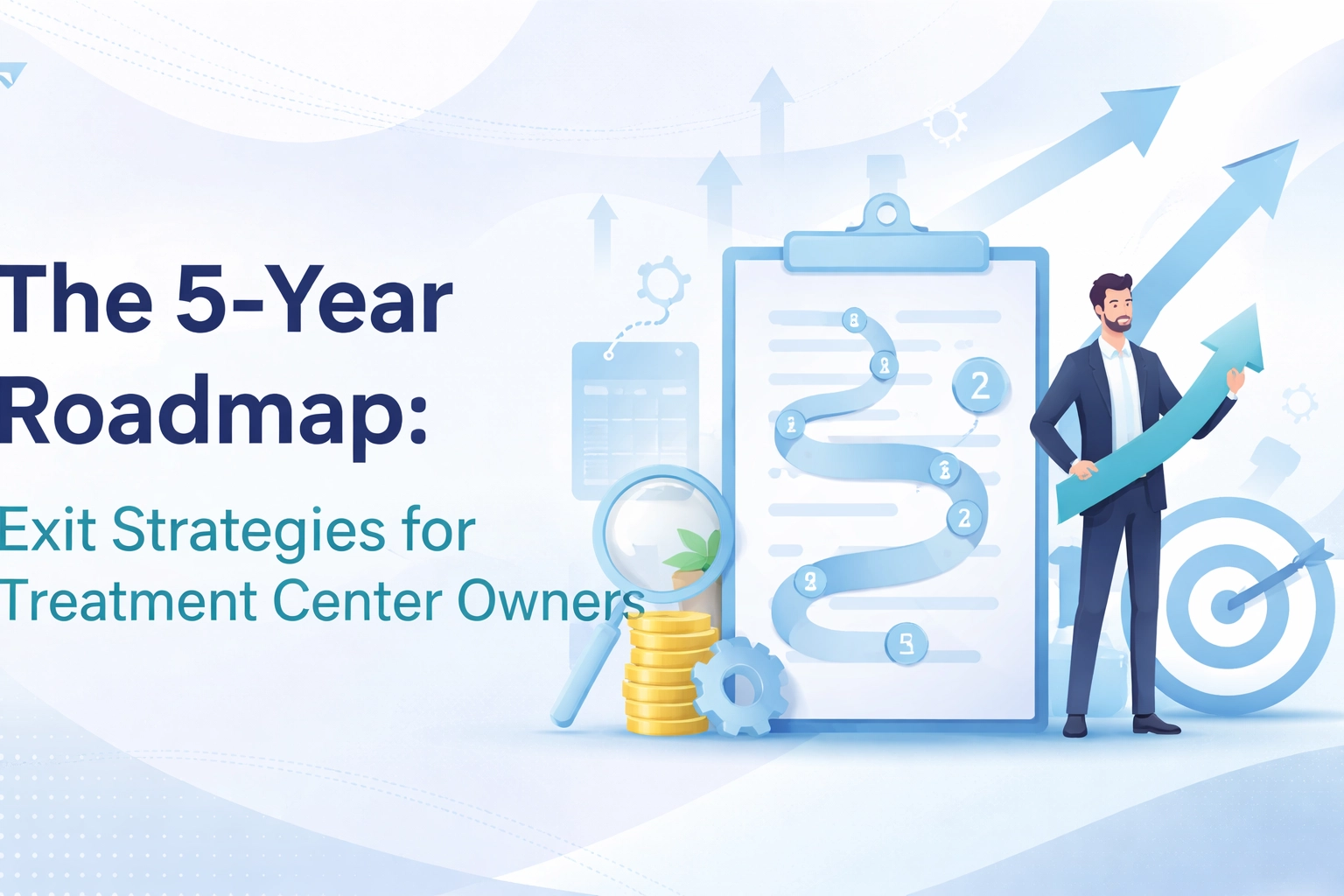
Let's break down a realistic 5-year roadmap so you can maximize your treatment center's value and walk away on your own terms.
Why Start Planning Your Exit Strategy Now?
You might be thinking, "I'm not selling for another five years: why would I worry about this now?" Fair question. But here's the reality: buyers aren't just purchasing your current revenue. They're buying your facility's ability to generate future revenue without you running the show every day.
Treatment centers that command premium valuations share one thing in common: they've built systems that work independently of the owner. That takes time. According to NAATP, facilities with documented operational processes and diversified payer mixes consistently outperform those that don't when it comes to acquisition offers.
The earlier you start, the more leverage you have when negotiations begin.

Years 1-2: Building the Foundation
The first two years are all about getting your house in order. Think of this phase as constructing the infrastructure that makes your facility attractive to buyers down the road.
Decide What You Actually Want
Before anything else, get clear on your goals. Are you looking for a complete sale: patient files, equipment, real estate, the whole package? Or would you prefer to retain ownership of hard assets like the building while selling the operational side?
Your personal vision matters here. What does life after the sale look like for you? Do you want a clean break, or would you consider staying on in an advisory role during the transition? These aren't questions you can answer later. They shape everything.
Document Everything (Seriously, Everything)
Buyers get nervous when they see a facility that only runs smoothly because the owner is personally involved in every decision. Your job during this phase is to prove that's not you.
Start documenting:
- Admissions workflows with clear conversion metrics
- Staff training protocols that can be replicated
- CRM systems that track leads from initial contact to admission
- Clinical outcome data including patient satisfaction scores
If you haven't already optimized your admissions process, now's the time. Check out our guide on admissions process optimization to get started.
Build a Leadership Team That Doesn't Need You
This one stings for some owners, but it's non-negotiable. You need people who can run operations without you hovering. Hire, train, and empower a management team that demonstrates competence to potential buyers.
Years 2-3: Optimizing Your Facility's Value
Now that your foundation is solid, it's time to address the factors that directly impact your valuation. This is where the rubber meets the road.
Fix Your Payer Mix
Here's a hard truth: facilities that rely heavily on out-of-network payments face significant valuation discounts. Buyers see volatility. They see regulatory risk. They see headaches.
Work on establishing relationships with major insurance payers. Increase your in-network reimbursement rates. Predictable, diversified revenue streams are worth more than flashy but unstable income sources. If you need help getting credentialed, we've got a resource on how to get credentialed with insurance companies.

Improve Clinical Outcomes (and Prove It)
Low relapse rates, high patient satisfaction scores, and strong clinical documentation aren't just good for patients: they justify higher pricing and reduce regulatory risk for buyers.
According to SAMHSA, treatment facilities with documented outcome tracking demonstrate greater long-term stability. Start measuring what matters and keep those records clean.
Diversify Your Referral Sources
If 80% of your patients come from one geographic area or a single referral partner, that's a red flag. Buyers will see geographic concentration as a risk.
Develop marketing strategies that pull patients from multiple states. This demonstrates scalability and reduces dependency on any single market. Need help with this? Our post on residential treatment facility business growth covers the essentials.
Years 3-4: Pre-Sale Preparation
You're getting closer. This phase is about tying up loose ends and positioning yourself for serious conversations with potential buyers.
Get Your Legal Ducks in a Row
Resolve any pending claims against your company. Ensure management contracts are fully assignable. Review lease terms: you don't want a lease renewal complicating negotiations at the worst possible time.
Work with professionals to understand all tax implications. The difference between proper and poor tax planning can be hundreds of thousands of dollars in your pocket.
Identify Your Ideal Buyer Profile
Not every buyer is created equal. Some want to acquire and grow. Others want to strip assets. Some prefer owner involvement during transition; others want a clean handoff.
Define the characteristics you need from a buyer:
- Financial stability and proof of funds
- Experience in healthcare or treatment operations
- Alignment with your facility's mission and values
- Reasonable expectations for transition involvement
| Buyer Type | Pros | Cons |
|---|---|---|
| Private Equity | Higher valuations, fast closings | May prioritize profit over mission |
| Strategic Acquirer | Industry expertise, growth potential | Longer due diligence process |
| Management Buyout | Continuity for staff and patients | May require seller financing |
| Individual Owner | Personal attention to legacy | Limited capital for premium offers |
Year 4-5: Final Preparation and Execution
This is the home stretch. Everything you've built over the past four years needs to shine now.
Demonstrate Operational Excellence
A facility running at 85% capacity year-round is worth more than one that fluctuates between 60% and 95% depending on the season. Consistency signals stability. Stability commands premium pricing.
If your census has been inconsistent, consider what's driving that volatility. Is it marketing? Admissions follow-up? Insurance verification bottlenecks? Address these issues before going to market.
Prepare Your Documentation Package
Buyers want comprehensive information to reduce their perceived risk. Compile:
- Three to five years of financial records
- Clinical outcome data and patient satisfaction surveys
- Staff training materials and retention statistics
- Marketing performance metrics and lead source data
- System documentation and operational playbooks

Communicate the Transition
Once you've identified a buyer and finalized negotiations, inform key stakeholders: staff, referral partners, and patients who need to know. Make an introduction that builds confidence in the new ownership.
Where Ads Up Marketing Fits In
Here's where we come in. A big part of your facility's value comes down to predictable, documented marketing and admissions systems. Buyers want to see that your patient pipeline isn't dependent on your personal relationships or random referrals: it's driven by scalable, replicable processes.
That's exactly what we help treatment center owners build. From high-intent lead generation to admissions optimization, our team specializes in creating marketing infrastructure that increases your facility's value: whether you're planning an exit in two years or five.
We've worked with dozens of treatment center owners preparing for acquisitions. We know what buyers look for, and we know how to position your marketing to maximize valuation.
Ready to Start Your 5-Year Roadmap?
Planning your exit strategy isn't something you should do alone. The decisions you make now will ripple through every aspect of your eventual sale.
If you're serious about maximizing your treatment center's value and building systems that buyers actually want to purchase, let's talk. Our team can help you identify gaps, strengthen your marketing infrastructure, and position your facility for a premium exit.
Call us at 305-539-7114 to schedule a consultation. Your future self will thank you for starting today.