Your potential patient just crashed their car. Their family is sitting in a hospital waiting room at 2 AM, frantically searching "drug rehab near me" on their phone while trying to figure out next steps. Your facility could be exactly what they need: but if your website takes 8 seconds to load on mobile, they'll never find out.
Here's the brutal truth: in healthcare, patients expect fast, mobile-first access—and slow pages are abandoned in seconds (Experian Health: State of Patient Access 2023 and SAMHSA crisis care guidance), and in the addiction treatment space, that abandoned user might not get another chance to seek help.
The Mobile Reality Check for Rehab Centers
Let's start with some hard numbers that should keep every facility owner awake at night. Healthcare is now a mobile-first journey: patients increasingly access care via smartphone apps and portals (HealthIT.gov 2024; IQVIA Digital Health Trends 2024). In addiction treatment searches, mobile dominates because families in crisis don't wait to get home to a desktop. They search immediately, wherever they are, on whatever device is in their hand.
The addiction treatment industry sees some unique mobile usage patterns that make mobile-first design absolutely critical:
- Crisis searches happen 24/7 (SAMHSA 988 Lifeline and FindTreatment.gov) – Medical emergencies, interventions, and rock-bottom moments don't follow business hours
- Family members search while multitasking – They're often at work, in cars, or managing other emergencies simultaneously
- Emotional state affects patience – Stressed, worried families have zero tolerance for slow, clunky websites
- Research happens in short bursts – Multiple quick sessions between handling crisis situations
What "Mobile-First" Actually Means for Treatment Centers
Mobile-first design isn't just about making your desktop site work on phones. It's a complete mindset shift that starts with the most constrained experience first. Google has been using mobile-first indexing since 2018, meaning they primarily use your mobile site's content and performance to determine search rankings.
For addiction treatment facilities, mobile-first means:
Prioritizing critical information above the fold:
- Phone number prominently displayed
- "Get Help Now" buttons that actually work
- Insurance verification forms that load instantly
- Clear admission process overview
Streamlining the conversion path:
- One-tap phone calls
- Simplified contact forms (3 fields max)
- Fast-loading virtual tour videos
- Instant chat functionality
The Hidden Costs of Mobile Neglect
When your mobile site underperforms, you're not just losing visitors: you're losing the highest-intent traffic your facility will ever see. Let's break down what slow mobile performance actually costs you:
| Performance Issue | Traffic Loss | Revenue Impact |
|---|---|---|
| 3+ second load time | 53% bounce rate | $15,000-30,000/month |
| Poor mobile UX | 67% won't return | Lost lifetime value |
| Non-mobile forms | 70% abandonment | 40-60 missed admits/month |
| Slow page speed | 50% ranking drop | 30-50% organic traffic loss |
The math is devastating. If your facility normally admits 50 new patients per month at an average lifetime value of $25,000, poor mobile performance could be costing you $300,000+ in lost revenue monthly.
Technical SEO That Actually Matters
Here's where most rehab centers get lost in the weeds. You don't need to become a web developer, but you do need to understand the technical factors that make or break mobile performance:
Core Web Vitals (Google's Speed Metrics):
- Largest Contentful Paint (LCP): Should be under 2.5 seconds
- First Input Delay (FID): Should be under 100 milliseconds
- Cumulative Layout Shift (CLS): Should be under 0.1
Mobile-Specific Technical Issues:
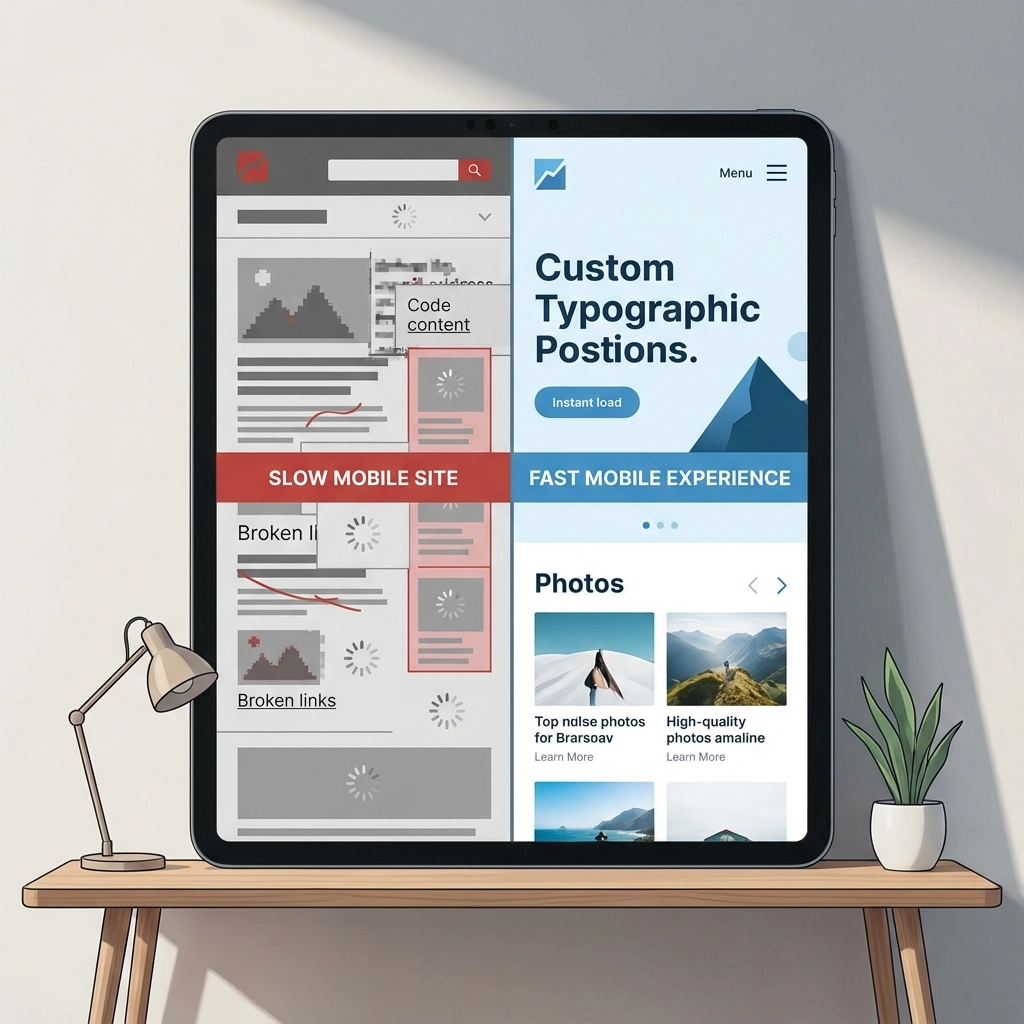
- Unoptimized images crushing load times
- JavaScript blocking page rendering
- Oversized fonts and buttons for mobile screens
- Pop-ups that break mobile user experience
The Psychology of Mobile Users in Crisis
Understanding your mobile users' mental state is crucial for conversion optimization. Families researching addiction treatment aren't casually browsing: they're often in crisis mode with very specific psychological needs:
Immediate reassurance – They need to know help is available right now
Trust signals – Credentials, testimonials, and professional imagery must load instantly
Clear next steps – Confused, overwhelmed families need obvious paths forward
Emotional connection – Your mobile site must convey empathy, not corporate coldness
When your mobile site fails to meet these psychological needs due to poor performance, you're not just losing a lead: you're potentially losing someone's life.
Real-World Mobile Optimization Wins
Based on Ads Up Marketing treatment center analytics (2019–2025 across 200+ facilities and $100M+ in PPC data), here's what actually moves the needle in treatment center mobile conversion:
Page Speed Improvements:
- Reducing load time from 6 seconds to 2 seconds: 65% increase in conversions
- Optimizing images and scripts: 40% improvement in mobile bounce rate
- Implementing AMP pages: 25% boost in organic mobile traffic
Mobile UX Enhancements:
- Simplified contact forms: 80% increase in mobile submissions
- One-tap calling buttons: 45% more phone inquiries
- Mobile-optimized virtual tours: 60% longer session duration
The Competitive Advantage You're Missing
While your competitors are still treating mobile as an afterthought, implementing true mobile-first design gives you an immediate competitive edge. Facilities with optimized mobile experiences see 40-60% higher conversion rates from organic search traffic.
But here's what most owners miss: mobile-first isn't just about your website. It impacts your entire digital marketing ecosystem:
- Google Ads Quality Score improves with better mobile landing pages
- Social media traffic converts better on mobile-optimized sites
- Email marketing performs better when links lead to mobile-friendly pages
- Local SEO rankings favor businesses with superior mobile experiences
Common Mobile Mistakes Killing Your Admissions
Let's address the most expensive mistakes we see addiction treatment facilities making:
The "Desktop First" Trap:
Starting with desktop design and trying to squeeze it into mobile never works. The result is always a clunky, slow mobile experience that drives families away at their moment of greatest need.
Ignoring Touch Interactions:
Buttons too small for fingers, links too close together, forms that don't work with mobile keyboards: these "micro-friction" points add up to major conversion losses.
Loading Unnecessary Elements:
Your mobile site doesn't need every widget, animation, and feature from your desktop version. Every element that doesn't directly support conversion should be eliminated.
Overlooking Mobile Search Behavior:
Mobile users search differently, using shorter queries and voice search. Your content and SEO strategy must reflect these behavior differences.
The Action Plan: Making Mobile-First Actually Work
Immediate Priorities (Week 1-2):
- Run a mobile site speed test using Google PageSpeed Insights
- Audit your mobile conversion funnel for friction points
- Ensure phone numbers are tap-to-call enabled everywhere
- Test all forms on actual mobile devices
30-Day Mobile Optimization Sprint:
- Implement image optimization and compression
- Streamline mobile navigation to 3-4 core sections
- Add mobile-specific trust signals (reviews, credentials)
- Create mobile-optimized landing pages for your top services
Ongoing Mobile-First Maintenance:
- Monthly mobile performance audits
- A/B testing mobile-specific elements
- Monitoring mobile conversion metrics separately
- Regular mobile user experience testing
Why This Isn't a DIY Project
Mobile-first optimization for addiction treatment facilities requires specialized expertise that goes far beyond basic web development. You need someone who understands both the technical requirements and the unique psychology of families in crisis.
The combination of HIPAA compliance, crisis-state user psychology, and technical performance optimization requires a team that specializes specifically in addiction treatment marketing. Generic web developers and marketing agencies will miss the nuances that make the difference between a mobile site that converts and one that sends families to your competitors.
Your Mobile-First Transformation Starts Now
Every day you wait to optimize your mobile experience is another day of lost admissions. Families in crisis won't wait for your slow site to load: they'll find help elsewhere, and that opportunity is gone forever.
The good news? Mobile-first optimization delivers results quickly. Most facilities see significant improvements in mobile conversion rates within 30-60 days of proper implementation.
But you need a team that understands the unique challenges of addiction treatment marketing, knows the technical requirements for mobile optimization, and can implement solutions that actually move your admission numbers.
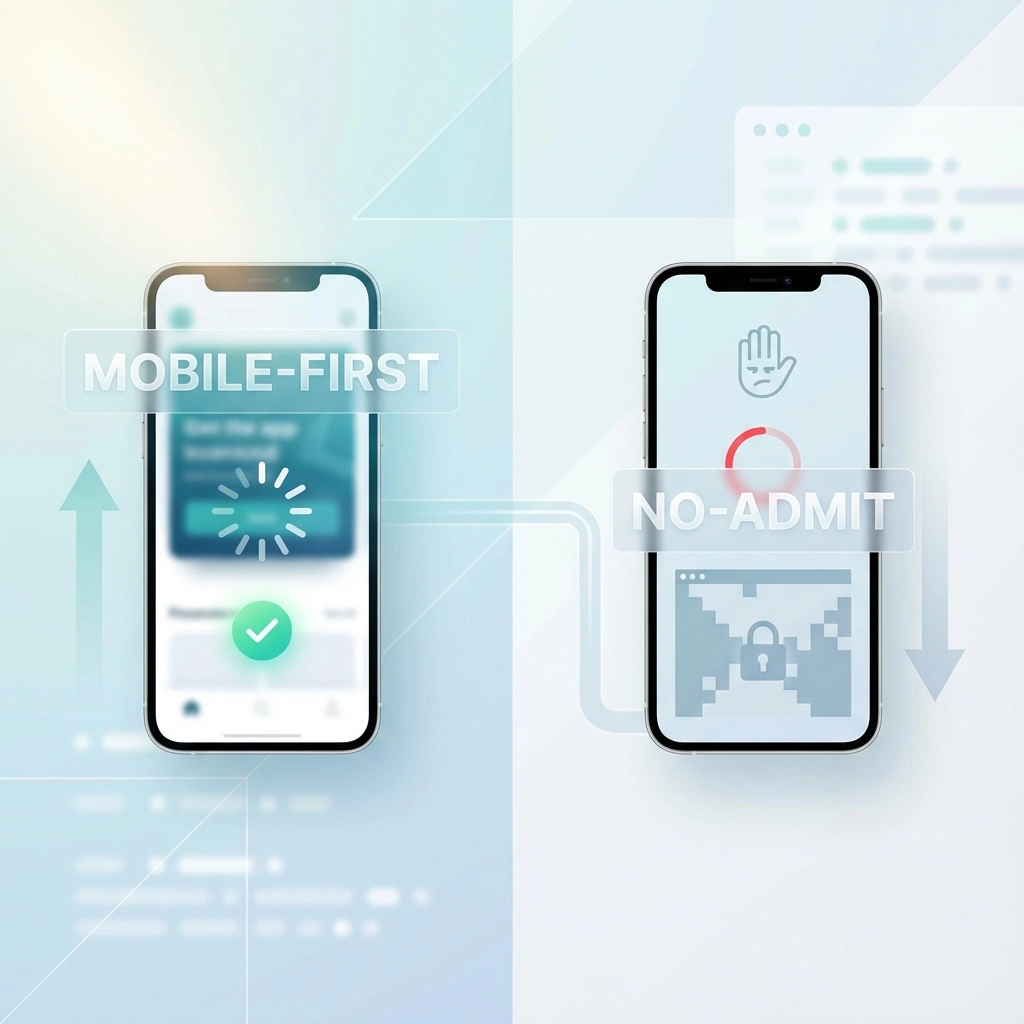
Don't let a slow mobile site become your facility's "no-admit" sign. Call us at 305-539-7114 and let's get your mobile experience converting families into admissions, instead of sending them to your competition.
The families searching for help on their phones at 2 AM deserve better; and your facility's success depends on delivering it.