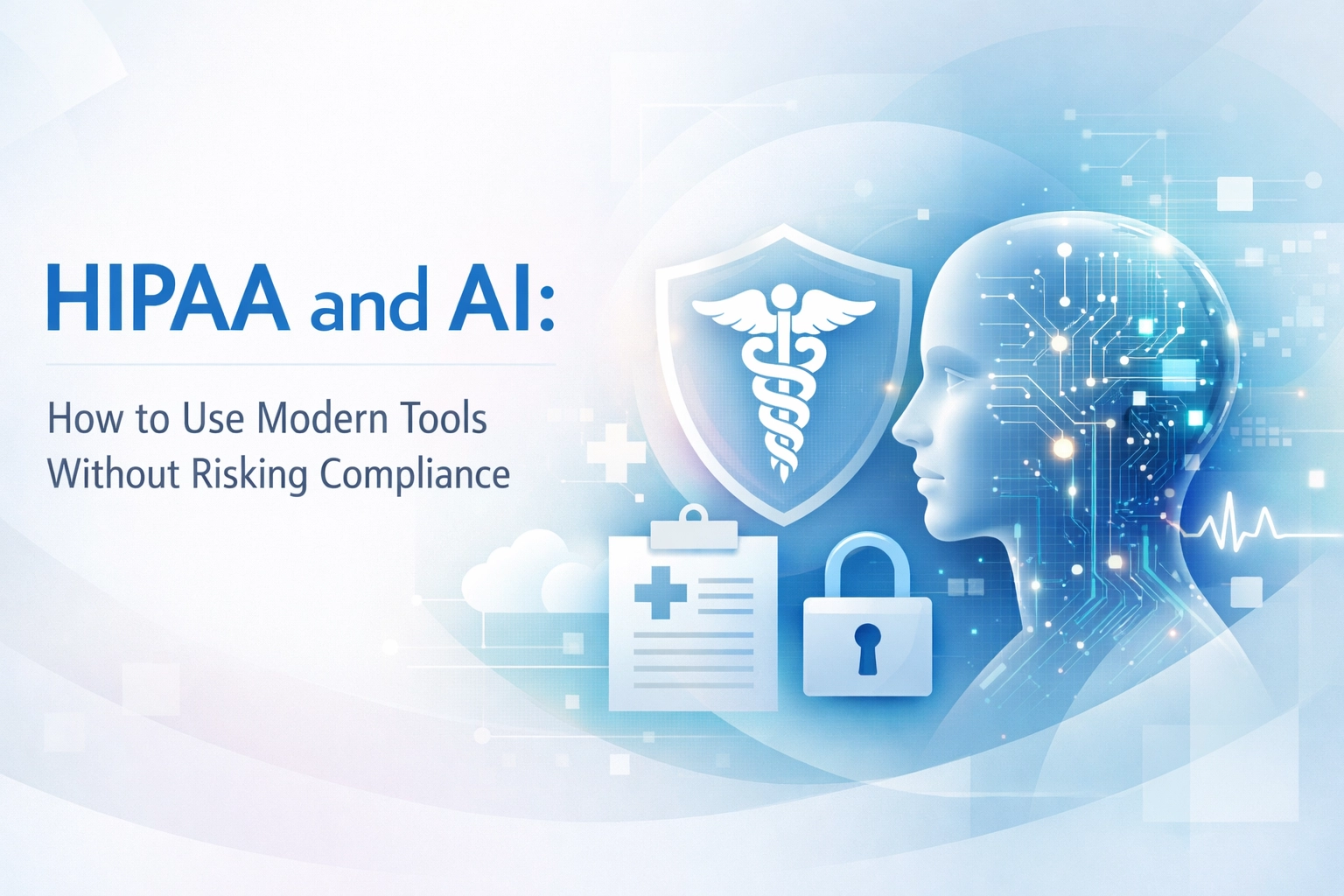
AI tools are everywhere in healthcare marketing right now. Chatbots that pre-qualify leads. Automated ad targeting that finds people actively searching for treatment. Predictive analytics that tell you which prospects are most likely to convert.
But here's the problem: one misstep with Protected Health Information (PHI) and you're looking at fines that start at $31,000 per violation. And that's just for the small stuff.
If you're running a behavioral health facility, addiction treatment center, or any healthcare organization, you're probably wondering: Can I actually use AI without putting my license, and your patients' privacy, at risk?
The short answer is yes. But only if you understand the legal framework and put the right safeguards in place. Let me walk you through exactly how to do that.
Why This Actually Matters More Than You Think
Look, I get it. Compliance isn't sexy. It's not the flashy part of marketing that gets you excited about growth and admissions. But think about this for a second: your ability to use modern marketing tools hinges entirely on whether you can do it legally.
AI isn't going away. Your competitors are using it. The question isn't whether to adopt AI: it's how to do it without accidentally handing over patient data to a vendor who treats HIPAA like a suggestion.

One practice got hit with a $31,000 fine simply for sharing patient records with a vendor who hadn't signed the right paperwork. That's not a data breach. That's just not having your compliance ducks in a row.
The Legal Framework You Actually Need to Know
HIPAA has three core requirements when it comes to AI tools:
1. The Privacy Rule – This protects the confidentiality of patient data. Any AI system that touches PHI must have safeguards to keep that information private.
2. The Security Rule – This requires technical measures like encryption, access controls, and audit logs.
3. The Breach Notification Rule – If something goes wrong, you need to report it. Fast.
These aren't suggestions. They're federal law, backed by the Office for Civil Rights (OCR), and they apply whether you're using AI for marketing automation, chatbots, lead scoring, or predictive analytics.
Business Associate Agreements: Your First Line of Defense
Here's the deal-breaker: If an AI vendor will access, process, or store PHI in any way, you need a Business Associate Agreement (BAA) before you share a single piece of data.
A BAA is a legal contract that makes the vendor responsible for:
- Safeguarding patient data
- Using PHI only for specified purposes
- Reporting security incidents immediately
- Accepting liability if something goes wrong
If a vendor won't sign a BAA? Walk away. Full stop. That's not a negotiation. According to HIPAA regulations, sharing PHI without a BAA is a violation from day one.
Technical Safeguards That Actually Protect You
Once you've got your BAA locked down, you need to implement the technical side of compliance. Here's what that looks like in practice:
Encryption Standards
Data should be encrypted both in transit (when it's moving between systems) and at rest (when it's stored). This isn't optional: it's baseline.
Role-Based Access Controls
Not everyone in your organization needs access to everything. Set up user permissions so that team members can only see the PHI they actually need to do their jobs.
Audit Logging and Monitoring
Your AI systems should track who accessed PHI, what they did with it, and when. This creates an accountability trail if something goes sideways.
Multi-Factor Authentication (MFA)
Passwords alone don't cut it anymore. MFA adds an extra layer of security during login, making it much harder for unauthorized users to access sensitive data.
Automated Data Anonymization
Where possible, AI tools should work with de-identified or anonymized data. If the system doesn't need to know a patient's name to do its job, strip that information out before it ever touches the AI.

The Data Minimization Principle (And Why It Matters)
One of the most overlooked aspects of HIPAA compliance is the "minimum necessary" rule. Your AI should only access the absolute minimum PHI required for its specific task.
Let's say you're using an AI chatbot to schedule appointments. That chatbot needs a patient's name and preferred time. It doesn't need their diagnosis, treatment history, insurance details, or anything else.
If your AI vendor is asking for access to full patient records when all they're doing is automating lead qualification? That's a red flag. Push back. Ask why they need that level of access. Most of the time, they don't: they're just being lazy with their data architecture.
Vetting AI Vendors: What to Look For
Not all AI vendors are created equal. When you're evaluating a new tool, here's your checklist:
| Vendor Requirement | Why It Matters |
|---|---|
| Willingness to sign a BAA | Non-negotiable. If they won't sign, they can't touch PHI. |
| Completed security assessments | Shows they've been audited by third parties and passed. |
| Clear data transfer policies | You need to know where your data goes and how it's stored. |
| Transparent security documentation | No black boxes. They should be able to explain their safeguards. |
| HIPAA-compliant infrastructure | Cloud servers, encryption standards, access controls: all built in. |
At Ads Up Marketing, we only work with vendors who meet every single one of these requirements. We've been burned before, and we've seen clients get hit with fines because they trusted the wrong partner. It's not worth the risk.
Governance and Ongoing Validation
Here's something most facilities miss: deploying an AI tool isn't a one-and-done process. You need ongoing governance and validation to make sure the system continues to meet compliance standards as it evolves.
That means:
- Conducting local validation before deployment (generic vendor testing isn't enough)
- Testing AI tools within your specific clinical workflows and patient populations
- Establishing oversight bodies that include clinical, technical, ethical, and legal expertise
- Creating a complete inventory of every AI-driven tool currently in use
- Running regular security assessments and bias audits
California and several other states now require healthcare providers to disclose AI use to patients and obtain explicit consent before deploying AI in patient care. Non-compliance can result in regulatory penalties and lawsuits.

What Happens When You Get It Wrong
Let's be real: the penalties for HIPAA violations are steep. Fines range from $100 to $50,000 per violation, depending on the level of negligence. And violations can stack up fast.
But beyond the financial hit, there's reputational damage. Patients trust you with their most sensitive information. A data breach: or even the perception that you're careless with their data: can destroy that trust overnight.
And here's the kicker: you're liable even if it's your vendor who screws up. That's why the BAA matters so much. It shifts some of that liability to the vendor, but it doesn't eliminate your responsibility to vet partners and implement safeguards.
How Ads Up Marketing Keeps You Compliant
Look, we get it. You didn't start a treatment facility to become a HIPAA compliance expert. You got into this field to help people recover and rebuild their lives.
But the reality is that modern marketing requires modern tools: and those tools come with legal obligations. That's where we come in.
At Ads Up Marketing, we specialize in healthcare marketing that's built on a foundation of compliance. Every AI tool we use, every automation we set up, every vendor we work with: it's all vetted for HIPAA compliance before it ever touches your data.
We handle:
- BAA negotiations with all third-party vendors
- Technical implementation of encryption, access controls, and audit logging
- Ongoing monitoring and validation of AI systems
- Documentation and reporting to keep you audit-ready
- Training your team on compliance best practices
We've worked with behavioral health facilities, addiction treatment centers, and healthcare organizations across the country. We've seen what works, what doesn't, and what gets facilities into trouble. And we use that experience to keep you on the right side of the law while still leveraging the most powerful marketing tools available.
If you're ready to use AI without the compliance headaches, let's talk. Call us at 305-539-7114 or visit our website to schedule a consultation.
The Bottom Line
AI is a game-changer for healthcare marketing. It can help you qualify leads faster, target the right audiences, and convert prospects into admissions more efficiently than ever before.
But you can't afford to cut corners on compliance. The risks are too high, the regulations are too complex, and the stakes: both financial and ethical: are too significant.
Get your Business Associate Agreements in place. Implement technical safeguards. Vet your vendors. Validate your systems. And if you need help navigating all of this? That's exactly what we're here for.
Marketing in healthcare doesn't have to be a compliance nightmare. With the right partner, you can use cutting-edge AI tools while protecting your patients, your facility, and your peace of mind.
Ready to get compliant and competitive? Call Ads Up Marketing at 305-539-7114 today.
For more insights on navigating compliance in healthcare marketing, check out our posts on Understanding Patient Privacy: HIPAA in Your Digital Marketing Strategy and The New Frontier of Compliance: Navigating AI in Rehab Marketing.