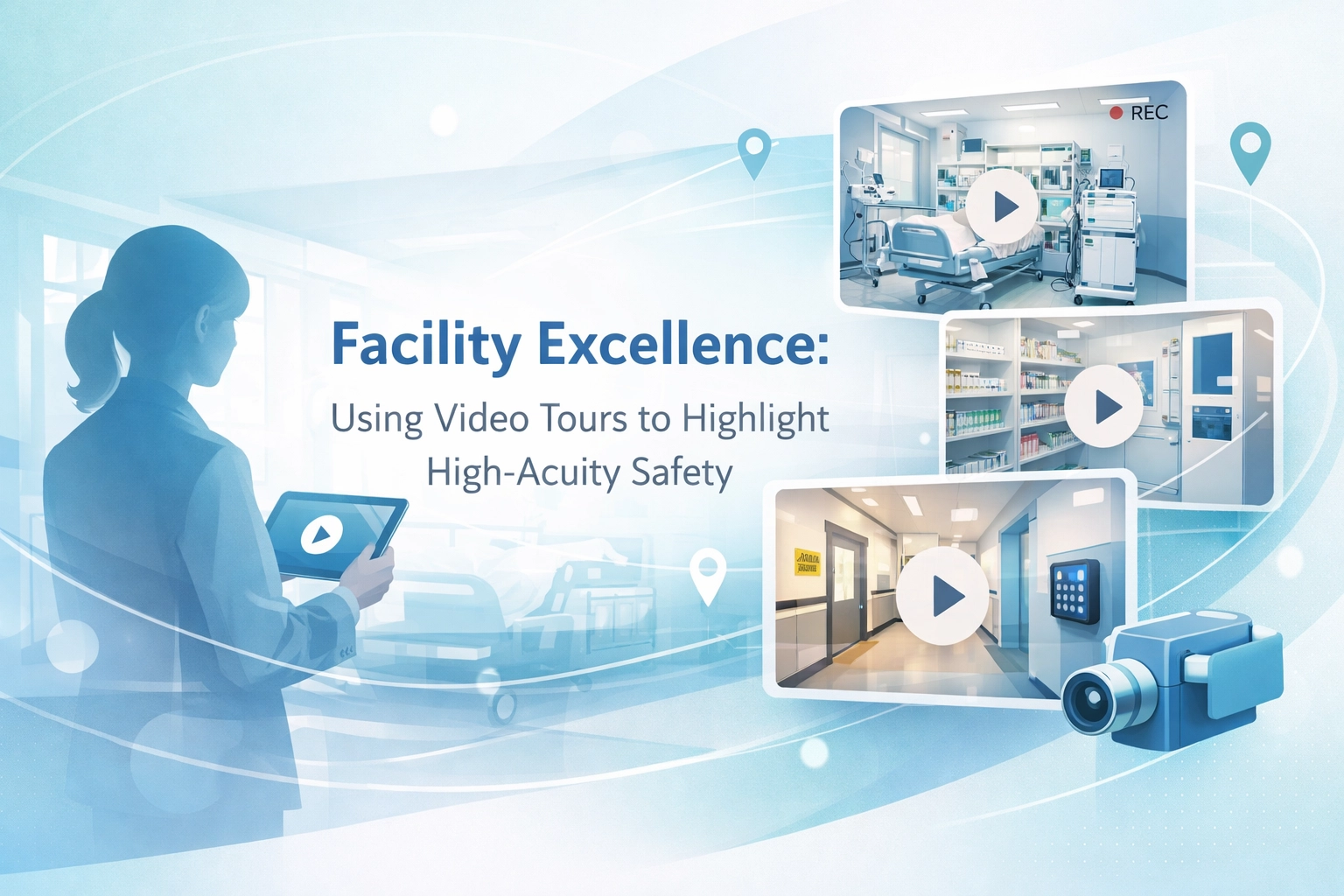
Let's be honest, when someone's considering your facility for high-acuity care, they're already anxious. Maybe it's a family member researching trauma centers after a serious accident. Maybe it's a patient trying to figure out which ICU they trust with their life. Either way, trust isn't built with generic stock photos and vague safety claims on your website.
Video tours are the transparency play that actually moves the needle. They let prospects see your facility's safety infrastructure, equipment availability, and care environment before they ever step through your doors. And in 2026, if you're not using video strategically to showcase high-acuity safety, you're leaving admissions, and revenue, on the table.
Why Video Tours Matter for High-Acuity Admissions
Here's the thing: high-acuity patients and their families are making decisions under stress. They're Googling at 2 AM. They're comparing facilities while sitting in an ER waiting room. They need to see that your facility can handle complex cases safely.
According to research from healthcare consumer behavior studies, virtual facility tours can significantly reduce patient anxiety about medical procedures and contribute to higher satisfaction scores. That anxiety reduction? It translates directly into conversion. When families feel confident about your safety protocols before they even call, your intake team has a much easier conversation.

Video walkthroughs accomplish something your competitor's static "About Our Facility" page never will, they prove your safety claims instead of just stating them. Prospective patients see your trauma bays, your monitoring equipment, your clean and organized spaces. They watch your staff explain protocols. That's visual trust in action.
What High-Acuity Video Tours Should Actually Show
Not all video tours are created equal. If you're just panning slowly through empty hallways with elevator music, you've missed the point entirely.
For high-acuity facilities, your video tour needs to demonstrate specific safety infrastructure and operational readiness. Think about what matters during an American College of Surgeons verification review for trauma centers, because that's exactly what matters to informed patients and families too.
Your video walkthrough should strategically cover:
- Emergency department intake and triage areas
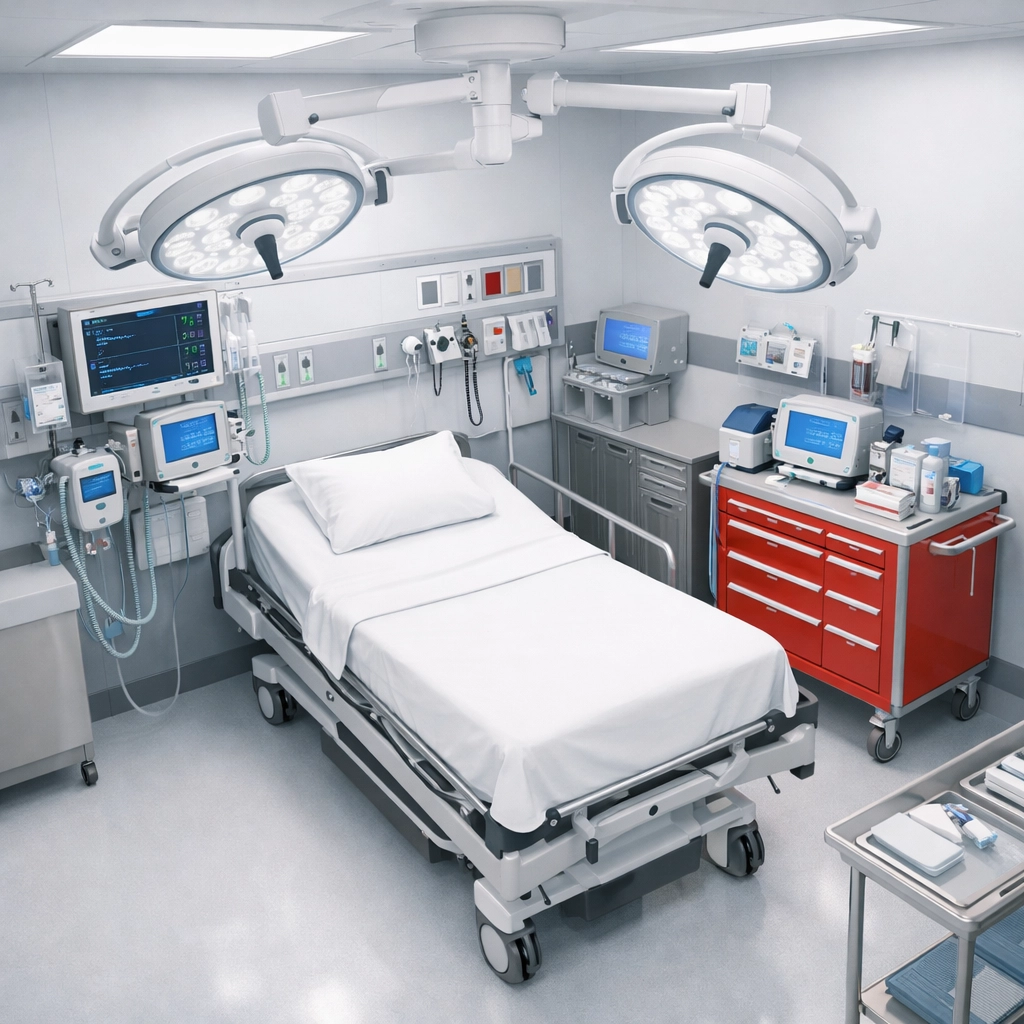
- Trauma bays with visible equipment and monitoring systems
- Operating rooms (when appropriate and compliant)
- Surgical ICU and step-down units
- Blood bank and lab facilities
- Patient transport routes showing clear, safe pathways
You're essentially walking viewers through the patient journey, but with an emphasis on the safety measures at each checkpoint. Show the defibrillators. Show the central monitoring stations. Show the crash carts positioned strategically throughout units. These aren't props, they're proof.
The Technical Side: Making High-Acuity Tours Work
Look, you can't just hand an iPhone to someone and tell them to "get some footage." High-acuity video tours require actual planning if you want them to build trust instead of raising red flags.
Camera Coverage That Makes Sense
Use at least two camera operators stationed in different areas. This lets you transition smoothly between zones without awkward dead air or shaky running-through-hallways shots. One camera can be showing the ICU setup while the other is moving into position for the OR, you keep the flow going.
The Right People in Frame
Station your trauma medical director or program manager in key areas to answer anticipated questions on camera. But here's what most facilities forget, you also need someone playing "traffic cop" to manage patient privacy, control ambient noise, and keep the camera view clear. HIPAA violations in your marketing video? That's not the kind of attention you want.
Rehearse Like It's Game Day
Run full technical rehearsals using your actual teleconferencing or video hosting software. Test audio in loud areas like the ED. Check video quality under your facility's lighting. Make sure WiFi signal holds up as you move between zones. Nothing kills credibility faster than a pixelated or buffering safety demonstration.
Strategic Planning: What to Highlight (and What to Skip)
You don't need to show every single room variation. Three nearly identical patient rooms doesn't add value, it adds boredom. Instead, select representative areas that best demonstrate your differentiated safety capabilities.
Here's how smart facilities are structuring these tours in 2026:
| Tour Section | Primary Goal | Key Safety Elements to Show |
|---|---|---|
| Intake/Triage | Demonstrate rapid assessment capability | Monitoring equipment, clear protocols, staffing |
| Trauma Bays | Show emergency readiness | Equipment accessibility, space organization, tech integration |
| ICU | Highlight continuous monitoring | Central stations, bedside systems, alarm protocols |
| OR | Prove surgical capability | Sterile environment, equipment availability, team coordination |
| Recovery/Step-down | Show continuum of care | Transition planning, family integration, safety monitoring |
Build in clear conversion points throughout the video. After showing your ICU capabilities, include a simple overlay: "Questions about our critical care? Call us at 305-539-7114 to speak with our admissions team."
The Compliance Piece You Can't Ignore
Let me be clear about something: your video tour needs to be HIPAA-compliant, period. This isn't optional. Work with virtual tour providers who understand healthcare regulations and the logistics of filming in active medical facilities.
Yes, some staging is acceptable to show your facility in its best light. But presenting a false image of your safety practices? That's both ethically wrong and legally risky. The Office for Civil Rights has clear guidance on marketing in healthcare settings: make sure your team knows it.
HIPAA-compliant filming means:
- Getting explicit patient consent for any areas where patients might be visible or identifiable
- Scheduling filming during low-census periods when possible
- Blurring or avoiding any protected health information on screens, charts, or whiteboards
- Training all on-camera staff about what can and cannot be discussed
One violation caught on your marketing video could cost you way more than the admissions it brings in.
Where Video Tours Fit in Your Sales Funnel
This is where we need to talk strategy. Video tours aren't just a "nice to have" piece of content: they're a conversion tool that should be integrated throughout your digital marketing ecosystem.
Top of Funnel: Use short clips on social media showing specific safety features. A 30-second video of your trauma bay setup with key equipment tagged can drive awareness and initial interest. At Ads Up Marketing, we help healthcare facilities create these snackable video assets that perform on platforms where your prospects are actually scrolling.
Middle of Funnel: Your full facility tour should be prominently featured on your website, especially on service pages for high-acuity care. Embed it on your trauma center page, your ICU page, your "Why Choose Us" page. Make it impossible to miss.
Bottom of Funnel: Include tour links in follow-up emails from your admissions team. When a family is deciding between your facility and a competitor, send them straight to the video showing exactly what their loved one will experience. Reduce friction, increase trust.
The ROI Conversation: What Video Tours Actually Cost vs. What They Deliver
Let's talk numbers because you're running a business. Professional facility video tours for high-acuity areas typically run between $5,000-$15,000 depending on scope, length, and production quality. That might feel steep until you run the math on what one additional high-acuity admission is worth to your bottom line.
If your average high-acuity case generates $50,000-$150,000 in revenue and your video tour conversion rate improves by even 2-3%, you've paid for the investment many times over. This isn't speculation: facilities using strategic video tours are seeing measurable increases in qualified inquiries and admission conversions.
But here's where most facilities drop the ball: they create the video and then… do nothing with it. They bury it three clicks deep on their website, never promote it, never measure its performance. That's like buying a billboard and storing it in your basement.
Making This Actually Happen at Your Facility
So you're convinced. Video tours make sense for showcasing your high-acuity safety capabilities. Now what?
Start by identifying your differentiators. What safety features or capabilities do you offer that competitors don't? Those are the hero moments in your video. Maybe it's your newly renovated trauma bays. Maybe it's your nurse-to-patient ratios in the ICU. Maybe it's specialized equipment for complex cases. Whatever it is, make it unmissable.
Next, assemble the right team. You need clinical leadership who can speak authoritatively on camera, operations people who understand patient flow, compliance staff to ensure HIPAA adherence, and marketing professionals who know how to tell your story effectively.
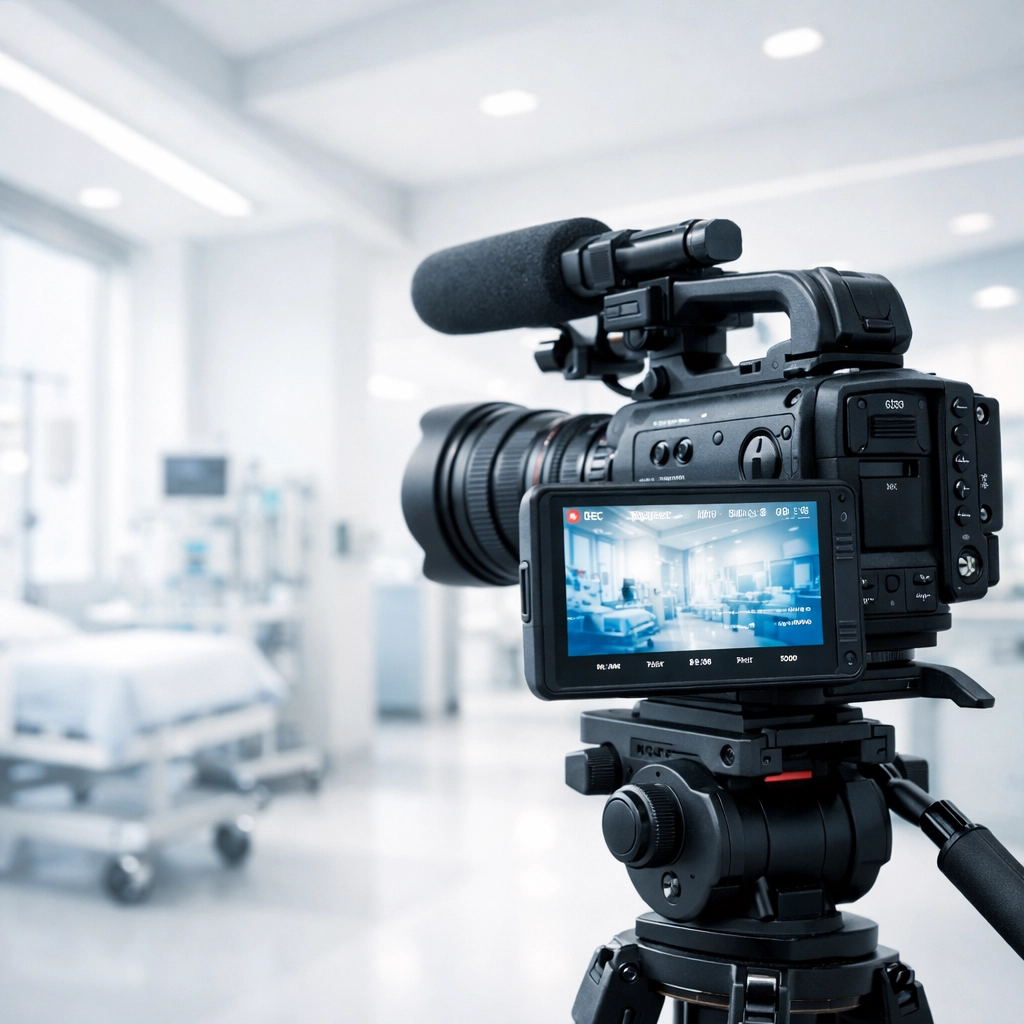
This is exactly where partnering with a healthcare marketing agency that understands both the clinical side and the digital strategy makes the difference. We've worked with treatment facilities and healthcare providers to create video tours that don't just look good: they convert. We know what questions families are asking at 2 AM. We know what makes them choose one facility over another.
Your Next Steps on Building Visual Trust
Video tours showcasing high-acuity safety aren't a luxury anymore: they're table stakes for facilities serious about growing census through strategic marketing. Your competitors are either doing this already or planning to. The question is whether you'll lead or follow.
If you're ready to showcase your facility's safety excellence in a way that actually drives admissions, let's talk strategy. Our team at Ads Up Marketing specializes in healthcare marketing solutions that combine clinical credibility with conversion-focused execution.
Call us at 305-539-7114 to discuss how video tours can fit into your broader digital marketing strategy. We'll walk through your specific high-acuity capabilities, identify the moments that build trust, and create a video strategy that turns virtual visitors into actual admissions.
Because at the end of the day, you've invested millions in safety infrastructure and clinical excellence. Isn't it time your marketing actually showed it?