You're running a rehab facility, and you know the numbers game all too well. Empty beds mean lost revenue. But when you're marketing addiction treatment services, every decision carries weight, not just for your bottom line, but for the vulnerable people you're trying to reach.
Here's the uncomfortable truth: the rehab marketing industry has a reputation problem. Patient brokering scandals, misleading success rate claims, and predatory tactics have left families skeptical and regulators watching closely. The challenge? You need to fill beds ethically while competing against facilities that might not share your scruples.
So how do you acquire patients without crossing ethical lines? Let's break down what's actually working in 2026, and what could land you in hot water.
The Real Cost of Cutting Corners
The addiction treatment industry generates over $42 billion annually, according to SAMHSA data, making it a tempting target for aggressive marketing tactics. But those shortcuts come with consequences you can't afford.
When the SAFE Act took effect in January 2024, it fundamentally changed the compliance landscape. Facilities now face mandatory disclosure requirements, stricter advertising standards, and real penalties for misleading claims. The FTC has increased enforcement actions against treatment centers making unsubstantiated promises, with settlements ranging from $50,000 to over $1 million.
But beyond the legal risks, there's something more important: trust. When families are making treatment decisions, they're already vulnerable and desperate. If your marketing manipulates that desperation, even subtly, you might get the admission, but you've damaged your reputation and potentially harmed someone who needed genuine help.

What Ethical Marketing Actually Looks Like
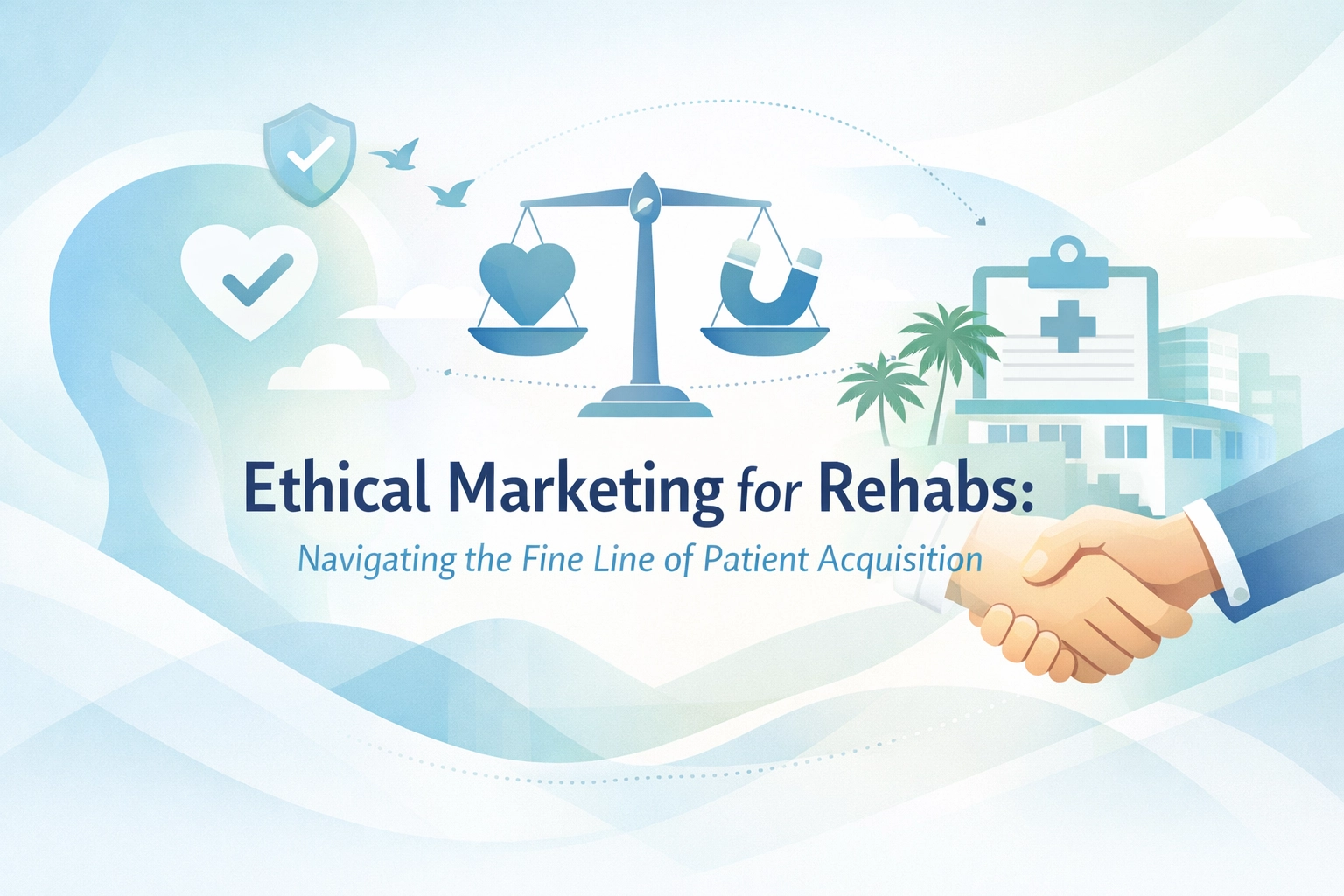
Let's get practical. Ethical marketing isn't about handicapping your patient acquisition, it's about building sustainable growth through trust and transparency.
Transparency Over Hype
Your messaging should clearly communicate what you offer, what outcomes are realistic, and what the actual costs are. That means:
- No vague claims about "90% success rates" without defining success and showing methodology
- Upfront pricing information (or at least clear guidance on insurance verification)
- Honest representation of treatment modalities and staff qualifications
- Real photos of your actual facility, not stock imagery from luxury resorts
Evidence-Based Claims Only
Every claim in your marketing materials needs backing. If you say your program is "evidence-based," you should be able to point to peer-reviewed research supporting your approach. The National Institute on Drug Abuse (NIDA) provides excellent resources on treatment effectiveness that can inform your messaging.
This doesn't mean you can't highlight your strengths, just that you need to be specific and accurate. Instead of "Our unique approach cures addiction," try "Our 90-day program combines cognitive behavioral therapy with medication-assisted treatment, approaches supported by clinical research."
Respecting Patient Dignity
Your advertising should never exploit vulnerability or stigmatize addiction. This means avoiding:
- Fear-based messaging that pressures immediate decisions
- Before-and-after photos that sensationalize addiction
- Language that portrays addiction as a moral failing
- Testimonials that feel exploitative rather than empowering

The Compliance Framework You Can't Ignore
Here's your regulatory checklist for 2026. Miss any of these, and you're exposing your facility to significant risk:
| Regulation | Key Requirement | Violation Risk |
|---|---|---|
| SAFE Act | Clear disclosure of licensing, program details, and outcomes in all advertising | State penalties, loss of license |
| FTC Guidelines | No false or misleading claims; substantiation for all marketing statements | Federal fines, enforcement actions |
| HIPAA | Explicit written consent for any patient testimonials or identifying information | Privacy violation penalties up to $50,000 per incident |
| State Regulations | Varies by state, often includes specific advertising language restrictions | State-level sanctions, operational restrictions |
The National Association of Addiction Treatment Providers (NAATP) maintains updated compliance guidance that should inform your marketing strategy. These aren't suggestions, they're the baseline for operating legally.
Building Your Ethical Marketing System
So what's the connection between compliance and actually filling beds? More than you might think. When your marketing is genuinely helpful and transparent, you attract better-fit patients who are more likely to complete treatment and become positive referral sources.
Step 1: Audit Everything
Start with a comprehensive review of all marketing materials, your website, Google Ads, social media, brochures, everything. Ask these questions:
- Are there any outcome claims without data support?
- Do testimonials have proper consent documentation?
- Are costs clearly explained or easily accessible?
- Does imagery accurately represent your facility?
- Is language respectful and non-exploitative?
If you're not sure where to start, our team at Ads Up Marketing specializes in compliance audits for treatment centers. We've helped dozens of facilities identify and fix potential issues before they become problems.
Step 2: Create Clear Guidelines
You need documented protocols that everyone on your team understands. This includes:
- Approved messaging frameworks and language
- List of prohibited claims and tactics
- Social media posting guidelines
- Intake coordinator phone scripts
- Review and approval processes for new materials
These guidelines protect your staff from accidentally creating compliance issues and ensure consistency across all patient touchpoints.

Step 3: Focus on Educational Content
The most effective ethical marketing doesn't feel like marketing at all, it feels like genuine help. Educational content that answers real questions builds trust and positions your facility as an authority.
Consider blog posts, videos, and resources addressing:
- "What to Look for in a Rehab Program"
- "Understanding Different Treatment Approaches"
- "How to Verify Facility Credentials"
- "Questions to Ask During Facility Tours"
Yes, this means helping people make informed decisions even if they don't choose you. But it also means the people who do choose you are better informed and more committed. Our SEO services for rehabs can help you create and rank this educational content effectively.
The Social Media Challenge
Social platforms present unique ethical challenges for rehab marketing. You're competing for attention in an environment designed for quick engagement, which can tempt facilities toward sensationalized content.
What Works:
- Recovery tips and mental health resources
- Educational infographics about addiction science
- Staff profiles highlighting qualifications
- Facility updates showing genuine day-to-day operations
- Thoughtful responses to questions in comments
What Doesn't:
- Dramatic "rock bottom" stories that exploit trauma
- Pressure tactics like "limited beds available"
- Unsubstantiated claims like "we'll cure your addiction"
- Overly emotional manipulation of family members
- Competitive attacks on other facilities
Need help navigating social media compliance? Our social media marketing services are built specifically for healthcare providers who need results without risk.
The ROI of Ethical Marketing
Let's talk numbers, because you're running a business. Does ethical marketing actually perform?
Short answer: yes, but differently. You might see lower initial conversion rates on aggressive campaigns when you remove manipulative elements. But your patient quality improves dramatically:
- Higher treatment completion rates (better clinical outcomes)
- More positive online reviews (improved organic visibility)
- Stronger referral networks (sustainable growth)
- Lower legal and compliance costs (protected margins)
- Better staff morale (reduced turnover)
One facility we worked with saw their cost-per-admission increase by 18% when they overhauled their marketing to meet ethical standards. But their 30-day retention improved by 34%, and their Google reviews went from 3.2 to 4.7 stars in six months. The long-term ROI was significantly positive.
Your Next Steps
You know what's at stake. The question isn't whether ethical marketing matters: it's how you implement it without sacrificing the patient acquisition your facility needs to survive.
Here's what we recommend:
- Conduct a compliance audit within the next 30 days: identify your exposure areas before they become problems
- Document clear marketing guidelines: protect your team and your reputation
- Shift toward educational content: build trust that converts sustainably
- Partner with specialists who understand both marketing and compliance: you don't have to figure this out alone
At Ads Up Marketing, we've built our entire approach around this balance. We understand the regulatory environment, we know what works in patient acquisition, and we've helped facilities navigate this exact challenge. We're not going to promise you overnight miracles or cut corners that put your license at risk.
Want to talk through your specific situation? Call us at 305-539-7114 or schedule a consultation here. We'll review your current marketing, identify potential compliance issues, and show you exactly how to acquire patients ethically and effectively.

The facilities winning in 2026 aren't the ones with the biggest ad budgets or the most aggressive tactics: they're the ones building sustainable growth through trust, transparency, and genuine value. That's not just good ethics. It's good business.
Ready to build a patient acquisition system that works without keeping you up at night worried about compliance? Let's talk: 305-539-7114