You've invested thousands in Google Ads. Your phones are ringing. Leads are coming in. But here's the gut-punch: only 15% of those callers actually show up for intake.
Sound familiar?
If you're running a treatment center, you know that admissions teams are the front line of your entire operation. They're the voice your potential clients hear when they're at their most vulnerable. And yet, most facilities are throwing their admissions staff into the deep end with minimal training, hoping they'll figure out how to balance speed with compassion on their own.
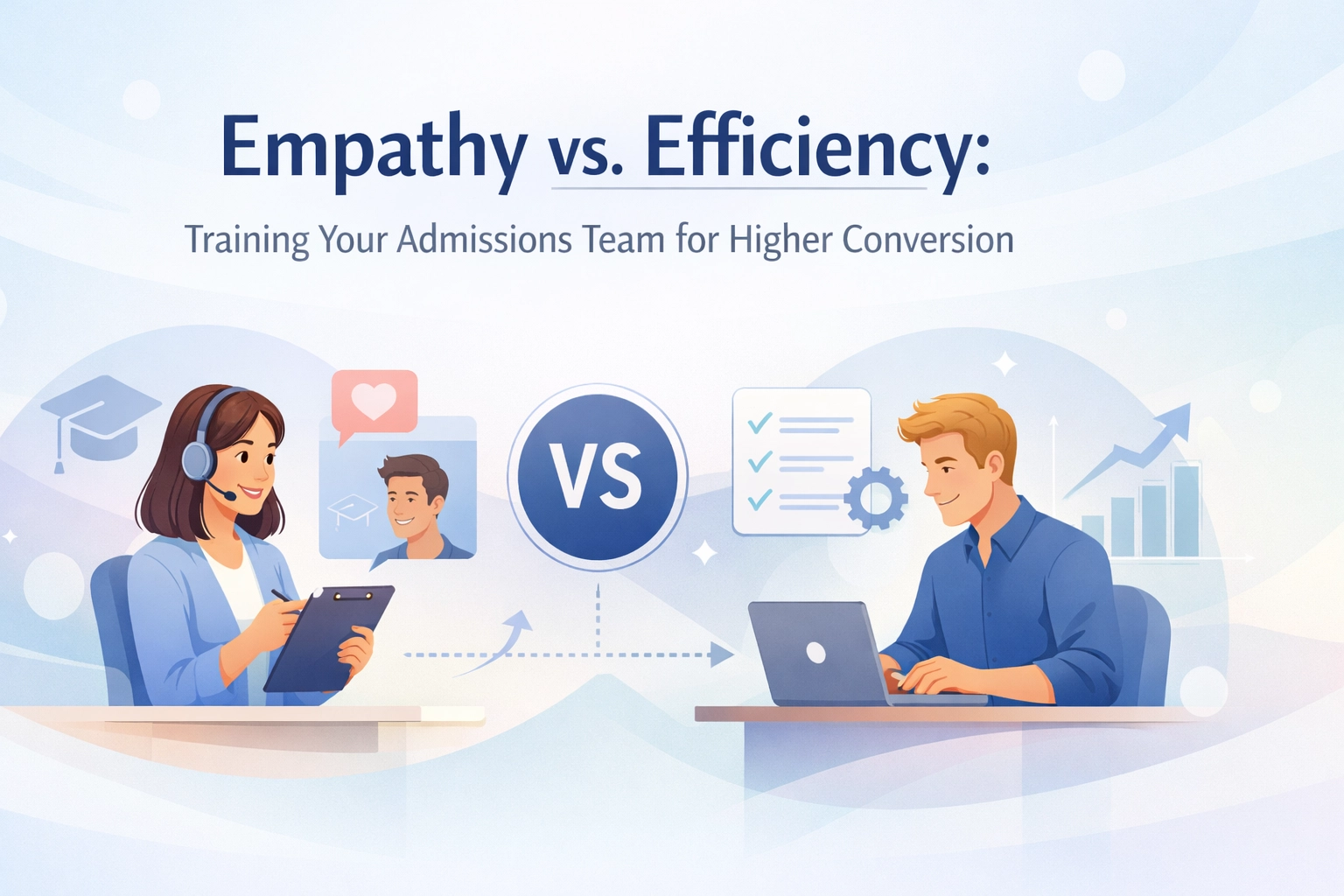
Here's the reality: your admissions team can either be your greatest revenue driver or your most expensive liability. The difference comes down to one thing, how well they're trained to balance empathy with operational efficiency.
Let's break down exactly what that looks like and how you can transform your admissions process from a conversion bottleneck into a revenue engine.
Why Most Admissions Teams Fail at Conversion
The addiction treatment space is notoriously competitive. According to SAMHSA's National Survey of Substance Abuse Treatment Services, there are over 15,000 specialized treatment facilities across the United States. That means potential clients have options, lots of them.
When someone calls your facility, they're not just shopping for treatment. They're looking for hope, reassurance, and human connection at one of the lowest points in their life. If your admissions counselor sounds robotic, rushes through the conversation, or can't answer basic questions with confidence, that caller is moving on to the next facility within minutes.
But here's the other side of the coin: if your team spends 45 minutes on every inquiry call without qualifying leads properly, you're burning time and resources on people who may never convert. The key is finding the sweet spot between genuine empathy and operational efficiency.

The Data Behind Speed and Empathy
Let's talk numbers. Research shows that treatment centers responding to inquiries within 5 minutes are 21 times more effective at converting leads than those who wait even 10-15 minutes. That's not a typo. The window of opportunity for someone seeking help is incredibly narrow.
But speed alone won't save you. A 2-minute callback that feels transactional or scripted will lose the caller just as fast as a 30-minute delay.
Here's what we've seen working with behavioral health facilities at Ads Up Marketing:
| Metric | Untrained Team | Trained Team (Empathy + Efficiency) |
|---|---|---|
| Average Call Length | 38 minutes | 22 minutes |
| Lead-to-Admission Rate | 12% | 28% |
| Follow-Up Completion Rate | 35% | 68% |
| Cost Per Admission | $4,200 | $2,300 |
Those improvements didn't come from hiring more people or increasing ad spend. They came from structured training that teaches admissions staff how to connect quickly, qualify effectively, and move leads through the funnel without sacrificing human connection.
The Three Pillars of High-Converting Admissions Training
So how do you actually train your team to balance empathy with efficiency? It comes down to three core areas:
1. Pre-Call Preparation (Efficiency Foundation)
Your admissions team needs to know who's calling before they pick up the phone. Period.
This means integrating your CRM with your call tracking system so counselors can see:
- Where the lead came from (Google Ad, referral, organic search)
- What service they were searching for (detox, residential, IOP)
- Any previous interactions or abandoned forms
When your admissions counselor answers the phone and says, "Hi Sarah, I see you were looking into our 30-day residential program: how can I help you today?" instead of "Hello, how did you hear about us?": that's an instant trust signal.
This isn't about being creepy. It's about respecting the caller's time and showing them you're organized and prepared to help.
2. Empathy-Driven Questioning (Connection Framework)
Here's where most admissions teams go off the rails. They either ask zero qualifying questions (wasting everyone's time) or they fire off 20 clinical questions in a row like they're filling out an intake form over the phone (killing any emotional connection).
The solution? Teach your team the "Validate, Explore, Guide" framework:
- Validate: Acknowledge the caller's situation without judgment. "I can hear how hard this has been for you. You're not alone in this."
- Explore: Ask open-ended questions that get to the heart of their needs. "What made today the day you decided to reach out?"
- Guide: Position your facility as the solution while addressing concerns. "Based on what you've shared, here's what I recommend…"
This framework keeps calls focused while still allowing space for genuine human connection. Your admissions counselor isn't just collecting information: they're building trust.

3. Systems-Driven Follow-Up (Efficiency with Heart)
Most leads don't convert on the first call. In fact, the average person seeking treatment needs 3-5 touchpoints before they're ready to commit.
The problem? Most facilities have zero structured follow-up process. Your admissions team sends one follow-up email, leaves one voicemail, and then moves on to the next lead.
Here's what works:
- Automated welcome sequences that send personalized resources and reduce pre-admission anxiety (like showing your medical team)
- Multi-channel outreach: email, text, and phone calls over a 7-14 day window
- Milestone reminders: "Hi John, just wanted to check in: have you had a chance to talk with your insurance about coverage?"
This isn't about being pushy. It's about staying present during a chaotic, emotional decision-making process. Every touchpoint should reinforce that your facility is ready to help whenever they're ready to take the next step.
Common Training Mistakes That Kill Conversion
We've audited dozens of treatment center admissions processes, and these are the patterns we see over and over:
Mistake #1: Script Dependency
Your team sounds like robots reading from a call center script. Callers can hear it immediately, and it destroys trust.
Mistake #2: No Lead Scoring
Every inquiry is treated the same, whether it's a high-intent caller ready to admit today or someone just browsing options for a family member.
Mistake #3: Ignoring VOB Speed
Your VOB process takes 48 hours. By the time you call back with insurance info, the lead has already admitted somewhere else.
Mistake #4: No Ongoing Training
You train admissions staff once during onboarding and never revisit it. Skills atrophy, bad habits form, and conversion rates drop.
Fixing these issues doesn't require a massive overhaul. It requires intentional, ongoing training and the right systems to support your team.
How Ads Up Marketing Builds High-Performing Admissions Teams
At Ads Up Marketing, we don't just drive leads to your facility: we help you convert them. Our approach to admissions training is part of our comprehensive healthcare marketing services designed specifically for addiction treatment and behavioral health facilities.
Here's what we do differently:
Call Flow Optimization: We listen to your actual admissions calls (with permission) and identify exactly where conversions are being lost. Then we build custom training modules to address those gaps.
CRM Integration: We ensure your admissions team has all the context they need before every call, reducing friction and improving personalization.
Follow-Up Automation: We build email and SMS sequences that keep your facility top-of-mind without overwhelming your staff.
Ongoing Coaching: Admissions training isn't a one-time event. We provide quarterly audits and refresher sessions to keep your team sharp.
We've worked with facilities that went from 18% lead-to-admission rates to over 30%: not by spending more on ads, but by fixing what happens after the click. That kind of improvement doesn't just boost your bottom line. It means more people getting the help they need.
Curious what your current admissions process might be missing? Give us a call at 305-539-7114 and let's talk about where your conversion gaps really are.
The Role of Technology in Empathetic Intake
Technology often gets a bad rap in healthcare: people assume automation equals cold, impersonal interactions. But when used correctly, technology actually enables more empathy by removing administrative friction.
Here's what that looks like in practice:
- Instant lead capture from multiple sources (calls, forms, chat) so no inquiry falls through the cracks
- Automated acknowledgment emails that confirm you received their inquiry and provide immediate next steps
- Smart routing that connects callers with the right admissions counselor based on their specific needs
- Task automation that reminds counselors when to follow up, freeing them from manual tracking
When your admissions team isn't bogged down by spreadsheets and sticky notes, they have the mental space to be present during conversations. That's when real connection happens.
Organizations like the National Association of Addiction Treatment Providers (NAATP) emphasize ethical, patient-centered marketing and intake practices. Using technology to create efficiency so you can deliver better human care is perfectly aligned with those values.
Measuring What Matters
You can't improve what you don't measure. If you're serious about optimizing your admissions process, you need to track these key metrics:
- Response time (how quickly your team returns inquiries)
- Call duration (are calls too short or unnecessarily long?)
- Lead-to-admission conversion rate (the ultimate measure)
- Follow-up completion rate (are leads slipping through the cracks?)
- Cost per admission (how much are you spending to fill each bed?)
Most treatment centers have no idea what their numbers look like in these areas. That's a problem, because you're essentially flying blind.
When you implement proper tracking and reporting, you can identify exactly where your process is breaking down. Maybe your response time is great, but your follow-up is nonexistent. Or maybe your team is spending way too long on low-intent leads while high-intent callers go to voicemail.
Data doesn't lie. And when you combine hard data with empathetic training, you get admissions teams that convert at rates your competitors can't touch.
Stop Leaving Money on the Table
Your marketing is working. Leads are coming in. But if your admissions team isn't trained to convert those leads efficiently and empathetically, you're throwing money away.
Every missed call, every awkward intake conversation, every lead that goes cold because nobody followed up: that's revenue walking out the door. And in an industry where the average cost per admission is north of $10,000, you can't afford to waste opportunities.
The good news? This is fixable. With the right training framework, supportive technology, and ongoing optimization, your admissions team can become one of your facility's most valuable assets.
Ready to see what strategic admissions training can do for your conversion rates? Call us at 305-539-7114 or reach out through our contact page. We'll show you exactly where the gaps are: and how to fix them.