INSIGHTS
CRM Integration: Why Data Flow is Crucial for Admissions
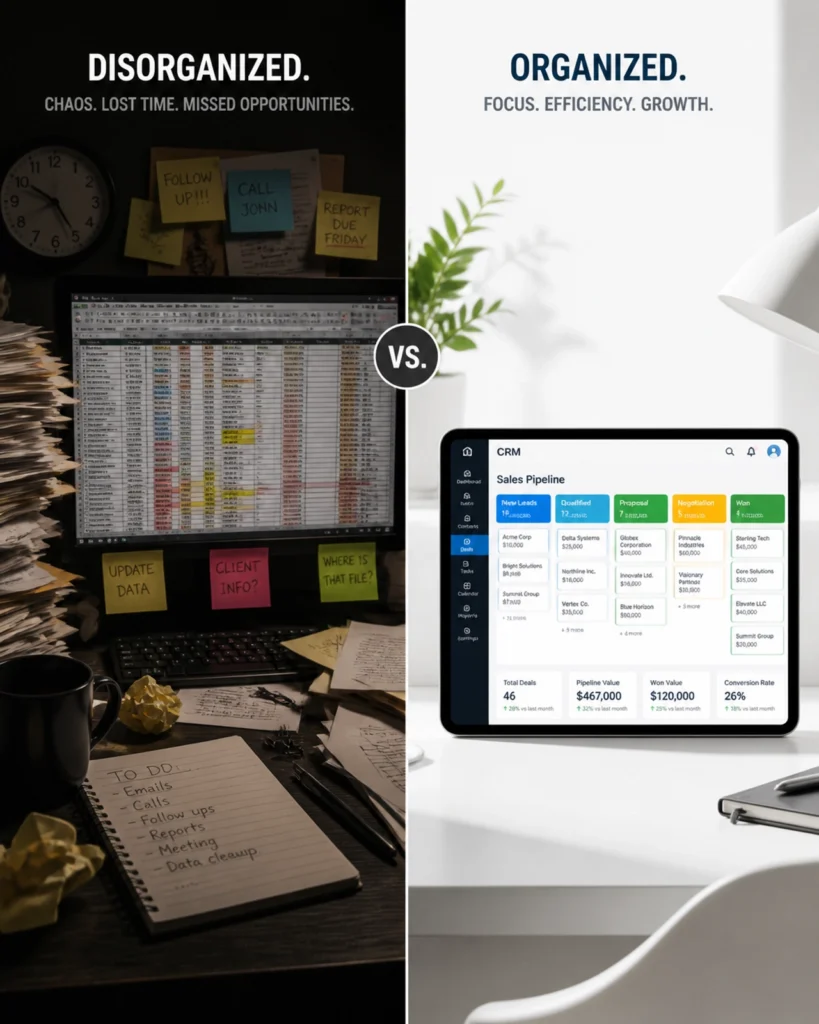
Imagine this: your marketing team just launched a high-performing Google Ads campaign. The leads are pouring in: phones are ringing, and web forms are stacking up. But three days later, you look at your admissions report and see a flatline.
Where did they go?
The prospect who called at 2:00 AM while in a moment of crisis? They never got a callback. The high-intent lead who filled out a form for your residential program? Their information is sitting in an unread email inbox or, worse, buried in a messy Excel sheet that hasn't been updated since Tuesday.
I know you’re struggling to keep up with the volume while maintaining the quality of care, but disorganized data is the silent killer of your rehab facility’s growth. If your admissions team doesn't have the right information at the right time, you aren't just losing "leads": you're losing people who desperately need help.
This is where CRM integration changes everything. It’s not just a piece of software; it’s the nervous system of your facility.
Table of Contents
- The Chaos of Manual Lead Management
- Why Data Flow is the Heart of Admissions
- Real-Time Lead Attribution: Connecting PPC to the Intake Desk
- Performance Impact: Manual vs. Integrated CRM
- Optimizing the Call Center: How Data Closes the Sale
- HIPAA Compliance and Data Integrity
- The ROI of Seamless Integration
The Chaos of Manual Lead Management
Are you still relying on spreadsheets or, heaven forbid, sticky notes to track your inquiries?
I see this all the time with facility owners who are scaling quickly. You move from 10 beds to 50, and suddenly the "old way" of doing things creates a massive bottleneck. When your lead data is siloed: meaning your marketing data lives in one place and your admissions notes in another: you're flying blind.
So what’s the connection between a messy spreadsheet and a low admission rate? It comes down to rehab lead management. When a lead isn't entered into a centralized system immediately, the "speed to lead" plummets. In this industry, if you don't answer or call back within five minutes, that person has already moved on to the next facility on the Google search results page.
Without an integrated CRM, your team is stuck doing manual data entry instead of doing what they do best: building trust with families and saving lives.
Why Data Flow is the Heart of Admissions
When we talk about "data flow," we aren't just talking about names and phone numbers. We’re talking about the entire journey of a human being looking for help.
A seamless data flow means that the moment a lead clicks an ad, their information flows directly into your CRM. Your admissions rep doesn't just see a phone number; they see:
- Which keyword they searched for (e.g., "heroin detox near me").
- Which page of your website they spent the most time on.
- Whether they’ve called your facility before.
But this still doesn't drill down to the most important part: Admissions process optimization. When your CRM is integrated with your call tracking and your EMR (Electronic Medical Record), the handoff from marketing to admissions to clinical is instantaneous. No more "I'll have to get back to you after I check your insurance." With a modern system, that data is already there.
If you’re wondering how your current process stacks up, it might be time to look at cost per admission vs. cost per lead to see where the gaps are.
Real-Time Lead Attribution: Connecting PPC to the Intake Desk
If you’re spending $20,000 or $100,000 a month on PPC (Pay-Per-Click) advertising, you need to know exactly which ads are resulting in admissions.
Most agencies will tell you how many "conversions" you got. But a "conversion" is just a phone call. An admission is revenue. By integrating your CRM with your marketing platforms, you can track the lifecycle of a patient from the first click to the final discharge.
This allows you to stop wasting money on "junk leads" that never admit and double down on the channels that actually fill beds. Organizations like NAATP emphasize the importance of ethical and data-driven management in the treatment industry, and having clear attribution is a major part of that transparency.
Need help setting up your tracking? Call us at 305-539-7114 to see how we can sync your marketing and sales data.
Performance Impact: Manual vs. Integrated CRM
To truly understand the ROI, look at the difference in these key performance indicators (KPIs).
| Metric | Manual Process (Spreadsheets) | Integrated CRM Flow |
|---|---|---|
| Speed to Lead | 30 minutes – 4 hours | < 2 minutes (Automated) |
| Contact Rate | 45% – 55% | 75% – 90% |
| Lead Attribution | Guesswork / Self-Reporting | 100% Accurate (UTM Tracking) |
| Follow-up Consistency | Hit or Miss | 100% (Automated Workflows) |
| Inquiry-to-Admission | 3% – 5% | 8% – 15% |
Data based on industry benchmarks and internal client performance at Ads Up Marketing.
Optimizing the Call Center: How Data Closes the Sale
Your call center team is the frontline of your facility. They have one of the hardest jobs in the world: talking people through the worst days of their lives.
Why make their job harder by giving them no information?

When your call center support is backed by an integrated CRM, the agent is empowered. They can see the lead's history, their specific needs, and even their insurance information before the call is even finished. This allows for a much more empathetic and personal conversation.
Instead of asking, "So, what are you looking for?" they can say, "I saw you were looking into our dual-diagnosis program. I'd love to tell you more about how we handle that specifically."
That level of personalization is how you increase closing rates. It’s about making the prospect feel seen and heard immediately.
HIPAA Compliance and Data Integrity
I know what you're thinking: "Is all this data sharing safe?"
In the behavioral health world, HIPAA compliance isn't optional: it's everything. A proper CRM integration uses secure API connections and encrypted databases to ensure that Patient Health Information (PHI) is protected at every step.
Using generic, non-healthcare CRMs can put your facility at risk for massive fines. You need a system that understands the nuances of patient privacy and digital marketing strategy. We always recommend working with platforms that provide a BAA (Business Associate Agreement), such as Salesforce Health Cloud or specialized rehab CRMs.
By centralizing your data, you actually increase security because you no longer have patient names and phone numbers floating around in unsecured spreadsheets or email threads. You can find more guidelines on maintaining these standards through the SAMHSA website.
The ROI of Seamless Integration
At the end of the day, you’re running a business. To provide the highest level of care, your facility needs to be profitable.

When your data flows correctly, your ROI improves in three ways:
- Lower Cost Per Admission (CPA): You stop spending money on ads that don't convert.
- Higher Staff Efficiency: Your admissions team spends more time talking to patients and less time doing admin work.
- Better Patient Retention: When the handoff from admissions to clinical is smooth, the patient feels more confident in your care from day one.
I've seen facilities double their monthly admissions simply by fixing the "leaks" in their data flow. It’s not always about getting more leads: it’s about doing more with the leads you already have.
Are you tired of wondering where your marketing budget is going? At Ads Up Marketing, we specialize in the technical side of the rehab industry. We don't just run ads; we help you build the infrastructure needed to close them.
Call us today at 305-539-7114 for a free consultation on how we can optimize your admissions process and integrate your CRM for maximum growth.
Whether you are a small local clinic or a nationwide operation, you deserve to have data that works as hard as you do. Don't let another qualified lead slip through the cracks of a broken system. Let's get your data flowing, your beds full, and your mission back on track.