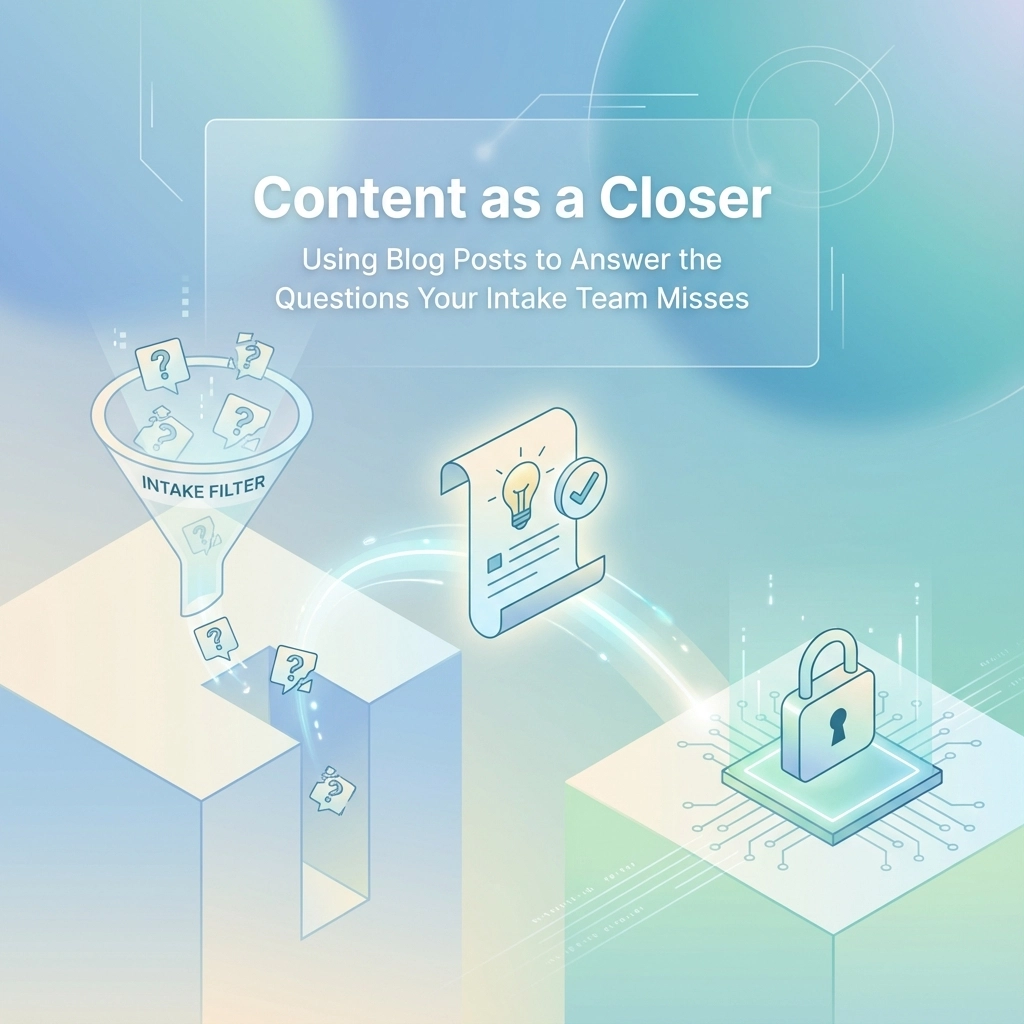
Your intake team is doing their best. They're fielding calls, answering questions, and trying to guide families through one of the most difficult decisions they'll ever make. But here's the hard truth: they're missing critical questions that could be the difference between an admission and a lost lead.
Every day, potential patients and their families hang up with unanswered concerns that keep them from taking the next step. Maybe it's confusion about insurance coverage, anxiety about what treatment actually looks like, or fear about the cost. These unaddressed worries become barriers that your competitors might solve, and steal your admissions.
That's where strategic content marketing comes in. The right blog posts don't just drive traffic; they function as silent sales tools that work 24/7 to address the questions your intake team never gets asked directly.
The $50,000 Question Gap
According to recent industry data from SAMHSA's National Survey on Drug Use and Health, only 10.3% of adults who needed substance abuse treatment actually received it. That means 89.7% of your potential market is walking away before they ever call.
Why? Because their questions aren't being answered at the moment they're ready to ask them.
Think about your last 100 intake calls. How many people asked about:
- Specific insurance coverage details?
- What happens during detox?
- Whether they can keep their job during treatment?
- How family therapy actually works?
Now think about how many people probably wanted to ask these questions but didn't: either because they felt embarrassed, didn't know how to phrase it, or called outside business hours.

How Content Marketing Rehab Centers Use to Shorten Sales Cycles
Smart facility owners are using targeted blog content to bridge this gap. Instead of hoping your intake team catches every concern, you're proactively addressing the most common questions through content that prospects can access anytime.
Here's what this looks like in practice:
Before Content Strategy:
- Average time from first call to admission: 14-21 days
- Intake team handles same questions repeatedly
- 30-40% of qualified leads go cold due to unanswered concerns
After Strategic Content Implementation:
- Average time from first call to admission: 7-12 days
- Intake team focuses on high-value conversations
- Only 15-20% of qualified leads go cold
The difference? Prospects arrive at your intake call already educated and ready to move forward.
The Questions Your Intake Team Misses (And How Content Solves Them)
Let's break down the most common missed opportunities and the content solutions that close these gaps:
Insurance and Financial Concerns
What prospects think but don't ask: "Will my insurance actually cover this? What's my out-of-pocket going to be? Are there payment plans?"
Content solution: Dedicated blog posts like "Does Aetna Cover Residential Treatment? A Complete Guide" or "5 Ways to Afford Rehab Without Breaking the Bank."
Why it works: Families can research privately without feeling judged or pressured to commit before they understand the financial reality.
Treatment Process Anxiety
What prospects think but don't ask: "What does a typical day look like? Will I be sharing a room? Can I have my phone?"
Content solution: Detailed walkthroughs like "Your First Week in Residential Treatment: Hour by Hour" or "What to Pack (And What to Leave at Home) for Rehab."
Why it works: Reduces unknown fears that often cause last-minute cancellations.
Family and Professional Impact
What prospects think but don't ask: "How do I explain this to my employer? What do I tell my kids? Will people find out?"
Content solution: Practical guides like "FMLA and Addiction Treatment: Protecting Your Job During Recovery" or "Age-Appropriate Ways to Explain Mom's Treatment to Children."
Why it works: Addresses the social stigma and practical concerns that often prevent people from seeking help.

The ROI Breakdown: Content as Your 24/7 Sales Team
Here's the financial impact of implementing strategic content marketing for treatment centers:
| Metric | Without Content Strategy | With Strategic Content |
|---|---|---|
| Average Lead Response Time | 6-12 hours | Immediate (via content) |
| Qualified Lead Conversion Rate | 15-25% | 35-45% |
| Average Time to Admission | 14-21 days | 7-12 days |
| Cost per Admission | $3,500-$5,000 | $2,200-$3,200 |
| Intake Team Efficiency | 60% time on basic Q&A | 80% time on high-value conversations |
Real numbers from our clients: One 50-bed facility in Florida saw their admission rate increase by 23% within 90 days of launching targeted content. Their intake director reported that families were arriving "already sold" on treatment and ready to discuss logistics rather than whether treatment was right for them.
Building Your Content Closing Strategy
The key isn't just creating more content: it's creating the right content at the right stage of your prospect's decision journey.
Stage 1: Awareness Content
Blog posts that acknowledge the problem without pushing treatment:
- "10 Signs Your Drinking Has Become a Problem"
- "When Prescription Pain Medication Becomes Addiction"
- "Why Smart, Successful People Struggle with Addiction"
Stage 2: Consideration Content
Educational pieces that explain treatment options:
- "Inpatient vs. Outpatient: Which Treatment Level is Right for You?"
- "What Happens During Medical Detox? A Day-by-Day Guide"
- "How Long Does Addiction Treatment Really Take?"
Stage 3: Decision Content
Practical information that removes final barriers:
- "Your Insurance Coverage Checklist for Addiction Treatment"
- "What to Expect in Your First 48 Hours at Our Facility"
- "How We Help Working Professionals Maintain Career Confidentiality"

The Technical Implementation
Here's how top-performing treatment centers structure their content strategy:
Step 1: Audit Your Intake Questions
Record or track the 50 most common questions your team answers. These become your content topics.
Step 2: Map Content to Intent
Create different content for different levels of readiness:
- Blog posts for early-stage research
- Downloadable guides for serious consideration
- FAQ pages for ready-to-admit prospects
Step 3: Optimize for When People Actually Search
According to Google Trends data, addiction-related searches spike between 11 PM and 3 AM. Your content needs to be ready when crisis moments hit.
Step 4: Track What Moves the Needle
Monitor which blog posts generate the most qualified leads, not just the most traffic. A post about "insurance coverage" might convert better than one about "signs of addiction."
Common Content Mistakes That Cost Admissions
Mistake 1: Generic Treatment Information
Don't just explain what addiction is: address the specific concerns your demographic has.
Mistake 2: Avoiding Hard Topics
If families are worried about cost, address it head-on. Dodging difficult questions doesn't make them go away.
Mistake 3: No Clear Next Steps
Every blog post should end with a specific action: "Call for a free insurance verification" or "Download our treatment timeline guide."
Mistake 4: Forgetting Mobile Optimization
Over 70% of treatment-related searches happen on mobile devices, often during emotional crisis moments.
Your Next Steps
Content marketing for rehab centers isn't just about driving traffic: it's about creating a systematic way to address every concern that keeps qualified prospects from becoming admissions.
Start with these immediate actions:
- This Week: List the 25 most common questions your intake team answers
- This Month: Create blog posts addressing your top 5 most frequent concerns
- Next Quarter: Build a complete content library covering every stage of the decision process
The families calling you are already in crisis. Your content should be the bridge that helps them move from fear to action, not another obstacle in their path to recovery.
Ready to turn your blog into a closing tool that works around the clock? Our team specializes in content strategies that convert prospects into admissions. Call 305-539-7114 to discuss how strategic content marketing can fill your beds while reducing your intake team's workload.
Because in addiction treatment, the right information at the right moment doesn't just drive business; it saves lives.