
INSIGHTS
Attribution Modeling for Rehab: Which Channel Actually Closed the Bed?

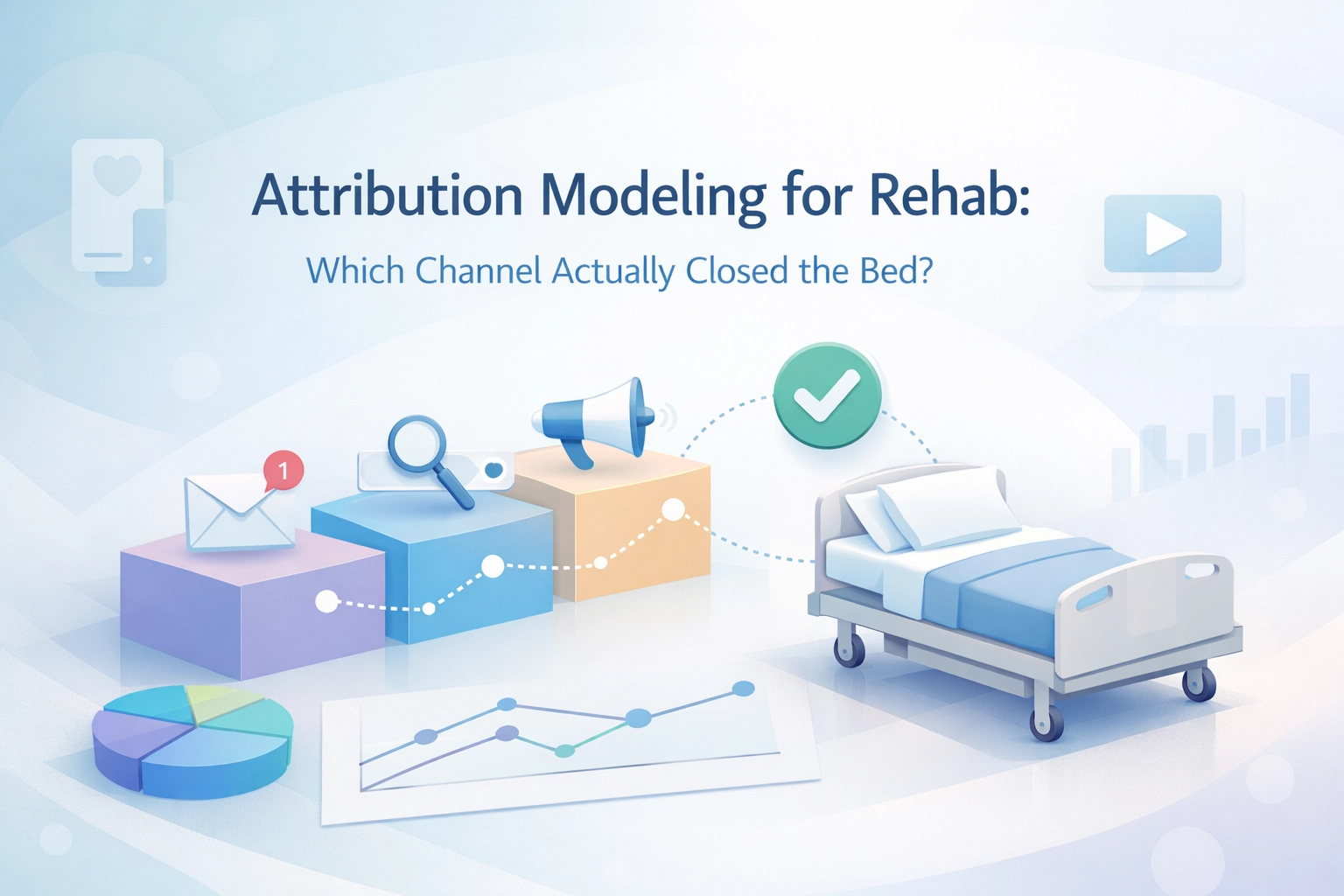
You're running Google Ads, Facebook campaigns, SEO efforts, maybe even some direct mail. Admissions are coming in. But here's the million-dollar question: which one of those channels actually deserves the credit?
Did that $50 Google click close the bed? Or was it the organic blog post they read three weeks earlier? Maybe it was the Facebook retargeting ad that nudged them over the finish line. Or all of the above?
If you can't answer that question with confidence, you're flying blind. And worse, you might be cutting budgets from channels that are quietly doing the heavy lifting while doubling down on ones that just happen to be the last touchpoint before someone picked up the phone.
Welcome to the world of attribution modeling: the missing piece that tells you which marketing channels are actually pulling their weight in your addiction treatment center.
What Is Attribution Modeling (And Why Should You Care)?
Attribution modeling is the framework that assigns credit to different marketing channels along the patient journey. Think of it as the referee deciding who gets the assist and who gets the goal.
In the addiction treatment space, this matters more than almost any other industry. Why? Because your average admission isn't a one-click impulse buy. It's a journey. Someone might see your ad, visit your site, leave, read some reviews, come back through organic search, call, hang up, get retargeted on Facebook, and finally convert two weeks later.
So which channel "closed the bed"?
The answer depends entirely on your attribution model. And choosing the wrong one can lead you to make expensive, misguided marketing decisions.
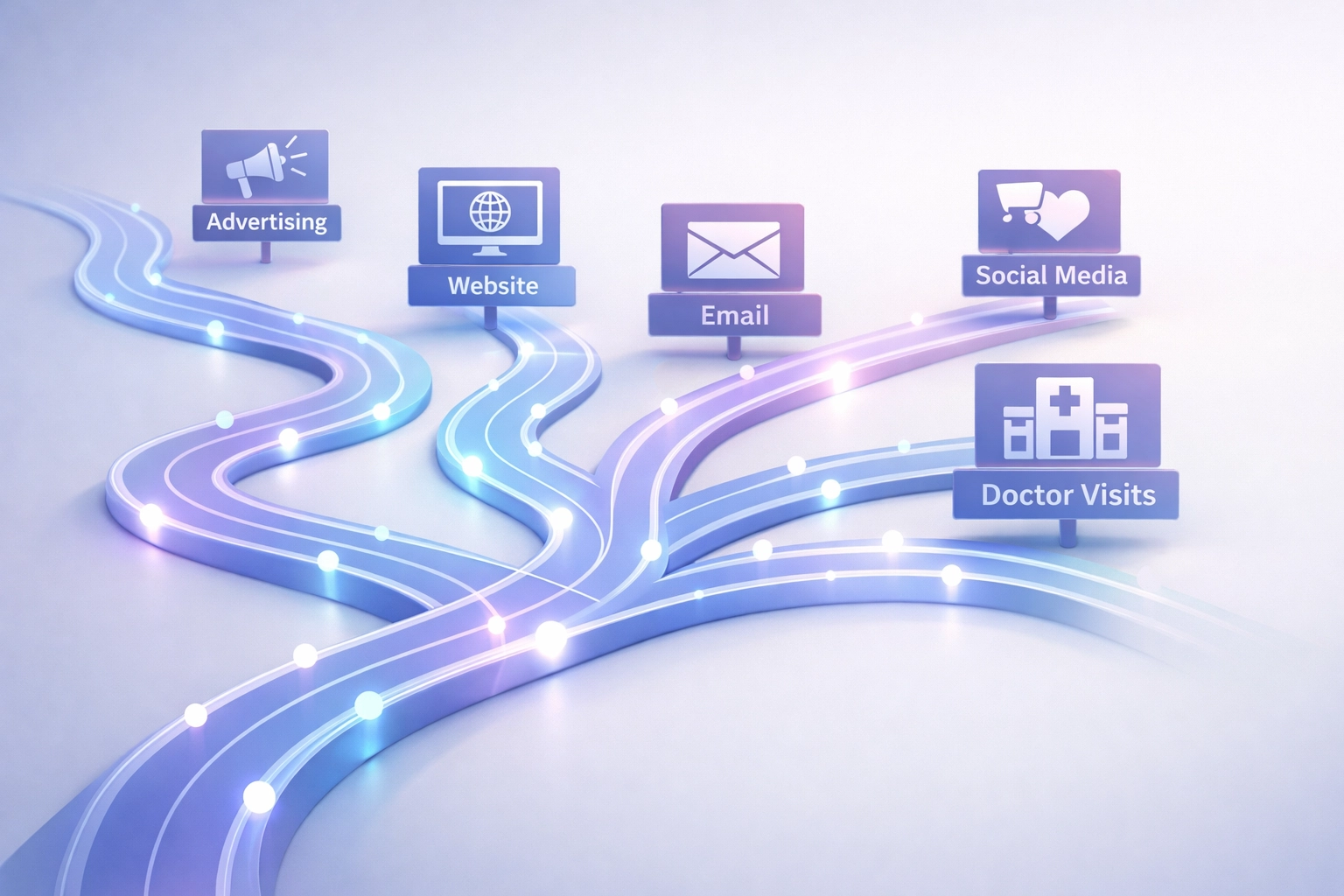
The Three Main Attribution Models You Need to Know
Let's break down the big three attribution frameworks that most treatment centers wrestle with.
First-Touch Attribution
This model gives 100% of the credit to the very first channel that introduced someone to your facility. If someone clicked a Facebook ad, visited your site, then came back through Google Ads two weeks later and converted, Facebook gets all the glory.
The upside: You get clear insight into which channels are best at generating awareness and starting the conversation.
The downside: It ignores everything that happened after that first interaction. If your SEO blog post or retargeting campaign was what actually convinced them to admit, first-touch won't show you that.
Last-Touch Attribution
This is the opposite. Last-touch gives 100% of the credit to the final channel someone interacted with before converting. If they came through a Google search at the moment they decided to call, Google gets all the credit: even if they'd been engaging with your content for weeks.
The upside: You know exactly what's driving immediate conversions.
The downside: It completely ignores the nurturing process. That expensive PPC campaign that first brought them in? It looks like it did nothing.
Multi-Touch (Linear) Attribution
Multi-touch tries to split the credit more fairly. It distributes value across all the touchpoints in the patient journey: either evenly or with weighted importance based on their role in the funnel.
The upside: You get a more holistic view of what's actually working across the entire journey.
The downside: It's more complex to set up and requires better tracking infrastructure.
According to research from healthcare marketing experts, multi-touch models provide the most accurate picture of patient behavior in treatment settings, where decision-making involves multiple visits and touchpoints before admission.
Why Attribution Gets Messy in the Rehab Space
Here's where it gets tricky. Unlike e-commerce, where you can track every click and purchase in a neat little funnel, addiction treatment marketing has some unique hurdles:
- Long consideration cycles – People don't decide on treatment in five minutes. It can take days, weeks, even months.
- Multiple decision-makers – Sometimes it's not the patient making the call. It's a spouse, parent, or interventionist.
- HIPAA compliance – You can't track patient data the same way a shoe company tracks purchases. Privacy laws add layers of complexity.
- Phone calls matter more than form fills – In this industry, conversions often happen offline. Attribution tools that only track digital actions miss half the story.
- Cross-device behavior – Someone might research on their phone, call from a landline, and fill out a form on a laptop. Connecting those dots isn't easy.
This is exactly why so many treatment center owners feel like they're guessing when it comes to marketing ROI. The data exists, but connecting it requires the right tools and expertise.

The Real Cost of Bad Attribution
Let's talk numbers. Here's what happens when you're using the wrong attribution model: or worse, no model at all:
| Scenario | First-Touch Only | Last-Touch Only | Multi-Touch Model |
|---|---|---|---|
| SEO Blog Post (Awareness) | Gets 100% credit | Gets 0% credit | Gets 25% credit |
| Facebook Retargeting (Nurture) | Gets 0% credit | Gets 0% credit | Gets 25% credit |
| Google Search Ad (Intent) | Gets 0% credit | Gets 0% credit | Gets 25% credit |
| Direct Call (Conversion) | Gets 0% credit | Gets 100% credit | Gets 25% credit |
| Result | You cut PPC and retargeting budgets | You cut SEO and content budgets | You see the full picture |
Without a proper attribution model, you're making budget decisions based on incomplete information. You might kill a channel that's quietly doing the heavy lifting just because it doesn't get credit under your current tracking setup.
And in an industry where cost-per-admission can easily hit $3,000–$5,000, that mistake gets expensive fast.
So Which Model Should You Use?
Here's the honest answer: it depends on your goals.
Use first-touch attribution if:
- You want to understand which channels are best at creating awareness
- You're testing new top-of-funnel campaigns and need to know what's working
- Your sales cycle is relatively short
Use last-touch attribution if:
- You need to know which channels drive immediate conversions
- You're optimizing for direct response and bottom-of-funnel performance
- You have a limited tracking infrastructure and need something simple
Use multi-touch attribution if:
- You want the full story of how patients find and choose your facility
- You're ready to invest in better tracking and analytics tools
- You have a complex funnel with multiple touchpoints (which most treatment centers do)
The National Association of Addiction Treatment Providers (NAATP) emphasizes the importance of data-driven decision-making in treatment center operations. Proper attribution is a core part of that.

How to Actually Implement Attribution Tracking
This is where most facility owners hit a wall. You know attribution matters. But how do you actually set it up without a degree in data science?
Here's the roadmap:
-
Implement call tracking – Use dynamic number insertion so you know which marketing channel drove each phone call. This is non-negotiable in the treatment space.
-
Connect your CRM to your ad platforms – Tools like Google Analytics, HubSpot, or CallRail can tie online behavior to offline conversions when set up correctly.
-
Tag your URLs – Use UTM parameters on every campaign so you can trace traffic sources back to specific ads and channels.
-
Set up conversion goals properly – Make sure you're tracking the actions that matter: form fills, phone calls, chat inquiries, and appointment bookings.
-
Use HIPAA-compliant analytics tools – Standard tracking setups can violate patient privacy laws. You need solutions built for healthcare.
-
Review your attribution reports weekly – Data only helps if you actually look at it. Make this a regular part of your marketing review process.
The Substance Abuse and Mental Health Services Administration (SAMHSA) provides guidelines for ethical marketing in addiction treatment, and proper attribution tracking falls under that umbrella. You need to know what's working so you can allocate your budget responsibly.
Where Most Treatment Centers Go Wrong
Even when facilities try to implement attribution tracking, here are the most common mistakes we see:
- Only tracking digital conversions – If you're not tracking phone calls, you're missing 60-70% of your conversions.
- Using default attribution settings – Most ad platforms default to last-click. That's not necessarily what's best for your business.
- Not accounting for assisted conversions – Just because a channel didn't get the "final click" doesn't mean it didn't contribute to the admission.
- Ignoring cross-device behavior – People switch between devices constantly. Your tracking needs to account for that.
- Cutting budgets based on surface-level data – A channel might look "expensive" on a last-click basis but could be essential for starting the patient journey.
Attribution isn't a set-it-and-forget-it project. It requires ongoing attention, testing, and refinement.
How Ads Up Marketing Solves the Attribution Problem
This is exactly the kind of challenge we live and breathe at Ads Up Marketing. We've built our entire digital marketing service around the unique needs of addiction treatment and behavioral health facilities.
Here's what we do differently:
Full-funnel tracking setup – We implement call tracking, CRM integration, and HIPAA-compliant analytics so you can see the complete patient journey from first click to admission.
Custom attribution models – We don't force you into a one-size-fits-all framework. We build attribution models that reflect your actual sales process and goals.
Weekly performance reviews – We don't just set up tracking and walk away. We monitor your attribution data weekly and adjust your campaigns based on what's actually driving admissions.
Transparent reporting – You'll see exactly which channels are performing, which ones need optimization, and where your budget is going.
We've helped treatment centers cut their cost-per-admission by 30-40% just by properly attributing conversions and reallocating budget to the channels that actually move the needle. That's money you can reinvest into better care, staff training, or facility improvements.
Want to know which of your marketing channels are really closing beds? Give us a call at 305-539-7114 and let's run a full attribution audit. We'll show you exactly where your admissions are coming from: and where you should be investing more.
The Bottom Line
Attribution modeling isn't just a nice-to-have for data nerds. It's the difference between making marketing decisions based on facts versus flying blind and hoping for the best.
In an industry where every admission matters and marketing budgets are tight, you can't afford to guess which channels are working. You need to know.
Whether you tackle this in-house or bring in a team that specializes in drug rehab marketing, the important thing is to start tracking attribution properly. Your bottom line will thank you.
Ready to stop guessing and start knowing? Contact us today or call 305-539-7114. We'll help you build an attribution framework that actually works for your facility.