INSIGHTS
The Business Case for Harm Reduction Content: Building Trust through Education
If you are running an addiction treatment center today, you already know the brutal reality of the digital landscape. Private equity-backed facilities with bottomless ad budgets are driving cost-per-click rates sky-high, while prospective patients and their families grow increasingly cynical of high-pressure sales tactics, inflated success claims, and predatory placement brokers.
So what happens when your potential clients stop believing the ads? They look for guidance. They look for honesty. And most importantly, they look for education.
Shifting your marketing approach toward a harm reduction content strategy isn't just an ethical win: it is one of the smartest financial decisions your facility can make. Let’s break down why building trust through education transforms casual browsers into loyal admissions, reduces your patient acquisition costs, and positions your center as an indispensable community pillar according to insights from the Substance Abuse and Mental Health Services Administration (SAMHSA) and the National Association of Addiction Treatment Providers (NAATP).
Table of Contents
- Why Traditional Rehab Marketing is Losing Ground
- What is Harm Reduction Content (And Why Facility Owners Should Care)?
- The ROI of Trust: How Education Drives Sustainable Admissions
- Performance Impact: Traditional Ads vs. Educational Harm Reduction
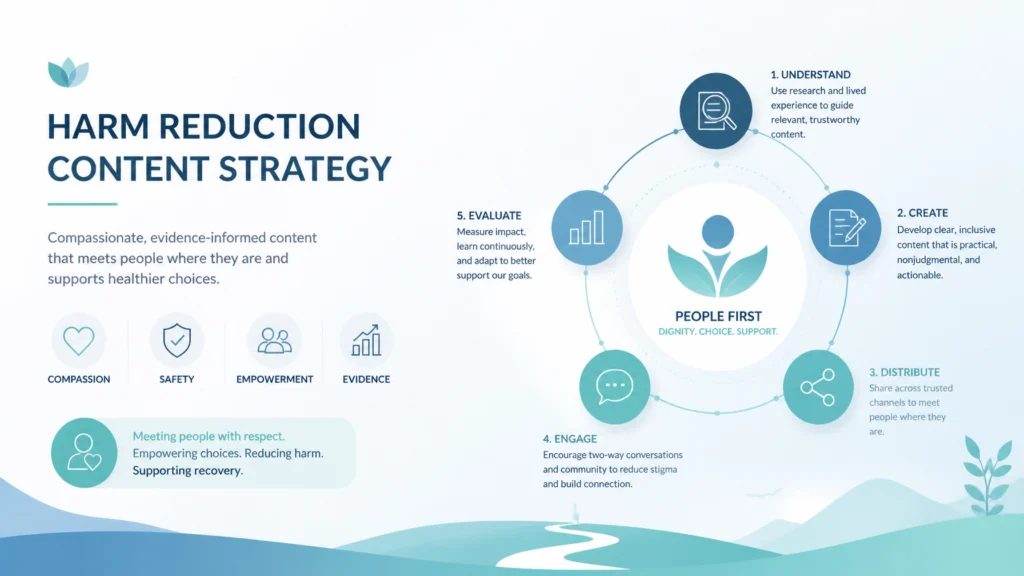
- Core Pillars of a Harm Reduction Content Strategy
- Navigating Compliance, Ethics, and Brand Protection
- Partnering with Behavioral Health Marketing Experts
Why Traditional Rehab Marketing is Losing Ground
For years, the playbook for drug and alcohol rehab marketing was straightforward: run aggressive Google Ads, feature stock photos of serene beaches, and promise miracle transformations on landing pages. But times have changed. Families researching treatment options are smarter, more skeptical, and emotionally exhausted.
When every facility claims to offer "world-class, individualized care," prospective clients experience decision paralysis. Worse yet, fear-based marketing and exaggerated promises alienate individuals who are not yet ready for immediate, total abstinence but are desperately seeking safety, information, and a non-judgmental starting point.
When you rely exclusively on hard-selling immediate admissions, you miss out on the massive top-of-funnel audience of individuals and family members who need guidance before they are ready to commit to a 30-day residential stay.
What is Harm Reduction Content (And Why Facility Owners Should Care)?

At its core, harm reduction focuses on minimizing the negative consequences associated with substance use rather than rigidly demanding immediate, unconditional abstinence as the sole acceptable outcome. In a content marketing context, this means meeting people exactly where they are on their journey.
Instead of scaring readers or demanding they check into a facility today, your content answers real, practical questions:
- How do I properly administer naloxone during an opioid overdose?
- What are the realistic signs of alcohol withdrawal that require medical detox?
- How can families support a loved one who isn't ready for residential treatment yet?
By providing objective, stigma-free education through specialized content creation services, you establish your facility as a trusted authority. You stop acting like a salesperson and start acting like a helper. And in behavioral health, trust is the ultimate conversion metric.
The ROI of Trust: How Education Drives Sustainable Admissions
You might be wondering: If we write content about safer use or harm reduction, won’t people just use those resources instead of paying for treatment?
In practice, the exact opposite occurs. When individuals find your center through a compassionate, highly informative guide on overdose prevention or navigating treatment levels of care, two powerful things happen:
- You capture high-intent organic traffic that your competitors: who only target bottom-funnel "rehab near me" keywords: completely ignore.
- You build reciprocity and psychological safety. When someone or their family member finally decides they need professional treatment, they will naturally turn to the facility that educated them without judgment.
Furthermore, educational content significantly lowers your blended customer acquisition cost (CAC). Paid search clicks are expensive, but high-ranking educational blog posts compound in value over time, generating steady, qualified organic inquiries month after month.
Performance Impact: Traditional Ads vs. Educational Harm Reduction
To understand how shifting your strategy impacts your bottom line, consider the following performance breakdown:
| Metric / Strategy | Traditional Aggressive PPC Only | Harm Reduction & Educational Content Strategy |
|---|---|---|
| Audience Reach | Narrow (only those actively seeking immediate placement) | Broad (includes early-stage researchers, families, and community partners) |
| Trust & Credibility | Low (viewed with skepticism due to sales-heavy tone) | High (viewed as an objective, compassionate industry authority) |
| Cost Per Acquisition (CPA) | High and continuously rising due to competitive keyword bidding | Optimized over time through compounding organic search visibility |
| Lead Quality | Mixed (high drop-off rate if prospects feel pressured) | High-intent, warm leads who are pre-educated and ready to engage |
| Long-term Brand Equity | Temporary (stops the moment ad spend pauses) | Permanent (evergreen content ranks and generates leads for years) |
Core Pillars of a Harm Reduction Content Strategy

Building an effective content engine requires structure and empathy. Here are the foundational pillars you should integrate into your marketing plan:
1. Stigma-Free Educational Guides
Address substance use disorders strictly as health conditions. Publish clear, science-backed guides explaining detoxification processes, medication-assisted treatment (MAT), and the differences between partial hospitalization (PHP) and intensive outpatient (IOP) programs.
2. Practical Safety and Family Resources
Create downloadable toolkits, checklists, and articles designed for loved ones. Families carry an immense burden of guilt and confusion; providing them with actionable boundaries and communication scripts makes your brand an invaluable ally.
3. Transparent Treatment Overviews
Remove the mystery from what happens inside your facility. Transparently outline daily schedules, clinical modalities, and realistic expectations. Combine this educational rigor with proactive reputation management to ensure your public footprint matches your clinical integrity.
Navigating Compliance, Ethics, and Brand Protection
In behavioral health marketing, compliance is non-negotiable. Ethical content creation protects both your patients and your business license.
- Maintain strict privacy: Ensure all patient stories, testimonials, and case studies are fully de-identified or backed by explicit written consent, adhering strictly to HIPAA guidelines.
- Avoid misleading claims: Align your messaging with FTC truth-in-advertising standards. Never guarantee 100% cure rates or gloss over the clinical challenges of recovery.
- Rely on evidence: Back your assertions with data from recognized public health authorities rather than anecdotal sensationalism.
Ready to see how your current digital footprint measures up against top competitors? Request a comprehensive free website audit to identify missed traffic opportunities and compliance gaps.
Partnering with Behavioral Health Marketing Experts

Executing a nuanced harm reduction and educational content strategy requires a deep, insider understanding of the addiction treatment sector. Generic marketing agencies often stumble by using tone-deaf language or violating industry compliance standards.
At Ads Up Marketing, we work exclusively with behavioral health facilities and addiction treatment centers. We combine decades of collective experience with data-driven analytics to help your facility rise above the noise, build authentic trust with prospective patients, and scale sustainable admissions.
Let’s talk about how we can help your center grow its impact and revenue without compromising your clinical values. Call us today at 305-539-7114 or contact us today to schedule a consultation with our specialized team.