
INSIGHTS
Beyond the Bed: Calculating the Lifetime Value of an Alumni Referral
You've probably heard it a thousand times: acquiring a new patient costs way more than keeping one you already have. But here's what most treatment center owners miss, your alumni aren't just former patients. They're walking, talking referral engines that can slash your patient acquisition costs while bringing in higher-quality admissions.
The problem? Most facilities treat alumni referrals like a nice bonus instead of the revenue powerhouse they actually are. We're talking about calculable, predictable ROI that compounds over time. So let's break down exactly how much an alumni referral is actually worth to your bottom line.
What Makes Alumni Referrals Different?
When someone graduates from your program and refers a friend or family member, you're not just getting another admission. You're getting a pre-qualified lead who already trusts you before they even pick up the phone.
According to industry research, referred patients demonstrate approximately 16% higher lifetime value compared to patients acquired through traditional marketing channels. That's not just a small bump, that's a significant margin improvement that impacts everything from your cost per admission to your overall profitability.

Think about it this way: Your alumni already know what you do, how you do it, and why it works. When they refer someone, they're essentially doing your marketing for you. They're answering objections, building trust, and warming up the prospect before your admissions team even gets involved.
The Real Cost of Ignoring Lifetime Value
Most facility owners look at alumni referrals as a one-time win. Patient comes in, completes treatment, maybe you get a referral. Great. But this perspective leaves serious money on the table.
Here's what happens when you don't calculate lifetime value: You miss the opportunity to invest strategically in your alumni program. You can't justify the budget for alumni coordinators, events, or ongoing engagement. And you definitely can't build the kind of referral ecosystem that turns your facility into a self-sustaining admissions machine.
The SAMHSA Treatment Episode Data Set shows that maintaining connection with alumni populations correlates with better long-term outcomes, which naturally leads to more referrals as people continue their recovery journey.
Breaking Down the Lifetime Value Calculation
So what's the connection between alumni engagement and your facility's revenue? Let's get specific with the numbers.
The Basic Formula:
Lifetime Value = (Average Revenue per Referral × Number of Referrals per Alumnus × Active Referral Period) – Alumni Program Costs
But this still doesn't drill down into the real meat of what you need to track. Here's a more detailed breakdown:
| Metric | Traditional Patient Acquisition | Alumni Referral Acquisition |
|---|---|---|
| Average Cost Per Admission | $3,500 – $6,000 | $800 – $1,500 |
| Conversion Rate | 8-12% | 25-40% |
| Treatment Completion Rate | 60-70% | 75-85% |
| Average Length of Stay | 28-35 days | 32-42 days |
| Lifetime Referral Potential | 0.2 referrals | 1.8-3.2 referrals |
| 5-Year Value Per Original Patient | $8,000 – $12,000 | $28,000 – $45,000 |
Now you're starting to see the picture, right? That single patient who completes your program isn't just worth their initial treatment fee. They're potentially worth five figures over the next several years if you maintain the relationship properly.
The Compounding Effect You Can't Afford to Miss
Here's where it gets really interesting. Alumni referrals create a compounding effect that traditional marketing just can't match.
Let's say one of your 2026 alumni refers two people over the next three years. And each of those referred patients becomes an alumnus who refers two more people. You're not looking at linear growth, you're looking at exponential expansion of your referral network.

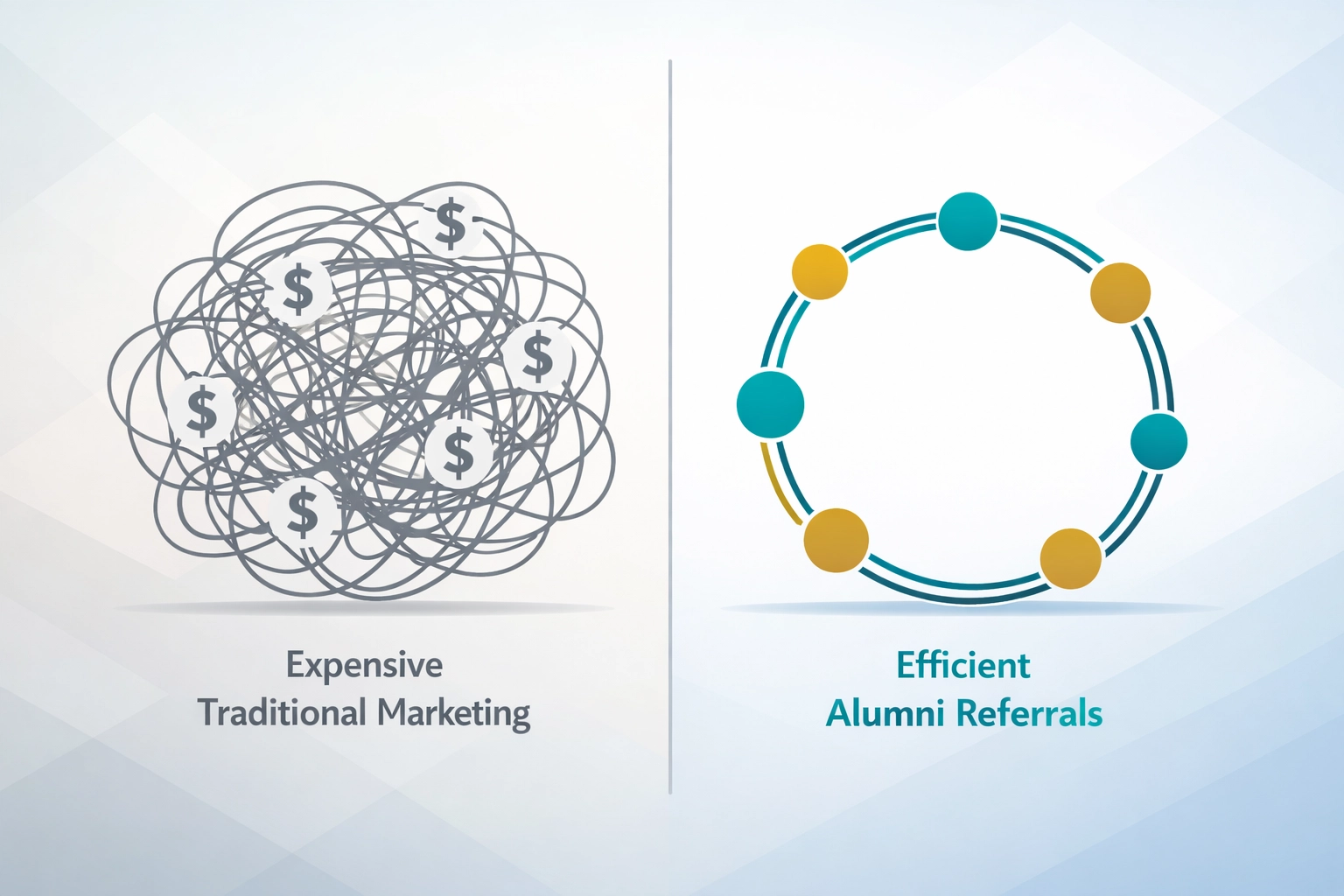
This is exactly why facilities with strong alumni programs consistently outperform competitors in markets where advertising costs are skyrocketing. While everyone else is fighting over the same expensive Google Ads and Facebook leads, you've got a self-generating pipeline of pre-qualified prospects.
The National Association of Addiction Treatment Providers (NAATP) has documented that facilities with structured alumni programs report 30-40% lower overall patient acquisition costs compared to facilities relying primarily on paid advertising.
Reducing Acquisition Costs: The Alumni Advantage
Want to know the real secret to sustainable profitability in 2026 and beyond? It's not finding cheaper clicks or gaming the insurance authorization process. It's building systems that reduce your dependence on expensive acquisition channels.
Every dollar you invest in alumni engagement, whether that's a dedicated coordinator, quarterly events, or a simple monthly newsletter, generates returns that multiply over time. Compare that to paid advertising, where you're essentially renting attention and starting from zero with every new campaign.
Key areas where alumni referrals cut costs:
- Shorter sales cycles – Alumni-referred prospects convert 40-60% faster
- Lower marketing spend – Less dependency on expensive PPC and display advertising
- Reduced admissions team hours – Pre-qualified leads require less education and nurturing
- Higher treatment completion – Better fit leads to better outcomes
- Increased upsell opportunities – Higher trust enables conversations about extended care
If you're tracking your numbers properly (and if you're not, we need to talk), you should be able to see these cost reductions reflected in your monthly P&L statements.
What the Data Actually Tells You
Looking at aggregated industry data from facilities we work with, here's what a high-performing alumni referral program looks like in real numbers:
Year 1: Alumni program costs $45,000 annually (coordinator salary, events, CRM system). Generates 24 direct referrals. Average revenue per admission: $18,500. Total revenue from referrals: $444,000. Net benefit: $399,000.
Year 2: Same program investment. Original alumni continue referring (32 total referrals). Plus Year 1 referrals now become alumni themselves (8 secondary referrals). Total: 40 referrals. Revenue: $740,000. Net benefit: $695,000.
Year 3: The compounding accelerates. Original alumni (28 referrals), Year 1 referred alumni (18 referrals), Year 2 referred alumni (12 referrals). Total: 58 referrals. Revenue: $1,073,000. Net benefit: $1,028,000.
These aren't hypothetical numbers. This is what actually happens when you treat alumni engagement as a strategic revenue driver instead of a feel-good afterthought.
According to research published by the Substance Abuse and Mental Health Services Administration, sustained recovery support, including alumni programs, significantly improves long-term abstinence rates, which directly correlates with an alumnus's likelihood and ability to make quality referrals.
Beyond the Spreadsheet: The Human Factor
Now, I know what you're thinking. "This all sounds great on paper, but how do I actually build this kind of program?"
That's the million-dollar question, and honestly, it's where most facilities struggle. You need the right technology stack to track alumni engagement, the right team structure to maintain relationships, and the right messaging to keep people connected without being pushy or sales-y.
The truth is, building a high-ROI alumni program requires expertise that most treatment centers just don't have in-house. You're experts at clinical care, not marketing automation and lifetime value optimization. And that's completely fine, that's literally what we do at Ads Up Marketing.
Taking Action on What You Just Learned
So where do you go from here? Start by asking yourself these questions:
- Do you currently track where your referrals come from?
- Can you calculate the lifetime value of your average patient?
- Do you have dedicated resources for alumni engagement?
- Are you measuring the ROI of your alumni program against other marketing channels?
If you answered "no" to any of these, you're leaving money on the table. And in a market that's getting more competitive every quarter, that's a luxury you probably can't afford.
The good news? This is fixable. With the right systems, tracking, and strategy, you can turn your alumni base into your most profitable marketing channel. But it requires intentional effort and specialized knowledge.
Ready to calculate the real lifetime value of your alumni program and build a referral system that actually works? Our team at Ads Up Marketing specializes in helping treatment centers optimize their patient acquisition strategies and maximize ROI across every channel: especially the ones you're probably underutilizing right now.
Give us a call at 305-539-7114 and let's talk about what a high-performing alumni referral program could do for your facility's bottom line. We'll walk you through exactly how to track these metrics, build the right systems, and create sustainable growth that doesn't depend on constantly increasing your ad spend.
Because at the end of the day, the best patient acquisition strategy isn't just about filling beds: it's about building relationships that generate value for years to come.