
INSIGHTS
Why Your Call Center Is the Biggest Leak in Your Marketing Funnel
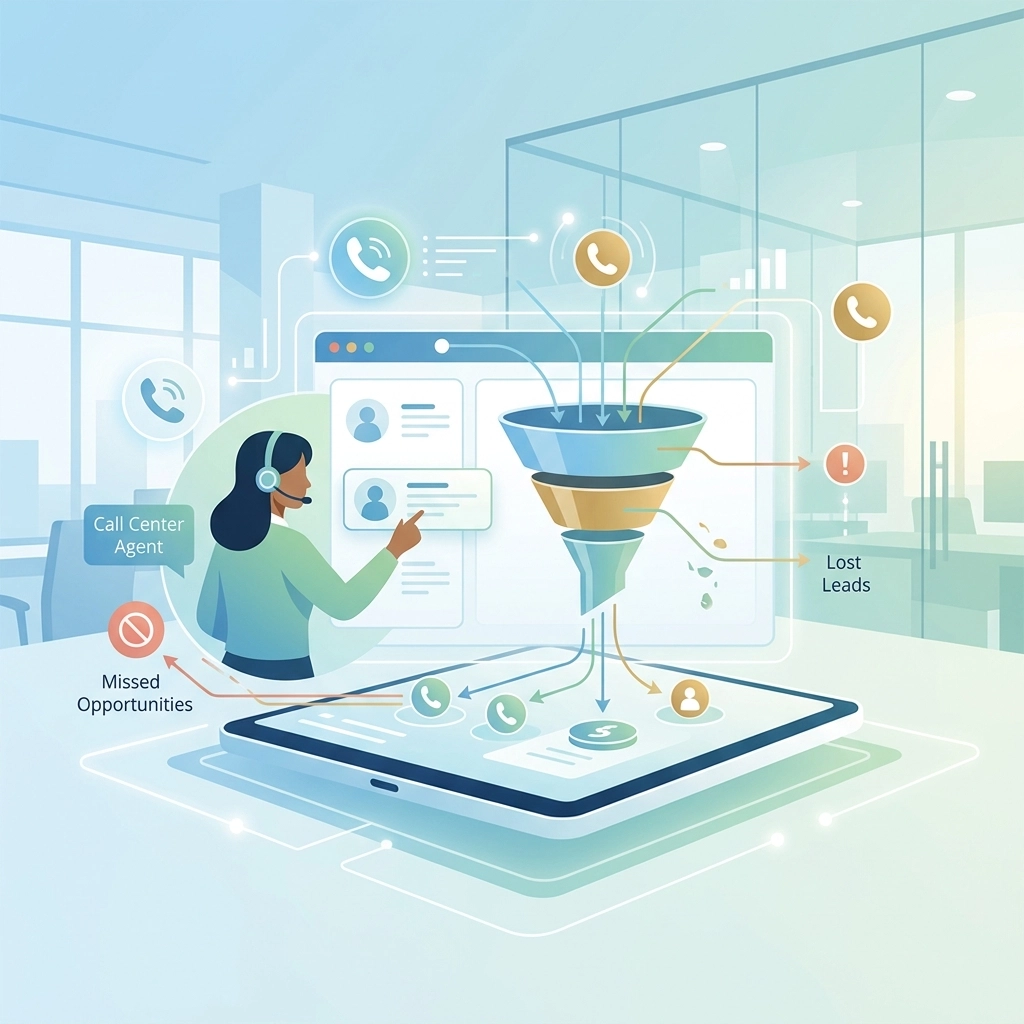
Table of Contents
- The $50,000 Ghost: When Clicks Don't Equal Admissions
- The Invisible Drain: Why Marketing Metrics Lie
- The Anatomy of a Leaky Call Center
- Data Over Guesswork: Moving Beyond "How Did You Hear About Us?"
- Performance Impact: Leaky vs. Optimized Intake
- Patching the Hole: Actionable Steps for 2026
- Conclusion: Let Ads Up Marketing Seal Your Funnel
The $50,000 Ghost: When Clicks Don't Equal Admissions
You just cut a check for your monthly PPC spend. It’s significant. You look at your Google Ads dashboard, and the numbers look "good." The CTR is high, the cost-per-click is within range, and your phone is ringing.
But then you look at your census. It hasn’t budged.
Where did those callers go? They were motivated enough to click, brave enough to dial, and desperate enough to seek help for addiction or mental health. Yet, they never made it through your front door. If you’re like most rehab owners, you probably look at your marketing agency and ask, "Why aren't these leads converting?"
The truth? Your marketing might be doing its job perfectly. The real culprit is often the "black hole" sitting right in your office: your call center. In the behavioral health industry, where the National Institute on Drug Abuse (NIDA) reports a massive gap between those needing treatment and those receiving it, every lost call isn't just a lost lead: it’s a lost life and a massive hit to your ROI.
The Invisible Drain: Why Marketing Metrics Lie
Marketing metrics like "Cost Per Lead" (CPL) are great for spreadsheets, but they can be incredibly deceptive for facility owners. If you're paying $100 for a lead that never gets a VOB (Verification of Benefits) run, that lead is effectively worthless.
Most agencies stop tracking at the click or the call duration. At Ads Up Marketing, we believe that tracking the full patient journey to ROI is the only way to see the full picture. If your call center staff is undertrained, overwhelmed, or simply following a script that lacks empathy, they are leaking money every single hour.
Think about it: according to SAMHSA’s National Survey on Drug Use and Health, millions of Americans meet the criteria for a substance use disorder, but only a fraction seek help. When they finally do call you, the friction in your intake process determines whether they become a success story or a "dropped call" statistic.

The Anatomy of a Leaky Call Center
Why is the call center such a common point of failure? It usually comes down to three main pressure points:
1. The 3 AM Crisis Handoff
Crisis calls don’t wait for business hours. If a potential patient calls at 3:00 AM and hits a voicemail or an untrained night-shift worker, they’re gone. They will call the next facility on the list. We’ve analyzed the anatomy of a 3 AM crisis call, and the difference between an admission and a hang-up often boils down to immediate clinical empathy and an efficient intake process.
2. The VOB Bottleneck
This is the silent killer of rehab ROI. You get a live person on the phone, they want help, they have private insurance: and then they sit on hold for 40 minutes while your team struggles to verify benefits. Or worse, they’re told "we’ll call you back tomorrow." In the world of addiction, tomorrow is often too late. As we’ve discussed before, your VOB process is your biggest marketing bottleneck.
3. Lack of "Closing" Skills (with Empathy)
Let’s be real: intake is sales. But it’s a high-stakes, high-empathy version of sales. If your team sounds like they’re reading a DMV manual, they won’t build the trust necessary for a patient to commit to a 30-day program. If you aren't showing the human side of your facility, you’re losing to the guy down the street who does. This is why showing your medical team on your site and mentioning them on the call is so vital.
Data-Driven Analytics: Moving Beyond "How Did You Hear About Us?"
In 2026, relying on your intake staff to ask "How did you find us?" is a recipe for bad data. Patients in crisis rarely remember if they clicked a Google Ad, saw a Facebook post, or found you through an organic search.
You need data-driven analytics that integrate your CRM with your marketing platform. You should be able to see exactly which keyword led to a call, how long that call lasted, whether a VOB was initiated, and why the lead didn't convert.
Are you seeing a high volume of calls from a specific campaign but zero admissions? It might not be the campaign; it might be that the campaign is attracting patients with insurance you don't take, and your call center isn't trained to refer them out properly or handle those objections. This is why understanding marketing KPIs is no longer optional for owners: it’s survival.

Performance Impact: Leaky vs. Optimized Intake
To visualize the financial impact, let’s look at two mid-sized facilities (50 beds) with the same marketing budget.
| Metric | Facility A (The "Leaky" Funnel) | Facility B (The Optimized Funnel) |
|---|---|---|
| Monthly Ad Spend | $30,000 | $30,000 |
| Total Inbound Leads | 300 | 300 |
| Cost Per Lead (CPL) | $100 | $100 |
| Call Answer Rate | 75% (voicemails/drops) | 98% (24/7 coverage) |
| VOB Initiation Rate | 40% | 70% |
| VOB to Admission Rate | 10% | 25% |
| Total Admissions | 12 | 52 |
| Average Revenue/Adm | $15,000 | $15,000 |
| Gross Revenue | $180,000 | $780,000 |
| Effective CPA | $2,500 | $576 |
The difference is staggering. Facility B isn't spending a penny more on ads, yet they are generating $600,000 more in monthly revenue simply by fixing the call center. This highlights why your 2026 CPA benchmarks might be completely skewed if you aren't accounting for call center leakage.
Patching the Hole: Actionable Steps for 2026
If you want to stop the bleeding, you need to treat your call center as an extension of your marketing team, not a separate silo. Here is how you can start:
- Implement Call Tracking & Recording: If you aren't listening to your calls, you have no idea what’s happening. Are your agents being empathetic? Are they asking for the VOB? Tools like CallRail or specialized healthcare CRMs are essential.
- Audit Your Speed-to-Lead: When a web form comes in, how fast do you call them? If it's more than 5 minutes, your conversion rate drops by 80%.
- Refine Your VOB Workflow: Use technology to speed up verifications. Don't let a "maybe" on insurance kill a potential admission.
- Focus on Professionalism: Your intake team is the first human contact a family has with your brand. High-quality communication is just as important as high-quality imagery on your website.
- Referral Partnerships: If a caller isn't a fit for your facility, don't just hang up. Help them. It builds goodwill and often results in reciprocal referrals from other centers.

Conclusion: Let Ads Up Marketing Seal Your Funnel
I know you’re struggling with the rising costs of digital advertising. The competition for behavioral health keywords is at an all-time high, and navigating compliance like LegitScript makes it even harder.
But throwing more money at PPC won't fix a broken intake process. You don't just need more leads; you need a funnel that actually holds the water you’re pouring into it.
At Ads Up Marketing, we don't just "do ads." We look at your entire operation: from the first click to the final admission. We help you identify where the leaks are, provide the data-driven analytics you need to hold your team accountable, and optimize your strategy to ensure your CPA stays low and your beds stay full.
Are you ready to see what’s actually happening when the phone rings? Stop guessing and start growing. Call us today at 305-539-7114 or visit our contact page to schedule a deep-dive funnel audit. Let's make sure your marketing budget is working as hard as you are.