
INSIGHTS
Professional Photography for Treatment Centers: Why Authenticity Drives Admissions
It is 2:00 AM. A desperate family member is sitting in a darkened living room, weeping quietly, frantically searching Google for a safe, welcoming drug rehab or addiction treatment center to save their loved one's life. They click on your facility's website. What do they see?
If your pages feature generic, plastic-smiling stock models holding coffee mugs in an obviously fake "therapy circle," you have already lost them. In behavioral health, prospective clients and their families aren't just shopping for a service: they are looking for sanctuary, safety, and human empathy during the darkest moment of their lives. When your visuals feel sterile or fabricated, trust evaporates instantly.
So why do so many treatment facility owners continue to rely on cheap stock imagery while pouring thousands into PPC ad spend? Let's dive into why professional photography for treatment centers is the single most powerful, undervalued catalyst for driving qualified admissions and lowering your cost per acquisition.
Table of Contents
- The Hidden Cost of Generic Stock Photos in Behavioral Health
- What Makes Professional Photography for Treatment Centers Essential?
- Performance Impact: Stock vs. Professional Photography
- Key Areas Every Treatment Center Photo Shoot Must Cover
- Ethical Considerations and Patient Privacy
- Transforming Your Visual Brand to Maximize ROI
The Hidden Cost of Generic Stock Photos in Behavioral Health
When you invest heavily in PPC management and consultation to drive traffic to your landing pages, every single click costs money. But traffic means nothing if your bounce rate is 80% because visitors cannot connect with your brand.

People seeking treatment are hyper-vigilant. They have been lied to or let down by broken systems before. When they spot the same stock model on three different rehab websites across the country, a subconscious alarm bell rings. It signals a lack of transparency, or worse, corporate impersonality.
According to behavioral health advocacy insights from organizations like the Substance Abuse and Mental Health Services Administration (SAMHSA), fostering an environment of transparency and immediate psychological safety is paramount for engagement. When you replace stock placeholders with high-end, authentic imagery of your actual facility and warm, welcoming staff, you eliminate doubt before the phone even rings.
"Families don't buy clinical brochures; they buy the feeling of safety they get when they look into the eyes of the people who will care for their child, spouse, or parent."
What Makes Professional Photography for Treatment Centers Essential?
You might wonder: Can't my marketing team just take a few quick photos with an iPhone between client groups? While smartphones have impressive lenses, architectural and healthcare photography requires technical precision.
Professional facility photographers know how to capture natural light streaming into common areas, make tight counseling rooms feel expansive yet intimate, and showcase the calming aesthetic of your campus without distorting reality.
Furthermore, professional photography allows you to highlight your unique value propositions:
- The Environment: Clean, modern, serene living quarters and dining spaces that assure families their loved one will be treated with dignity.
- The People: Approachable, qualified licensed therapists and medical directors who humanize your clinical care model.
- The Programming: Engaging wellness spaces, art therapy rooms, and outdoor courtyards that demonstrate a holistic approach to healing.
For broader industry standards on clinical ethics and operational excellence, exploring resources provided by the National Association of Addiction Treatment Providers (NAATP) highlights how crucial visual branding is for ethical positioning in a crowded market.
Performance Impact: Stock vs. Professional Photography
To understand how visual upgrades directly influence your bottom line, let’s look at a performance comparison between generic stock libraries and tailored professional media assets.
| Metric | Generic Stock Imagery | Professional Facility Photography |
|---|---|---|
| Landing Page Conversion Rate | 1.8% – 2.4% | 4.5% – 7.2% |
| PPC Cost Per Lead (CPL) | High due to bounce drop-offs | Lowered by 25–40% via engagement |
| Trust & Credibility Score | Low (Immediate skepticism) | High (Instant emotional resonance) |
| Inquiry-to-Admission Ratio | Struggling with cold leads | Qualified leads ready to talk |
As shown above, upgrading your visual assets doesn't just make your website look prettier: it fundamentally optimizes your digital funnel, driving more admissions from the exact same ad spend.
Key Areas Every Treatment Center Photo Shoot Must Cover

When planning a professional photo shoot for your behavioral health facility, you need a meticulous shot list. You cannot leave things to chance on shoot day. Here are the non-negotiable zones you must capture:
1. The Intake and Reception Area
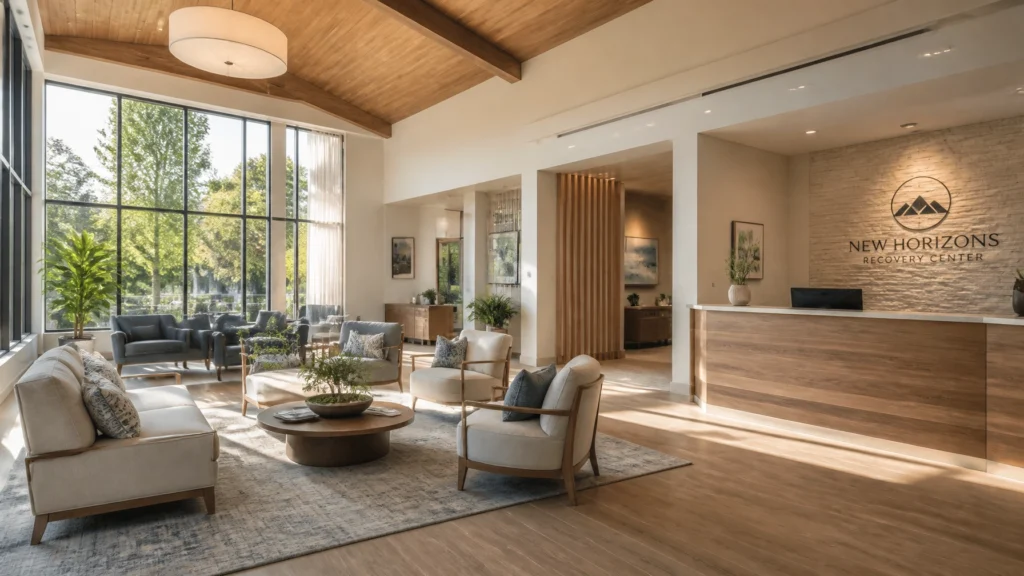
This is the physical threshold of recovery. Families want to know that when their loved one arrives, they will be greeted with warmth rather than a cold hospital desk. Capture soft lighting, comfortable seating, and welcoming front-desk staff.
2. Residential and Living Quarters
Showcase clean, comfortable, and orderly bedrooms and lounges. Highlight personal touches, natural light, and safety features that assure families their loved one will rest securely.
3. Clinical and Therapy Spaces
Whether it is a sunlit individual counseling office or a serene group therapy circle, these photos should convey focus, empathy, and professional expertise.
4. Outdoor and Recreational Amenities
Nature plays a massive role in recovery. Beautiful outdoor walking paths, gardens, patios, or fitness areas communicate physical wellness and holistic care.
Ethical Considerations and Patient Privacy
In addiction treatment marketing, HIPAA compliance and patient confidentiality are sacred. You can never compromise real client privacy for the sake of marketing.
When executing a professional photo shoot:
- Never use active clients in identifiable marketing photography.
- Use professional models or staff members to simulate patient scenarios (such as group therapy or dining), ensuring complete ethical compliance.
- Schedule shoots during non-client hours or in controlled, private areas of your campus.
- Obtain signed model releases for every staff member or model appearing in promotional materials.
Maintaining these rigorous ethical standards aligns your facility with top-tier compliance frameworks, reassuring both regulators and prospective families.
Transforming Your Visual Brand to Maximize ROI
Your treatment center offers life-saving care, but if your digital presence looks dated or fabricated, prospective families will click away to a competitor before discovering the incredible work your clinical team does. Investing in professional photography bridges the gap between clinical excellence and digital conversion.

At Ads Up Marketing, we specialize exclusively in helping addiction treatment centers and behavioral health facilities cut through the noise, optimize their digital presence, and scale qualified admissions through data-driven strategies and compelling branding.
Ready to elevate your facility's visual trust and turn more clicks into admissions? Let's talk about your growth strategy today. Call us directly at 305-539-7114 or visit our contact page to schedule your custom marketing consultation.