
INSIGHTS
Call Tracking for Residential Treatment Centers: Attribution Beyond the Phone
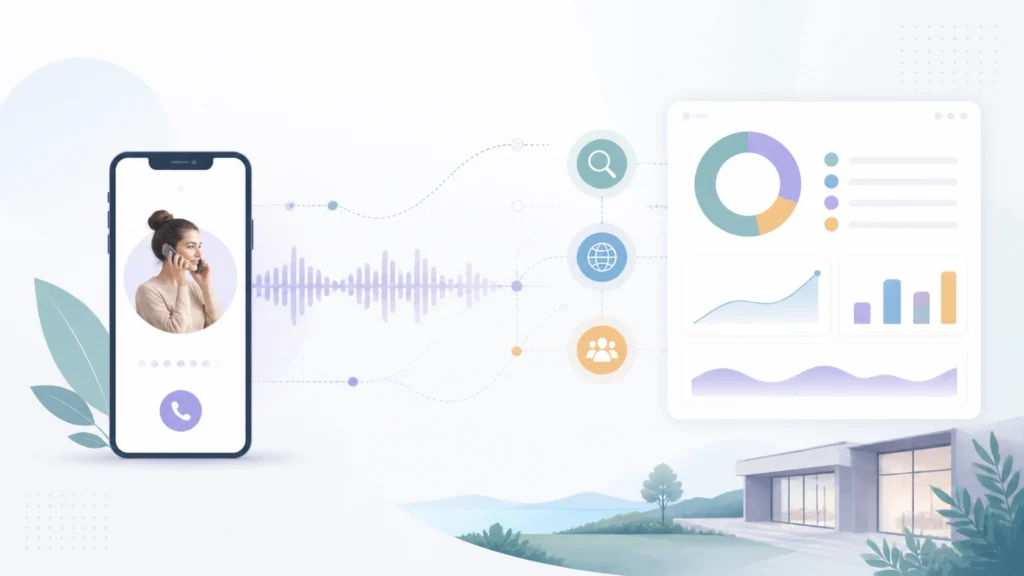
A prospective patient or family member finds your facility through a Google search, visits your website, and then calls your admissions team directly.
Your analytics platform may record the website visit. Your ad platform may report the click. Your call system may show the conversation.
But can you connect all three?
If not, you may be spending more on channels that look productive while underfunding the ones that actually create qualified conversations and admissions. Call tracking for residential treatment centers helps you move beyond counting phone calls. It shows which campaigns influence the journey from first search to meaningful admissions activity.
Table of Contents
- Why phone attribution matters in residential treatment marketing
- What call tracking should measure
- A practical attribution framework
- Performance Impact: basic tracking vs. connected attribution
- Privacy and compliance considerations
- How Ads Up Marketing can help
- Frequently asked questions
Why Phone Attribution Matters in Residential Treatment Marketing
In many residential treatment centers, the phone call is where marketing becomes a human conversation.
A caller may ask about insurance, availability, detox requirements, family involvement, transportation, or whether your program feels like the right fit. Those questions rarely appear in a form submission. Yet they can determine whether someone schedules an assessment or continues searching.
So what happens if your reporting counts only form fills?
You miss a major part of the admissions journey.
A simple example:
- A parent searches for residential addiction treatment.
- They click a paid search ad and read your website.
- They leave without submitting a form.
- Two days later, they search your facility by name.
- They call the main admissions number.
- Your team schedules an assessment.
A last-click report may credit branded search or direct traffic. A connected call tracking system can show that the original paid search campaign introduced the facility and helped create the eventual call.
That distinction matters when you are deciding whether to increase your PPC budget, improve your SEO strategy, or change your website.
What Call Tracking Should Measure
A tracking number by itself is not a strategy. You need to connect the phone event to the stages that follow it.
At a minimum, your system should help you understand:
- Call source: Google Ads, organic search, referral, social media, directory, or another channel
- Campaign and keyword context: Which ad group, search term, or landing page influenced the call
- Call quality: Whether the caller reached a live person and whether the conversation was relevant
- Disposition: New inquiry, wrong number, existing client, referral partner, insurance question, or another defined category
- Follow-up status: Assessment scheduled, documents requested, callback needed, or no further action
- Admissions progression: Whether the opportunity advanced to an assessment, verification, admission, or arrival
But this still doesn’t drill down far enough if every connected call is treated as a success.
A 42-minute conversation with a qualified family member should not be reported the same way as a 12-second robocall. Your admissions and marketing teams need shared definitions for what counts as a meaningful call.
That is why Ads Up’s conversion tracking approach connects calls, forms, chats, opportunities, transfers, and admissions wherever the available systems and privacy policies allow.

A Practical Attribution Framework
You do not need to build a complicated data warehouse on day one. Start with a framework your team can actually maintain.
1. Use channel-specific tracking numbers
Assign numbers to important sources, such as:
- Paid search campaigns
- Organic website traffic
- Social media campaigns
- Referral directories
- Email campaigns
- Offline referral materials
Dynamic number insertion can display different numbers based on how someone reached your website. The goal is not to collect more personal information. It is to preserve the marketing source before it disappears.
2. Capture the first meaningful source
The first source often explains how someone discovered your facility. It may be an SEO article about residential treatment, a location-based Google search, or a referral page.
Do not automatically give that source 100% of the credit. Just preserve it.
3. Record the last meaningful interaction
The final touchpoint is still useful. It may show what prompted the person to call today rather than next week.
For instance, an urgent “residential treatment near me” ad may create the immediate call, while an educational blog post and several website visits built trust beforehand.
A useful attribution report keeps both signals visible.
4. Connect the call to a business outcome
Your call center or admissions team should use consistent dispositions. Examples include:
- Qualified inquiry
- Assessment scheduled
- Insurance verification started
- Clinically appropriate
- Not a fit
- Follow-up required
- Admitted
- Lost opportunity
The exact labels will depend on your operation. What matters is consistency. If one admissions coordinator marks every call as “qualified” and another uses “qualified” only when an assessment is scheduled, your reports become noisy very quickly.
5. Review attribution with admissions data
Marketing should not review call volume in isolation. Compare:
- Qualified calls by source
- Assessment rate by source
- Admission rate by source
- Cost per qualified call
- Cost per assessment
- Cost per admission
- Lost opportunities by reason
This is the difference between reporting activity and measuring performance.
Performance Impact: Basic Tracking vs. Connected Attribution
The following comparison illustrates how the quality of your data changes the decisions you can make.
| Measurement approach | What you see | What stays hidden | Likely business decision |
|---|---|---|---|
| Main phone number only | Total call volume | Source, campaign, caller quality, outcomes | Spend based on incomplete demand data |
| Channel-level tracking | Calls by source | Assessment and admission progression | Shift budget toward high-volume channels |
| Call tracking plus dispositions | Qualified calls and reasons for loss | Downstream revenue and arrival data | Improve campaigns and admissions workflows |
| Connected source-to-admission reporting | Cost per qualified call, assessment, and admission | Less of the funnel remains unknown | Scale channels that create measurable outcomes |
This does not mean every admission can be perfectly assigned to one channel. Residential treatment decisions often involve several devices, family members, referrals, and multiple conversations.
The goal is not false precision. The goal is better decision-making with fewer blind spots.
Privacy and Compliance Considerations
Residential treatment marketing involves sensitive information. A call may include a person’s name, phone number, insurance details, treatment history, or information about a family member seeking care.
That means your tracking setup should be reviewed carefully with your compliance and legal teams.
The U.S. Department of Health and Human Services guidance on online tracking explains that regulated entities should evaluate how tracking technologies collect and disclose information connected to healthcare activity. A standard marketing pixel or analytics workflow should not be assumed to be appropriate simply because it is common in other industries.
Before launching call recording or call attribution, review whether your vendors:
- Will sign an appropriate Business Associate Agreement when required
- Encrypt data in transit and at rest
- Provide role-based access controls
- Maintain audit logs
- Support retention and deletion policies
- Allow recording disclosures and pause controls
- Limit unnecessary personal or clinical information in marketing tools
Substance use disorder programs also need to consider 42 CFR Part 2, which protects records that identify a person as having sought or received SUD diagnosis, treatment, or referral. The eCFR specifically includes information such as referral and intake records within its applicability provisions.
Call recording laws also vary by state. Some jurisdictions require notice or consent from all parties. If your facility receives calls nationally, ask qualified counsel to review your disclosure language and recording workflow. When in doubt, use a clear notification before recording begins and avoid recording sensitive conversations unless your organization has determined that it is appropriate.
The safest operating principle is simple: send the marketing signal, not unnecessary patient information.
Your marketing team may need to know that Campaign A generated a qualified call and an assessment. It usually does not need the caller’s diagnosis, detailed history, or full conversation transcript.
For additional context, SAMHSA’s National Helpline demonstrates how confidential treatment referral services communicate their privacy expectations. Your facility should make its own policies clear and accessible.
How Ads Up Marketing Can Help
At Ads Up Marketing, we work exclusively with addiction treatment centers and behavioral health facilities. That specialization matters because your funnel is not the same as an e-commerce checkout.
We can help you:
- Audit your current phone and form attribution
- Map marketing sources to admissions stages
- Define call dispositions and conversion events
- Review tracking gaps between your website, call center, CRM, and admissions systems
- Build reporting around qualified opportunities instead of raw lead volume
- Improve call handling and follow-up through call center support
- Connect attribution insights to PPC management, SEO, and website design
We also understand that not every facility has the same technology stack or staffing model. A small residential program may need a clean, reliable call disposition process before it needs a complex dashboard. A multi-location organization may need source persistence across several systems.
The right setup should fit your actual operation.
Frequently Asked Questions
What is call tracking for residential treatment centers?
Call tracking uses source-specific phone numbers and related data to identify which marketing channels generate phone calls. More advanced systems connect those calls to outcomes such as qualified inquiries, assessments, and admissions.
Is call recording required for attribution?
No. You can often track the source, time, duration, and outcome of a call without storing the full audio. Recording may help with quality assurance and training, but it creates additional privacy, consent, security, and retention considerations.
Can call tracking be HIPAA compliant?
It can be designed to support HIPAA requirements when the appropriate safeguards, vendor agreements, access controls, data minimization, and policies are in place. Your compliance or legal team should review the specific vendors and configuration before launch.
How should a treatment center measure call quality?
Start with clear definitions for connected calls, qualified inquiries, assessments scheduled, follow-up completed, and admissions progression. Then review those outcomes by source instead of treating every call as an equal conversion.
Stop Guessing Which Channels Create Admissions
Your phone is not just another conversion point. For many residential treatment centers, it is where trust begins and decisions become real.
If your current reporting shows clicks and calls but cannot explain which sources create qualified opportunities, it is time to connect the pieces.
Request a confidential attribution analysis from Ads Up Marketing, or call 305-539-7114. We can help you identify what your reporting currently explains, where it breaks down, and how to build a clearer path from marketing activity to admissions.
Target keyword: call tracking for residential treatment centers