
INSIGHTS
Before-and-After Facility Imagery: Using Real Environments to Convince Families
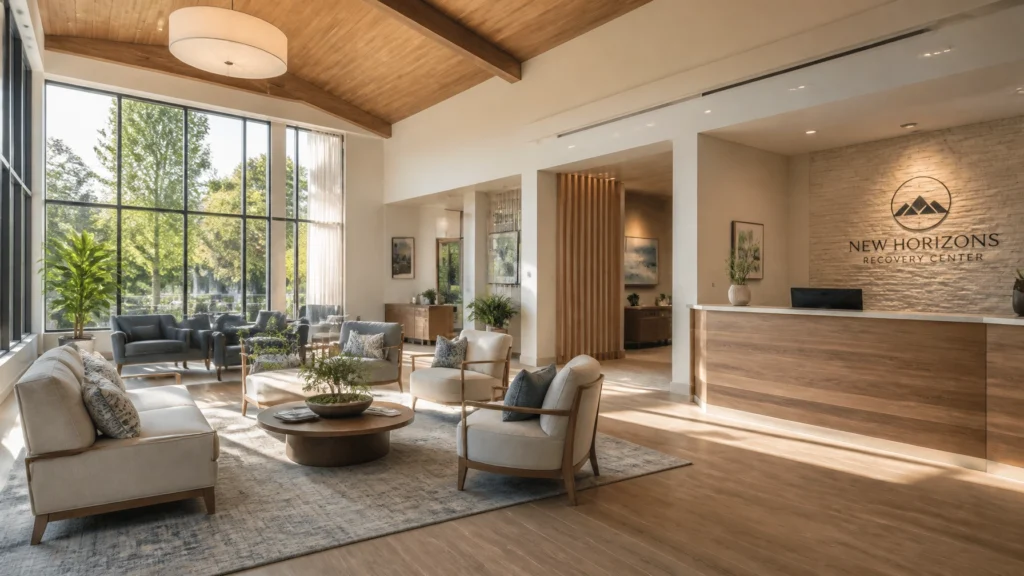
A family member lands on your website after searching for treatment late at night. They are worried, tired, and probably comparing several facilities at once.
Then they see a generic stock photo of smiling people sitting in a therapy circle.
It looks familiar. Maybe too familiar.
In a high-stakes decision like addiction treatment, generic imagery can create distance instead of trust. Families want to know where their loved one will sleep, meet with clinicians, eat meals, spend downtime, and begin the next stage of care.
That is where before-and-after facility imagery can help: when it focuses on the environment, not on exposing a person’s worst moments.
Table of Contents
- What “before and after” should mean in treatment marketing
- Why real environments build visual trust
- The facility areas families need to see
- Privacy, consent, and ethical boundaries
- Performance Impact: Generic imagery vs. real facility imagery
- How to create a trustworthy facility image library
- Frequently asked questions
What “Before and After” Should Mean in Treatment Marketing
Let’s draw an important line first.
There is a major ethical difference between:
- Showing how a facility’s common room looked before and after renovation
- Showing a refreshed outdoor space or updated bedroom
- Showing a client’s face before and after treatment
The first examples communicate investment in the treatment environment. The last can expose someone’s history, reinforce stigma, and create long-term privacy concerns.
The National Association of Addiction Treatment Providers (NAATP) Code of Ethics emphasizes that treatment providers must protect patient dignity and privacy. It also warns against misleading advertising and requires facilities to accurately represent their services, locations, credentials, and levels of care.
So, when you use before-and-after facility imagery, the “before” should usually refer to:
- A renovation
- A redesigned reception area
- Updated bedrooms or common areas
- Improved landscaping
- A more accessible or welcoming entrance
- A clearer, safer, and more comfortable environment
The goal is not to create a dramatic “transformation” story. The goal is to show families that you care for the place where treatment happens: and that the space they see online reflects what they will encounter in person.
Why Real Environments Build Visual Trust
Families are not simply evaluating a logo or color palette. They are trying to answer a more personal question:
“Can I trust this place with someone I love?”
Real facility photography helps reduce uncertainty before the first call. It gives visitors a sense of the setting, the atmosphere, and the standard of care you are trying to provide.
A polished but accurate image of a bright dining area may answer questions that your copy does not:
- Is the facility clean?
- Does it feel calm or institutional?
- Will my loved one have privacy?
- Is there space for family visits?
- Does the environment appear safe and maintained?
So what’s the connection between photography and admissions? Visual clarity lowers friction. When someone can picture the experience, taking the next step can feel less intimidating.
This matters in behavioral health because addiction is not a character flaw or a simple failure of willpower. As the National Institute on Drug Abuse explains, addiction is a complex disease that can make quitting difficult, even for people who genuinely want to stop.
Your imagery should reflect that reality. Avoid visual choices that shame, shock, or reduce people to stereotypes. Show dignity, safety, and a credible path forward.

The Facility Areas Families Need to See
A single exterior photo is not enough. Families want to understand the full experience, not just the building’s front door.
1. Reception and admissions areas
The first few minutes at a treatment center can feel overwhelming. Show a reception space that looks organized, comfortable, and welcoming.
Capture details such as:
- Comfortable seating
- Clear signage
- Warm lighting
- Private check-in areas
- Accessible entrances
- Staff spaces that look professional without feeling cold
If your admissions process is confidential, your imagery should support that expectation.
2. Bedrooms and living spaces
Families may want to know whether bedrooms are shared or private, how much storage is available, and whether the space feels livable.
Photograph rooms as they actually appear. Do not remove every sign of daily life or stage the room so heavily that it becomes unrealistic. Clean, orderly, and comfortable is the target.
3. Therapy and clinical rooms
Therapy spaces should communicate professionalism and privacy. Include individual counseling rooms, group spaces, family meeting areas, and medical or nursing areas where appropriate.
But this still doesn’t drill down into the full patient experience. If your program includes specialized spaces: such as art therapy, fitness, meditation, or trauma-informed care areas: show them clearly and explain their purpose.
4. Outdoor areas and recreational spaces
Outdoor spaces can help families imagine moments of calm between sessions. Photograph patios, walking paths, gardens, courtyards, fitness areas, or other amenities that are genuinely available to clients.
Do not imply that a temporary setup is a permanent program feature. Accurate imagery protects trust.
5. Staff and human details
You do not need to photograph clients to make your facility feel human.
Use staff members, clinicians, and professional models: with appropriate written releases: to show non-identifying moments such as:
- A clinician preparing a group room
- An admissions professional welcoming a visitor
- Staff reviewing treatment materials
- A team member walking through the facility
- A clinician speaking with a colleague
The emphasis should be on warmth and competence, not staged emotional drama.
Privacy, Consent, and Ethical Boundaries
Before scheduling a photo shoot, create a written visual privacy policy. It should be reviewed by leadership and, where appropriate, your compliance or legal team.
At a minimum:
- Do not photograph active clients for identifiable marketing use.
- Schedule photography during non-client hours whenever possible.
- Check mirrors, windows, whiteboards, computer screens, paperwork, and signage for accidental identifiers.
- Obtain signed releases from every staff member, model, or other person appearing in promotional images.
- Document where each image may be used: website, social media, paid ads, brochures, directories, and video.
- Keep a process for removing or replacing images when staff leave or when an image becomes outdated.
- Never publish an old “after” image if the space no longer reflects the current facility.
If you are considering a client testimonial or recovery story, the standard should be even higher. Consent should be informed, voluntary, and specific. The person should understand that online content can remain searchable for years.
A written story without a face may be a safer option. You can also use abstract imagery, staff photography, or environmental details that convey hope without identifying a vulnerable person.
For broader patient and family resources, you can also direct people to SAMHSA’s National Helpline, a free and confidential service available 24 hours a day, 365 days a year.
Performance Impact: Generic Imagery vs. Real Facility Imagery
Before-and-after facility imagery should not be judged only by how attractive it looks. Measure whether it helps visitors understand your program and take a meaningful next step.
| Visitor Experience | Generic Stock Imagery | Real Facility Imagery |
|---|---|---|
| Understanding of the setting | Limited; visitors may not know what is real | Stronger; visitors can see the actual environment |
| Perceived transparency | Can feel interchangeable or staged | Communicates openness and specificity |
| Family questions before calling | More unanswered questions | Visuals answer basic questions early |
| Brand differentiation | Often looks similar to competing centers | Shows what makes your facility distinct |
| Content reuse | Limited to general website sections | Useful across service pages, ads, social media, and email |
| Measurement opportunity | Difficult to connect to user behavior | Can be tested by page, gallery, video, and CTA performance |
This is not a promise that new photography automatically increases admissions. It is a foundation for better testing.
Use analytics to compare:
- Engagement on pages with real facility galleries
- Calls and forms from pages with updated imagery
- Mobile behavior before and after image optimization
- Performance of paid landing pages using facility-specific visuals
- Conversion rates for pages showing amenities versus pages using stock photos
Your conversion tracking setup should connect visual changes to calls, forms, chats, and: where available: qualified admissions outcomes.
Mid-article next step: If you are unsure which pages, images, or conversion points are helping families move forward, contact Ads Up Marketing for a confidential review. You can also call 305-539-7114.
How to Create a Trustworthy Facility Image Library
A strong image library is more than a collection of attractive photos. It should support the entire marketing funnel.
Start with a practical shot list:
- Facility exterior and entrance
- Reception and admissions spaces
- Bedrooms and bathrooms
- Group and individual therapy rooms
- Dining and kitchen areas
- Outdoor and recreational spaces
- Accessibility features
- Staff portraits and candid professional moments
- Detail images showing cleanliness, comfort, and organization
- Renovation comparisons with clear dates and captions
Then prepare the facility honestly:
- Deep clean and declutter
- Remove confidential documents and personal information
- Repair visible maintenance issues
- Use natural light where possible
- Add modest, appropriate touches such as plants or artwork
- Photograph spaces in the way clients actually use them
- Update the image library when the facility changes
Your website design should make these visuals easy to navigate. A family should not have to hunt through five menus to find bedrooms, program spaces, or location information.
Ads Up Marketing’s treatment center website design service can help organize facility photography into clear, mobile-friendly pages. Our SEO services for addiction treatment centers can also help those pages become discoverable for searches related to your programs, location, amenities, and levels of care.
And if you are sending paid traffic to a page that still relies on generic imagery, our PPC management team can help evaluate the full path from click to call.
Frequently Asked Questions
Should a treatment center use client before-and-after photos?
Generally, client transformation photos create unnecessary privacy and ethical risks. They may also reinforce stigma or create a misleading impression of recovery as a simple visual transformation. Use real facility imagery, staff photography, or anonymized stories instead.
What is the safest type of before-and-after imagery?
Facility renovation photography is usually the safest option when no clients are identifiable and the images accurately show the space. Include dates or captions so visitors understand what changed.
Can staff members appear in treatment center marketing photos?
Yes, with informed written consent and clear documentation of how the images will be used. Update your image library when staff roles or employment status change.
How many facility photos should appear on a website?
There is no universal number. You should include enough imagery to answer practical questions about the environment without slowing down the page. Prioritize quality, accuracy, mobile performance, and clear organization over a very large gallery.
Let Your Facility Speak for Itself
Families do not need a perfect-looking facility. They need an honest one that feels safe, respectful, and prepared to help.
That is the real power of before-and-after facility imagery. It shows progress without exploiting a client’s history. It creates visual trust without relying on clichés. Most importantly, it helps families picture the care environment before they make a difficult call.
At Ads Up Marketing, we work exclusively with addiction treatment centers and behavioral health facilities. We can help you plan the photography, improve the website experience, build stronger landing pages, and measure whether your visual investment is producing better conversations.
Call 305-539-7114 or contact Ads Up Marketing to discuss your facility’s visual trust strategy.