
INSIGHTS
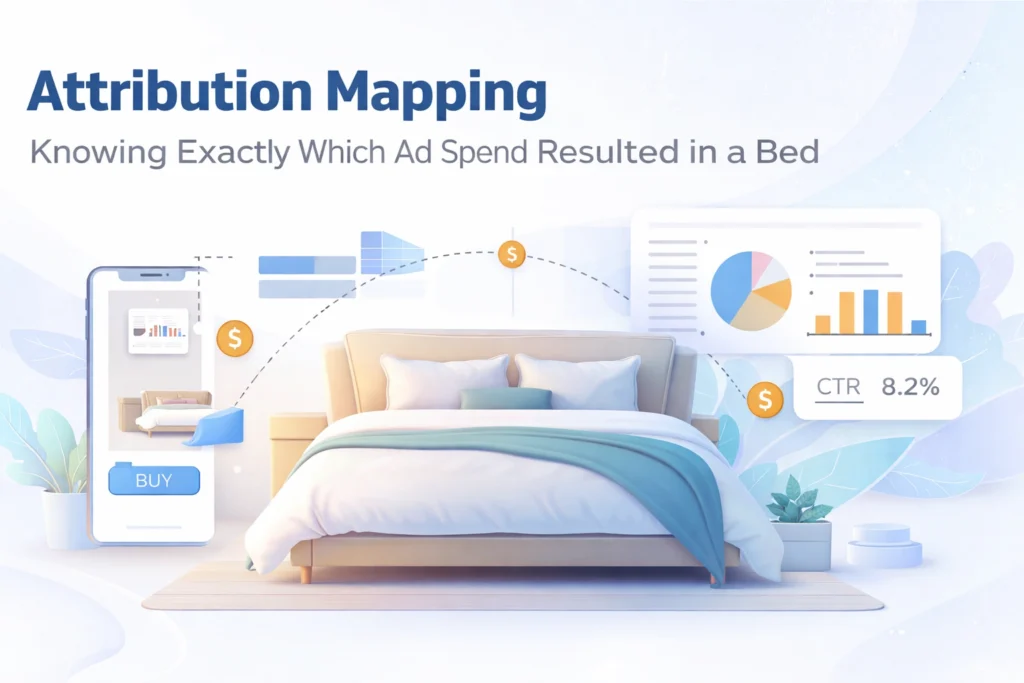
Attribution Mapping: Knowing Exactly Which Ad Spend Resulted in a Bed
Focus Keyword: treatment center marketing attribution tracking
You're spending money on Google Ads. You've got a Facebook campaign running. Maybe some SEO work happening in the background. And yeah, beds are filling up. But here's the question that keeps facility owners up at night: which marketing dollars actually brought those admissions through the door?
If you can't answer that question with confidence, you're essentially flying blind. And in an industry where a single admission can represent $15,000 to $60,000 in revenue, guessing isn't a strategy anyone can afford.
That's where attribution mapping comes in. Let's break down what it is, why it matters specifically for treatment centers, and how you can finally connect the dots between your ad spend and the beds you're filling.
What Exactly Is Attribution Mapping?
Attribution mapping is the process of tracking every touchpoint a potential client has with your marketing before they pick up the phone or submit a form. Then, it assigns credit to those touchpoints so you know what actually influenced that admission.
Think about it this way. Someone might see your Facebook ad on Monday. Google your facility name on Wednesday. Read a blog post Thursday. And finally call your admissions line on Friday after clicking a Google search ad.
So what brought them in? Was it Facebook? The blog? Google Ads? All of them?
Attribution mapping answers that question. According to the Substance Abuse and Mental Health Services Administration (SAMHSA), treatment admissions often involve multiple decision points and influences, which makes tracking even more critical for facilities competing for those admissions.

Why Treatment Centers Need This More Than Most Industries
Here's the thing about addiction treatment marketing, it's not like selling shoes online. Your prospects don't usually see one ad and immediately convert. The decision to seek treatment is deeply personal, often takes time, and involves multiple family members researching options.
That means a potential client might interact with your brand seven to twelve times before making contact. If you're only looking at last-click data (which most basic analytics setups do), you're missing the full picture.
Let's say you pull the plug on Facebook ads because your last-click data shows Google is bringing in all the leads. But what you didn't realize? Facebook was introducing prospects to your facility in the first place. Three weeks later, your Google leads dry up too.
Attribution mapping prevents these expensive mistakes.
The National Institute on Drug Abuse (NIDA) notes that treatment seeking behavior is complex and influenced by multiple factors, your marketing touchpoints are part of that influence chain.
The Different Attribution Models (And Which One Makes Sense for You)
Not all attribution models are created equal. Here's a quick breakdown of the main approaches:
| Attribution Model | How It Works | Best For |
|---|---|---|
| Last-Touch | 100% credit goes to the final interaction before conversion | Simple tracking, short sales cycles |
| First-Touch | 100% credit to the first interaction that introduced your brand | Understanding awareness channels |
| Linear | Credit split equally across all touchpoints | Getting a balanced view of the full journey |
| Position-Based (U-Shaped) | 40% to first touch, 40% to last touch, 20% split among middle touches | Valuing both discovery and conversion moments |
| Time-Decay | More credit to touchpoints closer to conversion | Longer consideration periods |
| Data-Driven | Uses machine learning to assign credit based on actual performance patterns | High-volume facilities with robust data |
For most treatment centers, position-based or data-driven attribution tends to give the clearest picture. You want to know what's introducing people to your facility AND what's finally getting them to call.
But honestly? The "best" model depends on your specific situation, your call volume, and how sophisticated your tracking setup is. That's something we help facilities figure out every day at Ads Up Marketing.
How to Actually Set Up Attribution Tracking
Alright, let's get practical. Here's what a solid attribution mapping setup looks like for treatment centers:
Step 1: Get Your Tracking Foundation Right
Before you can attribute anything, you need proper tracking in place. That means:
- Google Analytics 4 configured correctly (not just installed, actually configured)
- Call tracking with dynamic number insertion so you know which page or ad generated each call
- UTM parameters on all campaign links (yes, every single one)
- CRM integration that connects leads to admissions
If your current setup doesn't have these elements, you're collecting data that won't actually help you make decisions. Our team at Ads Up Marketing can audit your current tracking and identify the gaps.
Step 2: Connect Your Marketing Channels
Your Facebook pixel, Google Ads conversion tracking, Microsoft Ads tracking: all of these need to be talking to each other through a centralized platform. Whether that's Google Analytics, a dedicated attribution tool, or your CRM depends on your budget and technical comfort level.

Step 3: Map Admissions Back to Marketing Sources
This is where the magic happens. When someone becomes an actual admission (not just a lead: an admission), you need a process to trace back which marketing efforts contributed.
That might mean:
- Asking during intake how they heard about you (though this is notoriously unreliable)
- Matching phone numbers from call tracking to your admission records
- Using hidden form fields that capture source data
- Implementing closed-loop reporting between marketing and admissions
Step 4: Analyze and Adjust (Monthly, At Minimum)
Attribution data is only useful if you actually look at it and make changes. Set a monthly review cadence to examine which channels are contributing to admissions: not just leads: and shift budget accordingly.
The Mistakes We See Facilities Make All the Time
After working with treatment centers across the country, we've noticed some patterns in how attribution goes wrong:
Mistake #1: Only tracking leads, not admissions. A channel that generates 100 leads but zero admissions isn't valuable. You need to track all the way through the funnel.
Mistake #2: Relying on "how did you hear about us?" responses. People genuinely don't remember. Or they say "Google" when they really mean they saw your billboard and then Googled your name. Self-reported source data is about 40% accurate at best.
Mistake #3: Not accounting for phone calls. In treatment marketing, phone calls often represent your highest-intent leads. If you're not tracking call sources with the same rigor as form submissions, you're missing a huge piece of the puzzle.
Mistake #4: Setting it and forgetting it. Attribution models need refinement as your marketing mix changes. What worked six months ago might not reflect your current reality.
What This Actually Looks Like in Practice
Let me paint a picture. One of our facility clients was spending roughly $30,000 monthly across Google Ads, Facebook, and SEO. Their gut told them Google Ads was doing all the heavy lifting because that's where they saw the most last-click conversions.
When we implemented proper attribution mapping, the data told a different story. Facebook was the primary discovery channel: introducing about 60% of eventual admissions to the brand. Those people then searched for the facility name and clicked a branded Google Ad to convert.
Without that Facebook awareness, the branded search volume (and Google Ads conversions) would have tanked. We helped them rebalance their budget to protect that top-of-funnel investment while optimizing their Google Ads for efficiency.
The result? 23% increase in admissions over six months with the same ad budget.

Let's Get Your Attribution Dialed In
Look, we get it: this stuff can feel overwhelming. Between compliance concerns, running a facility, and managing staff, diving into marketing analytics probably isn't how you want to spend your Tuesday afternoon.
That's exactly why our team at Ads Up Marketing exists. We specialize in healthcare and addiction treatment marketing, and attribution mapping is something we set up for facilities every week.
Whether you need a full audit of your current tracking, help implementing a new system, or someone to manage and optimize your campaigns based on real attribution data: we've got you covered.
Ready to finally know which ad dollars are filling beds? Give us a call at 305-539-7114 or reach out through our website. Let's turn your marketing data into actual insights you can use.
Because in this industry, every admission matters. And knowing exactly what's driving those admissions? That's how you scale sustainably.