
INSIGHTS
Virtual Tours: How to Use Tech to Lower the Barrier to Admission
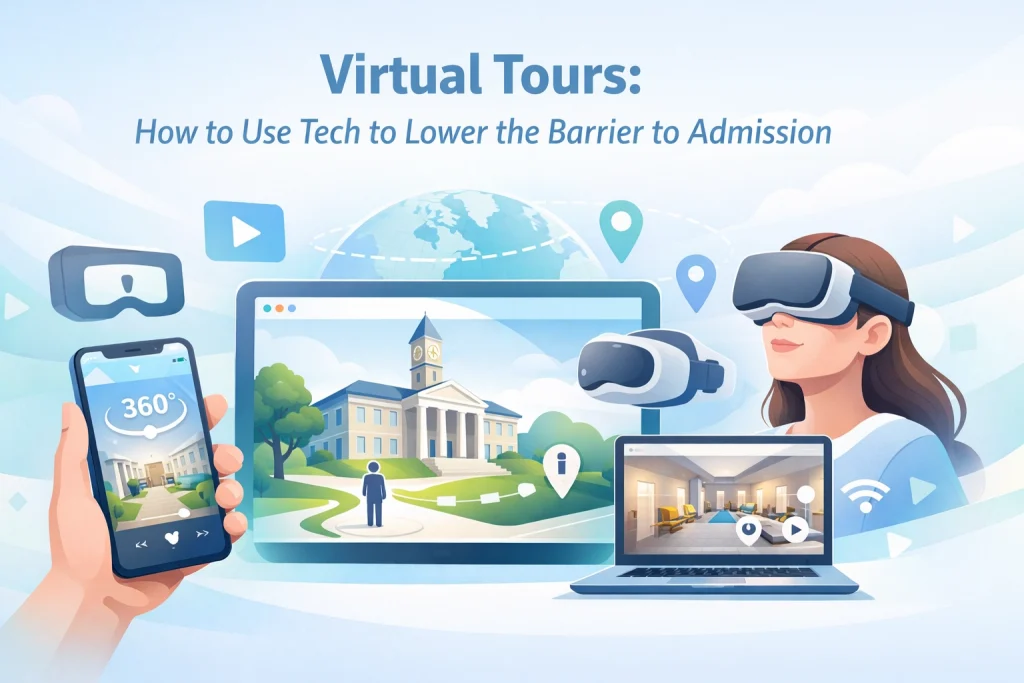
You've invested hundreds of thousands into your facility: beautiful grounds, comfortable rooms, state-of-the-art therapy spaces. But here's the problem: most of your prospective patients will never see it in person before making a decision.
They're researching at 2 AM in crisis mode. They're comparing facilities from three states away. They're terrified, overwhelmed, and making one of the biggest decisions of their lives based on a few static photos and some marketing copy.
That's where virtual tours change everything.
Virtual tours aren't just a nice-to-have anymore: they're becoming the deciding factor between your facility and the one down the road. When someone can virtually walk through your space, see where they'll sleep, explore your therapy rooms, and get a real feel for your environment, you're building trust before they ever pick up the phone.
Let's talk about how you can leverage this technology to lower the barrier to admission and fill more beds.
The Trust Problem in Behavioral Health Marketing
Here's what you're up against: people seeking treatment (or their families) are making decisions in the most vulnerable moment of their lives. They're skeptical. They've probably heard horror stories. They're wondering if your facility is actually as nice as your website claims.
Static photos? They help, but they don't tell the full story. A slideshow of images can't give someone the spatial awareness they need to picture themselves in your space. It can't show them the flow from bedroom to common area to therapy space.
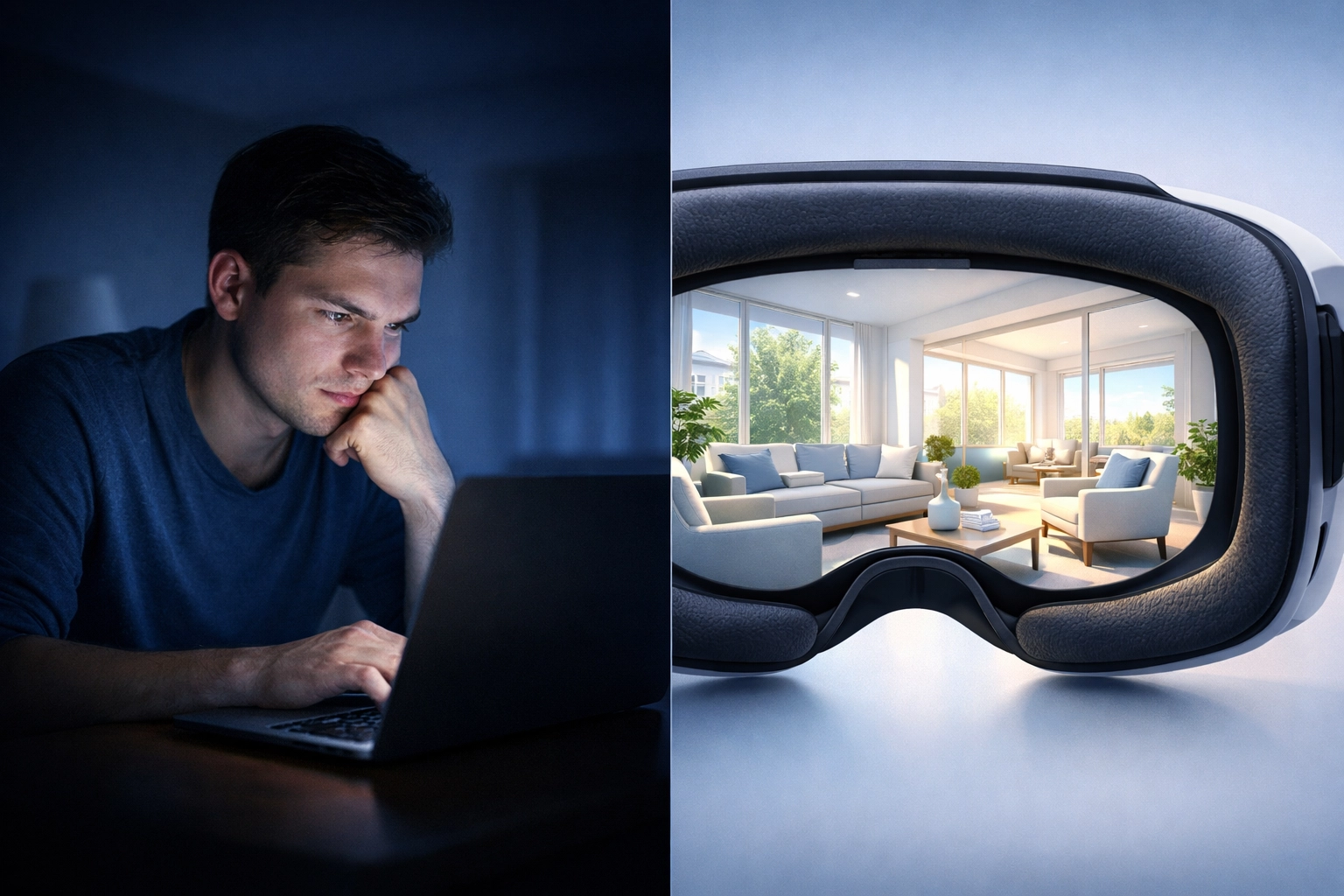
Virtual tours solve the visualization gap. They let prospects explore at their own pace, in their own time, without the pressure of a scheduled tour or the logistics of travel. For someone in California researching Florida facilities at midnight, that's invaluable.
How Virtual Tours Reduce Admission Barriers
Let's get specific about the barriers standing between you and admissions: and how virtual tours knock them down.
Geographic Barriers
Most of your prospects aren't local. They're researching from different states, maybe even different countries. Asking them to fly in for a tour before committing? That's a massive ask, especially when they're comparing multiple facilities.
Virtual tours let them explore your facility from anywhere, at any time. They can show it to family members. They can revisit it multiple times. They can make more informed decisions faster.
Financial Barriers to Exploration
Even if someone's willing to travel for a physical tour, the costs add up: flights, hotels, time off work. For families already stressed about treatment costs, adding $1,500+ in travel expenses just to look at facilities? That's a dealbreaker for many.
With virtual tours, that barrier disappears. They can tour five facilities in one evening without spending a dime on travel.
Time Constraints
Crisis doesn't wait for your tour schedule. When someone's ready to seek treatment, they need to move fast. If they have to wait three days for your next available tour slot while another facility offers instant virtual access, you're losing admissions.
Virtual tours work on the prospect's timeline, not yours. They reduce the time from initial interest to admission decision.
Physical and Mobility Limitations
Some prospective patients have mobility issues. Others might be immunocompromised. According to SAMHSA guidelines, accommodating diverse needs is crucial in behavioral health settings. Virtual tours ensure everyone can access critical information about your facility without physical barriers.
The Psychology of Visual Trust
Here's something most facility owners miss: people make emotional decisions and justify them with logic later. When someone's choosing a treatment center, they're asking themselves "Can I picture myself here? Does this feel safe?"
Virtual tours tap into that emotional decision-making in ways that photos and text simply can't.
Building Emotional Connection
When someone takes a virtual tour, they're not just looking: they're mentally placing themselves in your space. They're imagining waking up in that bedroom. They're picturing themselves in that group therapy room. That emotional connection is powerful.
Transparency Breeds Trust
Offering comprehensive virtual tours sends a clear message: you have nothing to hide. You're confident in your facility. That transparency builds trust before the first phone call.
Compare that to facilities that only show carefully staged photos of their "best" rooms. Prospects can sense when they're getting a curated version versus the real thing.
Implementation: What Actually Works
Let's get practical. Not all virtual tours are created equal, and you don't want to waste money on technology that doesn't convert.
360-Degree Photography vs. Full Virtual Tours
You've got options:
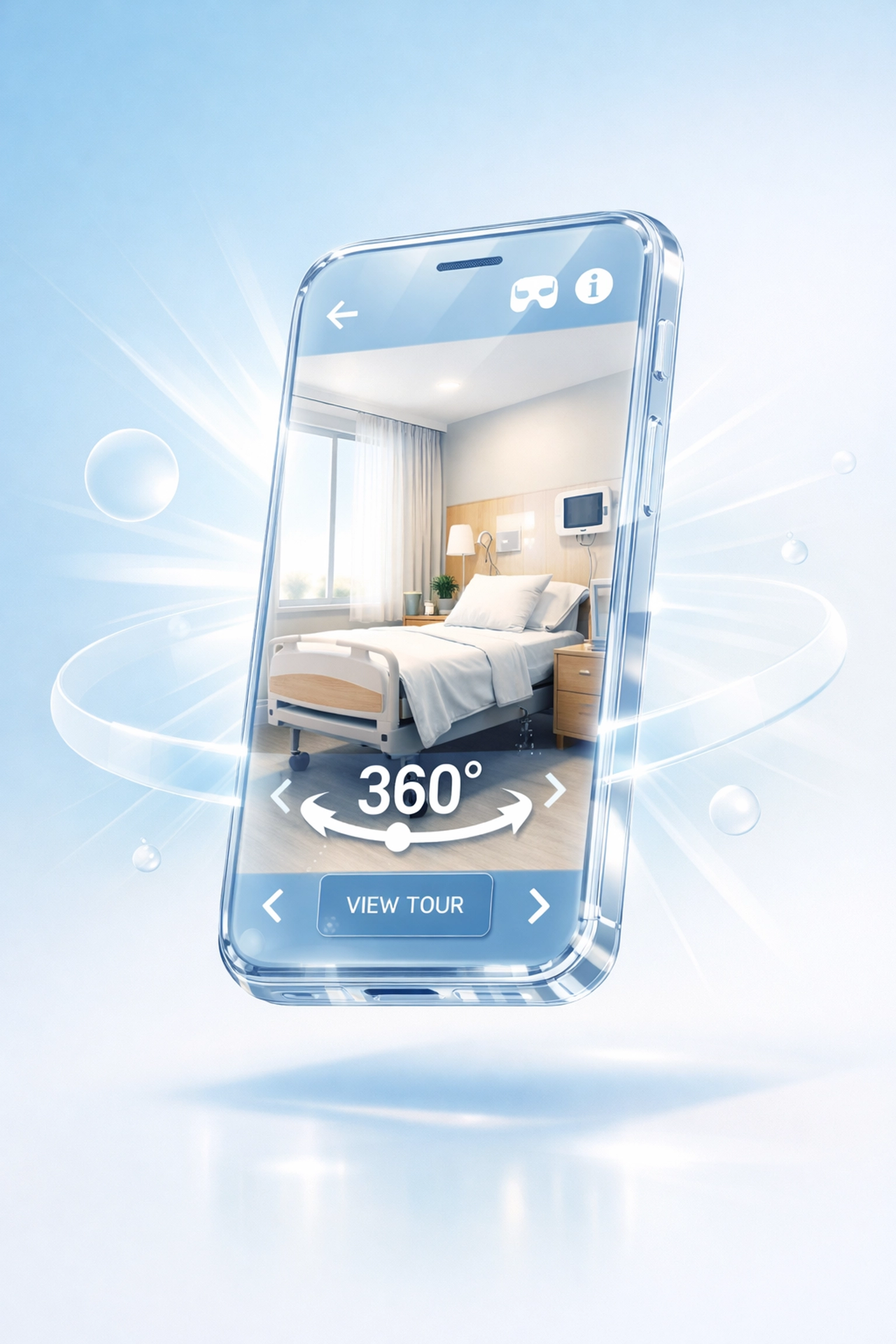
360-degree photos are the entry-level approach. They're relatively affordable ($500-2000 for professional shoots) and give users some control to look around rooms. But they're limited: users can't move between spaces naturally.
Full virtual tours (using platforms like Matterport) cost more upfront ($2,000-5,000) but deliver a complete walkthrough experience. Users can navigate your entire facility as if they're there. For treatment facilities competing on trust and transparency, this is usually worth the investment.
Key Spaces to Prioritize
Don't just tour everything: focus on what matters to prospects:
- Private rooms (both standard and upgraded options)
- Common/living areas where they'll spend most of their time
- Therapy spaces (group rooms, individual therapy offices)
- Outdoor areas (especially if you have nice grounds)
- Dining facilities
- Fitness/recreation areas
Skip the administrative offices and staff-only areas. Focus on patient experience spaces.
Technical Accessibility Requirements
This is crucial and often overlooked: your virtual tour needs to work for everyone. According to NAATP best practices, accessibility isn't just ethical: it expands your potential patient base significantly.
Your virtual tour platform should:
- Work with screen readers for visually impaired users
- Include text descriptions of each area
- Function on mobile devices (most users will view on their phones)
- Load quickly even on slower connections
- Be WCAG 2.1 compliant for legal protection
ROI: What Virtual Tours Actually Deliver
Let's talk numbers, because you're running a business.
| Metric | Before Virtual Tours | After Implementation | Impact |
|---|---|---|---|
| Tour-to-inquiry conversion rate | 12-18% | 25-35% | +13-17% increase |
| Average time to admission decision | 7-10 days | 3-5 days | 40% faster |
| Physical tour no-shows | 35-45% | 15-20% | 20-25% reduction |
| Geographic reach | Local + regional | National/international | Unlimited expansion |
| Cost per qualified lead | $850-1,200 | $600-900 | 20-30% reduction |
These aren't hypothetical numbers: this is what we're seeing with clients who've implemented quality virtual tour systems.
The math is simple: if virtual tours increase your inquiry-to-admission conversion rate by even 10%, and your average patient value is $25,000, you only need 4-5 additional admissions to pay for the entire virtual tour investment and ongoing hosting.

Integration with Your Marketing Strategy
Here's where most facilities drop the ball: they invest in virtual tours, then bury the link at the bottom of their website.
Virtual tours need to be central to your digital marketing strategy:
On Your Website
Put virtual tour access front and center on your homepage. Add it to every service page. Include it prominently on your "About Our Facility" page. Make it impossible to miss.
In Your PPC Campaigns
If you're running Google Ads or Facebook campaigns (and you should be), mentioning virtual tours in your ad copy increases click-through rates. People want to see before they commit to calling.
In Your Email Follow-Up
When someone inquires but hasn't admitted, send them the virtual tour link. Many people need multiple touchpoints before making a decision. The tour gives them a reason to re-engage.
On Social Media
Post clips or highlights from your virtual tour on social channels. These perform better than static images and drive traffic back to the full experience on your site.
Common Mistakes to Avoid
After helping dozens of treatment facilities implement virtual tours, we've seen what doesn't work:
Outdated tours. If you've renovated or changed anything significant, update your tour. Nothing kills trust faster than showing up to a facility that looks different than the tour.
Poor lighting or quality. Cheap, dark, grainy virtual tours make your facility look worse than no tour at all. This isn't where you cut corners.
No mobile optimization. Over 70% of healthcare searches happen on mobile devices. If your virtual tour doesn't work seamlessly on phones, you're losing the majority of prospects.
Missing call-to-action. Every virtual tour should end with a clear next step: a phone number, a contact form, a chat feature. Don't let people explore and then leave without converting.
How Ads Up Marketing Can Help
Look, implementing virtual tours effectively isn't just about hiring a photographer. It's about integrating this technology into your entire digital marketing ecosystem.
That's where we come in.
At Ads Up Marketing, we specialize in helping behavioral health facilities leverage technology to increase admissions. We don't just help you set up a virtual tour: we build a complete strategy around it.
Here's what we do:
- Strategy consultation to determine which virtual tour approach fits your facility and budget
- Vendor coordination with quality 360-degree photographers and Matterport professionals
- Website integration that makes your virtual tour central to the user experience
- PPC campaign optimization that leverages your virtual tours in ad copy and landing pages
- Conversion tracking to measure exactly how many admissions come from virtual tour engagement
- Ongoing optimization to continually improve tour-to-admission conversion rates
We've helped treatment facilities across the country implement virtual tours that actually generate ROI. Our clients typically see a 25-40% increase in qualified inquiries within 90 days of implementation.
Want to see what's possible for your facility? Call us at 305-539-7114 to schedule a consultation. We'll review your current digital presence, identify opportunities for virtual tour integration, and show you exactly how this technology can lower your barrier to admission and fill more beds.
The Bottom Line
Virtual tours aren't just another marketing gimmick: they're becoming table stakes in behavioral health marketing. As more facilities adopt this technology, the ones that don't risk looking outdated and less transparent.
But here's the opportunity: most of your competitors either don't have virtual tours, or they've implemented them poorly. Getting this right now gives you a significant competitive advantage.
The barrier to admission isn't usually price or programming: it's trust and visualization. People need to see themselves in your space before they commit to treatment. Virtual tours bridge that gap.
Every day you wait to implement quality virtual tours is another day you're losing potential admissions to facilities that make it easier for prospects to build that visual trust.
Ready to lower your barrier to admission and start converting more inquiries? Contact Ads Up Marketing at 305-539-7114 or visit our digital marketing services page to learn how we can help you implement virtual tours that actually drive admissions.
We'll handle the technical complexity so you can focus on what you do best( providing life-changing treatment.)