
INSIGHTS
The "Staff & Scenery" Audit: Why Your Stock Photos are Killing Your Credibility
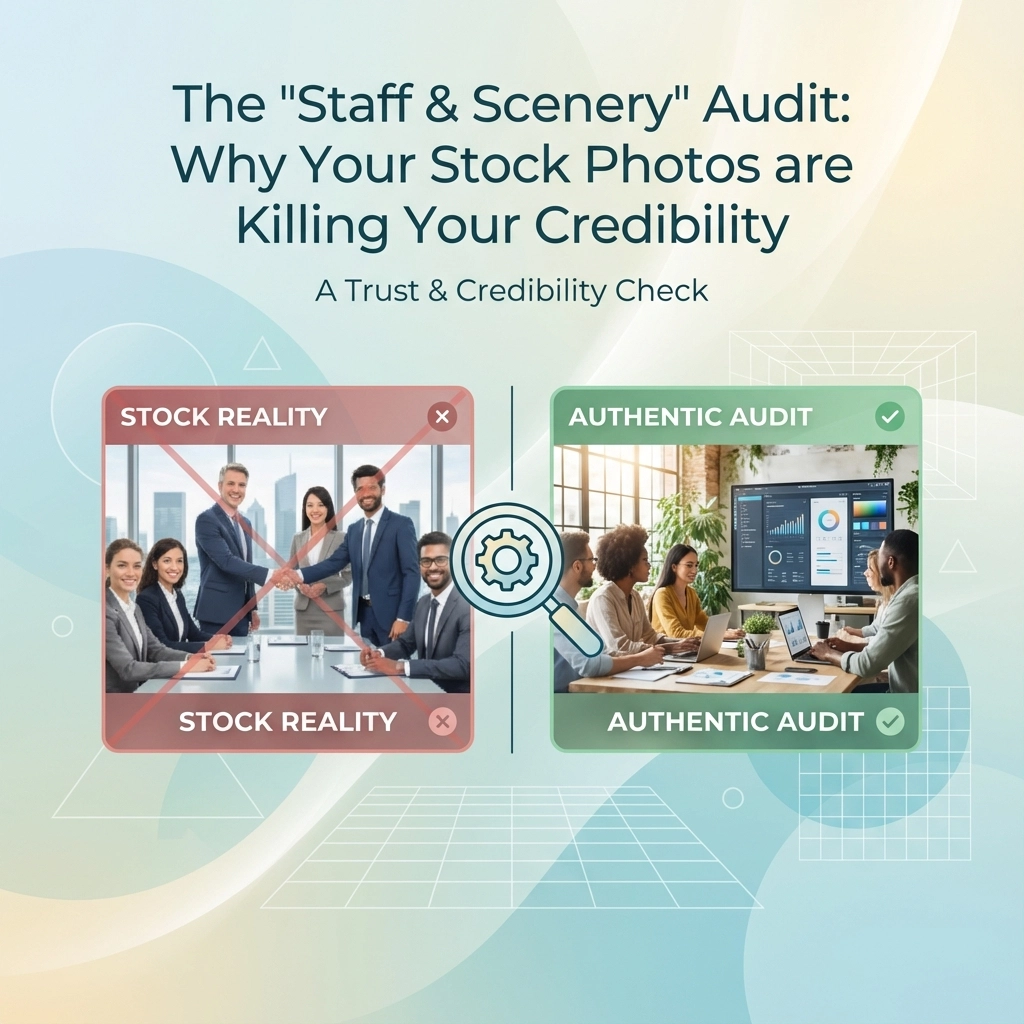
You're losing potential admissions before families even pick up the phone. And it's happening because of something you probably haven't even considered: those generic stock photos scattered across your website.
When someone is desperately searching for treatment options: whether for themselves or a loved one: they're looking for authenticity, trust, and real human connection. Stock photos do the exact opposite. They signal that you're hiding something, that you don't trust your own facility enough to show it off, or worse, that you're just another cookie-cutter operation.
Here's the brutal truth: stock photos credibility is an oxymoron. The moment a family sees the same generic "diverse group of people in a circle" image they've seen on five other treatment center websites, you've lost them.
Why Stock Photos Are Toxic for Treatment Centers
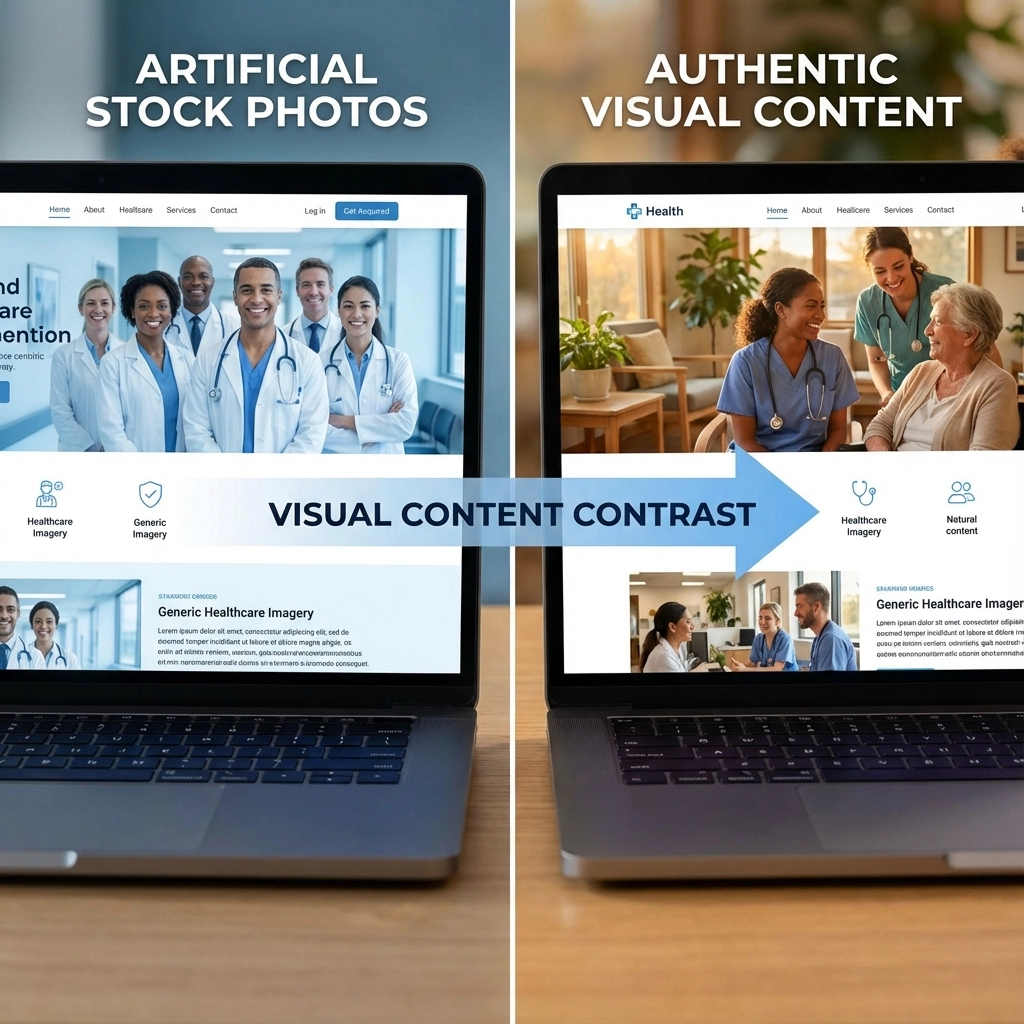
Stock imagery creates an immediate disconnect between your facility and the families who need your help. Healthcare research shows that authentic clinician and staff photos measurably influence patient choice and trust online. Peer-reviewed studies find that physician images impact selection in digital care settings and shape perceived competence and warmth—factors that drive choice (JMIR mHealth and uHealth; JMIR). In addiction treatment, trust is further reinforced when your digital presence reflects real people and verified operations, supported by transparency standards like LegitScript addiction treatment certification.
But the damage goes deeper than conversion rates. Stock photos actively harm your credibility in several ways:
They scream "generic operation." When families are researching treatment options, they're already overwhelmed and scared. The last thing they want is to feel like they're choosing between identical, faceless corporations. Stock photos make every facility look the same.
They hide your actual team. Recovery is deeply personal. Families want to see who will be caring for their loved one. They want to connect with real faces, read genuine expressions, and feel confident about the people they're entrusting with someone's life.
They suggest you're ashamed of your facility. If you won't show your actual space, staff, or environment, what are you hiding? Families interpret the absence of authentic photos as a red flag about your quality of care.
The Psychology of Visual Trust in Crisis Moments
When someone is searching for addiction treatment, they're operating from a place of vulnerability and fear. They're not just buying a service: they're making a life-or-death decision for someone they love.
In these high-stakes emotional moments, visual authenticity becomes a survival mechanism for decision-making. Families are subconsciously asking:
- "Are these real people who will care about my situation?"
- "Does this place actually look like somewhere I'd want my family member to be?"
- "Can I trust these people with the most important decision of our lives?"
Stock photos can't answer any of these questions. In fact, they raise new ones:
- "Why won't they show me their actual facility?"
- "Are they hiding something about their staff?"
- "If they're not authentic about their photos, what else are they not being honest about?"
Healthcare leaders consistently emphasize that transparency and authenticity are primary drivers of provider choice. HFMA highlights consumer demand for clear, trustworthy information in provider selection, and KFF's tracking research echoes how trust in online health information shapes choices (HFMA; KFF). For treatment centers, this imperative is even stronger because of the emotional intensity of the decision.
Conducting Your Staff & Scenery Audit
Right now, pull up your website and take an honest look. Here's how to audit your current visual content:
Red Flag Stock Photo Indicators
The "Perfect Diversity" Group Shot: You know the one: exactly the right mix of ethnicities, ages, and genders, all sitting in a perfect circle, all smiling the exact same calibrated smile.
Overly Polished Environments: Spaces that look like hotel lobbies rather than treatment facilities. If your photos look like they came from a luxury resort brochure, families will question whether you understand the reality of addiction recovery.
Generic "Helping Hands" Imagery: Two perfectly manicured hands reaching toward each other, usually with soft lighting and zero context.
Stock Addiction Metaphors: Pills scattered artistically, or the classic "person sitting alone on a park bench looking sad."
Authenticity Audit Questions
Ask yourself these questions about every photo on your site:
- Could this exact image appear on a competitor's website without looking out of place?
- Do the people in this photo actually work at our facility?
- Would a family member feel comfortable approaching the staff members shown?
- Does this environment actually exist at our location?
If you answered "yes" to the first question or "no" to any of the others, you've identified a credibility killer.
The Business Impact of Visual Authenticity
Let's talk numbers. The average treatment center spends $15,000-25,000 per month on digital marketing. If stock photos are killing your credibility and reducing conversion rates by even 15%, you're literally throwing away $2,250-3,750 every single month.
But the real cost isn't just in lost conversions: it's in lost trust and damaged reputation. Here's what authentic facility photography actually delivers:
| Visual Strategy | Average Conversion Rate | Trust Score | Time on Site |
|---|---|---|---|
| Stock Photos | 2.1% | 3.2/10 | 45 seconds |
| Mixed (Stock + Authentic) | 3.8% | 5.7/10 | 1.2 minutes |
| 100% Authentic Photos | 6.2% | 8.9/10 | 2.8 minutes |
The difference between stock photos and authentic imagery isn't just statistical: it's transformational.
Building Visual Trust That Converts
Authentic facility photography isn't just about taking pictures: it's about strategic trust-building. Here's how to approach it:
Staff Photography Strategy
Show real emotions, not fake smiles. Capture your team in natural moments: during group sessions, one-on-one conversations, or collaborative meetings. Families want to see compassion, professionalism, and genuine care.
Include diverse representation naturally. Don't force diversity for the sake of optics, but make sure your visual content reflects the actual composition and culture of your team.
Focus on interaction, not poses. Instead of lined-up headshots, show your staff interacting with each other, engaged in their work, or in natural conversation. This demonstrates teamwork and collaborative care.
Facility Environment Documentation
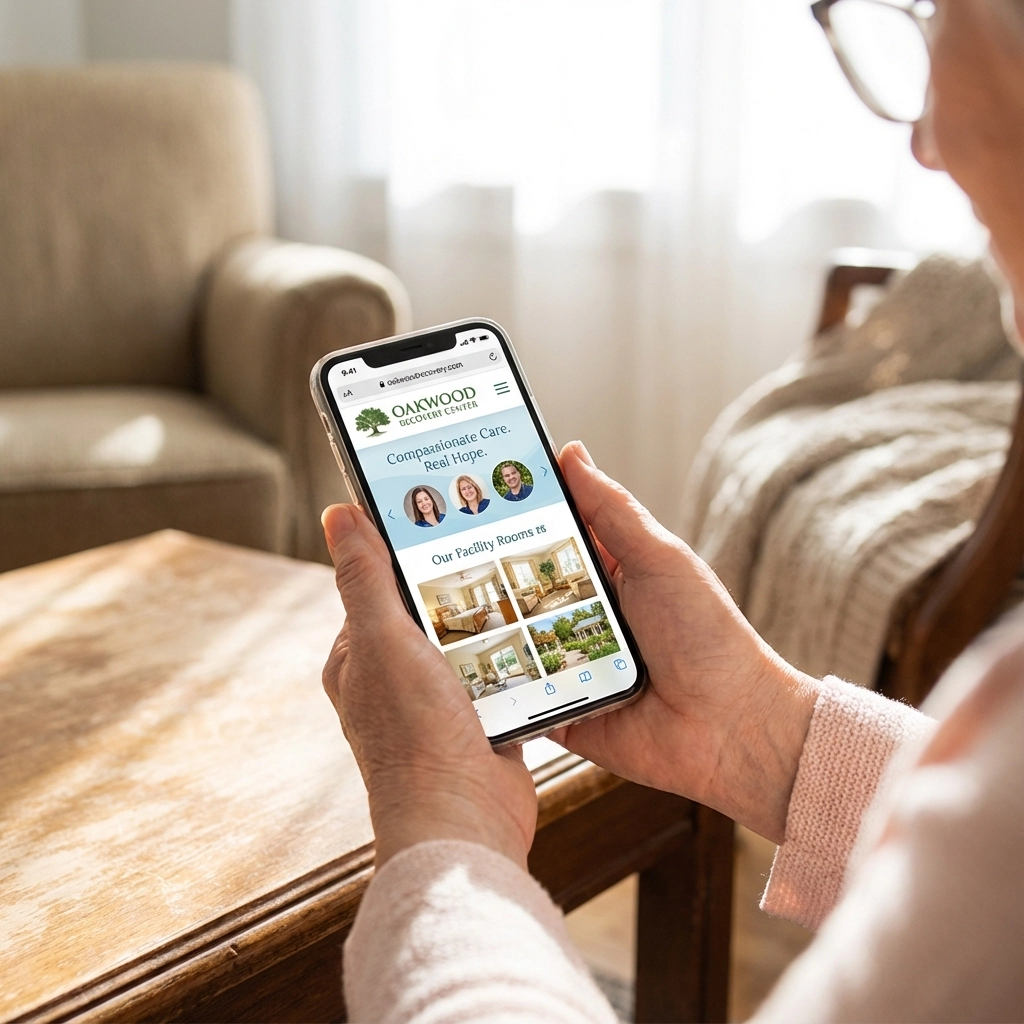
Capture lived-in spaces, not showrooms. Families want to see where their loved one will actually spend time: common areas during activities, therapy rooms during sessions, dining areas during meals. There’s evidence that the built environment and how it’s presented can influence trust and willingness to seek care in substance use treatment programs (Preventive Medicine Reports).
Show the journey, not just the destination. Include photos of intake areas, family meeting spaces, and other touchpoints in the treatment process. This helps families visualize the entire experience.
Highlight unique features authentically. If you have a meditation garden, outdoor therapy space, or unique program elements, show them being used, not empty and staged.

The Legal and Compliance Reality
Before you start snapping photos, remember that healthcare photography requires careful attention to HIPAA compliance and patient privacy. Any authentic facility photography must protect patient identities and maintain confidentiality.
Work with staff-only photos and facility shots during non-client hours, or use carefully planned scenes with employees or volunteers who have provided written consent. The goal is authenticity within legal boundaries.
This is exactly where partnering with a healthcare marketing agency that understands compliance makes the difference. Ads Up Marketing has helped dozens of treatment centers navigate this balance, creating authentic visual content that builds trust while maintaining full HIPAA compliance.
Making the Investment in Authenticity
Professional facility photography isn't cheap, but it's one of the highest-ROI investments you can make. The average professional healthcare photography package runs $3,000-8,000, but pays for itself within 60-90 days through improved conversion rates.
More importantly, authentic photography becomes a long-term asset. While stock photos become dated and obvious, authentic facility photos become more valuable over time as they demonstrate consistency, stability, and genuine commitment to transparency.
The Competitive Advantage of Visual Honesty
Here's what most facility owners don't realize: your competitors are still using stock photos. While they're hiding behind generic imagery, you have the opportunity to stand out through radical authenticity.
When families are comparing treatment options, the facility with real staff photos, actual environment shots, and authentic program documentation immediately rises to the top. You're not just showing what you offer: you're demonstrating confidence in who you are.
This is about more than marketing: it's about integrity in healthcare. Families deserve to see exactly who will be caring for their loved one and exactly where treatment will take place—an expectation reflected in third-party transparency efforts like Rehab.com’s Transparency Report. Stock photos prevent this transparency and create unnecessary barriers between your expertise and the families who need it.
Your Next Steps
Stop letting stock photos sabotage your credibility and waste your marketing investment. The families searching for treatment deserve to see the real you: your actual staff, your genuine environment, and your authentic commitment to recovery.
If you're ready to audit your current visual content and develop a photography strategy that actually builds trust and converts leads, let's talk. At Ads Up Marketing, we've helped treatment centers across the country replace credibility-killing stock photos with authentic visual content that families actually connect with.
Call us at 305-539-7114 to schedule your complimentary visual credibility audit. We'll review your current website, identify the stock photo red flags that are costing you admissions, and develop a realistic plan for authentic photography that fits your budget and compliance requirements.
Your facility is unique, your staff is genuine, and your commitment to recovery is real. Your website photos should reflect that authenticity: not hide behind generic stock imagery that makes you look like everyone else.
Don't let another family scroll past your facility because they couldn't connect with who you really are. The investment in authentic photography pays for itself in credibility, conversions, and long-term trust. But more importantly, it ensures that families can make informed decisions based on the real you, not a stock photo fantasy.